
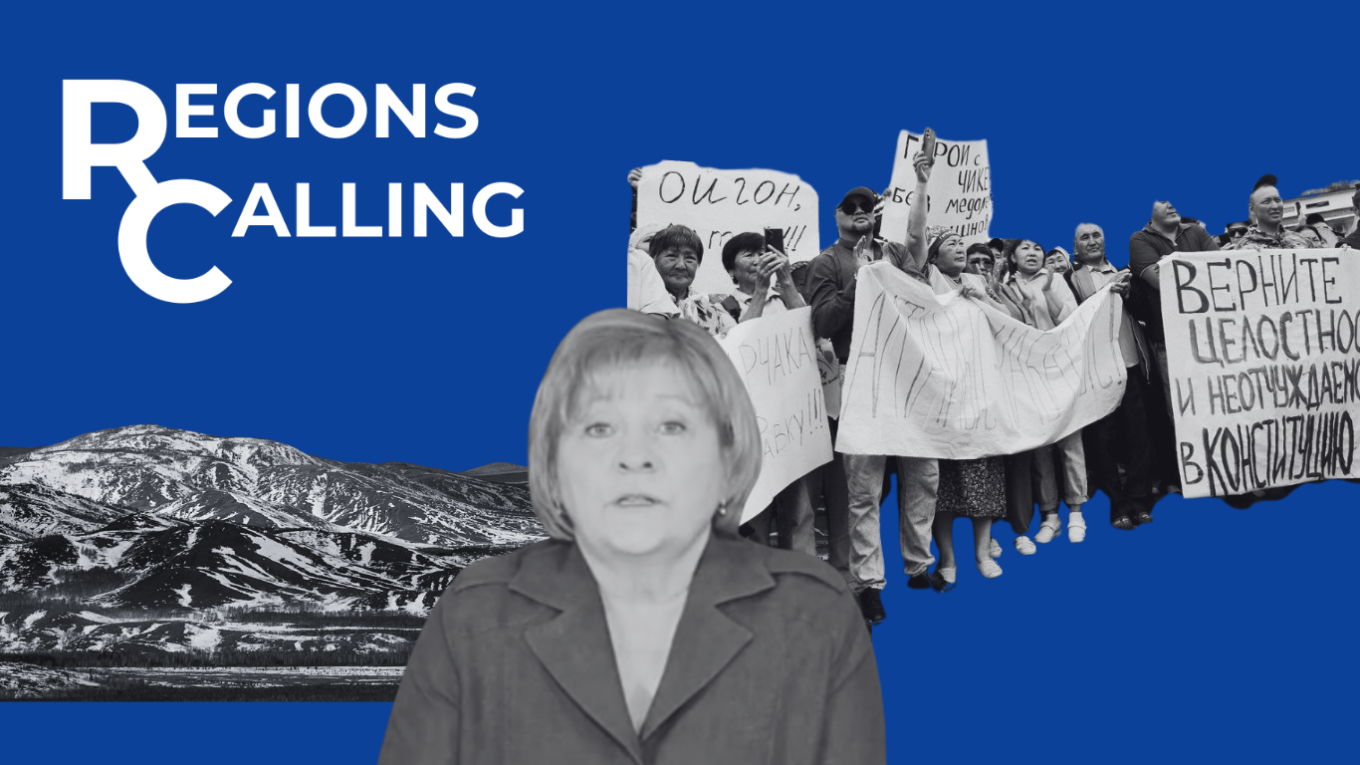
Merry Christmas and welcome to Regions Calling, a newsletter by The Moscow Times shedding light on life beyond the Russian capital.
For this final newsletter of the year, we asked our special correspondent Leyla Latypova to reflect on her 2025 coverage of the regions and choose one policy, person and place that left the most pronounced impact this year.
In Russia’s Regions, Who Shaped History in 2025?
There was no shortage of pivotal events in Russia’s regions and ethnic republics this year.
Nearly every day in 2025 saw a protest in at least one of the country’s 83 federal subjects, whether it was a lone single-person picket or a rally drawing thousands.
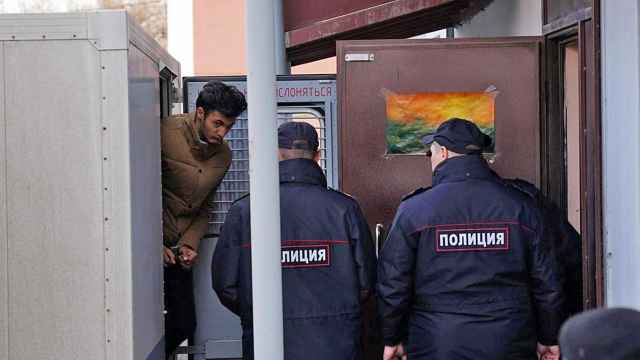
Because only a small fraction of these protests were sanctioned by the authorities, participants faced risks ranging from modest fines to multi-year prison sentences, as well as inclusion in Russia’s rapidly expanding registries of foreign agents, extremists and terrorists.
Regional officials also did their share to stay in the spotlight.
Some, like eccentric Vologda Governor Georgy Filimonov, made headlines for enacting borderline-absurd ultraconservative policies. Others, like deputies of the State Council of Tatarstan and Khakassia’s head Valentin Konovalov, staged rare demarches against Moscow.
As paradoxical as it may sound, the political discontent that swept the regions this year was largely of the Kremlin’s own making. Emboldened by its ongoing war in Ukraine and crushing of the domestic opposition, Moscow moved to assert Russian cultural dominance at home and solidify control over regional elites and natural resources on Indigenous lands — actions that were met with resistance.
As another turbulent and busy year of covering Russia’s regions comes to a close, here are my picks for the policy, person and place that will make 2025 go down in history:
Policy: The municipal government reform
President Vladimir Putin first floated the idea of a nationwide municipal government reform, which would essentially abolish lower-tier urban and rural municipal governments, in 2019.
A bill was finally introduced in Russia’s lower house of parliament in 2021, but it would take another four years and over 1,000 amendments for it to be finally passed in March this year.
Observers have long warned that the abolition of the two-tier system of local government could create long-term problems for the Kremlin, including public protests and depopulation in small towns, by weakening ties between local authorities and residents.
The first signs of trouble appeared even before the bill was passed.
The head of Tatarstan, an economic powerhouse that attempted to secede from Russia in the 1990s, slammed the reform as “shameful” and “disgraceful,” prompting the Duma to introduce an amendment that gives regional authorities the final say on whether to implement it.
Even the generally Kremlin-loyal Communist Party repeatedly lambasted the bill. Communist deputies in the State Duma unanimously voted against it, while regional members entered into protracted conflicts with the reform’s supporters.
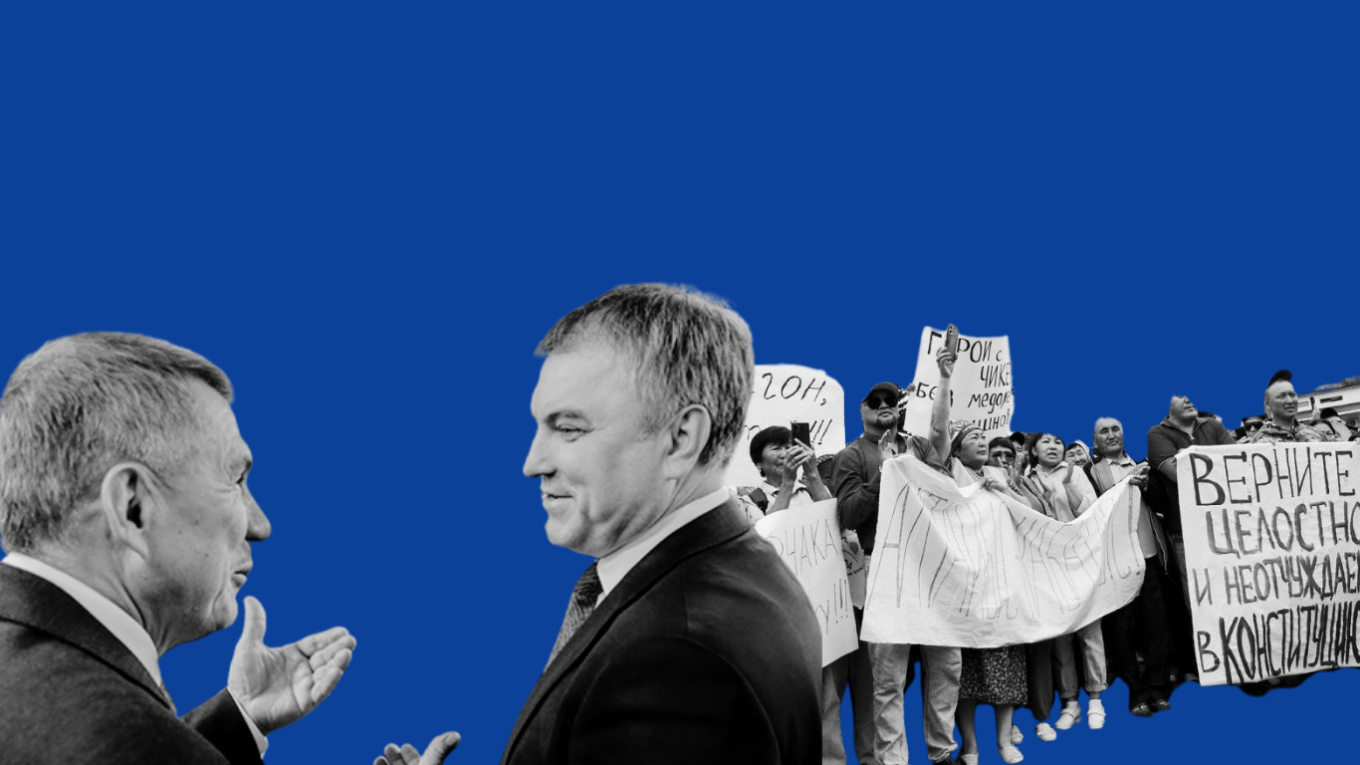
Once Putin signed the bill, street protests began.
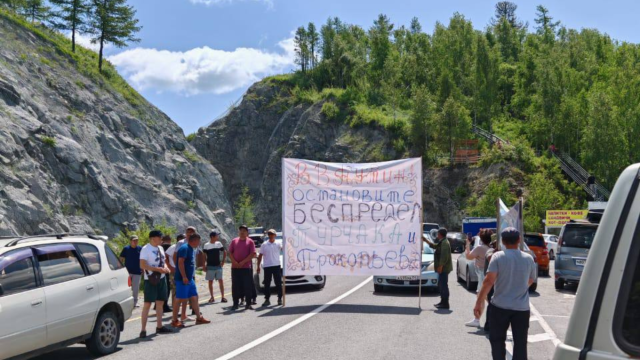
Residents of Altai, a vast but scarcely populated republic in southern Siberia, have shown the fiercest opposition to the reform, dubbing it a threat to the republic’s territorial integrity and Indigenous livelihoods.
With nearly 2% of Altai’s entire population joining an anti-reform rally in June, the republic has emerged as one of the most discontent-prone regions in wartime Russia.
Residents of other vast and predominantly rural regions of the Far East and Siberia also spoke out against the reform, though they largely resorted to recording public addresses and petitions instead of street protests.
Kremlin-installed officials in the republics of Altai and Buryatia, as well as the Irkutsk and Zabaikalsky regions, pressed ahead with the change anyway. The India-sized republic of Sakha remains the only outlier set to keep the two-tier system.

Person: Svetlana Lada-Rus
In a socio-political field dominated by disjointed grassroots movements, one person stood out as a possible leader of the anti-Kremlin opposition in the regions: the exiled occult healer Svetlana Lada-Rus.
Lada-Rus might not have the international public profile of Yulia Navalnaya or the mass public admiration of jailed Bashkir opposition activist Fayil Alsynov.
Yet for those closely tracking Russia’s regional politics, her shadowy presence, unorthodox teachings and links to some of the year’s most visible protest campaigns are impossible to ignore.
A music teacher by training, Lada-Rus first gained attention in the 1990s after opening an occult healing center in Samara. She later ventured into politics, running for the State Duma in 2003 and attempting a presidential bid in 2012 with backing from her own party, Volya (“The Will”), which was outlawed as “extremist” in 2016.
Her ideology blends denial of the Soviet Union’s dissolution, Russian nationalism, anti-vaccine rhetoric, reptilian conspiracy theories and claims that Russia’s ruling elite has been co-opted by British intelligence services.
Lada-Rus lives in an undisclosed location in exile and has not been seen in public for years.
The healer-turned-politician addresses her political followers in hours-long voice commentaries on current events, which she releases every day without fail.
Though it is difficult to estimate the actual number of Lada-Rus’ followers inside Russia, dozens of activists with alleged links to the healer — all of them middle-aged, working-class women — were arrested across the country in 2025.
Among the arrested Lada-Rus sympathizers were Altai protest leader Aruna Arna and Bashkortostan environmental rights activist Guzel Reyter, who joined a major campaign against a government-backed plan to develop copper mining deposits in her native republic.
Olga Tsukanova, the founder of the Council of Wives and Mothers, a now-closed independent group of soldiers’ relatives that lobbied the Kremlin to return mobilized troops from Ukraine, was another prominent Lada-Rus ally to face repressions.
In November, Lada-Rus herself was sentenced in absentia to eight years in prison on numerous charges including fraud and causing grievous bodily harm through negligence.
Openly pushing ideals of Russian ethnic nationalism and voicing no condemnation of the Kremlin’s invasion of Ukraine, Lada-Rus is hardly a leader who would put Russia on the path to democracy.
Instead, her popularity is yet another testament to the fact that unstable times provide fertile ground for the rise of questionable figures.
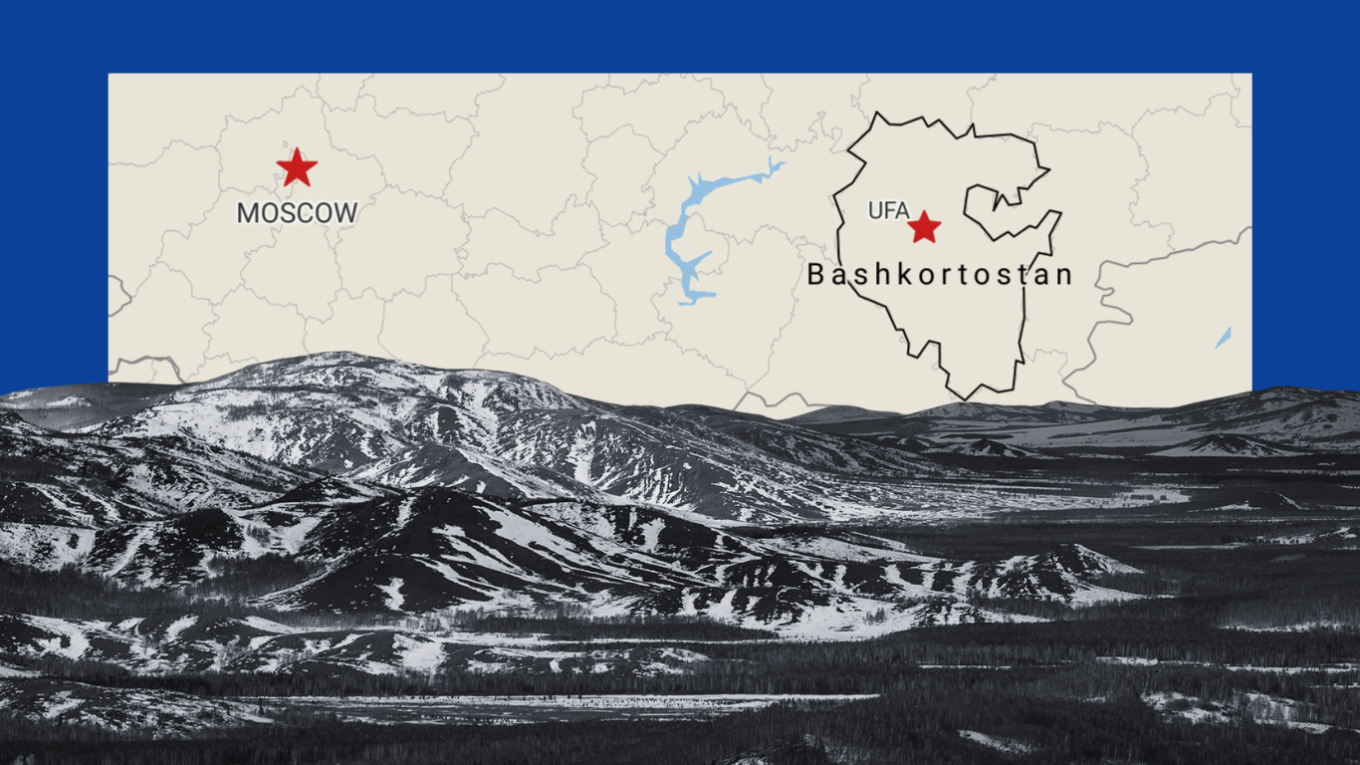
Place: Republic of Bashkortostan
After thousands-strong 2024 protests in Bashkortostan’s Baymak district gave way to the largest political trial in modern Russian history, many observers expected the Turkic-majority republic to fall out of the headlines.
But brutal repressions against participants of the Baymak protests, which affected hundreds of families in the republic, have failed to completely stamp out civil society.
In May, Bashkortostan returned to the spotlight with fresh protests over a government-backed plan to develop copper mining deposits at the picturesque Kyrktytau mountain range, a popular area for outdoor tourism.
Local residents and environmental activists warned that the project, if approved, would inflict irreparable ecological damage to their Indigenous lands and other interconnected ecosystems, including in neighboring Kazakhstan.
A month later, police raided the homes of pro-Kyrktytau activists and detained dozens of them for questioning.
With defenders silenced, the Bashkir government went ahead with the development project.
In August, dozens of Bashkir environmental activists marked five years since the protests in defense of the Kushtau mountain, one of the few successful grassroots protests in Russia’s modern history. With many prominent Kushtau defenders later forced into exile or jailed as part of the Baymak case in 2024, most participants resorted to sharing their bittersweet memories online.
Beyond its protest potential, Bashkortostan was frequently targeted in Ukrainian drone attacks ranked No. 1 in the country for confirmed war losses and surprised observers by inaugurating a Ukrainian cultural center. It also gave rise to the country’s most commercially successful Indigenous music project to date, the band Ay Yola.
In 2025, Bashkortostan was one of the most mentioned places in The Moscow Times’ coverage of Russia’s regions. Despite the repressions orchestrated by its Kremlin-aligned government, it will remain a place to watch in the years to come.
To learn more about 2025 in Russia’s regions, consider reading our in-depth coverage of the year’s key events:
- “Russia’s New Indigenous Policy Enables Unchecked Resource Exploitation, Experts Warn” by Leyla Latypova
- “Hundreds of Ethnic Germans Are Dying for Russia in Ukraine. This Man Is Tracking Them” by Andrei Grigorev and Leyla Latypova
- “A Push For Local Government Efficiency in Russia Is Really About Kremlin Control” by Andras Toth-Czifra
- “In Altai Republic, a Kremlin-Backed Government Reform Aids the Tycoons” by Leyla Latypova
- “Harmful by Nature': Bashkortostan's Controversial New Mining Project Could Have Global Impacts” by Leyla Latypova
A Message from The Moscow Times:
Dear readers,
We are facing unprecedented challenges. Russia's Prosecutor General's Office has designated The Moscow Times as an "undesirable" organization, criminalizing our work and putting our staff at risk of prosecution. This follows our earlier unjust labeling as a "foreign agent."
These actions are direct attempts to silence independent journalism in Russia. The authorities claim our work "discredits the decisions of the Russian leadership." We see things differently: we strive to provide accurate, unbiased reporting on Russia.
We, the journalists of The Moscow Times, refuse to be silenced. But to continue our work, we need your help.
Your support, no matter how small, makes a world of difference. If you can, please support us monthly starting from just $2. It's quick to set up, and every contribution makes a significant impact.
By supporting The Moscow Times, you're defending open, independent journalism in the face of repression. Thank you for standing with us.

Remind me later.