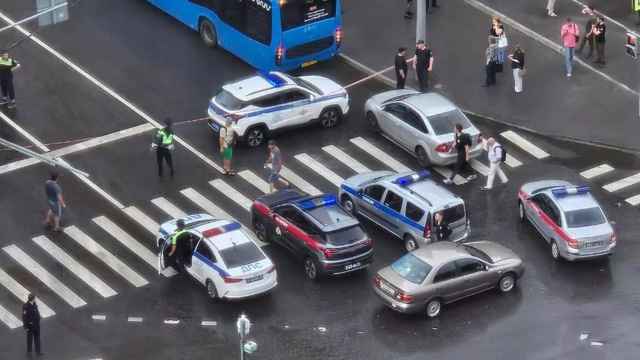
An overnight explosion in southern Moscow killed three people, including two police officers, near the site where a Russian general was killed by a car bomb earlier this week, law enforcement authorities said Wednesday.
The blast occurred when two traffic police officers approached a “suspicious individual near a police service vehicle,” Russia’s Investigative Committee said in a statement. The officers and the individual were all killed in the explosion.
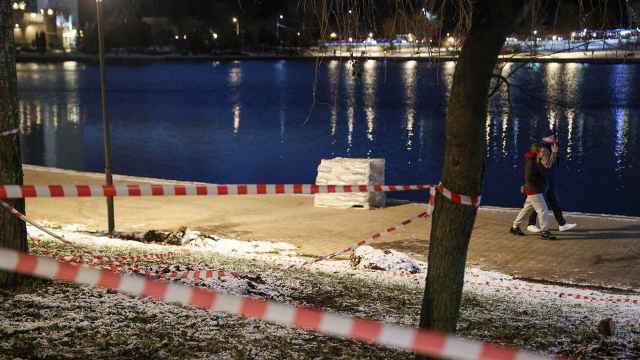
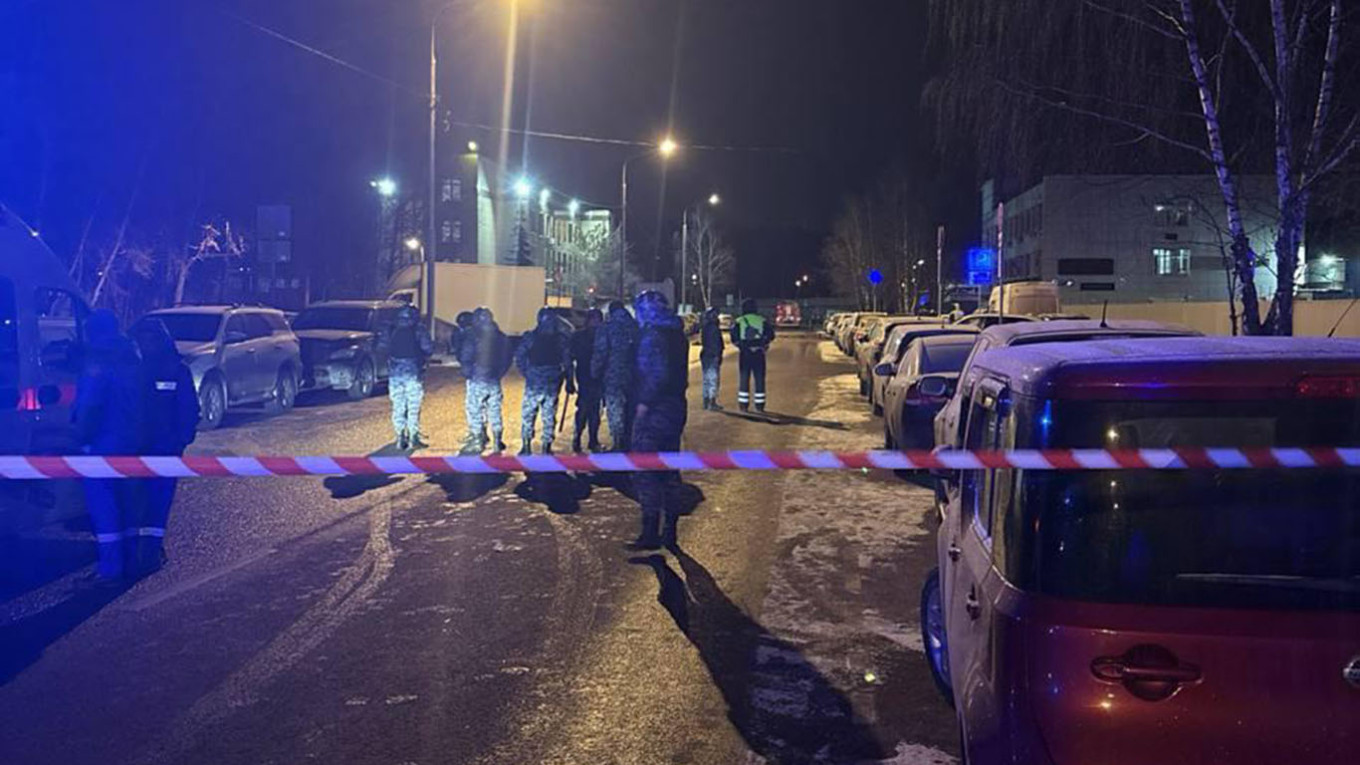
Investigators released video footage showing debris scattered across an empty street and a blurred body at the scene. Other videos circulating on social media showed a heavy police presence overnight.
The Investigative Committee said investigators were examining the scene and conducting forensic tests, including medical and explosives analyses.
Alexander Bastrykin, who heads the law enforcement agency, ordered federal-level forensic experts to join the probe to identify those responsible and determine the circumstances of the blast.
Moscow’s investigative office said it was treating the incident as an attempted killing of a law enforcement officer and was also investigating possible illegal explosives trafficking.
The explosion occurred around 1:30 a.m. on Yeletskaya Street in the Orekhovo-Borisovo Yuzhnoye district of Moscow, according to Russian television, which cited eyewitnesses. The area was cordoned off and remained under heavy police guard as of Wednesday morning.
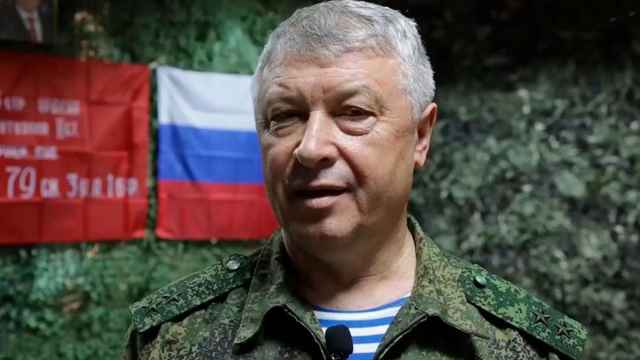
Yeletskaya Street intersects with the street where Lieutenant General Fanil Sarvarov was killed on Monday after a bomb detonated underneath his car.
Law enforcement authorities launched a murder investigation into that killing and said they were examining possible involvement by Ukrainian intelligence services.
A Message from The Moscow Times:
Dear readers,
We are facing unprecedented challenges. Russia's Prosecutor General's Office has designated The Moscow Times as an "undesirable" organization, criminalizing our work and putting our staff at risk of prosecution. This follows our earlier unjust labeling as a "foreign agent."
These actions are direct attempts to silence independent journalism in Russia. The authorities claim our work "discredits the decisions of the Russian leadership." We see things differently: we strive to provide accurate, unbiased reporting on Russia.
We, the journalists of The Moscow Times, refuse to be silenced. But to continue our work, we need your help.
Your support, no matter how small, makes a world of difference. If you can, please support us monthly starting from just $2. It's quick to set up, and every contribution makes a significant impact.
By supporting The Moscow Times, you're defending open, independent journalism in the face of repression. Thank you for standing with us.

Remind me later.