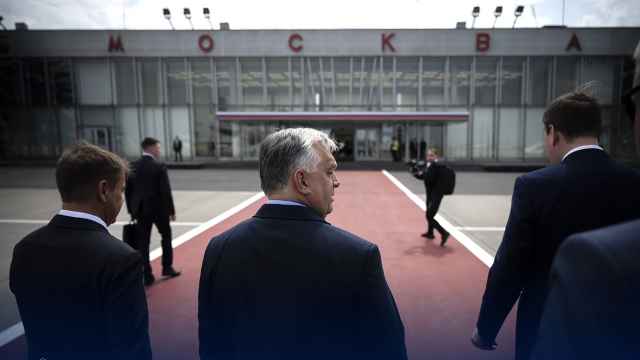
The Kremlin has approved a plan to support Hungarian Prime Minister Viktor Orbán’s ruling Fidesz party through a covert social media campaign ahead of Hungary’s elections next month, the Financial Times reported Wednesday, citing people familiar with the matter.
The plan drafted by the Kremlin-linked Social Design Agency proposed spreading pro-Orbán messages, memes, infographics and short videos on Hungarian social media disguised as content created by local users and shared by influential Hungarians, according to a proposal seen by the FT.
The campaign portrays Orbán as the only leader capable of defending Hungary’s sovereignty and maintaining ties with global powers, while depicting his main rival, Péter Magyar, as a “Brussels puppet with no outside support.”
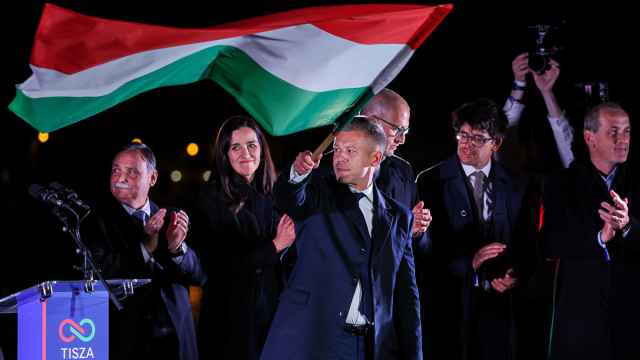
Magyar’s Tisza party currently leads in opinion polls ahead of the April 12 parliamentary election. According to Politico’s Poll of Polls, Tisza has about 48% support compared with roughly 39% for Fidesz, a gap that has persisted since last summer.
The Social Design Agency proposal also calls for “information attacks” against Magyar and portrays Tisza as a party of “incompetence, division and secret agendas,” the newspaper said.
The Social Design Agency is already under Western sanctions for election interference.
The U.S. Justice Department in 2024 accused the agency of running a disinformation operation known as Doppelgänger, which used fake news websites to spread pro-Russian narratives and undermine trust in governments supporting Ukraine.
The agency has not liaised with the Hungarian government directly to avoid political backlash, the FT said.
The campaign would also emphasize Orbán’s role as a key partner of U.S. President Donald Trump, presenting Trump as Hungary’s best hope for security and economic stability.
The Kremlin denied interfering in the campaign, with spokesman Dmitry Peskov telling the FT: “You are most likely making mistaken conclusions based on a fake. Unfortunately, this has often happened in recent years. Even with serious publications.”
The Hungarian government also denied any Russian interference.
Magyar last week accused Russia of trying to interfere in Hungary’s election, saying Russian military intelligence officers had recently arrived in Budapest under diplomatic cover to influence the vote.
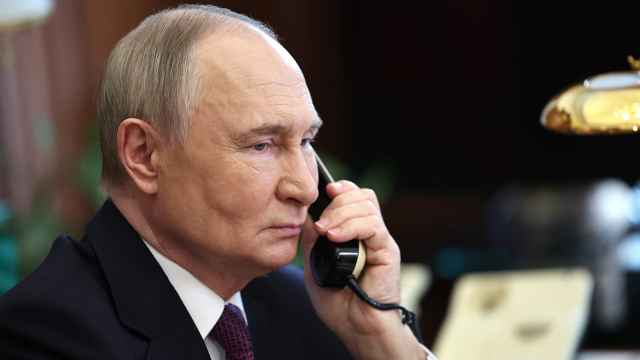
According to the independent Hungarian outlet VSquare, Russian President Vladimir Putin tasked Kremlin deputy chief of staff Sergei Kiriyenko with ensuring Orbán’s victory.
Sources cited by the FT said Russian operatives involved in the effort were likely to be working under Kiriyenko, who has overseen similar influence campaigns abroad.
Separately, Kremlin spokesman Peskov said Wednesday that Russia was rapidly losing the tools it once used for propaganda abroad.
Speaking at a conference at the Higher School of Economics in Moscow, he complained that Russia now faced “hostile social networks” dominating the global information space.
“We are rapidly losing the toolkit for our propaganda work abroad,” Peskov said, according to the state-run TASS news agency. “We are dealing with hostile social networks that dominate across the CIS [group of former Soviet countries] and worldwide… We do not work in these environments, and we need to figure out how we will do this going forward.”
Read this article in Russian at The Moscow Times' Russian service.
A Message from The Moscow Times:
Dear readers,
We are facing unprecedented challenges. Russia's Prosecutor General's Office has designated The Moscow Times as an "undesirable" organization, criminalizing our work and putting our staff at risk of prosecution. This follows our earlier unjust labeling as a "foreign agent."
These actions are direct attempts to silence independent journalism in Russia. The authorities claim our work "discredits the decisions of the Russian leadership." We see things differently: we strive to provide accurate, unbiased reporting on Russia.
We, the journalists of The Moscow Times, refuse to be silenced. But to continue our work, we need your help.
Your support, no matter how small, makes a world of difference. If you can, please support us monthly starting from just $2. It's quick to set up, and every contribution makes a significant impact.
By supporting The Moscow Times, you're defending open, independent journalism in the face of repression. Thank you for standing with us.

Remind me later.