

One month after Elon Musk’s SpaceX cut Russia’s access to its Starlink satellite internet terminals, President Vladimir Putin asked a Russian servicewoman about the state of the country’s military communications on the front line in Ukraine.
“Yes, they are working clearly and in an organized manner. Special communications are functioning excellently,” the servicewoman, who was not identified by name, replied in a televised meeting.
In reality, the Starlink disconnection has created more problems for the Russian military than its leadership would like to admit, military analysts told The Moscow Times.
“The loss of part of their communications created disorganization within the Russian army,” Ukrainian military analyst Ivan Stupak told The Moscow Times. “Infantry units ended up in an information bubble where they cannot understand what is happening to their left or right, while drones cannot transmit data in real time.”
As a result, Ukrainian forces took more territory than they lost in the last two weeks of February, in the first such gain since 2023, the U.S.-based Institute for the Study of War (ISW) said, and Russia’s advances have noticeably slowed.
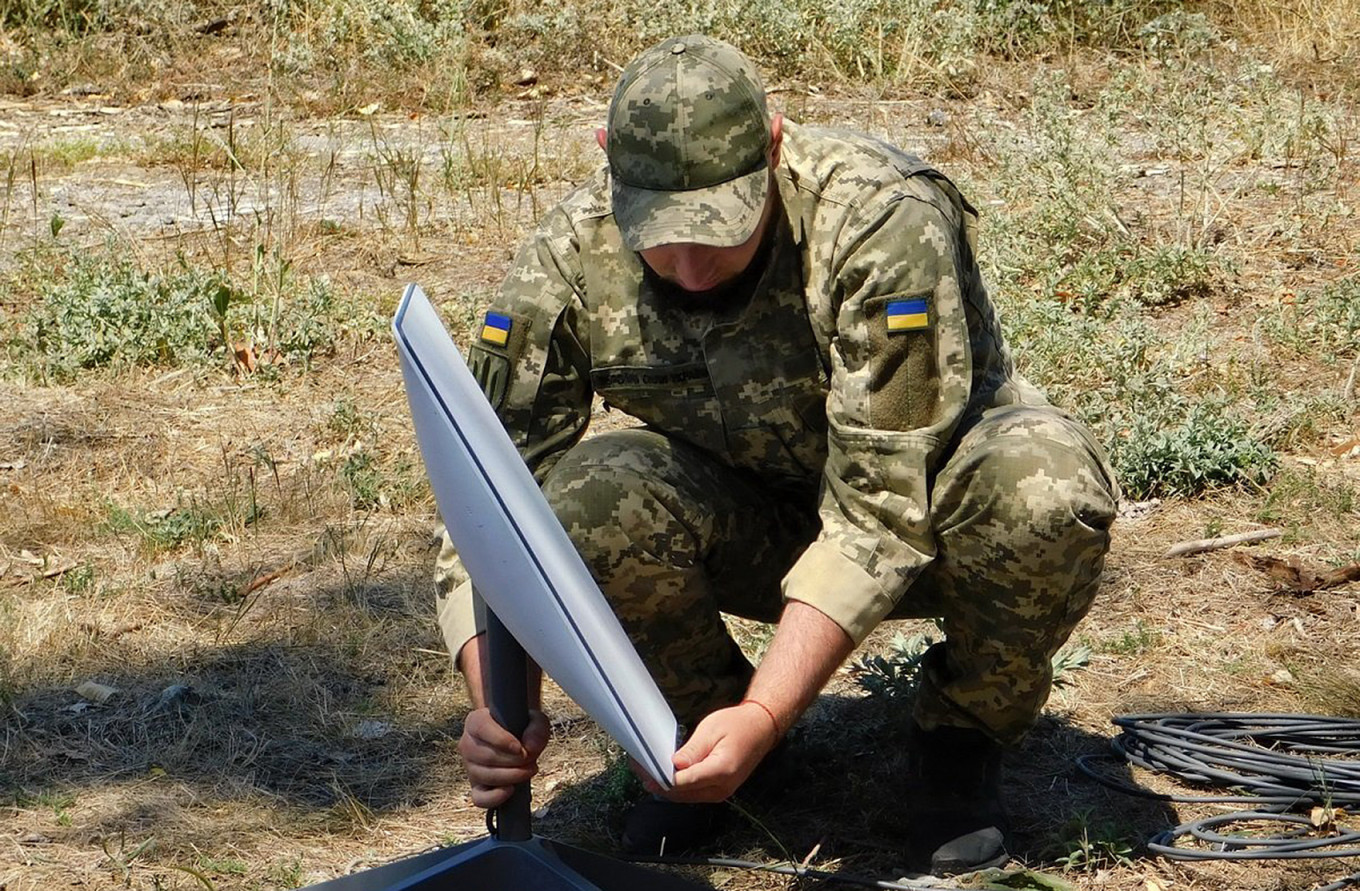
Starlink has never been officially supplied to Russia. But terminals reached Russian forces through grey-market supply chains and were widely used to maintain communications and guide drones on the battlefield.
The network’s stable signal, high-speed connectivity and relative resistance to electronic warfare had made it especially valuable to Russian units, helping compensate for weaknesses in their own communications systems.
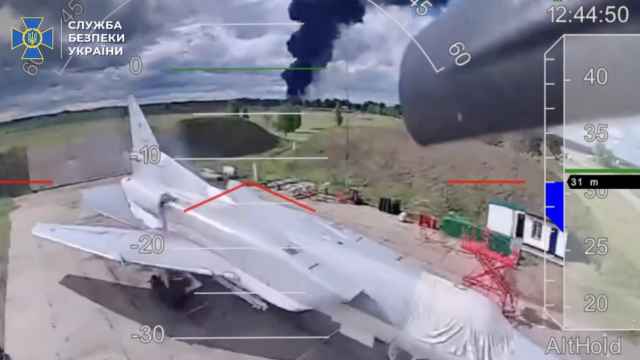
Russian military bloggers have reported that drones equipped with Starlink connections were used in January to strike Ukrainian supply vehicles up to 50 kilometers from the front line in Ukraine’s Donetsk region.
That changed when, in early February, SpaceX blocked unauthorized devices operating in Russian-occupied areas of Ukraine following a request from Kyiv. Ukrainian telecoms operators worked with SpaceX to implement a “whitelisting” system that disconnected unregistered terminals.
Observers started reporting tactical effects soon after.
According to the ISW, Ukrainian units carried out a series of localized counterattacks and pushed Russian positions back in several sectors east of Zaporizhzhia in mid-February.
Ukrainian media, citing military sources, reported that up to 300 square kilometers of territory were recaptured.
Stupak said the loss of stable high-speed satellite communications has been one of the factors that allowed Ukrainian forces to advance.
“These aren’t breakthrough successes or a strategic turning point, but it is still an achievement for us given our limited capabilities,” Stupak told The Moscow Times.
The Ukrainian OSINT project DeepState has likewise recorded Ukrainian advances, although it has marked those territories as part of a “grey zone” rather than as fully liberated.
Analysts often publish battlefield updates with a delay in order to avoid leaking sensitive intelligence.
According to Ilya Abishev, a military analyst with the BBC’s Russian service, many Russian units had become heavily reliant on Starlink access, which also enabled the use of internet services blocked inside Russia.
“The shutdown deprived the Russian army of the ability to use Starlink-linked targeting systems for medium- and long-range attack drones,” he told The Moscow Times.
Russian officials have sought to downplay the impact of the restrictions. Beyond Putin’s apparently choreographed conversation with the military servicewoman, the Defense Ministry has said that drone systems remain operational and that communications disruptions are limited.
However, Russian pro-war bloggers with direct contacts at the front have publicly accused the military leadership of misrepresenting the situation.
“Reports from the front say there are already major problems, even in the Dnipropetrovsk direction. The front isn’t collapsing, but it’s destabilizing. We prepared in advance — many others did not. I’m once again stunned by the ‘wisdom’ of our leadership, which failed to launch even a few hundred satellites for stable communications. Not like Musk’s system — just something sufficient for voice, images and text,” pro-war commentator Maxim Kalashnikov wrote.
“The shutdown throws communications and combat command back several years to long-forgotten technologies like wired internet, Wi-Fi and radio communications,” wrote the Telegram channel Military Informant. “Fighting NATO while relying on NATO’s satellite internet and failing to develop your own alternatives in time turned out to be a questionable strategy.”
Although Russia’s domestic systems can technically restore data transmission, they differ fundamentally from low-Earth-orbit satellite networks because they involve higher signal latency, require larger and more power-intensive antennas and are less suitable for rapid deployment or concealment near the line of contact.
Abishev said Russia’s dependence on Starlink reflected delays and setbacks in its efforts to develop a homegrown Starlink competitor.
“The Russian projects Efir and Sfera, which received enormous funding, were either never implemented or only partially realized,” he said. “A new project called Rassvet was later announced, but it also remains uncertain. The first satellite launches scheduled for December 2025 did not take place.”
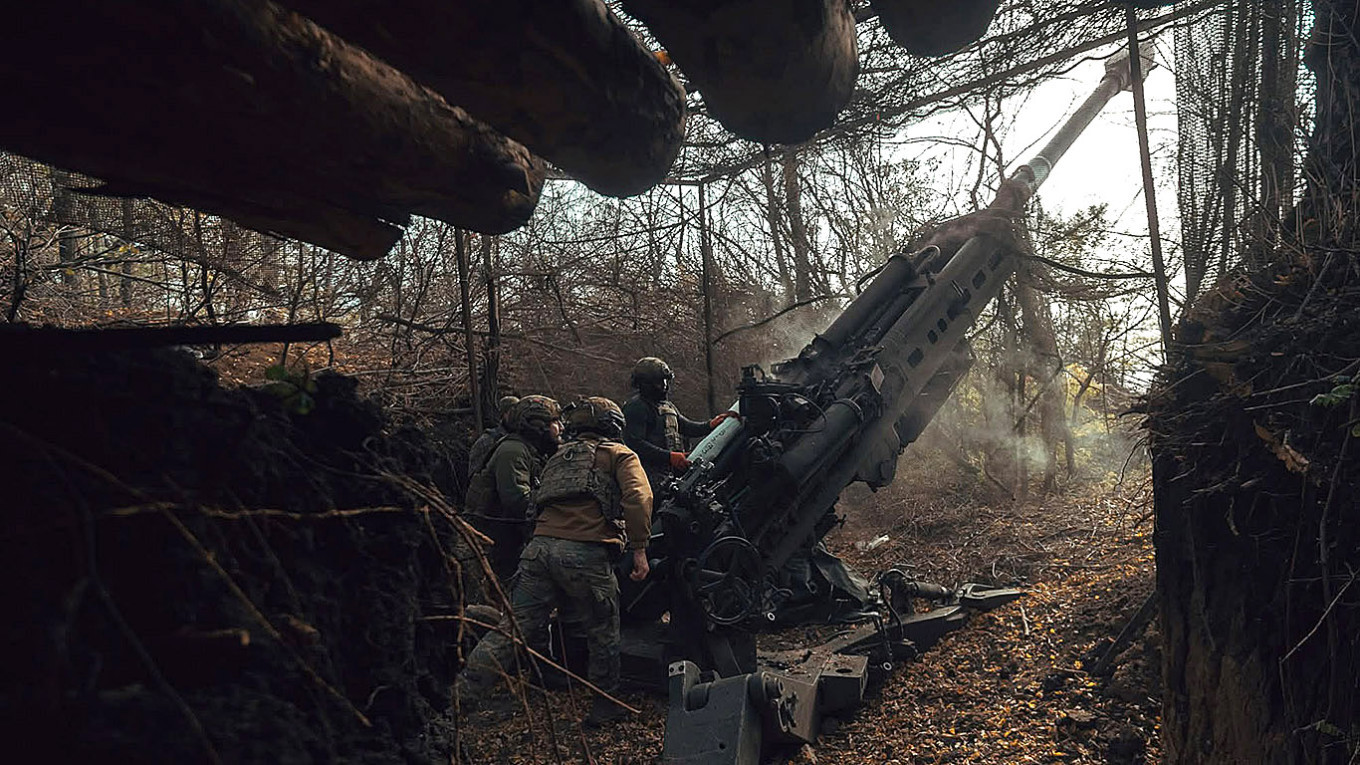
The shutdown affected frontline units the most, Abishev said. Command centers and rear facilities can rely on wired or stationary satellite connections, while mobile infantry and drone teams operating close to the line of contact face greater difficulties maintaining communications.
Some Russian units have reportedly moved communications equipment farther from the front and linked forward positions through ground-based Wi-Fi relays to compensate.
Ukrainian drone operators have reportedly targeted personnel attempting to install antennas on elevated structures.
Ukraine’s counterintelligence service has reported detaining individuals allegedly recruited by Russia to register Starlink terminals under Ukrainian identities in an effort to restore access.
Analysts told The Moscow Times that workarounds of this kind are unlikely to provide a lasting solution because terminals operating inside Russian-controlled territory can still be identified and blocked.
“It is too early to talk about this becoming widespread. Even if a Starlink terminal is registered in Ukraine, SpaceX’s system will show its location on the Russian side of the front,” Stupak said.
He added that terminals moving faster than 70 kilometers per hour are automatically blocked, making their use on drones impossible.
Despite the disruptions, analysts caution against characterizing them as a systemic collapse of Russian communications, as the Russian military retains its own infrastructure and has historically adapted quickly to new technological challenges.
“We probably have about a three-month window — possibly longer — before Russia scales up a technical solution. They are very good at mass implementation once a decision is approved,” Stupak said.
For now, Abishev said, Russian forces have largely reverted to older communications systems that are more vulnerable to electronic warfare and less efficient overall.
“If those systems had met the military’s needs,” he said, “Starlink would never have been necessary.”
A Message from The Moscow Times:
Dear readers,
We are facing unprecedented challenges. Russia's Prosecutor General's Office has designated The Moscow Times as an "undesirable" organization, criminalizing our work and putting our staff at risk of prosecution. This follows our earlier unjust labeling as a "foreign agent."
These actions are direct attempts to silence independent journalism in Russia. The authorities claim our work "discredits the decisions of the Russian leadership." We see things differently: we strive to provide accurate, unbiased reporting on Russia.
We, the journalists of The Moscow Times, refuse to be silenced. But to continue our work, we need your help.
Your support, no matter how small, makes a world of difference. If you can, please support us monthly starting from just $2. It's quick to set up, and every contribution makes a significant impact.
By supporting The Moscow Times, you're defending open, independent journalism in the face of repression. Thank you for standing with us.

Remind me later.