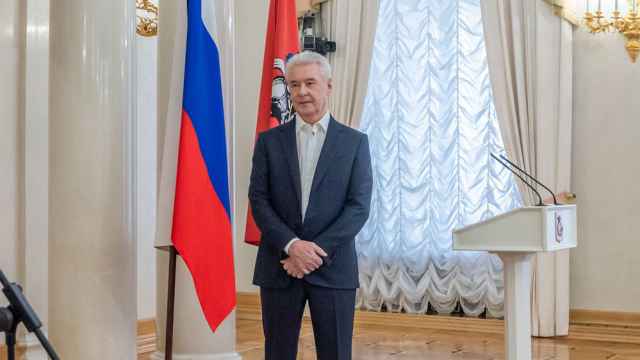
Leonid Brezhnev once said in 1981 that “the economy must be economical.” That sentiment is back in vogue — modesty is becoming fashionable again. And Moscow, the capital of Russian fashion, including economic fashion, has rushed to change its image by announcing a 15% reduction in the size of the city’s administrative workforce.
But this announcement is, at its core, an attempt to make it look like the city is taking its responsibilities seriously, cutting back on excess in a time of war. What many people do not know is that the staff formally employed by the mayor’s office — that is, official civil servants — make up just a minority of the workforce. The real waste is elsewhere.
Since Sergei Sobyanin became mayor in 2010, the Moscow city administration has relied on outsourcing. Each department has a modest number of officials, but they work alongside a vast network of contracted nonprofit organizations and private companies.
This system applies across all departments, from the press service to urban improvement services. As a rule, the leadership holds civil service positions. By law, they receive excellent salaries plus a pension equal to 70% of their salary after completing 15 years of service.
In addition to their base salary, they receive a host of additional payments, including one-time bonuses, monthly, quarterly, and annual bonuses, compensation for irregular working hours, and more. Once all that is taken into account, their pension amounts to around 40-50%of their total income. But still, you have to admit, that’s not bad at all.
The people contracted to work for the city receive none of that. Their salaries follow market rates. Moreover, their contracts usually only last a year, which means there are no long-term guarantees. If management does not like them, they can easily be fired or simply not have their contract renewed.
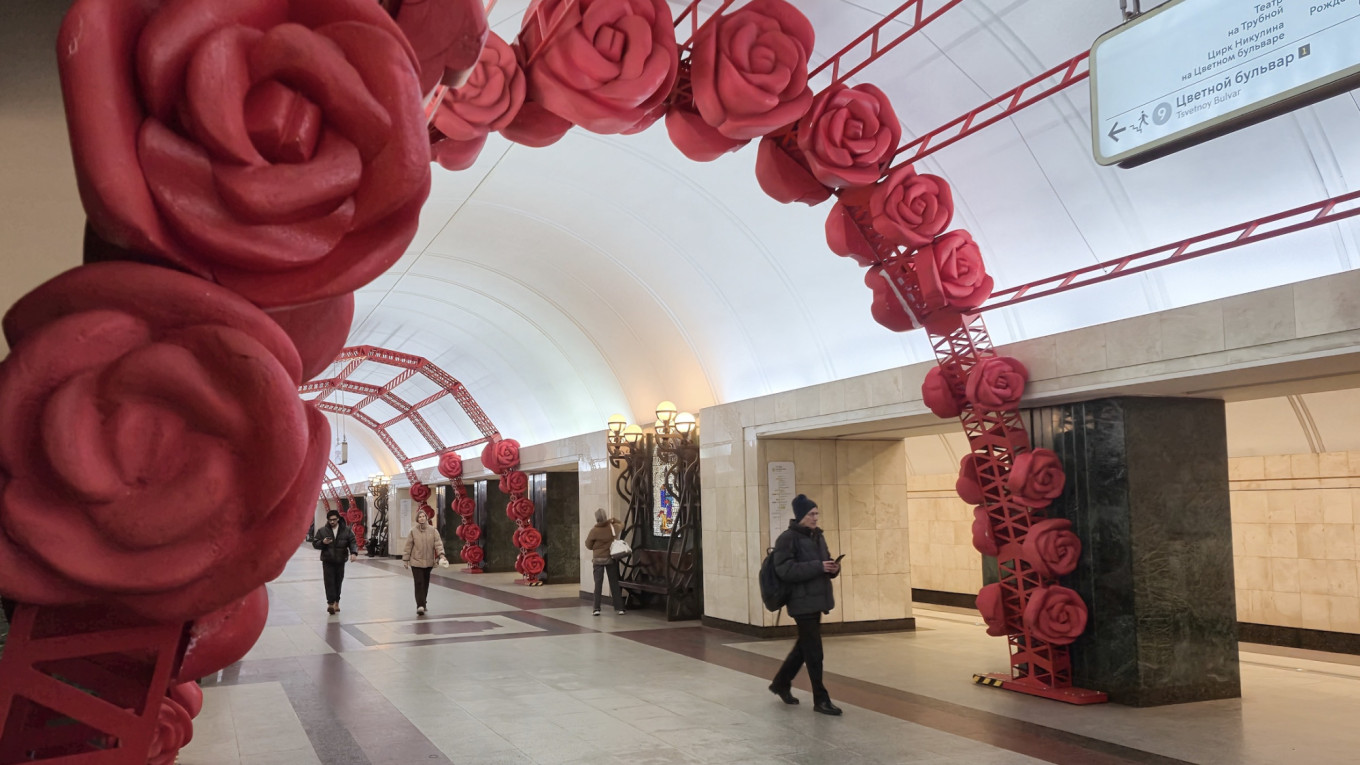
For residents, however, it is nearly impossible to understand how effectively funds are being spent. Especially when it comes to the Mayor’s Office’s relentless public relations campaigns for the administration — and for Sobyanin personally — not to mention seasonal replacement of paving slabs and the endless festivals and celebrations the city is decorated for — often in highly questionable taste.
Sobyanin has often been criticized for Moscow’s unrestrained official festivities at a time when the country is at war. Critics say it looks suspiciously like a feast during a plague, to which Sobyanin responds that maintaining a “normal life” and bringing joy to residents is precisely the right thing to do.
True, after the first wave of criticism, the Mayor’s Office began energetically publicizing how jams, pickles and pies from the festivals were being sent to the front and to hospitals.
So anyone worried can relax: the cuts to Moscow’s budget will not bring suffering to the Mayor’s Office staff. A few boys and girls in the proliferating autonomous non-commercial organizations attached to the Mayor’s Office may lose their jobs. Perhaps some managers will have to collect documents from the printer themselves.
I wouldn’t even rule out something truly terrifying: they may have to make their own coffee.
But there will be no serious inconvenience. To achieve that, staffing would need to be cut by something like 50%. Better yet, eliminate all those ANOs and affiliated companies entirely.
Festivals and celebrations will apparently be reduced, meaning fewer organizers will be needed. Perhaps the city administration has started to listen to its critics.
Or perhaps officials, dizzy from money, have finally realized that such unrestrained revelry could attract consequences — not from a Ukrainian drone, but from an angry reprimand from the Kremlin.
Indeed, even President Vladimir Putin, together with his economic ministers and the chair of the Central Bank, is pondering how to fill the hole in the federal budget. Oligarchs and regions alike are calling for help, not to mention ordinary citizens.
Budget sequestration has reentered officials’ vocabulary. The Chelyabinsk region has cut this year’s spending by 2.17 billion rubles ($27.5 million); the Primorye region has reduced its expenditures by 2.9 billion rubles ($37 million).
Across the country this winter, a wave of accidents caused by worn-out utility infrastructure left people without electricity, water and heat for days or even weeks in brutal cold.
Against this backdrop, Moscow’s luxury looked indecent. Sobyanin has never been known for lacking a sense of the political climate. Now he’s recognized that being so ostentatious while other regions go without might not help his image.
There is reason for austerity. Moscow currently holds the record for the largest budget deficit in absolute terms, at 229 billion rubles ($2.9 billion) in 2025. By comparison, the Yamal-Nenets autonomous district, which ranks second, recorded a deficit of 84 billion ($1 billion).
But considering Moscow’s high revenues, its budget deficit is much lower as a percentage than other regions like Kemerovo and Vologda (both around 35%) or Arkhangelsk (34%).
Still, the trend is not encouraging. In the first two months of this year, Moscow’s budget revenues grew by only 2%, while the budget had been drafted assuming 6.5% growth.
Thanks, in part, to the Kremlin, which moved the most successful layer of small businesses from simplified taxation and patent systems — whose payments went to regional budgets — into the value-added tax system, flowing into the federal budget.
Demand, even in Moscow, is gradually cooling. Particularly demonstrative consumption: it is no coincidence that cafés and restaurants on Patriarch’s Ponds are closing. These are places where bloggers and influencers go to make content promoting their own dazzling success. When the fatherland is in danger, it is not the time to hold mass festivities and hand out pies.
But don’t worry: the most important entertainments will remain untouched. The Mayor’s Office has specifically stated that the renovation program will remain intact. Nor is the reduction in urban improvement spending likely to affect the infamous paving tiles and curbs, which are constantly replaced. Those projects are where the real money lies for Moscow officials and the businessmen connected to them.
For now, the Moscow Mayor’s Office is simply launching another public relations exercise, pleading poverty and austerity. Judging by the noise the job cuts have generated, it has been quite successful. As I said, Sobyanin knows how to keep ahead of public opinion.
A Message from The Moscow Times:
Dear readers,
We are facing unprecedented challenges. Russia's Prosecutor General's Office has designated The Moscow Times as an "undesirable" organization, criminalizing our work and putting our staff at risk of prosecution. This follows our earlier unjust labeling as a "foreign agent."
These actions are direct attempts to silence independent journalism in Russia. The authorities claim our work "discredits the decisions of the Russian leadership." We see things differently: we strive to provide accurate, unbiased reporting on Russia.
We, the journalists of The Moscow Times, refuse to be silenced. But to continue our work, we need your help.
Your support, no matter how small, makes a world of difference. If you can, please support us monthly starting from just $2. It's quick to set up, and every contribution makes a significant impact.
By supporting The Moscow Times, you're defending open, independent journalism in the face of repression. Thank you for standing with us.

Remind me later.