
Russia is waging a war against its neighbor. Its economy is overheated and dependent on the continuing conflict, while the country is rapidly growing more authoritarian as political rights are further curtailed.
The date is not 2026, it’s 1999. Or 2008. Or 2014. It doesn't matter. Each time, Russia did not collapse.
Russia has been presented — and indeed has presented itself — as a threat for the West for decades. There is even a persuasive argument that the West defines itself in turn through othering and fearing Russia.
Also for some decades, one could see headlines that Russia is either on the brink of collapse or is collapsing at any moment. A 2001 cover story in The Atlantic proclaimed that “Russia is finished.” Recently, a new slew of arguments for Russia’s decline has been spritzed into the discourse, predicting the collapse of the Russian military or even a coup back in Moscow.
Whether these predictions come in the form of articles, videos or entire books, they have taken a largely uniform shape. They point out genuine faults in the bizarre structure of Russia’s economy, the Kremlin's politics, rampant corruption and inexorable population decline. They then make vague predictions about a return to the mayhem of the 1990s, a breakup of Russia along ethnic lines, total economic collapse or a brewing popular uprising.
The temptation to mock the collapse clairvoyance is strong. One could easily list all the objective reasons why Russia isn’t collapsing any time soon.
The country’s economy has proven surprisingly resilient, able to withstand sanctions of historic proportions. While the Russian military is stuck in the blood and mud in Ukraine, it has repeatedly shown an ability to adapt rather than collapse.
Russia’s diplomacy, which is traditionally seen in the West as not much more than incoherent gopnik yelps, is making headway in the Global South where Russian state-affiliated media are important players and student exchange programs are in full swing.
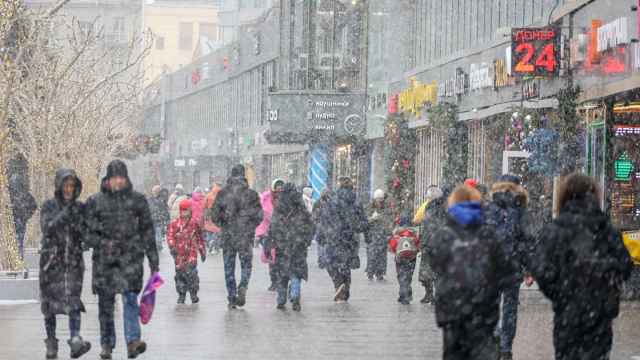
Inside Russia, civilians live relatively normal lives and are likely not thinking of rising up with pitchforks against the Kremlin. Many of them enjoy new Hollywood releases, chic cafes and exhibitions. Yes, life continues even as Russian cities are bombed and the economy is slowing down.
Regardless, predictions of Russia’s collapse rehashed repeatedly. What is more interesting is considering why this cottage industry exists. The answer is manifold: it has to do with education, fear and lack of imagination.
In the age of unprecedented geopolitical competition, it would be sensible for Western governments to invest in Russia studies departments at think tanks and universities. Yet, Western expertise on Russia is not enjoying its golden age, as many such departments are shutting down or getting defunded, while think tanks are plagued by management and financial issues.
Russia has also become increasingly more isolated from Western researchers, a trend that began in 2014 and only got worse in 2022. Institutions on both sides broke contact — Russian institutions came out in support of Putin’s invasion of Ukraine (whether willingly or not), which Western institutions could not let slide.
This resulted in the status quo where many Western Russianists were de facto (and often officially) banned from the country they study. Very few experts nowadays can safely travel to Russia and see things for themselves.
Moscow, for its part, discourages Russian officials and experts from speaking to Westerners. Western institutions — such as Yale University — have been designated legally “undesirable,” meaning that any interaction with them could lead to criminal prosecution. A knowledge iron curtain is actively being constructed by Moscow.
This is not to say that the Western political atmosphere is conducive to free and open discourse. Those who advocate for studying Russia more thoroughly run the risk of being branded as Kremlin stooges. Meanwhile, the exiled Russian academics who manage to make it to the West are often deplatformed and ostracized not necessarily for their political stance as much as for being Russian.
As a result exiled Russian experts that might have the ear of Western politicians are often outright anti-Kremlin activists. No wonder, since they saw their country being trampled into authoritarianism by Putin and his posse.
But their careers, in many cases, effectively depend on a collapse of Putinism — and perhaps Russia with it — within their lifetimes. Not much is left for the underfunded, disunited and depressed Russian opposition in exile except hope, which, as Russians say, “dies last.”
It leads to assertions about the inevitable collapse of Putin’s regime. In reality, of course, the exiles’ plans for an end to Putin’s regime are limited to finding a window of opportunity. Rational analysis is tainted by political objectives.
The West is thus discouraged from learning about Russia, while Russian intellectuals are discouraged from helping the West learn about Russia. This creates fertile ground for baseless speculations and wishful thinking about a nearing collapse.
Where Western governments are still interested in funding Russia studies, they are bound to tie this funding to defense, further securitizing the discipline.
As a result, there is not enough expertise on the region beyond viewing Russia as an adversary — creating incentives for analyses focused on finding cracks in the Kremlin regime and potentially talking themselves into believing that these cracks are deadly.
This is also emblematic of a key vulnerability of the Western intellectual scene — a general inability and unwillingness to conceive of a sustainable alternative model to capitalist liberal democracy.
To those who still like to think that they live at the End of History the continuing existence of Moscow is anathema because it threatens the very core of their worldview. So is acknowledging that Russia can be successful in some respects. To accept that Russia can exist and even occasionally punch above its weight in challenging the West, whether through black ops in Africa or meddling in Europe, is to contend with the idea that the liberal democratic model is not the only logical conclusion for every country in the world.
To add insult to injury, while Western economies remain the most prosperous on the planet, they often don’t feel this way to average citizens who are often anxious, underpaid and unfulfilled, fueling hard-right populism. Against such a backdrop, Russia offers a shiny facade to Western audiences and influencers like Tucker Carlson or Candace Owens willing to eat it up.
However, what effect might these things have on policy? Presumably, quite a lot. If expertise on Russia is laced with unfounded predictions of its imminent collapse, then it is no wonder that Western attempts to impact Russian society are largely in vain. Sanctions have not crashed the country’s economy and provoked mass uprisings — nor did calls from Western leaders lead to a popular anti-Putin revolution.
The predictions of imminent collapse might also lead the West into odd places. Take the 2022-23 boom of discussing the “decolonization” of Russia, which inspired conferences and speakers across Western capitals and respectable institutions. Grant-givers, eager for new ideas, made it rain for activists who were savvy enough to promise a rapid breakdown of the country.
There’s a Russian saying, “don’t divide the hide of a bear not yet killed,” that warns against making plans based on a positive outcome that may never happen. It is a warning that fell on deaf ears as activists promoted a fantasy of Russia breaking up into city states and ethnic republics, blending both right-wing and liberal fantasies.
Western policymakers left with little option but to talk to decolonial activists or exiled politicians will find that they do not represent any sizable movement within Russia. With access to Russia restricted and remaining avenues for dialogue discouraged, it’s no wonder that Cassandras keep getting things wrong.
Consequently, it is easier to just shrug off Russia and say that it is collapsing anyway. In the meantime, Moscow is going to continue building inroads in the Global South while its soldiers are killing hundreds of thousands in the heart of Europe.
A Message from The Moscow Times:
Dear readers,
We are facing unprecedented challenges. Russia's Prosecutor General's Office has designated The Moscow Times as an "undesirable" organization, criminalizing our work and putting our staff at risk of prosecution. This follows our earlier unjust labeling as a "foreign agent."
These actions are direct attempts to silence independent journalism in Russia. The authorities claim our work "discredits the decisions of the Russian leadership." We see things differently: we strive to provide accurate, unbiased reporting on Russia.
We, the journalists of The Moscow Times, refuse to be silenced. But to continue our work, we need your help.
Your support, no matter how small, makes a world of difference. If you can, please support us monthly starting from just $2. It's quick to set up, and every contribution makes a significant impact.
By supporting The Moscow Times, you're defending open, independent journalism in the face of repression. Thank you for standing with us.

Remind me later.