
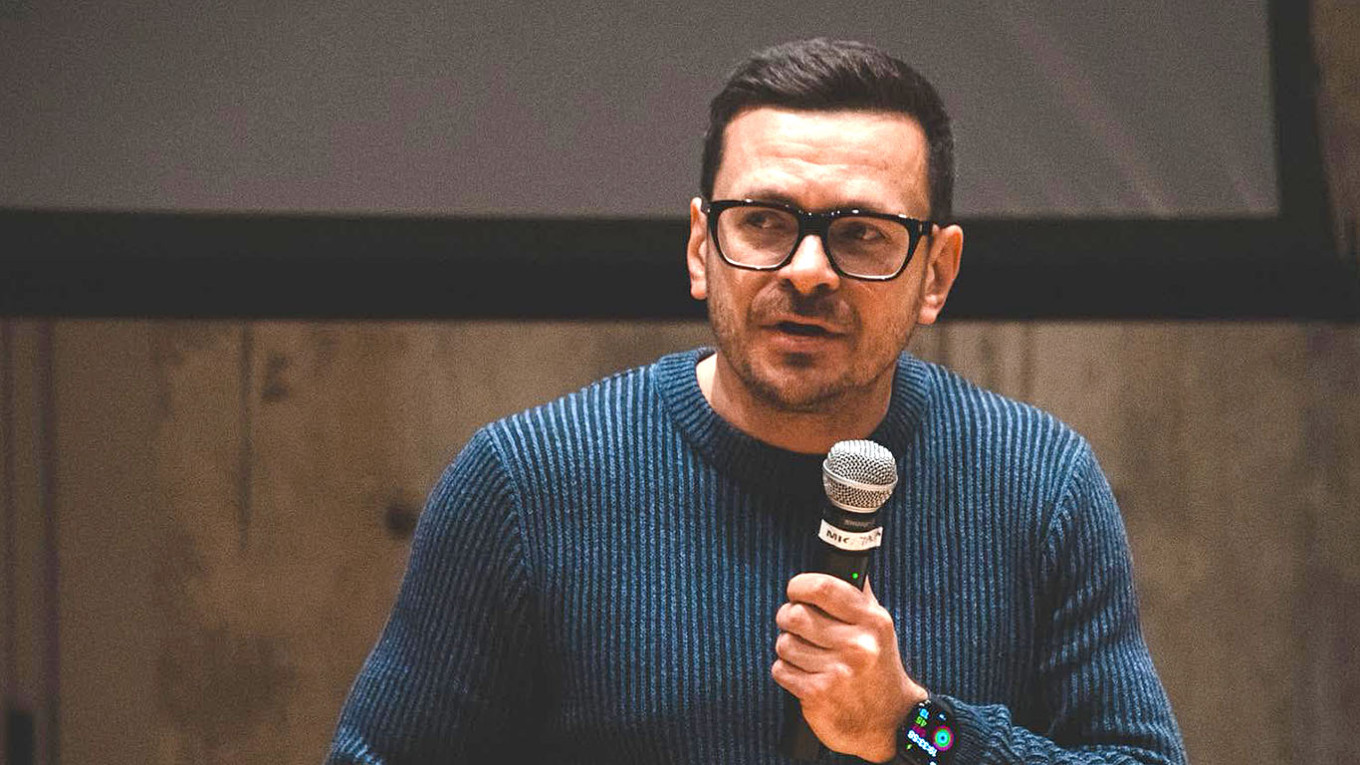
A recent article in The Spectator by the British former diplomat Nigel Gould-Davies raises an important question about the relationship between the European Union and Russia’s democratic opposition.
In essence, he argues that the interests of Russia’s opposition in exile are fundamentally at odds with Europe’s security. I believe the opposite is true. More than that, I would argue that Europe’s long-term security is impossible without the emergence of a democratic Russia.
It is right to describe the Kremlin’s actions as a global threat to European security. President Vladimir Putin is waging an aggressive war against Ukraine while at the same time conducting a hybrid war against Western democracies through propaganda, cyberattacks, espionage and sabotage.
Europe therefore has every right — indeed, every obligation — to defend itself. Military support for Ukraine, sanctions, counterintelligence measures and migration controls are all legitimate components of a sound security policy. There is no point in disputing that. The real question, however, is which strategy will actually make Europe safer.
The logic of Gould-Davies’s article suggests that Europe should pursue its security primarily through tighter restrictions, further isolating Russia and erecting ever higher barriers to migration.
I would propose a different approach — one that is no less consistent, but more pragmatic and more far-sighted.
More than four and a half years after Russia launched its full-scale invasion of Ukraine, Europe can no longer afford to be as open or as welcoming towards Russia as it once was. Sanctions targeting Putin’s war machine and his extensive network of agents are, of course, entirely justified.
Many see Russia’s isolation as an easy answer to a difficult question. It may seem that the fewer contacts Europe has with Russians, the safer Europeans will be. But that is merely an illusion of security. Europe’s security problems cannot be solved by prohibitions, sanctions and migration restrictions alone.
A fence separating Russia from Europe is unlikely to prevent the Kremlin’s intelligence services from continuing their activities across the continent. Professional spies will always have forged documents and other resources supplied by the state to get around any barriers Brussels puts in their way. Nor do Putin’s agents necessarily have to be Russian nationals. It is no secret that many acts of sabotage across the continent are carried out by European nationals or even Ukrainians recruited and paid by Russian intelligence services.
Take, for example, Germany’s decision to suspend its humanitarian visa program for anti-war Russians and Belarusian opposition activists.
How exactly did that make Putin’s regime weaker?
It is difficult to imagine that a single Kremlin spy or saboteur was trying to enter Europe through that program. For them, its suspension created no real obstacle. For the part of Russian society that genuinely aspires to freedom and democracy, however, the decision was deeply demoralizing.
Political repression continues in Russia. People are imprisoned every day simply for speaking out against Putin and against the war. I know this firsthand: I myself spent two years behind bars in Russia because I publicly opposed the invasion of Ukraine.
Many of my friends and like-minded colleagues remain in Russia. They live in constant fear. They do not speak out against the war because they fear being arrested. They do not join public demonstrations because they fear being killed.
They only have to look at Iran, where the regime brutally gunned down thousands of protesters. They know that if Putin one day orders troops to open fire on demonstrators in Moscow, no one will come to their aid — just as no one came to the aid of the protesters in Tehran.
As Europe shapes its security policy, it is crucial that Western leaders don’t forget these people inside Russia — not only for humanitarian reasons, but for pragmatic ones as well. These people are Europe’s allies precisely because they want to build a better Russia that no longer poses a threat.
Wise politicians must think not only about today, but also about the future. They must think strategically. Putin will not remain in power forever and, by the standards of history, his time is limited. Putin will go, but Russia will remain. It will continue to exist on Europe’s doorstep. The question of what the country becomes after Putin is one of the most important strategic questions Europe faces.
On the point that the Russian democratic opposition places the interests of the Russian people above all else, Gould-Davies is absolutely right. I can confirm that, for my colleagues in the Peaceful Russia party and me, the interests of our people are indeed our highest priority. Otherwise, we would have no right to call ourselves Russian politicians.
The crucial difference, however, is that we understand Russia’s interests in a fundamentally different way from Putin. For the current master of the Kremlin, Russia’s interests lie in isolation and an aggressive foreign policy that imposes its will through force. We believe Russia’s true interests lie in building a democratic state, abandoning imperial ambitions and establishing peaceful, good-neighborly relations with the West.
I strongly believe that this understanding of Russia’s interests is entirely consistent with Europe’s own interests. Only the kind of Russia that the democratic opposition seeks to build can provide Europe with lasting and sustainable security.
Common values, economic integration and mutual respect offer far more reliable guarantees of security than walls, barbed wire and fortified borders ever can.
Would it not be wiser, then, to build constructive relations with that part of Russian society that is capable of creating such a country? Would it not be wiser to regard us as allies and extend a hand to us? Would it not be wiser to support us, strengthening our position and improving our chances of shaping Russia’s future?
I am convinced that the West would make a profound strategic mistake if it viewed this part of Russian society solely through the prism of migration risks.
Yes, Europe needs strong walls while Putin continues to wage his war. But if Europe wants to remain secure after he is gone, it must think not only about the walls it builds, but also about the people who live on the other side of them.
Walls are easy to build. But building bridges is the wiser choice.
A Message from The Moscow Times:
Dear readers,
We are facing unprecedented challenges. Russia's Prosecutor General's Office has designated The Moscow Times as an "undesirable" organization, criminalizing our work and putting our staff at risk of prosecution. This follows our earlier unjust labeling as a "foreign agent."
These actions are direct attempts to silence independent journalism in Russia. The authorities claim our work "discredits the decisions of the Russian leadership." We see things differently: we strive to provide accurate, unbiased reporting on Russia.
We, the journalists of The Moscow Times, refuse to be silenced. But to continue our work, we need your help.
Your support, no matter how small, makes a world of difference. If you can, please support us monthly starting from just $2. It's quick to set up, and every contribution makes a significant impact.
By supporting The Moscow Times, you're defending open, independent journalism in the face of repression. Thank you for standing with us.

Remind me later.