Russian law enforcement authorities said Monday that they had detained a 21-year-old Moscow woman suspected of planting the car bomb that injured a former spokesman for former Ukrainian Prime Minister Mykola Azarov.
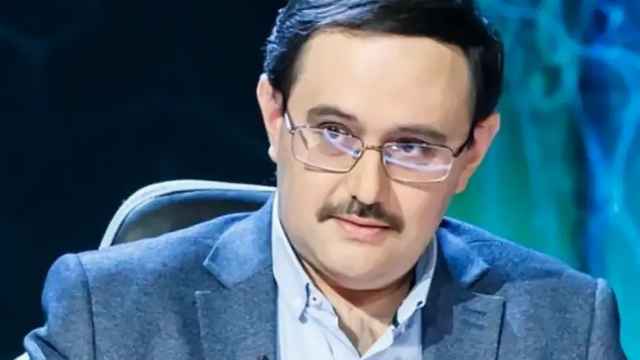
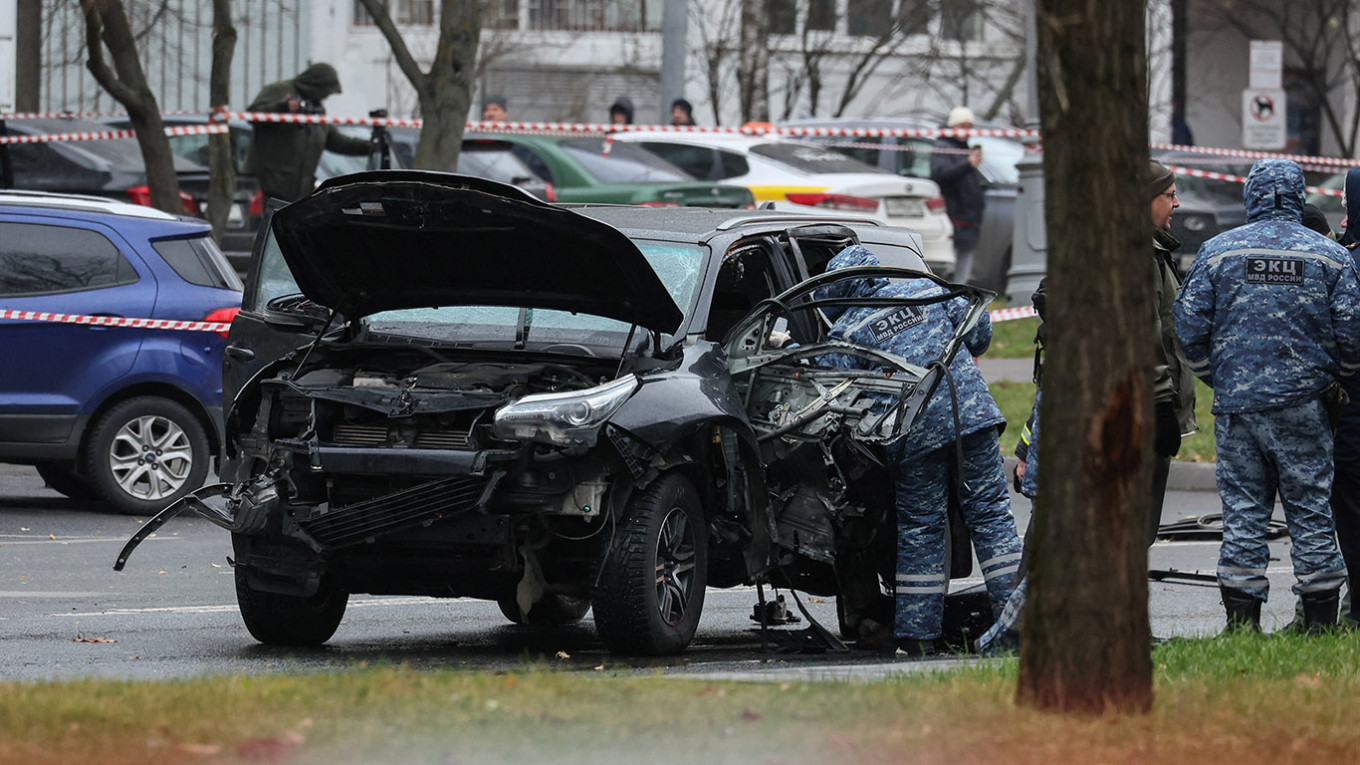
Sergei Zavorotny, 72, was hospitalized in serious condition Friday after an explosive device detonated beneath his SUV while he was driving from his apartment building. Investigators opened a criminal case on charges of attempted murder.
The FSB security service and the Investigative Committee, Russia’s top investigative body, both said the arrested woman fell victim to phone scammers earlier this year before being coerced into planting the explosives on behalf of Ukrainian intelligence services.
The scammers posed as bank employees who instructed the woman to transfer a “large sum of money” to so-called “safe accounts,” the Investigative Committee said.
“Subsequently, following instructions from anonymous handlers, she planted an explosive device beneath the undercarriage of Sergei Zavorotny’s car. It was detonated remotely,” the Investigative Committee added.
Video of the unidentified woman’s interrogation shared by state media showed her being told the explosive device was a “GPS tracker” that she was instructed to find in a designated dead drop and install under Zavorotny’s vehicle.
“They described it as a small power bank in a bag,” the woman, her face blurred, told investigators.
“I saw what happened in the news and then wrote [to the handler] asking them why they lied to me,” she added. “They told me ‘it’s all right.’”
Investigative Committee spokeswoman Svetlana Petrenko said the agency was working with the woman to establish the circumstances of the attack and identify potential accomplices.
Ukraine has not commented on the bombing.
Zavorotny, a Soviet-era foreign correspondent who later served as Azarov’s top aide, moved to Russia following Ukraine’s 2014 Maidan Revolution that toppled pro-Kremlin President Viktor Yanukovych.
U.S. intelligence previously identified Zavorotny as an officer in Russia’s Foreign Intelligence Service (SVR), according to a U.S. Senate Intelligence Committee report on Russian interference in the 2016 presidential election.
In 2019, a Ukrainian court sentenced Yanukovych to 13 years in prison in absentia for treason, and Kyiv later placed sanctions on him and Azarov.
A Message from The Moscow Times:
Dear readers,
We are facing unprecedented challenges. Russia's Prosecutor General's Office has designated The Moscow Times as an "undesirable" organization, criminalizing our work and putting our staff at risk of prosecution. This follows our earlier unjust labeling as a "foreign agent."
These actions are direct attempts to silence independent journalism in Russia. The authorities claim our work "discredits the decisions of the Russian leadership." We see things differently: we strive to provide accurate, unbiased reporting on Russia.
We, the journalists of The Moscow Times, refuse to be silenced. But to continue our work, we need your help.
Your support, no matter how small, makes a world of difference. If you can, please support us monthly starting from just $2. It's quick to set up, and every contribution makes a significant impact.
By supporting The Moscow Times, you're defending open, independent journalism in the face of repression. Thank you for standing with us.

Remind me later.