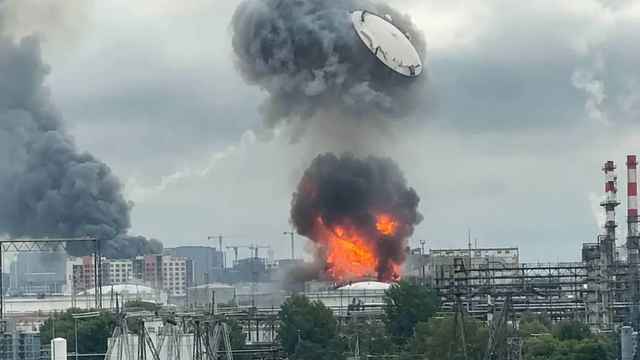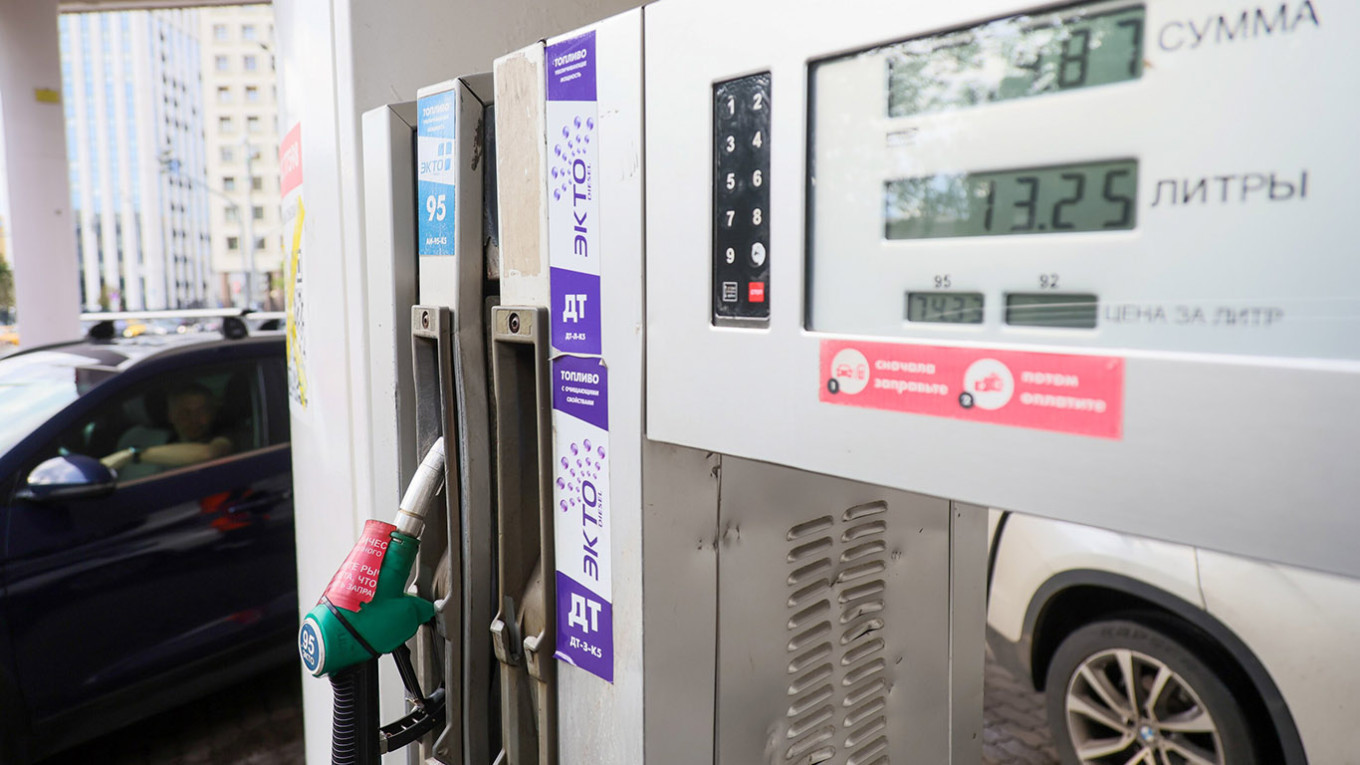
Wholesale gasoline sales on Russia’s main commodity exchange fell 31% last week after a series of Ukrainian drone strikes hit some of the country’s largest oil refineries, Reuters reported.
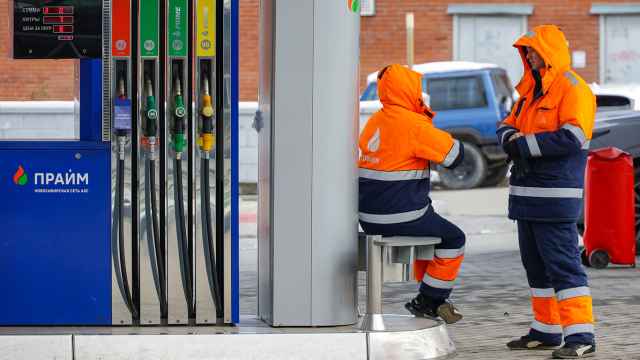
Crowdsourced data also pointed to growing shortages at gas stations in major Russian cities.
Gasoline sales on the St. Petersburg exchange fell to 52,980 metric tons in the week of Nov. 9 to 13 from 76,740 tons the previous week, Reuters reported.
Sales of regular AI-92 gasoline fell 33%, while those of higher-octane AI-95 dropped 27%. Diesel sales fell 10% to 125,580 tons.
The share of gas stations listed as having AI-92 in stock fell from around 60% to 50%, according to economist Janis Kluge’s analysis of data from the fuel-tracking service GdeBenz.
Kluge cautioned that motorists may be more likely to report stations that have run out of fuel during shortages.
Russia is processing around 3.7 million barrels of crude a day, down from a typical prewar rate of 5 million to 5.5 million barrels, RAND analyst Michael Bohnert estimated.
He put the volume needed to meet domestic demand at this time of year at 3.2 million to 3.8 million barrels a day.
Bohnert estimated that the YANOS refinery in Yaroslavl and Lukoil’s NORSI refinery near Nizhny Novgorod had shut down, while Rosneft’s Ryazan refinery was operating at around 10% of capacity.
The Omsk refinery, Russia’s largest, was running at about half capacity after it was hit on Nov. 11.
The refineries hit in the latest wave of strikes account for around 55% of Russia’s gasoline production, said Sergei Vakulenko, a senior fellow at the Carnegie Russia Eurasia Center.
He estimated that fuel stocks refiners may have built up during a lull in strikes in October would cover only about a week of nationwide consumption.
Bohnert said Russia’s fuel production could fall short of domestic demand by the end of this week if strikes continued at the same pace.
This article was translated with the help of artificial intelligence and was reviewed by a Moscow Times editor before publication. Learn more about our newsroom's AI policy here.
Read this article in Russian at The Moscow Times' Russian service.
A Message from The Moscow Times:
Dear readers,
We are facing unprecedented challenges. Russia's Prosecutor General's Office has designated The Moscow Times as an "undesirable" organization, criminalizing our work and putting our staff at risk of prosecution. This follows our earlier unjust labeling as a "foreign agent."
These actions are direct attempts to silence independent journalism in Russia. The authorities claim our work "discredits the decisions of the Russian leadership." We see things differently: we strive to provide accurate, unbiased reporting on Russia.
We, the journalists of The Moscow Times, refuse to be silenced. But to continue our work, we need your help.
Your support, no matter how small, makes a world of difference. If you can, please support us monthly starting from just $2. It's quick to set up, and every contribution makes a significant impact.
By supporting The Moscow Times, you're defending open, independent journalism in the face of repression. Thank you for standing with us.

Remind me later.