
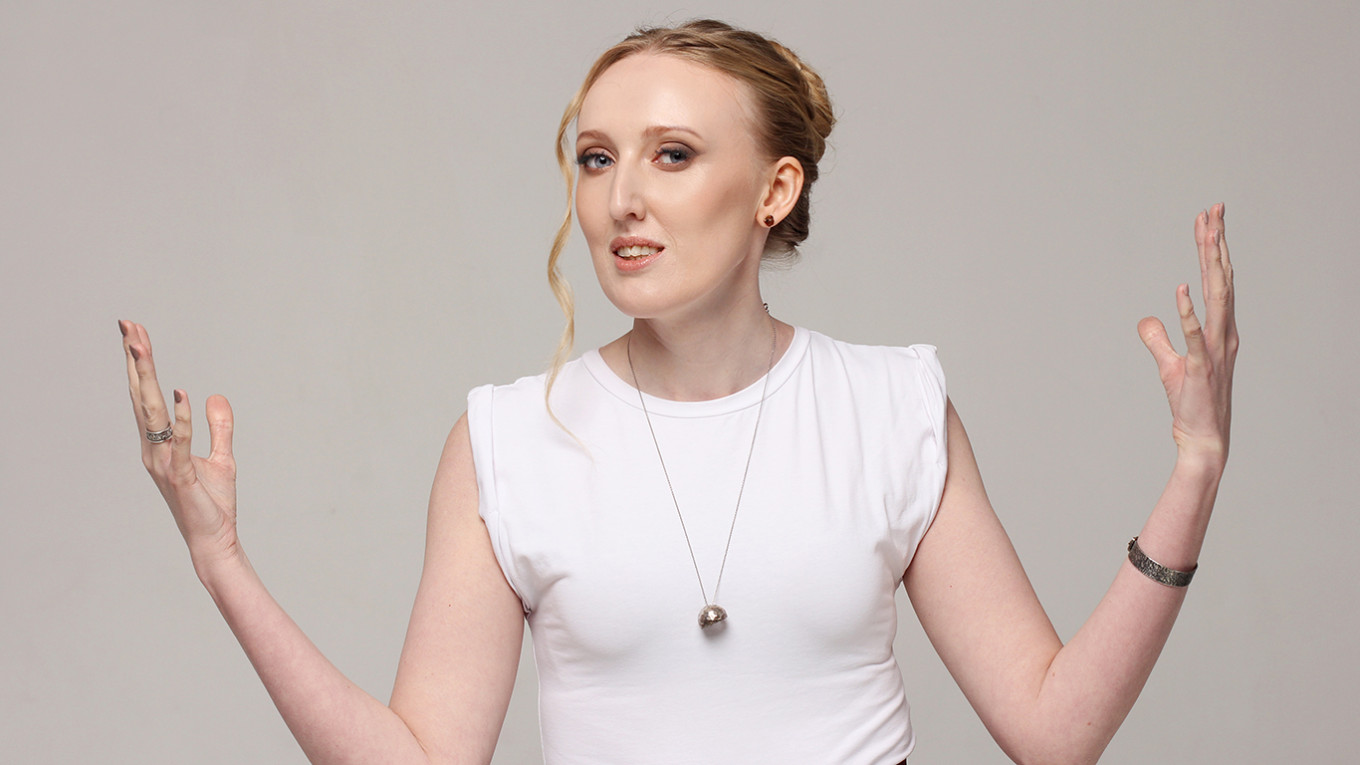
When theatre director Evgeniya Rudyuk traveled to the Jewish autonomous district in Russia’s Far East in 2025 to take part in a research expedition, it was her first time visiting the region where she was born and raised since fleeing Russia after the full-scale invasion of Ukraine.
While there, she discovered the story of Pavel Kushnir, a pianist who had died on hunger strike in the region a year earlier after being jailed for opposing Russia’s invasion of Ukraine.
Rudyuk saw a link between Kushnir’s fate and the history of Stalinist repression in the Jewish autonomous district — as well as with her own experiences and inner conflicts as a Russian artist in exile.
These parallels would inspire her new play “Queer Quark,” a reference to quantum entanglement that explores the invisible connections between people separated by place, time and circumstance.
“For me, it is a universal story of resilience, the loss of home and identity,” she told The Moscow Times.
An excerpt of “Queer Quark” will be performed at Memory Remains, the third installment of the Artists Against the Kremlin exhibition at De Balie in Amsterdam, from Aug. 14-Sept. 6.
Rudyuk spoke to The Moscow Times about creating the play, honoring Kushnir’s legacy and preserving the memories that repression seeks to erase.
This interview has been edited for length and clarity.
MT: You have been preparing ‘Queer Quark’ for Amsterdam Fringe. How did it become part of Artists Against the Kremlin as well?
ER: We met with Vladimir Shalamov at an event devoted to Pavel Krisevich’s artistic path. I approached him and asked whether he wanted us to be part of the upcoming exhibition. He said yes, of course, because Pavel Kushnir’s story is at the heart of our performance. Our story also fits with the theme of the upcoming edition, which, as I understand it, is about collective memory and how political upheavals change one’s artistic practice — about resisting the erasure of tragic people's fates and the silence surrounding Russian artists in exile now. So I think that’s why we were invited, but I’m not sure. Maybe it’s better to ask Vladimir himself.
You produced the ‘Birobidzhan Cycle’ about your hometown, and the topics and themes it explores are exactly what Artists Against the Kremlin is about this year. So you’ve been working with these ideas for quite some time.
I moved to Europe in 2024. Well, actually, I fled Russia in 2022, but I went to Turkey at first. After I had been in the Netherlands for about a year, I found myself totally devastated, both psychologically and artistically. As an artist I’ve always felt like a part of Russian culture, but in 2022 that became impossible — I had to reshape myself in exile.
I was thinking about what I would do as an artist in Europe when I came across an open call from an organization I had collaborated with in Russia. They were planning to visit the Jewish autonomous region, where I was born and raised. I had left that place — my homeland — many years before. They accepted my application and invited me to join the expedition.
It was a slightly mad decision to travel from the Netherlands to Russia in 2025, because I had fled Russia and decided to cut my ties there. But I felt a kind of inner calling. Now I think it was a good decision, because I drew a lot of inspiration from the trip.
We interviewed elderly descendants of the settlers who came to build the Jewish autonomous region (JAR) in 1934. Most were Jewish, but there were also Ukrainians and Russians. I would say Stalin created a PR campaign for the JAR, because there was nothing there at the time. It was just forests. These people made it possible. Within two years, they managed to establish collective farms. Many people died during those two years from hunger and illness, but they really did succeed in building the new region from scratch.
In 1937, the first wave of repression reached the region. Many leaders of these collective farms were arrested, convicted and executed. Then came World War II, when many more people died. After the war, a new wave of immigrants arrived. These were Holocaust survivors who had lost everything, including their families. They came to the JAR hoping to find a home and people who shared a similar mindset and spirit, the Soviet Jewish culture. There was a huge wave of immigration in 1946, I believe. Then, in 1949, a second wave of repression took place, also initiated by Stalin. It was connected to the well-known case of the Jewish Anti-Fascist Committee, and many artists were arrested.
When I returned to my hometown, I realized that although I was born in Birobidzhan in 1992, I knew nothing about this history. It was kept silent when we were children. Nothing was taught about it in Russian schools, even though we had a special course devoted to the history and literature of the JAR. The region was a land of poets, writers and other artists. I don’t know how they managed to combine hard physical labor with their artistic practice, but they did.
After the war against Ukraine had begun and amid renewed political repression, I realized that people still did not want to talk even about Soviet repression. Yet that repression greatly influenced the region’s present state, because it is one of Russia’s poorest and least developed regions. Not many people live there now. People drink vodka and work in shops, and there is no industry. Compared to what it once was, Jewish culture here is in decline, although a handful of dedicated activists are trying to revive it artificially. And that’s heartbreaking.
During that trip, I encountered the story of Pavel Kushnir, who had died there a year earlier. I recognized a connection between Pavel, a political prisoner and a political victim of this place, and Stalin’s two previous waves of repression. It became clear to me that this was a horrible repetition of history.
I decided to write a kind of diary there, which I called the ‘Birobidzhan Cycle,’ about the repetitiveness of cruelty and repression throughout history. That was the text I brought back to the Netherlands.
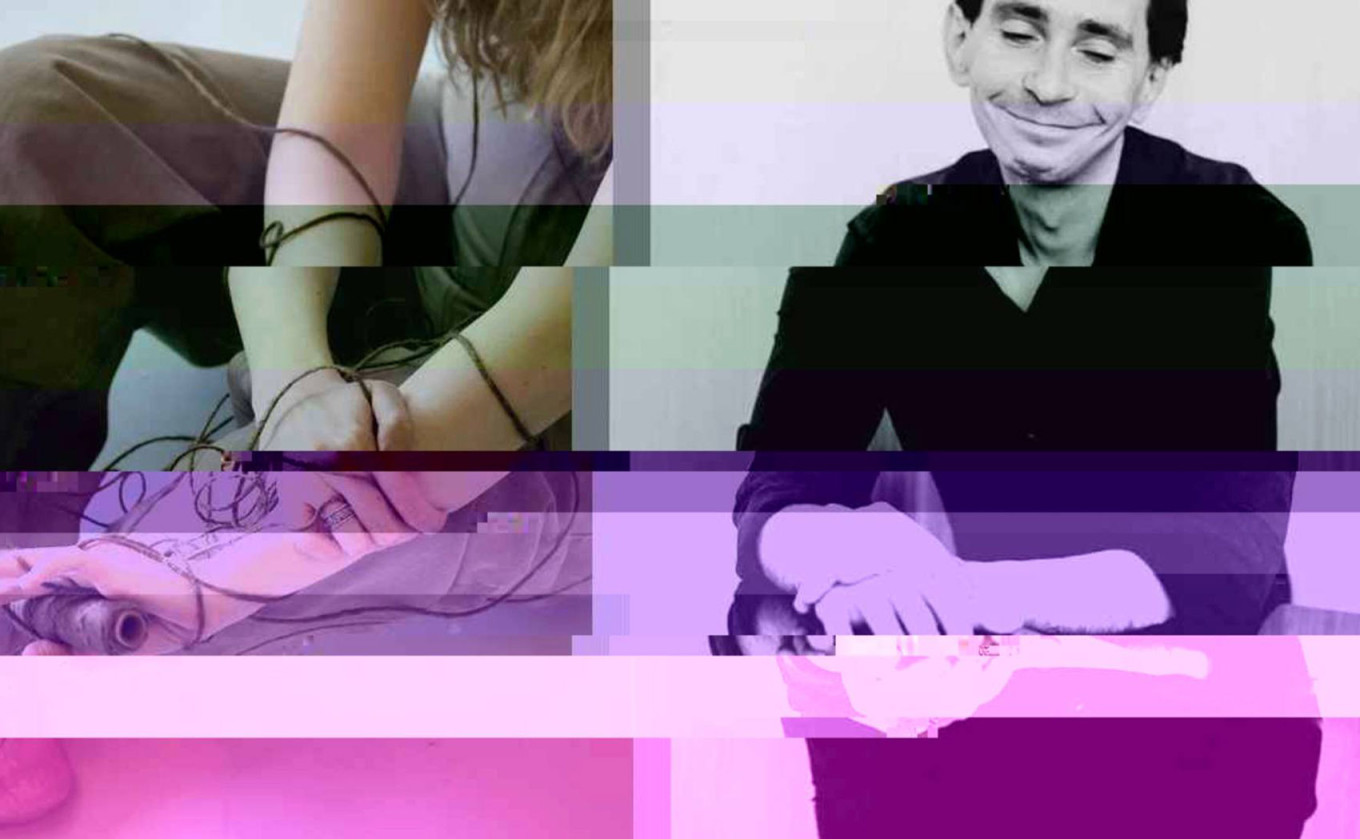
When I returned to Amsterdam, I read Pavel Kushnir’s ‘Birobidzhan Diary’ and was deeply impressed. It is a very unusual text, and it contains numerous cultural references and a strong performative element. I wanted to stage it. It also became clear to me that Pavel himself saw a connection between his own life and the people who were victims of the Jewish Anti-Fascist Committee case, because he was also an artist and he expected to be imprisoned for his resistance.
I contacted the pianist Maria Nemtsova, who also lives here in Amsterdam. I knew she had been studying music together with Pavel Kushnir, and I suggested that we collaborate on this idea. I’m grateful to her, because she suggested combining the two diaries — mine and Pavel’s. We thought my personal story could make his story more accessible to a local, European audience. That’s how ‘Queer Quark’ was born.
How did you combine your autobiographical story with Kushnir’s in a single performance?
At first glance, there is no connection between Pavel Kushnir and me. But I was deeply affected by the tragic story of his life, and I searched for a connection. Maria helped me, because I’m a shy person and I felt that I had no right to tell his story. Who am I to do that? We began thinking about and reflecting on this.
The first connection was Birobidzhan — the place where I was born and raised and where he died. We were also both artists who have chosen internal or external emigration under the current situation in Russia.
I found smaller similarities that touched me, but they were difficult to share with people through theatre. Pavel was somewhere between Christianity and Judaism, and so am I. He had a wonderfully ironic view of the world. He was a punk and loved music, and all of that also resonates with me.
But of course, in my opinion, I am nothing compared with Pavel, because he sacrificed himself in this political rebellion, this political fight. I didn’t dare to do that. So I had this moral dilemma over whether I had the right to tell his story. Therefore, I am deeply grateful to Maria Nemtsova and to Pavel’s close friend, Olga Shkrygunova, for their trust and support.
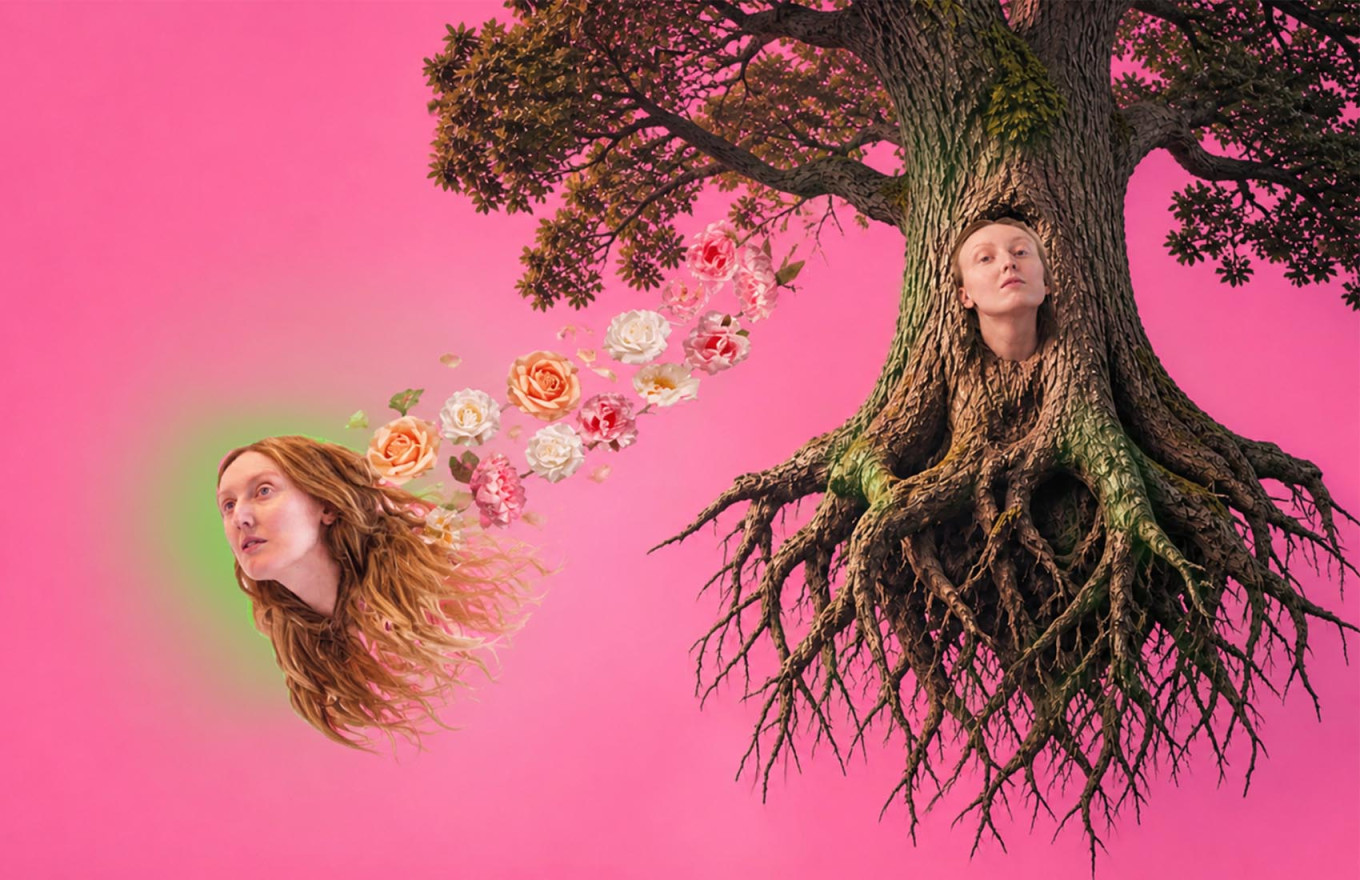
That’s how I came to use the metaphorical language of quantum physics, and why the performance is called ‘Queer Quark.’ Many people think it is an LGBTQ+ story, but it isn’t. A quark is one of the fundamental particles that make up the world. It represents the hidden sides of our lives — the stories of migrants, political prisoners and victims of political repression, which often go unseen.
‘Queer’ is more about being ‘other.’ For me, queerness is also about resisting normality and conformity — resisting what society defines as acceptable. In that sense, everyone who challenges the social and political order sanctioned by society and those in power can be understood as queer, in the broad sense of the term originally proposed by queer theory. Also ‘queer’ is about a nonbinary vision of life and the choice not to be someone defined.
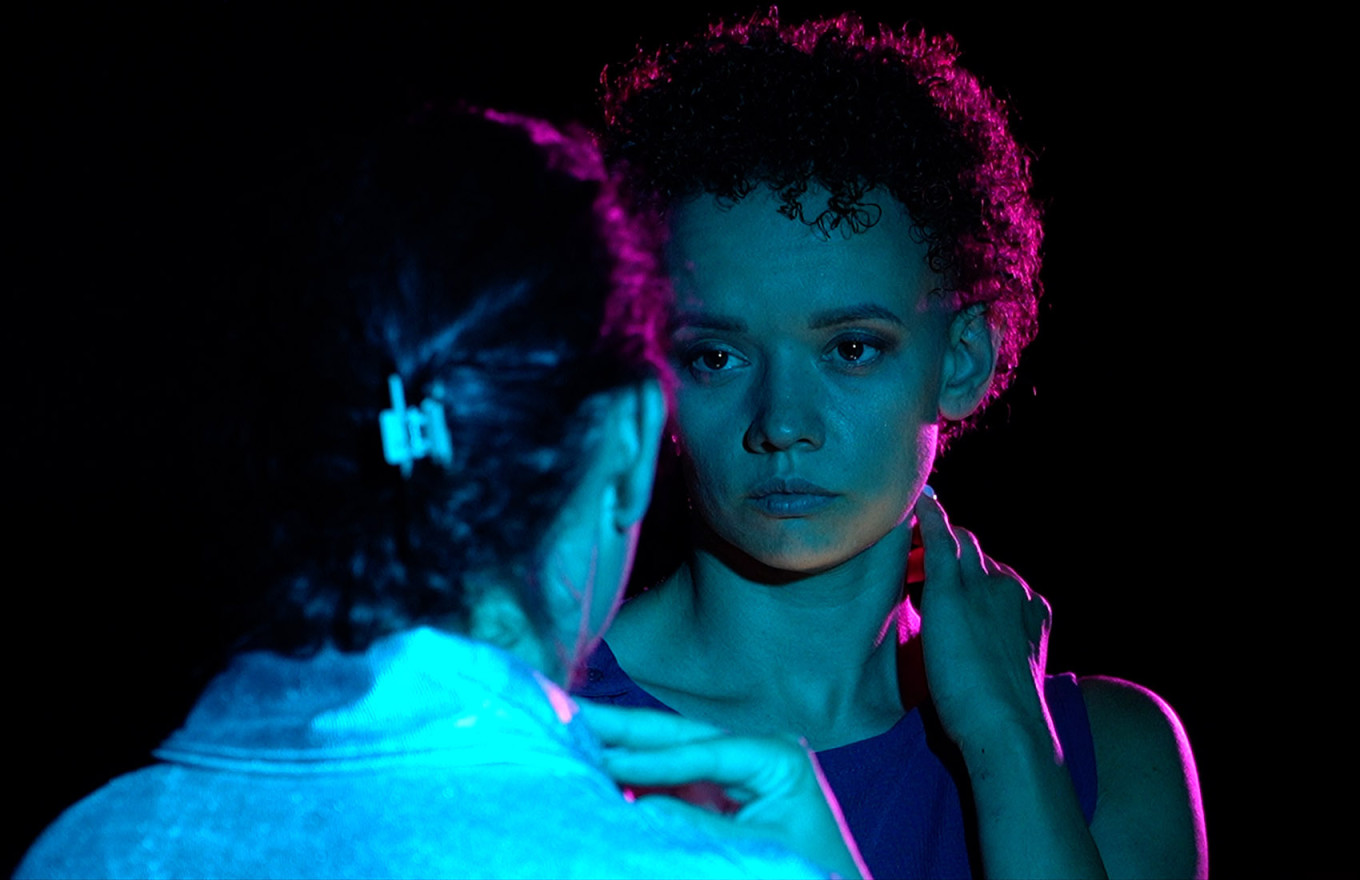
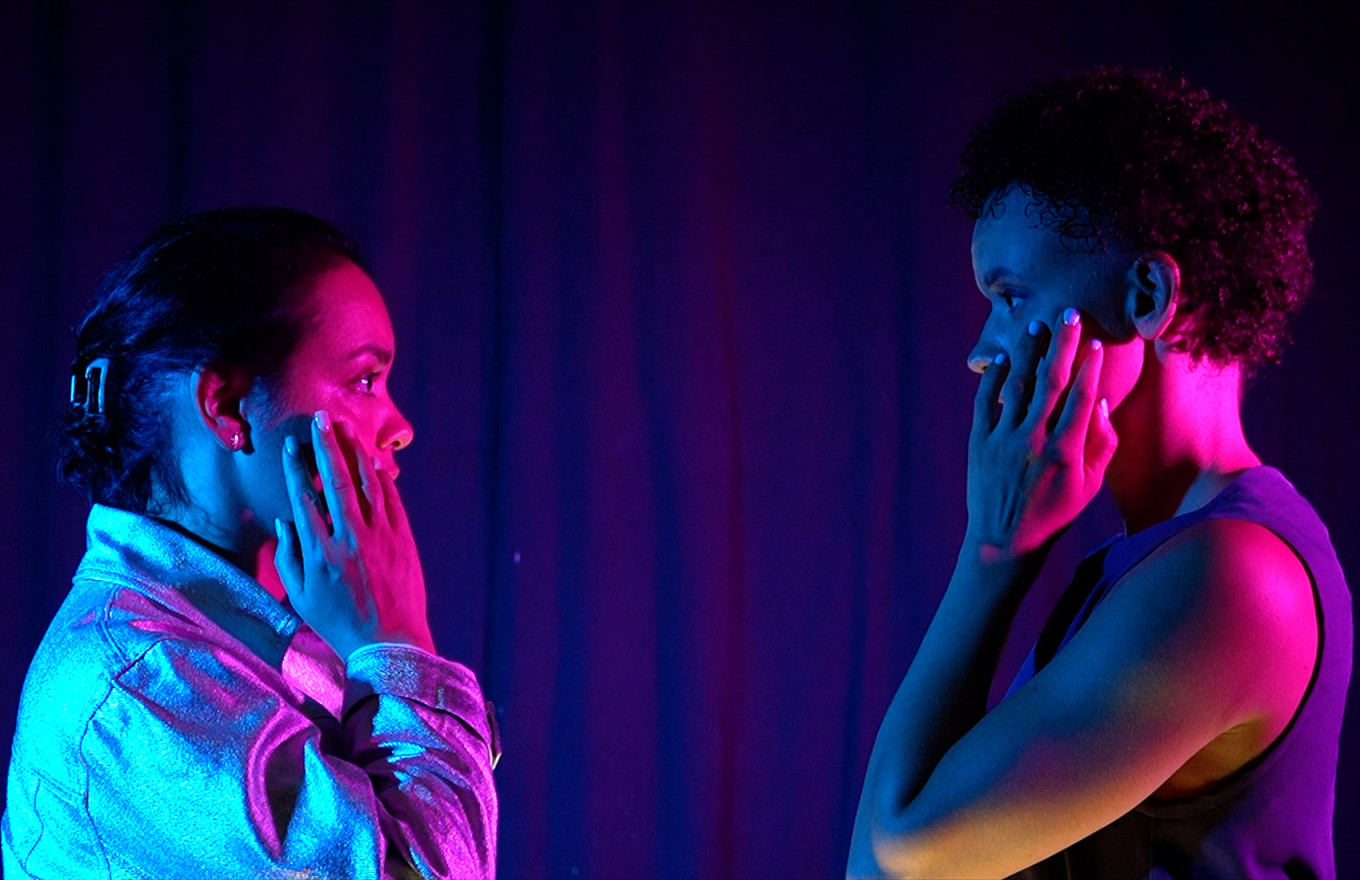
The performance follows a woman who has fled Russia and now lives in the Netherlands. She is also a friend of Pavel Kushnir. After learning of his death, she returns to Russia and is arrested. Throughout the performance, we follow her complex inner conflict. She lives between past and present, between Russia and Europe, between belonging and exile.
One of the story’s messages is that we don’t have to choose between who we were in the past and who we will be in the future. We don’t have to limit ourselves or try to hide our past as we begin new lives here in Europe. It is about embracing ourselves in all our complexity.
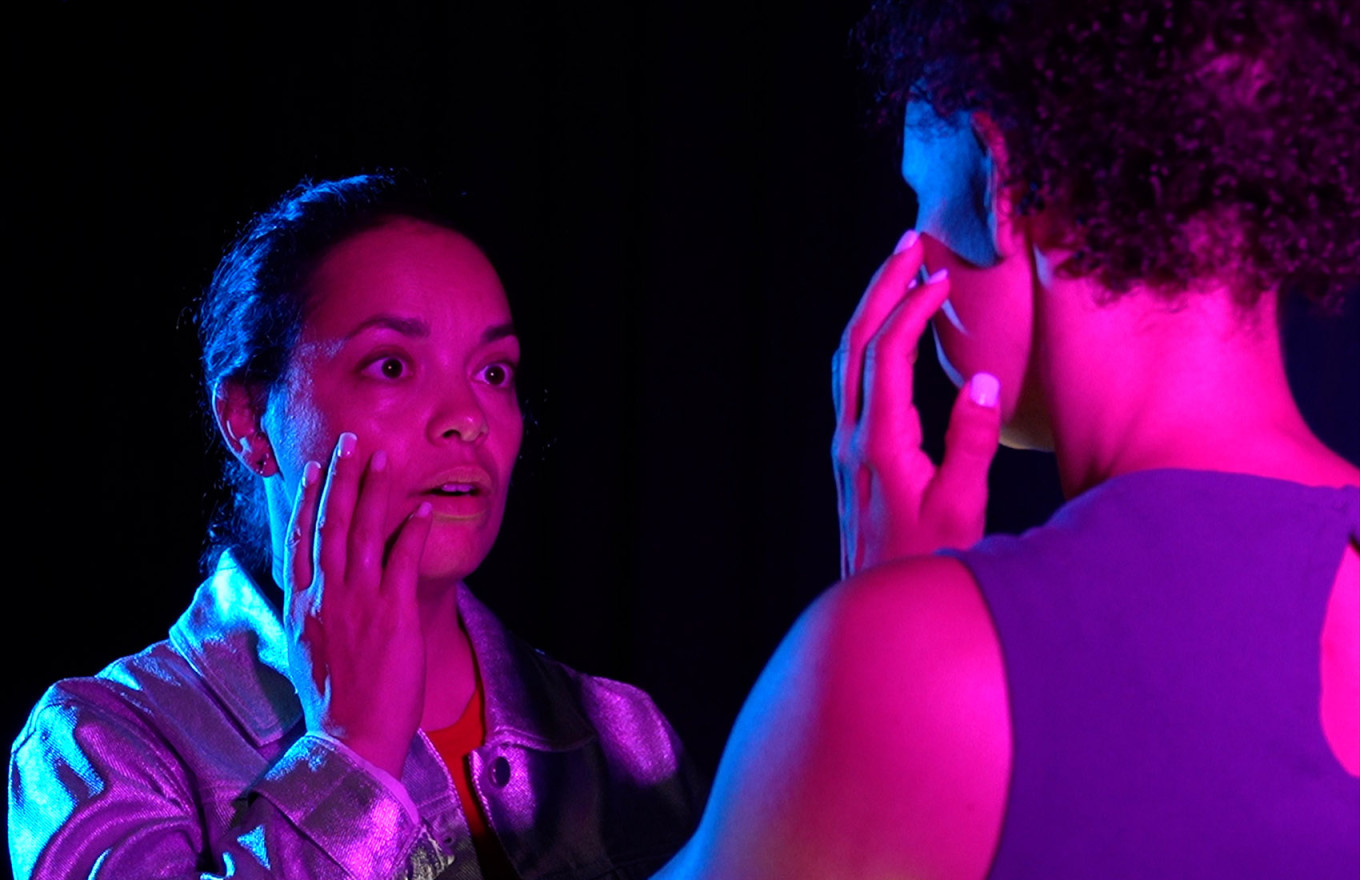
You take a multidisciplinary approach, incorporating music, dance and several other forms. How did you choose how to interpret these abstract emotions?
I’m very grateful to my creative team, because I could do nothing without their support. Most are also forced migrants from Russia living in the Netherlands or elsewhere in Europe. Each has a personal connection to the story, because it is also their story. That’s why I call Queer Quark a deeply personal documentary story that is about everyone. For me, it is a universal story of resilience, the loss of home and identity.
I included four disciplines because I believe this documentary story could not be told through just one artistic language. Each serves a specific purpose.
The live piano music is an artistic representation of Pavel Kushnir. That is why I chose live piano rather than recorded music. I see it as an image of Pavel as an artist, and of the music that I believe continues to live after his death. That is his legacy to us.
We also have spoken word. Of course, I need text in this performance. But because we are talking about political repression, postmemory and personal, intercultural and political trauma, I believe that in some moments another language can tell this story better than words alone. We know from trauma studies that trauma is unspeakable. That is why I began thinking about choreography and bodily movement.
The main artistic challenge is to use the actresses’ bodies to express the things they cannot convey through words. I’m very grateful to our choreographers, Polina Mir and Daria Titova. They are deep-thinking artists who have supported me in taking on this artistic challenge. The work of Pina Bausch has been a great inspiration. She is famous for her distinctive use of rhythm, repetition and physical presence on stage.
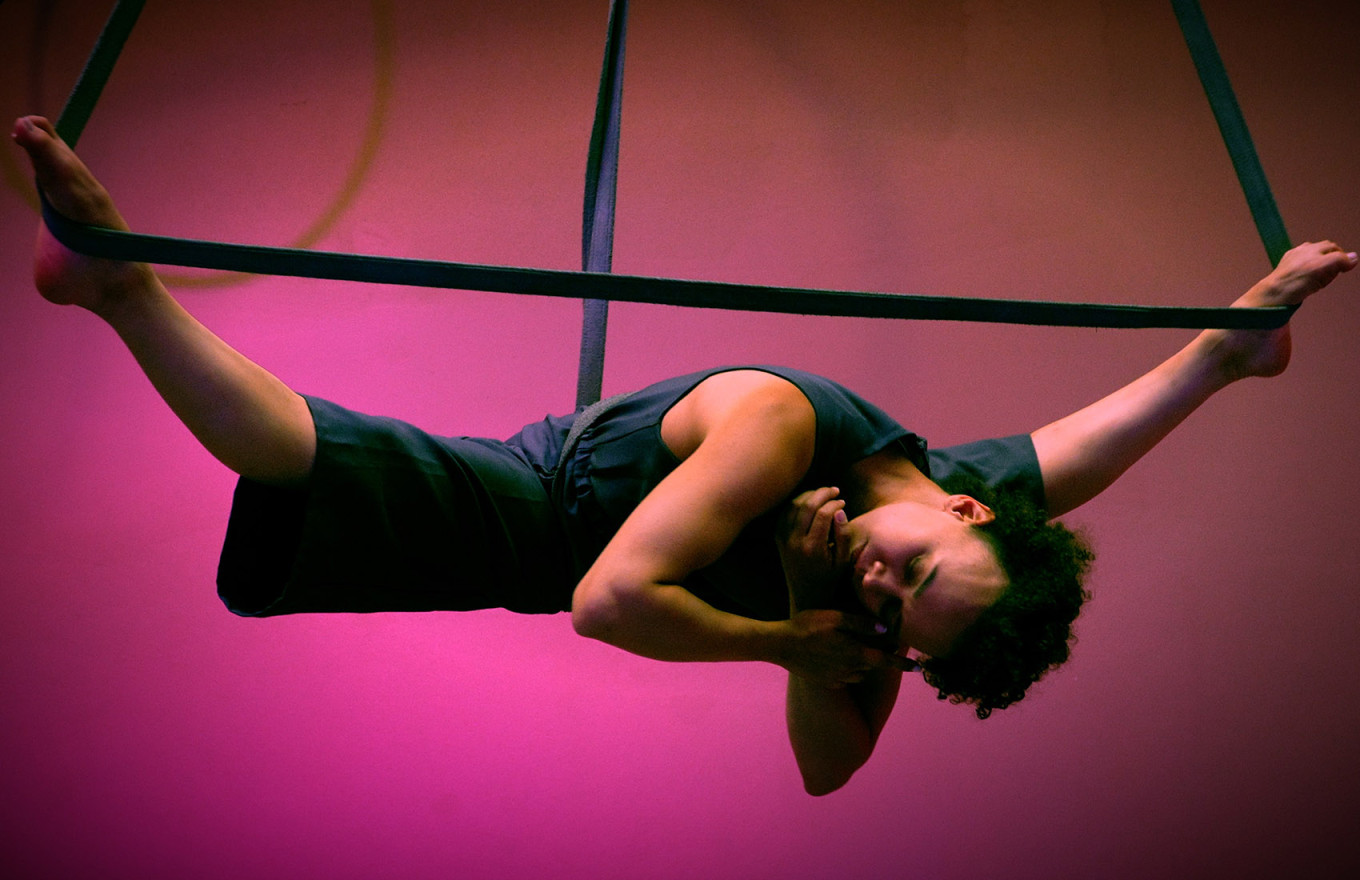
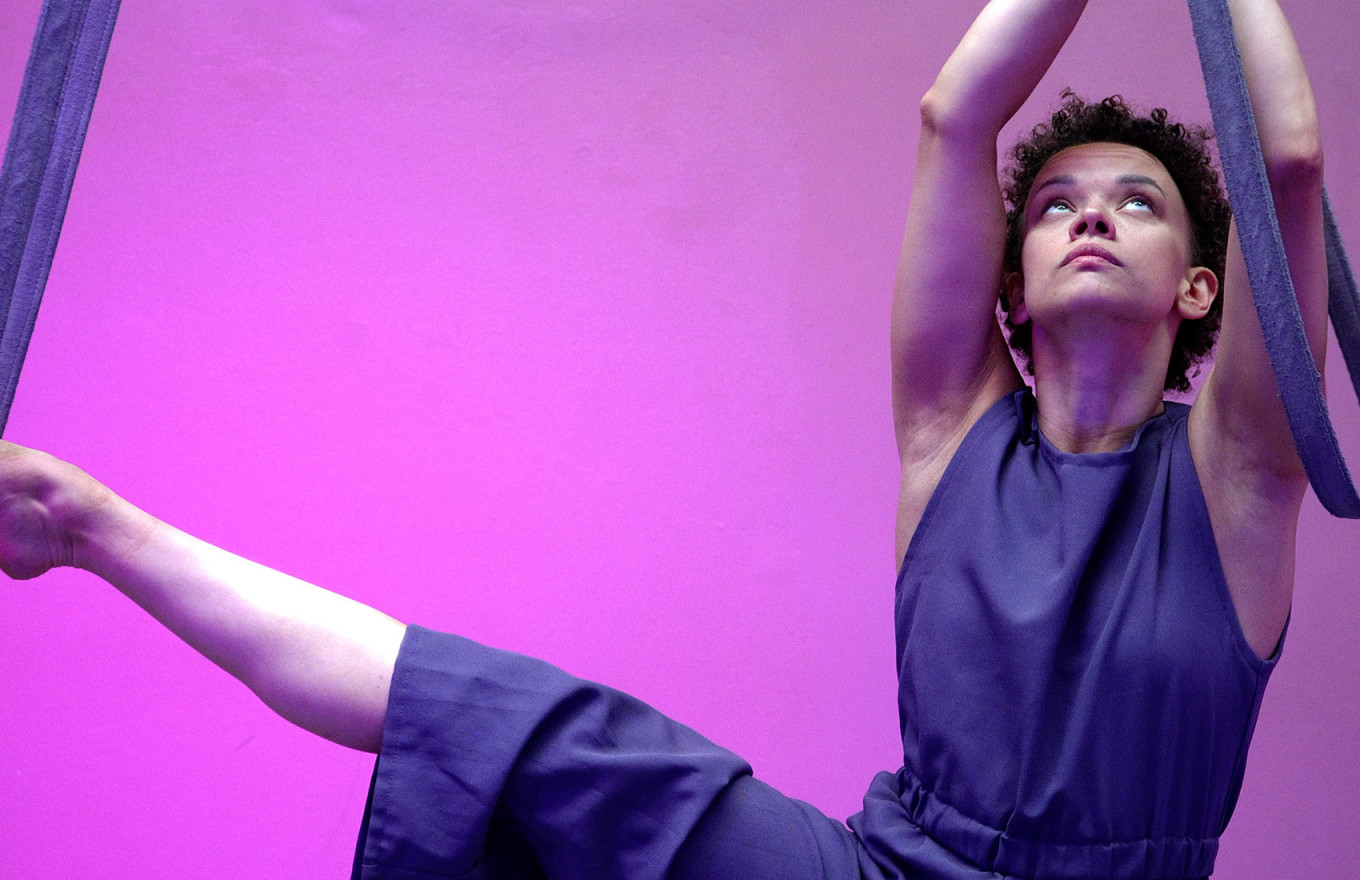
We also have aerial choreography performed by Natasha Smyslova. For me, aerial choreography is a language capable of conveying the experience of being suspended between the earth and the sky. It symbolizes the experience of forced migrants who live between past and present, between a new place and their homeland, between two versions of themselves. It is also connected to the quantum narrative, because the performer makes many spinning movements and sudden breaks. For me, it is very beautiful, symbolic and metaphorical.
The fourth element in our show is video projection, created by Lidia Sinelnik. For me, it creates an artistic space for memory where I tell Pavel Kushnir’s story and where he can be present today. Unfortunately, we cannot invite him to take part in our show, but through the video projection, we can introduce the audience to him and his art — and, of course, to his ‘Birobidzhan Diary.’ We decided to include fragments of the diary in the show as Pavel’s voice, which he also expressed to the world through music.
Our team also includes many remarkable and highly talented people who work every day to bring this performance to life: set and lighting designer Alkmini Damianakou and Dutch costume designer Puk Lindeman. I am deeply grateful to all of them for their creativity, dedication and invaluable contribution to this project.
How has ‘Queer Quark’ been adapted for Artists Against the Kremlin? Do you want to show a video recording?
We don’t have a video yet, because the premiere will take place Sept. 10-13 at Amsterdam Fringe. Recording a theatre performance is always a challenge. No recording can truly convey the magic of live theatre — the emotional immediacy and the unique sense of connection between performers and audience that can only be experienced in the theatre itself.
So we agreed to perform one act from the show, the part about Pavel Kushnir. I felt that this was the most relevant and significant part of the story — its core. I hope the audience will see it, feel connected to the story and perhaps come to our premiere at Amsterdam Fringe to watch the full show.
When you talk about two particles being separated but experiencing the same thing at the same time, how do you experience that as an artist in exile? How do you feel that connection to home?
Through quantum entanglement, I try to share with the audience how I feel connected to Pavel. The connection is not obvious or visible, but it exists for me because his death changed a great deal in my life.
If we are talking about my continuing connection to home and how I feel it now, I don’t want to sound too grandiose. But when I read the news from Russia and learn that another political prisoner has been arrested, convicted or has died, it feels as though a part of me dies at that moment.
That’s why I can’t simply live happily here in Europe. Someone might call it survivor’s guilt or something like that. But for me it exists, it still affects me, and I don’t know whether I will ever be able to live without this connection to Russia. I am still deeply interested in Russian people and Russian culture, and I am part of them. Perhaps this performance is the only thing I can do for them.
I don’t have any real hope that it could be shown in Russia. But if that ever came true, I would be the happiest person in the world.
Showing it to European audiences is also important.
Yes, that’s why we decided to tell this story of Pavel Kushnir and the main character. To be honest, I don’t think of myself as a political artist. In that sense, I would rather compare myself to Kryltsov, a character from Leo Tolstoy’s ‘Resurrection,’ whom the novel’s protagonist, Nekhlyudov, encounters on his path to spiritual awakening.
Kryltsov explains that he was not a revolutionary by conviction from the very beginning. He became one only after witnessing the cruelty of the authorities and the suffering of people who had been wrongfully convicted. I think that says far more about me than the label of a political artist ever could.
By the way, that is the choice the main character makes in the performance. She is very afraid of political persecution, but she decides to testify. I believe that is the choice we, as Russian artists, can carry with us here.
“Queer Quark” will premiere at the Amsterdam Fringe Festival from Sept. 10-13. The project is supported by WeExist!, the Wilhelmina E. Jansen Fonds and the Admiraal van Kinsbergenfonds. More information is available here.
A Message from The Moscow Times:
Dear readers,
We are facing unprecedented challenges. Russia's Prosecutor General's Office has designated The Moscow Times as an "undesirable" organization, criminalizing our work and putting our staff at risk of prosecution. This follows our earlier unjust labeling as a "foreign agent."
These actions are direct attempts to silence independent journalism in Russia. The authorities claim our work "discredits the decisions of the Russian leadership." We see things differently: we strive to provide accurate, unbiased reporting on Russia.
We, the journalists of The Moscow Times, refuse to be silenced. But to continue our work, we need your help.
Your support, no matter how small, makes a world of difference. If you can, please support us monthly starting from just $2. It's quick to set up, and every contribution makes a significant impact.
By supporting The Moscow Times, you're defending open, independent journalism in the face of repression. Thank you for standing with us.

Remind me later.