
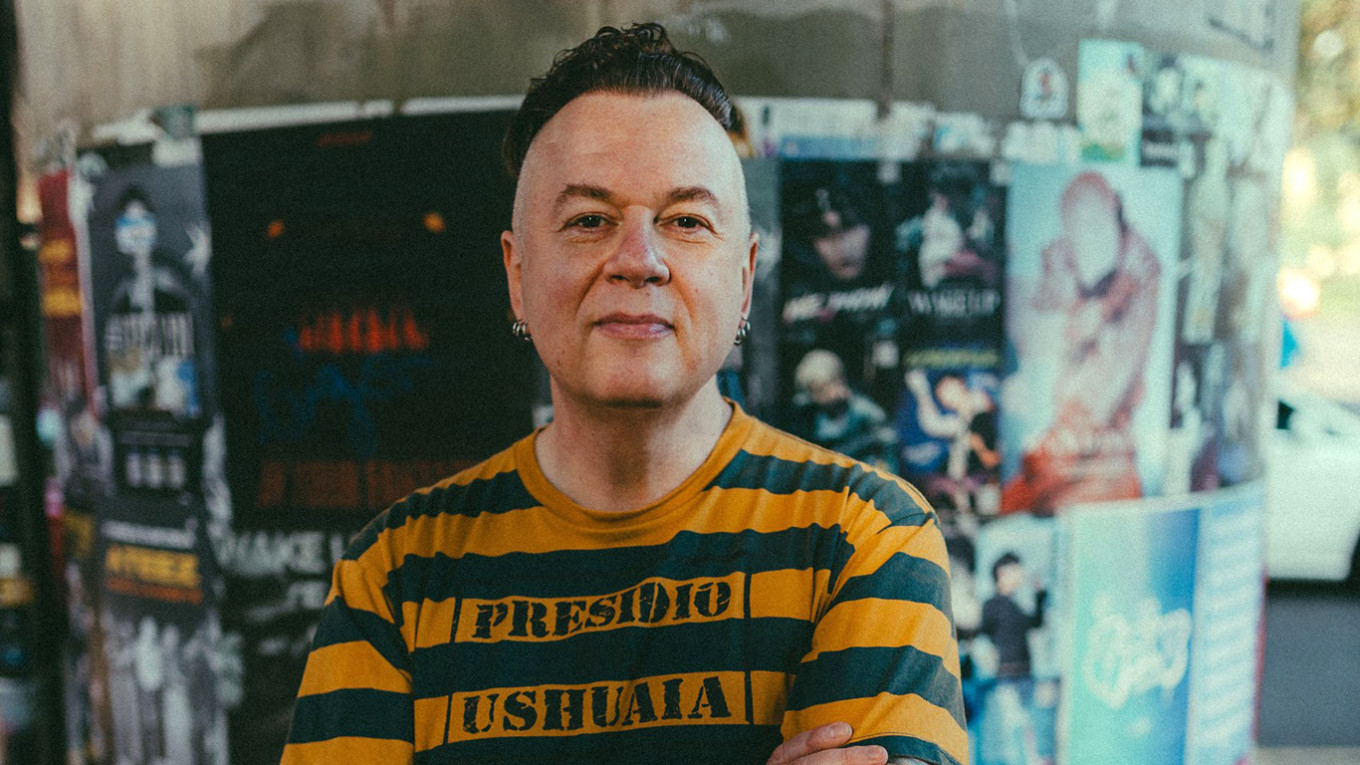
As the former frontman of the band Tarakany!, Dmitry Spirin is one of Russia’s most famous punk rock stars.
An outspoken critic of Vladimir Putin, the Russian government and the full-scale invasion of Ukraine, he left Russia in 2021 and was named a “foreign agent” in 2024.
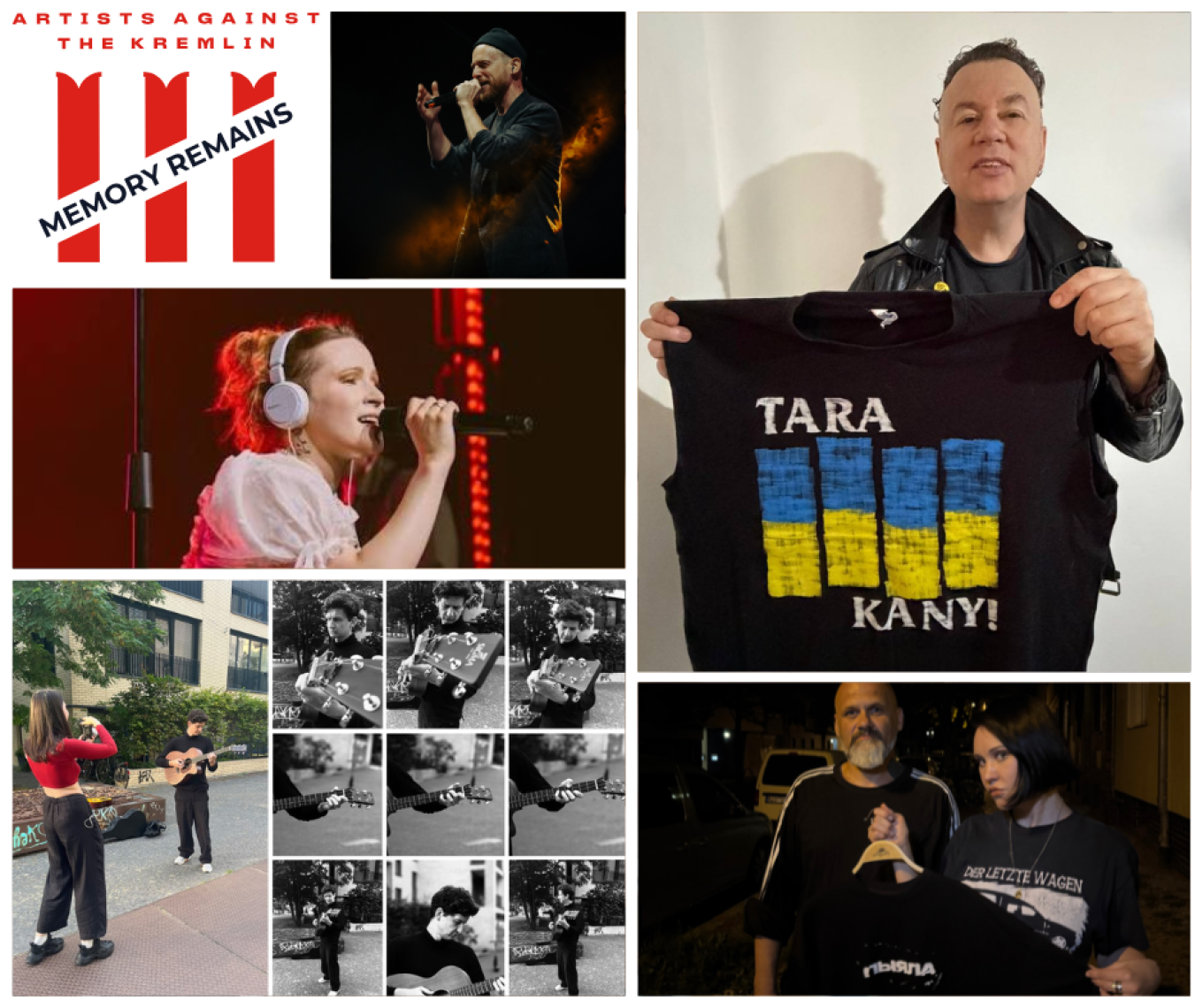
Most recently, Spirin collaborated with the art collective Prometheus on Hard Times Cafe, a section of the Amsterdam exhibition Artists Against the Kremlin III: Memory Remains.
Inspired by the Hard Rock Cafe chain, the installation tells the story of Russian musicians’ anti-war protests and lives in exile through personal artifacts donated by artists including Shym of Kasta, Igor Titov, Pussy Riot, Monetochka, Aigel and Spirin himself.
Spirin spoke to The Moscow Times about disbanding Tarakany!, settling in Argentina and building bridges between anti-war Russians and the punk scene in his adopted country.
MT: Many of our readers will know you as the frontman of the band Tarakany!. How difficult was it to make the choice to disband the group and leave Russia to live in exile?
DS: I had no other choice. Our band had essentially been banned in Russia and Belarus by the start of the war, so it would have been foolish to assume that anything would have changed once the war began. Even if that ban hadn’t existed, I couldn’t have imagined us happily touring a country that had launched a full-scale military aggression against Ukraine. It would have been impossible for me to play punk rock while remaining silent on stage about this nightmare. So it wouldn’t have lasted long and would have ended with me in prison.
Besides, by the time the war began, I had already been living outside Russia for some time. Feb. 24, 2022, found me at my home in Europe. Returning to Russia to continue performing with Tarakany! (even for a short time) carried the risk of never being able to return home, since I was certain that all air travel to and from Europe would be suspended immediately and the borders closed.
So, for me personally, this decision wasn’t very difficult.
Can you briefly describe your experience living in Argentina and making music as an emigrant?
We moved from Europe to Argentina primarily to quickly obtain another citizenship. This decision was made a few weeks after the war began, when it became clear that Russian citizenship was not only toxic, but also a source of shame.
However, after moving there, we grew to love the country itself and life there so much that we decided to stay, and for now we’re living here and enjoying ourselves.
For the first year and a half after the war began (and roughly the first year of living in Argentina), I didn’t pursue music, as I sincerely believed that after the band broke up, there was no need for me to continue doing so. I was deeply frustrated by the fact that, despite the existence of a strong anti-Putin/opposition music scene in Russia, we had failed not only to prevent the war from starting through our songs, but also to win over the majority of Russian citizens with our ideas and persuade them not to support Putin.
In the midst of this disappointment and depression over the very fact that the war had begun, I didn’t believe I could still do anything as a musician. However, in the fall of 2023, new songs began to sort of write themselves, which I recorded for my debut solo album, ‘Hot War.’
Since then, I’ve released another solo album, ‘Strangers’ (on which I recorded cover versions of anti-war songs by Russian artists written after the war began), several singles, an EP and a dozen music videos.
I created all this music with the help and participation of my musician friends from all over the world, so the fact that I’m physically based in Argentina didn’t play a major role here. But despite that, this country’s music scene never ceases to amaze and inspire me. I’m very glad to have ended up right here, where rock and punk live on in the hearts of so many music fans. I have some connections to the local scene; I often go to concerts by local bands, and I really enjoy it all. Right now, I’m getting ready to announce my second solo concert in Buenos Aires in February 2027.
You’ve also talked before about how you found Argentine rock albums on a Ramones forum. Did that impact your choice to move to Argentina at all, and have you made any progress translating some of those songs into Russian?
No, that fact didn’t influence my choice of country to move to at all. As you can imagine, there were more important factors behind that decision back in March 2022. But I was incredibly happy when, after moving here, I discovered that all those bands — whose music links people were sharing 20 years ago on the Ramones.ru forum — are still around today. And yes, I’ve been mulling over the idea of my third solo album, where I’d sing my own songs in Spanish and, conversely, do cover versions of songs by Argentine punk bands in Russian. An album like that could serve both as a way to bring my songs to Argentines and Spanish-speaking audiences around the world and to showcase Argentina’s incredibly cool punk scene to my Russian-speaking fans.
How did you come to be involved in the Hard Times Cafe and Artists Against the Kremlin?
From the very first day of the war, I’ve been open to proposals and initiatives [like Hard Times Cafe]. I feel a certain sense of guilt and shame over what the country where I lived — and of which I’m still a citizen — is doing to Ukraine and Ukrainians. I believe it is vitally important to support Ukraine with all our might, to do everything possible to ensure that Ukraine emerges from this war with the fewest losses and that its conclusion is just for Ukraine — and to achieve this, we all need to help. That’s why, as soon as I receive such proposals, I immediately agree to participate.
That’s exactly what happened with Hard Times Cafe and Artists Against the Kremlin. I have quite a few interesting and memorable items that I’d be more than happy to let serve a greater purpose for those who need them, rather than just sitting in my closet.
What are some of the most meaningful objects that you all have collected, for you personally?
I used to have many such items, but I sold almost all of them in the first months of the war, when I was still living in Budapest and needed to help Ukrainian refugees daily with housing, food and clothing. These were vinyl copies of my albums from my personal collection, special edition T-shirts (one of which, the one I performed in, I’m lending to Artists Against the Kremlin curator Vladimir Shalamov) and my guitar. Now that I’ve moved to Argentina, I don’t really have that many truly memorable items left.
Is this kind of curation something that you would be interested in doing again in the future?
Yes, of course. I just wish this war (and all other wars, too, of course) would end as soon as possible.
Are you involved in any other anti-war projects?
Yes, I almost always respond to requests to participate in charity events (fundraisers, auctions, concerts, exhibitions) aimed at raising funds for Ukrainian civilians affected by Russia’s military aggression. Furthermore, my entire musical career is an anti-war project; both of my solo albums consist exclusively of anti-war songs, and the same goes for my music videos, interviews, and social media posts.
A Message from The Moscow Times:
Dear readers,
We are facing unprecedented challenges. Russia's Prosecutor General's Office has designated The Moscow Times as an "undesirable" organization, criminalizing our work and putting our staff at risk of prosecution. This follows our earlier unjust labeling as a "foreign agent."
These actions are direct attempts to silence independent journalism in Russia. The authorities claim our work "discredits the decisions of the Russian leadership." We see things differently: we strive to provide accurate, unbiased reporting on Russia.
We, the journalists of The Moscow Times, refuse to be silenced. But to continue our work, we need your help.
Your support, no matter how small, makes a world of difference. If you can, please support us monthly starting from just $2. It's quick to set up, and every contribution makes a significant impact.
By supporting The Moscow Times, you're defending open, independent journalism in the face of repression. Thank you for standing with us.

Remind me later.