Will 2027 be the year the EU finally bids farewell to Russian liquefied natural gas, or LNG?
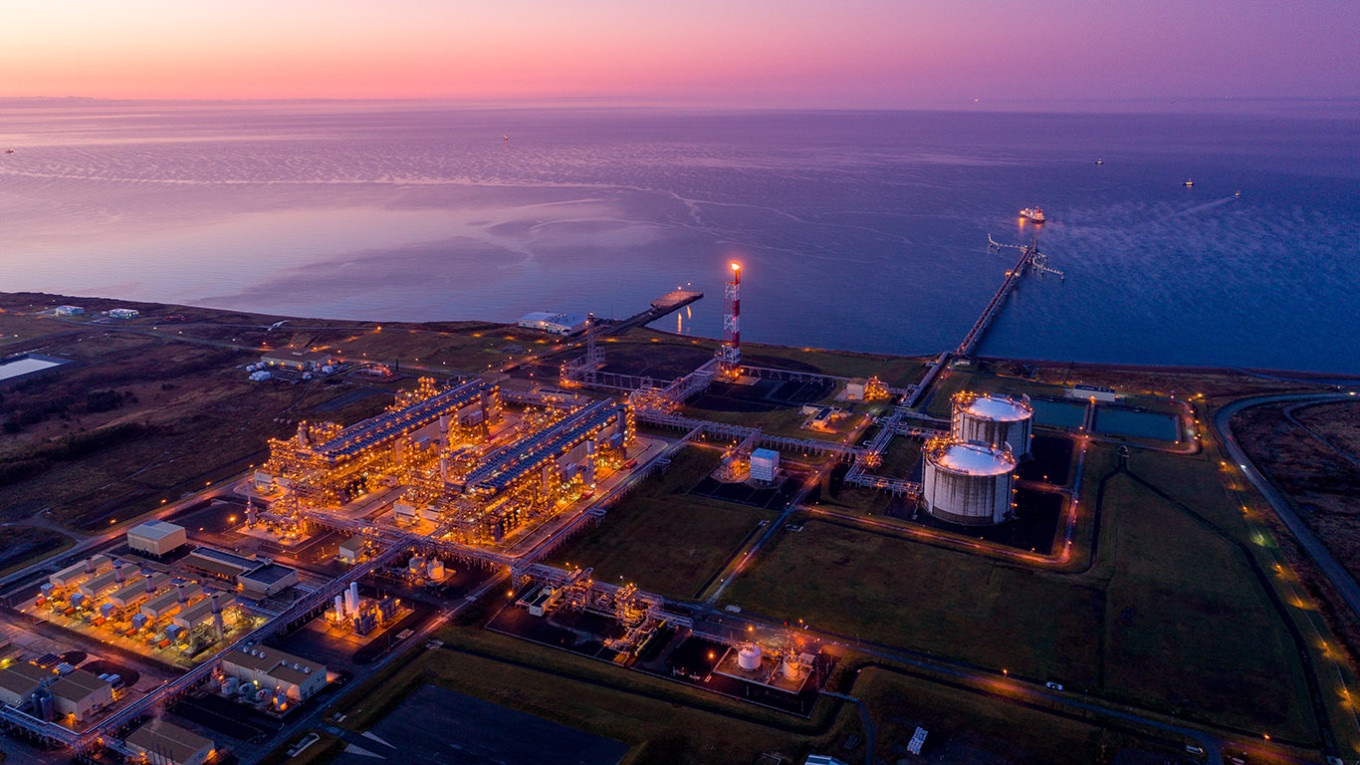
You’d hardly guess that a ban was coming from the traffic into European ports. In the year Europe was supposed to be winding down the trade, it has been buying more gas from Yamal, President Vladimir Putin’s flagship project in the Russian Arctic. Of every five tons Yamal shipped between January and October, four went to the EU.
On Jan. 1, the EU’s import ban will extend to the long-term contracts that still bring Russian LNG into European ports. There have already been murmurs of rebellion. Slovakia has gone to court to overturn the wider ban on Russian gas and EU governments have agreed to a carve-out allowing some shipments to buyers outside the bloc under pre-war contracts.
Before any EU minister asks for an exemption to keep the gas coming into Europe, consider what that short voyage west has been worth to Moscow’s treasury.
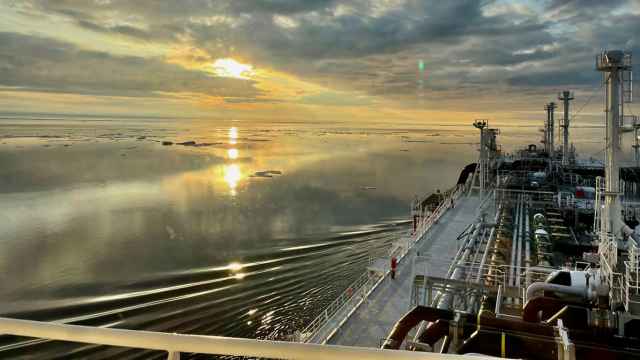
Throughout the full-scale war against Ukraine, a tanker has been able to load at the Arctic port of Sabetta, sail around Norway, unload in Belgium or France and head straight back for more. Come January, Yamal stands to lose that run just as the winter ice makes the voyage east to Asia hardest.
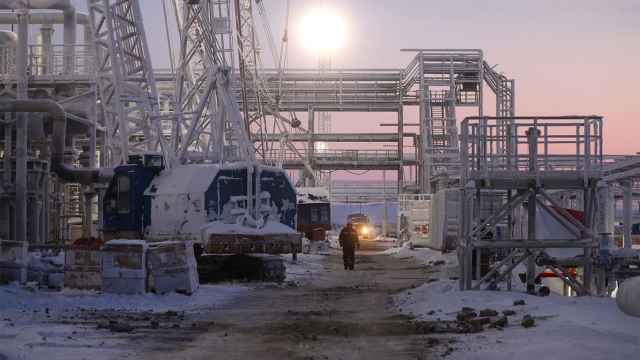
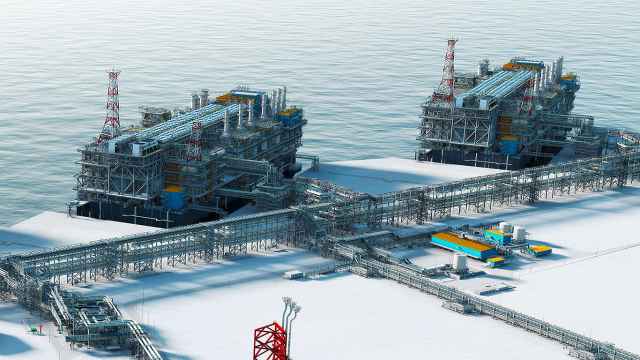
Europe’s part in Putin’s Arctic ambitions was there to see way back in December 2017, when he traveled to Sabetta to send off Yamal’s first cargo. The ship’s name and the white mustache painted on its bow were a tribute to Christophe de Margerie, the late head of the French oil company Total, who had helped get the $27 billion project off the ground — and his company owned a fifth of it.
Putin gave the order to load the tanker and offered the visiting Saudi energy minister some advice: “Buy our gas, you will save your oil.” The first cargo was bound for the United Kingdom. On Dec. 28, 2017, the Christophe de Margerie unloaded at the Isle of Grain in Britain’s Thames Estuary. Britain stopped importing Russian LNG in 2023. Across the Channel, the ships kept coming.
My colleagues and I at Urgewald tracked 177 Yamal cargoes carrying 12.89 million tons into EU ports between January and October 2026. That was 6.3% more than in the same months last year. Using Kpler shipping data and the European benchmark gas price for each month, we put the bill at 8.7 billion euros. Our estimate for the whole of 2025 was 7.2 billion euros.
October alone added an estimated 839 million euros to that total. Seven of that month’s ten cargoes to the EU went to France. Another two months at October’s pace would take the annual bill past 10 billion euros.
To see how those ships keep the gas moving, follow a tanker from Sabetta and back home.
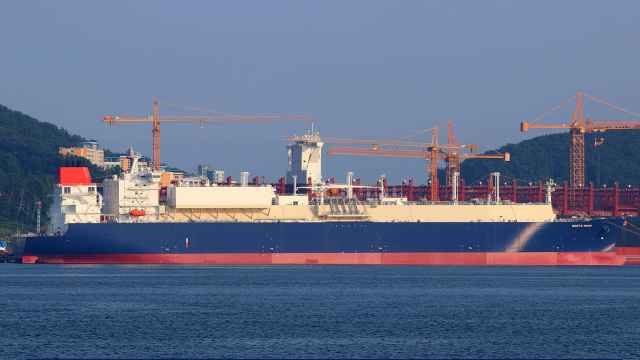
On Aug. 16, the Boris Davydov loaded 73,410 tons there. Six days later, it was unloading at Dunkirk. From there, or from Zeebrugge just across the Belgian border, a tanker can sail back around Norway to collect another cargo at Sabetta.
By the end of October, the Belgian port had received 42 Yamal cargoes, more than any other EU terminal, despite going three months without a delivery.
Once the winter ice sets in, ordinary tankers can no longer reach Sabetta. Yamal currently relies on 14 Arc7 ice-class tankers to ensure year-round operations.
This is why tackling these specific specialized ships is critical, as it gives Europe leverage: every extra day one of them spends at sea is another day before it can load Russian gas again.
A common question we’re asked is whether China could take the gas Europe has been buying.
It could take some, but replacing Europe as Yamal’s main customer would be difficult, especially when the Northern Sea Route is frozen in winter. A French port is only a few days’ sail from Sabetta. To see how long a winter delivery to China can keep a tanker away from Sabetta, let’s return to the ship with the white mustache.
On Jan. 5, 2021, the Christophe de Margerie left Sabetta and sailed east along Russia’s Arctic coast without an icebreaker before delivering its cargo in China’s Jiangsu province, requiring a nuclear-powered escort home. By the time it got back to Sabetta on Feb. 19 after 45 days, it had delivered just a single cargo. That’s hardly economical.
Few ships make that trip in winter. Since 2018, only 11 Yamal cargoes have gone east along Russia’s Arctic coast on Arc7s between November and May. There is another way to reach Asia. An Arc7 can sail west to meet a conventional tanker near Murmansk, where the crews pump the gas from one ship to the other.
A buyer negotiating with Novatek, the Russian gas producer, will know in January that the company can no longer sell the same cargo a few days’ sail away in France. Why wouldn’t that buyer ask for a discount?
For Leonid Mikhelson, the billionaire who stood beside Putin at Yamal’s opening, the price Yamal gets for its gas is personal. Much of his fortune is tied up in Novatek, which owns just over half the project. Another shareholder in Novatek is Gennady Timchenko, a longstanding friend of Putin. A cargo that costs more to deliver and fetches a lower price leaves less profit for both men.
Europe has also helped keep the ships carrying their gas at sea. Days after unloading at Dunkirk, the Boris Davydov, operated by the Greek shipping company Dynagas, was off the Danish coast, waiting to enter the Fayard shipyard. Since its last visit in 2023, that one tanker had carried 50 Yamal cargoes worth an estimated 1.9 billion euros. A few weeks in a Danish dry dock could keep it earning money for Yamal for several more winters.
The EU sanctioned the Christophe de Margerie in December 2024. From Jan. 1, its sister ships will lose their run from Sabetta to EU customers. EU shipyards will also have to stop providing routine repairs and maintenance to LNG tankers operating in Russia.
On Nov. 10, two days before we published our latest figures, Russia struck Ukraine’s power grid again. Homes in six regions lost power. Any EU minister asking for another exemption to the LNG ban should go to Kyiv and explain why Europe is helping Ukrainians rebuild their power stations while its energy companies keep buying gas from the country bombing them.
After almost five years of full-scale war, the EU must hold the line on Jan. 1. No new exemptions. No more kowtowing. While the Kremlin uses the cold as a weapon against Ukraine, Europe has no business buying Russian gas.
A Message from The Moscow Times:
Dear readers,
We are facing unprecedented challenges. Russia's Prosecutor General's Office has designated The Moscow Times as an "undesirable" organization, criminalizing our work and putting our staff at risk of prosecution. This follows our earlier unjust labeling as a "foreign agent."
These actions are direct attempts to silence independent journalism in Russia. The authorities claim our work "discredits the decisions of the Russian leadership." We see things differently: we strive to provide accurate, unbiased reporting on Russia.
We, the journalists of The Moscow Times, refuse to be silenced. But to continue our work, we need your help.
Your support, no matter how small, makes a world of difference. If you can, please support us monthly starting from just $2. It's quick to set up, and every contribution makes a significant impact.
By supporting The Moscow Times, you're defending open, independent journalism in the face of repression. Thank you for standing with us.

Remind me later.