
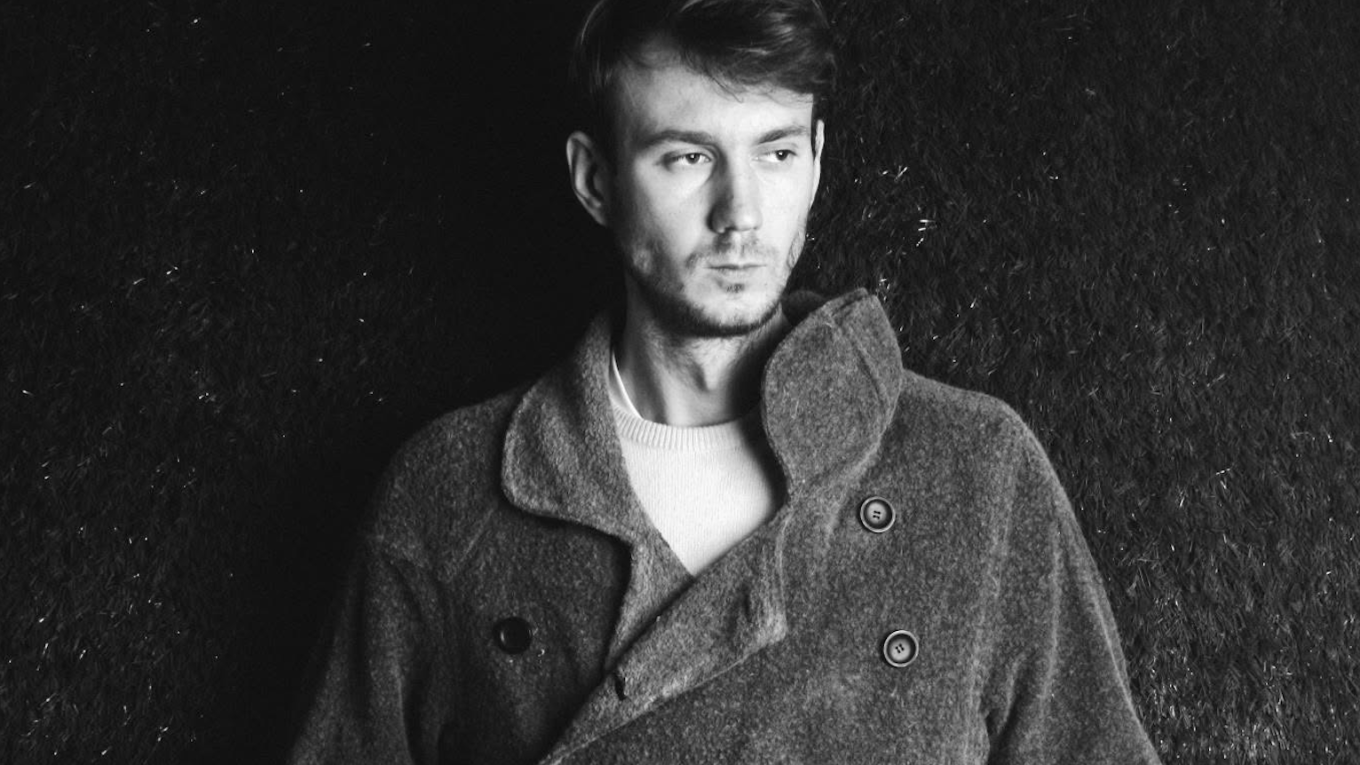
When deciding on the theme for the third edition of the Artists Against the Kremlin art exhibition, curator Vladimir Shalamov turned toward the past — or, rather, the Kremlin’s present-day manipulation of it.
As his Berlin-based team, the Prometheus cultural project, brainstormed ideas, Russian authorities were taking aim at institutions dedicated to preserving some of the country’s darkest, most painful memories. The Gulag History Museum in Moscow was shut down, while Memorial, the Nobel Peace Prize-winning rights group that has documented Soviet repressions for decades, was blacklisted as “extremist.”
“We're witnessing an active attempt to erase inconvenient memories and replace them with new ones that legitimize everything the Kremlin does while providing it with an ideological foundation,” Shalamov said. “We decided to say, ‘No, guys, that's unacceptable’.”
Prometheus' response was “Memory Remains,” the third and final edition of Artists Against the Kremlin that runs from Aug. 14-Sept. 6 at Amsterdam’s De Balie cultural center.
“If the Kremlin can cleanse the information space inside Russia and construct a version of history that suits its interests, then at least we, working in relative safety and with the freedom to speak openly, have a responsibility to preserve the evidence,” he said.
Shalamov spoke to Artists Against the Kremlin co-organizer The Moscow Times about “Memory Remains,” righting the wrongs of historical erasure and preserving the present era of protest art for posterity.
This interview has been edited for length and clarity.
MT: Why did you decide to call this year's exhibition ‘Memory Remains’?
VS: There's an obvious reference to Metallica's song ‘The Memory Remains,’ a title that's deeply familiar to my generation. When we decided that this year's exhibition would be about memory and started looking for a concise title, “Memory Remains” just surfaced naturally. At first it was a joke, but then the joke became reality.
After last year's exhibition, I ended up developing a lecture on critical art for The Moscow Times’ lecture series at Cambridge University called 100 Years of Protest Art in Russia: From Tsarism to Putinism. What struck me was just how many parallels there are between the protest art of a century ago and that of today.
For this year's exhibition, we wanted to show that continuity — to make the point that critical art and artistic resistance to what the Kremlin is doing didn't emerge yesterday, or even in recent decades. They've always existed.
Initially, we wanted to build the exhibition around historical works — pieces by Soviet dissidents, perhaps, or other important figures from the past. But then current events overtook us.
The Kremlin isn’t just rewriting isolated episodes of history — it’s trying to reinvent history itself, turning it into something politically useful. Because that's always been the Kremlin's central problem, not just during the full-scale war against Ukraine, but throughout the past 25 years. It has struggled to find an ideology.
We felt it was essential to draw attention to what is happening right now.
MT: Can you tell us a bit about the artists who are taking part in the exhibition, as well as the different sections of the project?
VS: When we decided that this year's exhibition would focus entirely on memory, the first question I asked myself was: who among the curators and people we know has really been working with this subject?
The obvious person was Anna Narinskaya. She said, ‘Why reinvent the wheel? There's already a fantastic exhibition that Memorial put together.’ It's called ‘The Other Russia. MEMORIAL: 35 Years of Struggle for Historical Truth and Democracy.’
Fortunately, this year we have more space, so we were able to divide the exhibition into several distinct sections. One of those sections is the Memorial exhibition itself — cohesive, beautifully designed, incredibly well curated and genuinely museum quality.
Then we started thinking about how to tell the stories of the people who resisted in the past. Simply displaying archival documents didn't feel like enough. At that point, it stops being an art exhibition and becomes more of a historical archive. We wanted it to be something of a tribute instead.
We invited a curator from Russia whose name I can't disclose for security reasons. He took responsibility for what we call the archive section. As we worked on it, he realized he wanted to focus on one specific subject — one that resonates powerfully with the present and vividly illustrates the relationship between the state and society.
That subject is punitive psychiatry. To me, it's one of the most shameful and horrifying forms of repression imaginable. It was a disgraceful practice in the Soviet Union, and unfortunately it continues in Russia today. One of the best-known contemporary examples is Alexander Gabyshev, the Yakut shaman who began his march to Moscow in 2019 with the declared goal of "driving Putin out." After the full-scale invasion of Ukraine began, he continued that mission, and the authorities effectively locked him away in a psychiatric hospital, where he remains today.
Another section was curated by Feminist Anti-War Resistance. We've worked closely with them for years, and it's incredibly important that women's protest and women's political resistance remain visible. Their section tells the stories of several women currently imprisoned in Russia.
In many ways, storytelling is what distinguishes this year's exhibition from our previous ones. Last year, the artworks largely spoke for themselves. This year, we're going much deeper. The works themselves are the starting point for telling stories that the Kremlin would much rather disappear.
We'll also have what we're provisionally calling the Tribute section. It will feature more than 60 new works by contemporary artists, roughly half of them created specifically for this exhibition. It will be our largest section by far, both in terms of the number of works and the range of artistic media represented.
Of course, even with an exhibition this large, we couldn't tell even half the stories we wanted to tell. That's actually one of the exhibition's central messages. Visitors will encounter around a hundred works and a hundred stories, yet they'll still leave knowing they've only seen a fraction of what's out there.
The final section came about almost by accident. At one point I was thinking about all the creative people who aren't visual artists. In English, an artist can be a musician, an actor, a theatre director — a creative person of any kind. That got me thinking: why limit ourselves to visual artists?
This year, pianist Maria Nemtsova, who performed at last year’s opening, will return to perform twice at the opening on Aug. 13. She has also composed the soundtrack for the Erased Memory section, which will feature in the Memorial exhibition. In effect, we're expanding that exhibition into a musical installation. It becomes a fully immersive installation, which is something new for us.
On Sept. 3, when the exhibition closes, we'll present Queer Quark, a performance by director Evgeniya Rudyuk. The full production will later be shown at the Fringe Festival in Amsterdam in September.
I realized we'd never really collaborated with musicians in a substantial way. So I came up with the idea of collecting artifacts from musicians who have publicly spoken out and whose values align with ours — objects that tell the story of their own personal acts of protest.
One artist might lend us the T-shirt they wore while performing an anti-militarist concert in Russia. Another might contribute the guitar they smashed during their first concert in exile in Europe. Someone else might give us the plane ticket they used to leave Russia.
We'll bring all of these objects together on a wall we're calling the Hard Times Cafe. It's something we intend to keep expanding, and eventually we'd like it to become a standalone traveling exhibition.
MT: How do you reach people inside Russia? Are there ways you try to get this message across to audiences there?
VS: We're an exile project. Most of the people involved live outside Russia, and from the very beginning we've worked primarily in English. That said, our roots are undeniably Russian. Most of our team comes from Russia, the overwhelming majority of our artists are Russian, and we even have artists who are still living and working there, quietly sending us works for our exhibitions.
The problem is that people there simply can't experience the exhibitions in person. Seeing an original artwork has an emotional impact that no digital reproduction can match. We certainly can't stage exhibitions inside Russia. Occasionally very brave artists suggest it, but we always decline because it would simply put them at too much risk.
So we've come to the conclusion that the only realistic way to reach audiences inside Russia is through Russian-language content distributed digitally.
After this third exhibition, we'll publish our third book in English. Then we'll translate the entire series of three books into Russian and distribute the digital editions free of charge. We hope that will allow these works — and the stories behind them — to reach a much wider audience in Russia, because at the moment most people there simply don't know they exist.
The reality is that artists who have left Russia have also lost direct access to audiences back home. One of our goals is to help introduce artists who aren't yet widely recognized, even though their work is every bit as compelling. I think time will prove that. And our exhibitions and books are part of making that happen.
MT: After the war, and after Putin, there will have to be a process of remembering and coming to terms with what happened with the war in Ukraine, much like the reckoning that followed the collapse of the Soviet Union. Is this exhibition also meant to serve as an archive or a document for when that moment comes?
VS: Absolutely. In fact, I'd say that was probably the main reason we started this project in the first place.
When we held our first exhibition in September 2023, about a year and a half after the full-scale invasion of Ukraine, there were virtually no major exhibitions of protest art. The impression was that Russian artists had simply fallen silent. Once they were in exile, they had other priorities. They had to find somewhere to live, figure out how to support themselves, find jobs, learn new languages and obtain documents.
But we wanted history to remember something different: that artistic protest did exist, that it was diverse, that it involved many different voices and that these specific people took part in it.
What we're trying to create is an honest archive. And I think our books, more than anything else, will allow us to do that.
As for Russia after Putin — that's an interesting question. First of all, I'm not convinced that Russia will automatically change after Putin. But let's imagine that this political system eventually comes to an end and Russia undergoes a profound transformation. We have no idea yet how this period will ultimately be studied.
I'm certain there are artistic movements and protest initiatives inside Russia that we know nothing about today because the people involved are deliberately keeping them invisible in order to protect themselves.
Future historians will study all of it. They'll study self-censorship. They'll study escapism among both artists and audiences. They'll study why people who might have supported resistance chose not to.
All of that will become part of history. Our goal is simply to make sure that the part we've taken responsibility for — visible critical and protest art — is documented honestly.
There's a good chance this will be the final exhibition in the Artists Against the Kremlin series. The biggest reason is burnout. Everyone involved works entirely on a volunteer basis. We have no structural funding, and we simply can't keep financing the project ourselves indefinitely. Right now we're using the last of our energy just to finish this exhibition and complete the accompanying book.
Over the past three years we've exhibited more than 400 works through Artists Against the Kremlin alone. That's an extraordinary collection — a body of work that can be studied and reinterpreted almost endlessly, whether as an archive or as a subject of research. Maybe one day it will become the foundation of the Museum of Critical Art that we dream about.
And it doesn't have to happen in a post-Putin Russia. It could happen outside Russia altogether. Because what matters isn't whether it's timely or fashionable; it matters because it's important. These stories need to be told. They need to be shown now, wherever that's possible. The location doesn't matter. What matters is that they exist. Because this is living testimony. This is active memory.
A Message from The Moscow Times:
Dear readers,
We are facing unprecedented challenges. Russia's Prosecutor General's Office has designated The Moscow Times as an "undesirable" organization, criminalizing our work and putting our staff at risk of prosecution. This follows our earlier unjust labeling as a "foreign agent."
These actions are direct attempts to silence independent journalism in Russia. The authorities claim our work "discredits the decisions of the Russian leadership." We see things differently: we strive to provide accurate, unbiased reporting on Russia.
We, the journalists of The Moscow Times, refuse to be silenced. But to continue our work, we need your help.
Your support, no matter how small, makes a world of difference. If you can, please support us monthly starting from just $2. It's quick to set up, and every contribution makes a significant impact.
By supporting The Moscow Times, you're defending open, independent journalism in the face of repression. Thank you for standing with us.

Remind me later.