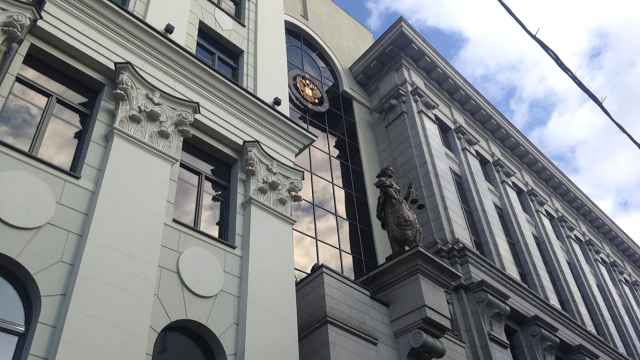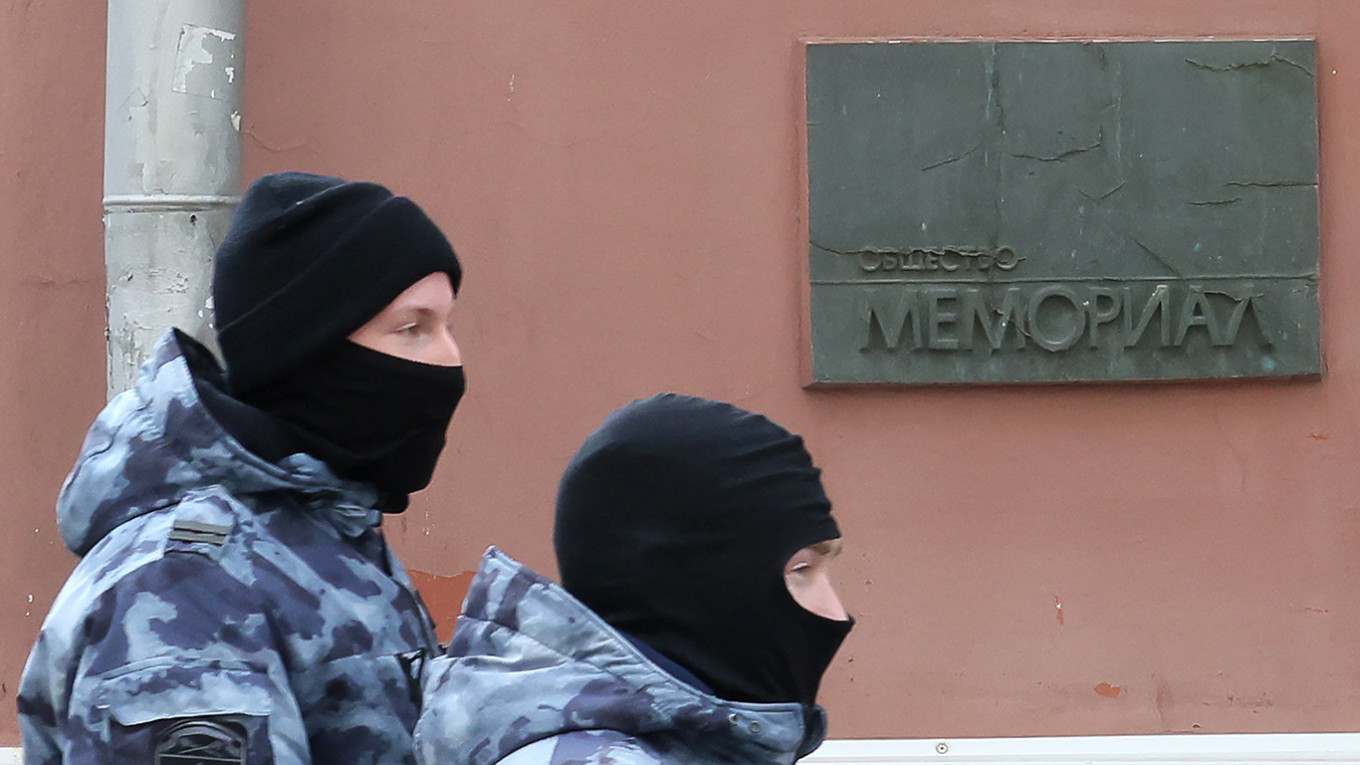
Russia’s Supreme Court on Thursday declared the Nobel Prize-winning human rights organization Memorial an “extremist” group, a designation that effectively criminalizes its remaining operations and exposes its supporters to criminal prosecution.
The ruling targets what the court termed the “Memorial international public movement,” an umbrella designation that the group itself notes has no formal legal entity, but which allows authorities to shutter any remaining projects or “structural divisions” linked to its name.
In a statement, the Supreme Court justified the ban by claiming Memorial’s activities are “markedly anti-Russian” and intended to “erode historical, cultural, spiritual and moral values” while undermining the “fundamental pillars of Russian statehood.”
Memorial was founded in 1987 to document Soviet-era political repression, a mission that has increasingly clashed with the state’s efforts to elevate the image of the U.S.S.R. under President Vladimir Putin.
The extremist label carries severe legal consequences. Authorities can now pursue criminal charges against any Russian citizen who cooperates with Memorial’s network in exile, shares content it produces or provides financial support.
In response to the “extremist” ruling, Memorial’s Human Rights Center, a branch providing legal aid to political prisoners, announced it would cease all direct operations within Russia to protect its staff and volunteers from the “repressive apparatus” of the state.
The EU’s delegation to Russia called the Supreme Court decision a “politically motivated blow” that would nonetheless fail to erase the group’s historical legacy.
Diplomats from France, Germany, Sweden and the Czech Republic reportedly attended the hearing in a show of support.
Memorial, which received the Nobel Peace Prize in 2022 alongside activists from Ukraine and Belarus, slammed the ruling as “unlawful,” characterizing it as the final stage in the state's total suppression of independent civil society.
A Message from The Moscow Times:
Dear readers,
We are facing unprecedented challenges. Russia's Prosecutor General's Office has designated The Moscow Times as an "undesirable" organization, criminalizing our work and putting our staff at risk of prosecution. This follows our earlier unjust labeling as a "foreign agent."
These actions are direct attempts to silence independent journalism in Russia. The authorities claim our work "discredits the decisions of the Russian leadership." We see things differently: we strive to provide accurate, unbiased reporting on Russia.
We, the journalists of The Moscow Times, refuse to be silenced. But to continue our work, we need your help.
Your support, no matter how small, makes a world of difference. If you can, please support us monthly starting from just $2. It's quick to set up, and every contribution makes a significant impact.
By supporting The Moscow Times, you're defending open, independent journalism in the face of repression. Thank you for standing with us.

Remind me later.