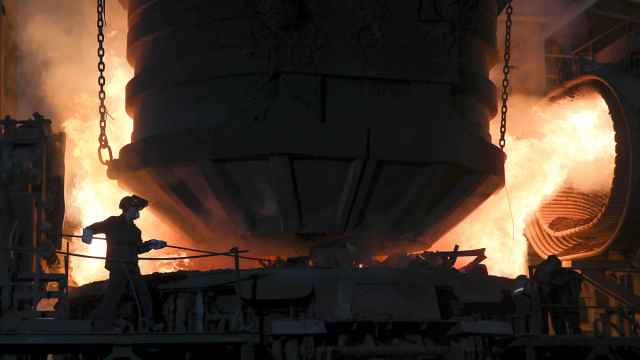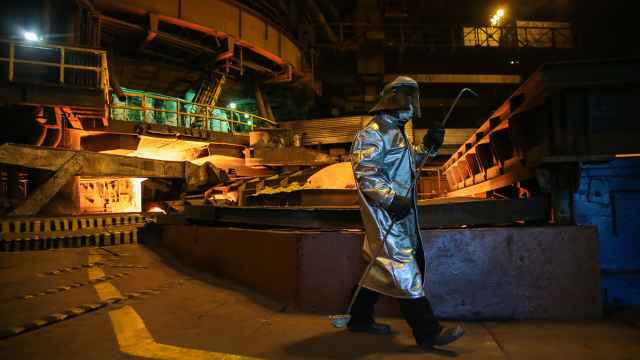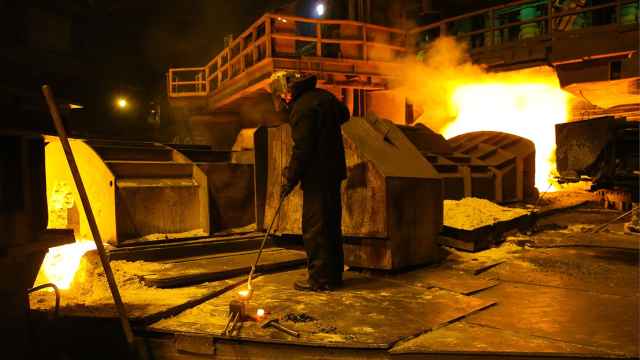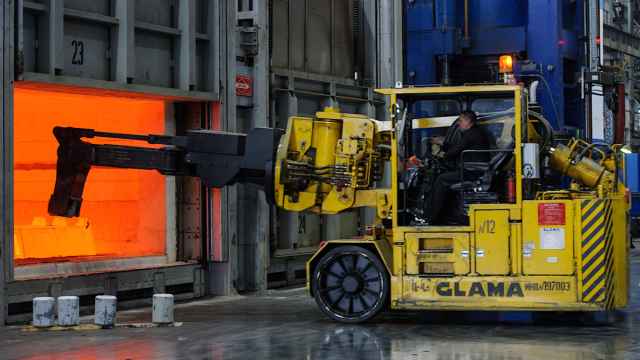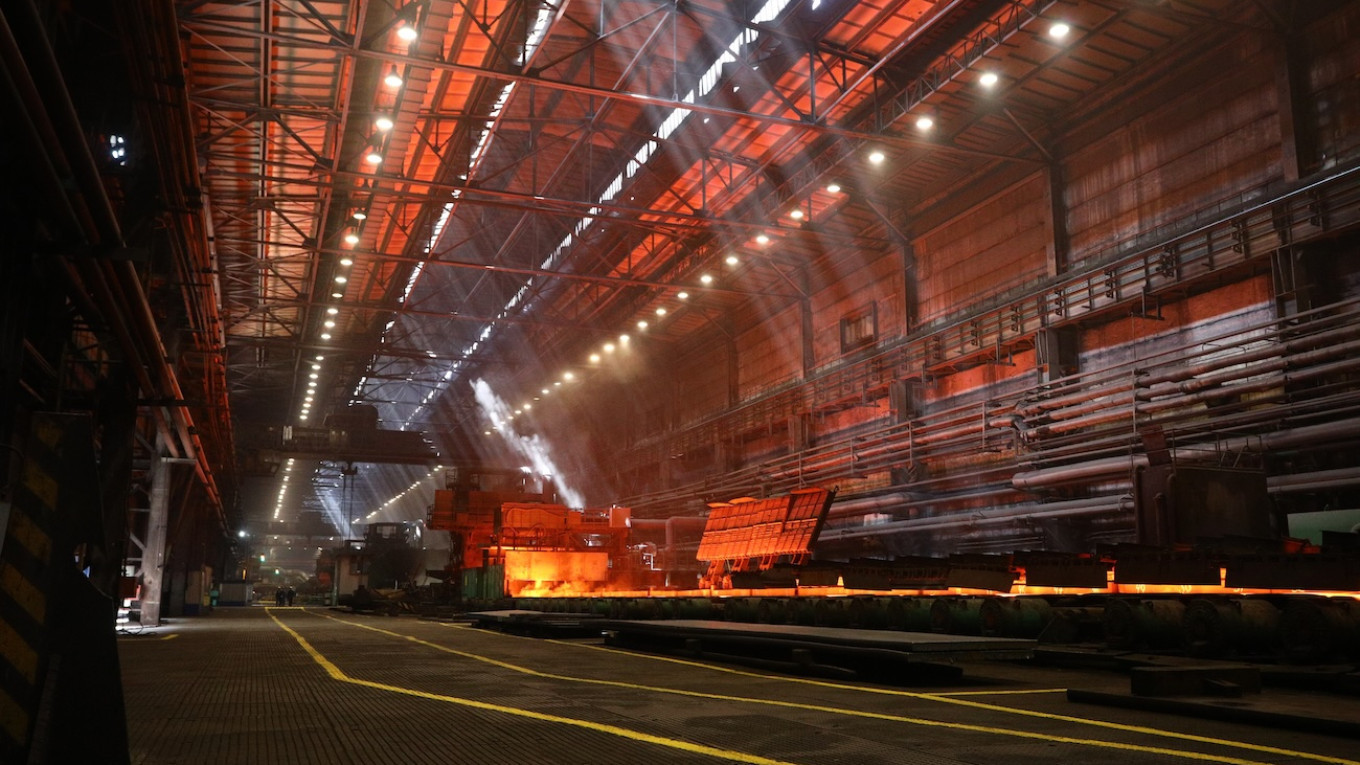
Russia's steel production fell to its lowest level in 15 years in 2025, as Western sanctions, weak domestic demand and high borrowing costs pushed one of the country's largest industrial sectors into its deepest downturn since the early 2000s, industry data showed.
Steel output declined to 67 million metric tons last year, down 12% from pre-war 2021 levels, according to data from industry association Chermet cited by the RBC news website.
The downturn accelerated in the first quarter of 2026, with steel production falling 10.4% year-on-year to 15.6 million tons despite continued demand from defense manufacturers.
The decline highlights the growing strains facing parts of Russia's wartime economy beyond the defense sector. While military spending has supported some industries, steelmakers have been hit by a combination of shrinking demand from key domestic customers, the loss of Western export markets and interest rates that have made financing increasingly expensive.
"The metal market is under pressure from two key factors," Alexei Parshukov, senior vice president at Industrial Metallurgical Holding (PMH), told RBC.
"First, there has been a reduction in domestic demand from metal-intensive industries such as construction, machinery manufacturing, the oil and gas sector, shipbuilding, agricultural equipment production and railcar manufacturing. Second, most export markets have effectively been closed."
Domestic steel consumption fell 14% in 2025 and declined by a further 15% in the first quarter of this year, according to the report.
Russian steel producers have also struggled to replace sales lost after sanctions cut off access to markets in the European Union, Britain, the United States, Canada and Japan. While companies redirected some exports to Turkey, China and former Soviet states, steel exports between 2021 and 2024 fell by roughly one-third, or 10 million tons, Parshukov said.
The downturn has weighed heavily on the financial performance of major producers.
"Virtually all large ferrous metallurgy companies reported declines in revenue and profit over the last financial year," Parshukov said.
Magnitogorsk Iron and Steel Works (MMK) reported a net loss of 14.9 billion rubles ($206 million) in 2025, according to RBC. Meanwhile, profit at Severstal fell fivefold and the company's free cash flow turned negative, with cash outflows exceeding inflows by 30.5 billion rubles ($421 million).
Steelmakers have responded by cutting costs and delaying investment.
Severstal reduced spending on maintenance by 15%, cut capital expenditures by 24%, suspended wage indexation and halted a strategic iron ore pellet project in the northwestern city of Cherepovets, RBC reported.
MMK lowered capacity utilization to 60%, sharply curtailed investment spending and announced plans to cut 10% of its management staff.
Russia's steel industry employs around 700,000 people and underpins nearly 100 single-industry towns, making it one of the country's most important industrial sectors.
Analysts at the Center for Strategic Research said the industry has entered a "survival mode." Steel companies borrowed 2.7 trillion rubles ($37.3 billion) from banks last year, mostly through short-term loans used to support working capital and cover operating shortfalls, they said.
According to Russia's Central Bank, troubled debt in the sector increased by 600 billion rubles ($8.3 billion).
Analysts warn that the downturn could persist for years.
Kirill Chuyko, an analyst at brokerage BCS, said the industry risked sliding back toward conditions last seen in the early 2000s without government support. Steelmakers sought tax relief from the Finance Ministry last year but were rebuffed.
"There is simply not enough money in the budget to support everyone," Dmitry Polevoy, chief investment officer at Astra Asset Management, told RBC.
Some analysts argue that a settlement to the war in Ukraine could eventually provide a lifeline to the industry.
"The need to rebuild territories and infrastructure would create substantial additional demand for steel products," Finam analyst Yaroslav Kabakov said.
"That could drive growth in steel company shares not by percentages but by multiples. However, that potential catalyst keeps moving further into the future."
Read this article in Russian at The Moscow Times' Russian service.
A Message from The Moscow Times:
Dear readers,
We are facing unprecedented challenges. Russia's Prosecutor General's Office has designated The Moscow Times as an "undesirable" organization, criminalizing our work and putting our staff at risk of prosecution. This follows our earlier unjust labeling as a "foreign agent."
These actions are direct attempts to silence independent journalism in Russia. The authorities claim our work "discredits the decisions of the Russian leadership." We see things differently: we strive to provide accurate, unbiased reporting on Russia.
We, the journalists of The Moscow Times, refuse to be silenced. But to continue our work, we need your help.
Your support, no matter how small, makes a world of difference. If you can, please support us monthly starting from just $2. It's quick to set up, and every contribution makes a significant impact.
By supporting The Moscow Times, you're defending open, independent journalism in the face of repression. Thank you for standing with us.

Remind me later.