Russia’s government has rejected requests from steel producers for broad tax breaks, opting instead for limited, targeted support as the sector struggles with falling demand and rising imports, the RBC news website reported Thursday.
Steelmakers had proposed raising the “cut-off price” used to calculate the steel excise tax and granting companies a six-month tax holiday.
Both initiatives were rejected at a Tuesday meeting chaired by First Deputy Prime Minister Denis Manturov, who backed the Finance Ministry’s opposition to systemic tax relief for the industry, RBC reported.
The decision highlights the Kremlin’s reluctance to reduce tax revenues at a time when federal finances are under strain and the government is prioritizing spending linked to the war in Ukraine.
Officials told industry representatives that broad tax breaks would cut revenues to an already stretched budget, sources cited by the magazine Ekspert said.
Instead, authorities offered case-by-case support through a government commission for companies facing acute financial distress.
Steel producers also urged the government to impose a tax on imported metal similar to the excise duty applied to domestic producers or to raise railway tariffs for imported products.
Officials viewed the tax option as potentially viable and tasked the Finance Ministry with examining whether the excise could be extended to imports, a measure that could take effect as early as summer 2026 under an “optimistic scenario,” according to one source.
The Industry and Trade Ministry said the meeting also examined expanding requirements to use Russian-made steel in the production of equipment and transport machinery by amending government decrees governing localization rules and public procurement.
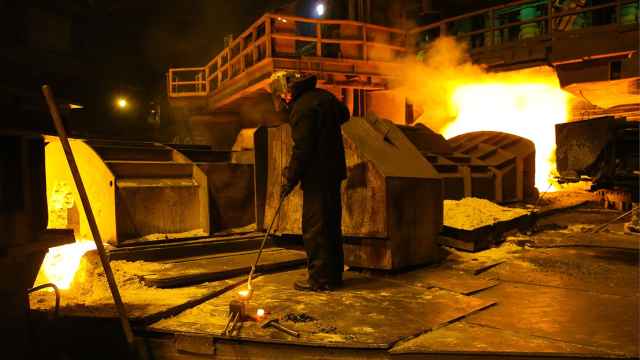
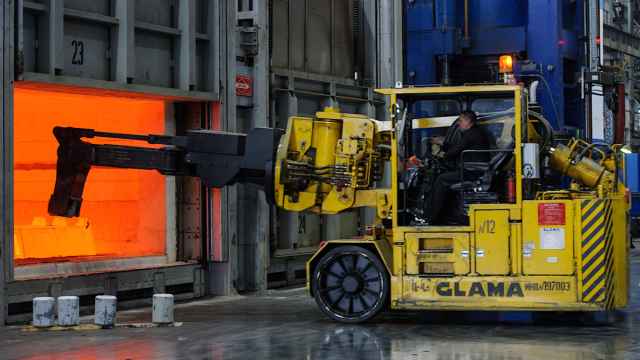
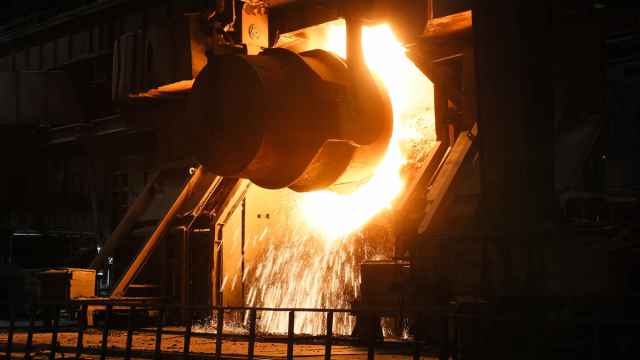
Russia’s steel industry has been hit by a combination of weak domestic demand, a stronger ruble, sanctions over the war in Ukraine, rising tariffs from state-controlled utilities and growing imports.
Foreign steel products’ share of the domestic market rose from 6.3% in 2024 to 9.6% in 2025, according to estimates by Russian steelmaker Severstal. The main suppliers are Kazakhstan and China.
Steel output in Russia fell 4.7% in 2025 to 67.4 million metric tons, according to analytics firm Corporation Chermet, while the World Steel Association estimated a similar 4.5% decline to 67.8 million tons.
Domestic consumption of ferrous metallurgy products dropped 14% last year to 38.9 million tons — the lowest level since 2011 — according to the Center for Strategic Research, reflecting a downturn in machinery manufacturing and the automotive sector as well as stagnation in construction.
Read this story in Russian at The Moscow Times' Russian service.
A Message from The Moscow Times:
Dear readers,
We are facing unprecedented challenges. Russia's Prosecutor General's Office has designated The Moscow Times as an "undesirable" organization, criminalizing our work and putting our staff at risk of prosecution. This follows our earlier unjust labeling as a "foreign agent."
These actions are direct attempts to silence independent journalism in Russia. The authorities claim our work "discredits the decisions of the Russian leadership." We see things differently: we strive to provide accurate, unbiased reporting on Russia.
We, the journalists of The Moscow Times, refuse to be silenced. But to continue our work, we need your help.
Your support, no matter how small, makes a world of difference. If you can, please support us monthly starting from just $2. It's quick to set up, and every contribution makes a significant impact.
By supporting The Moscow Times, you're defending open, independent journalism in the face of repression. Thank you for standing with us.

Remind me later.