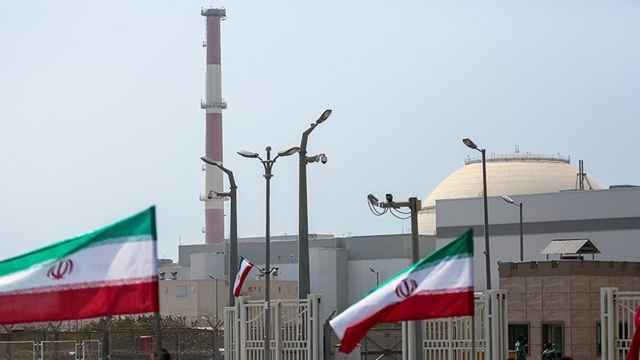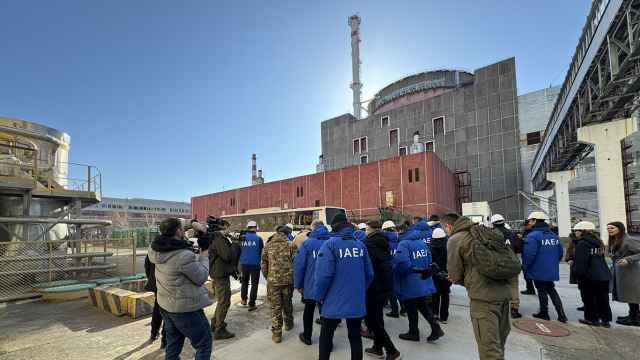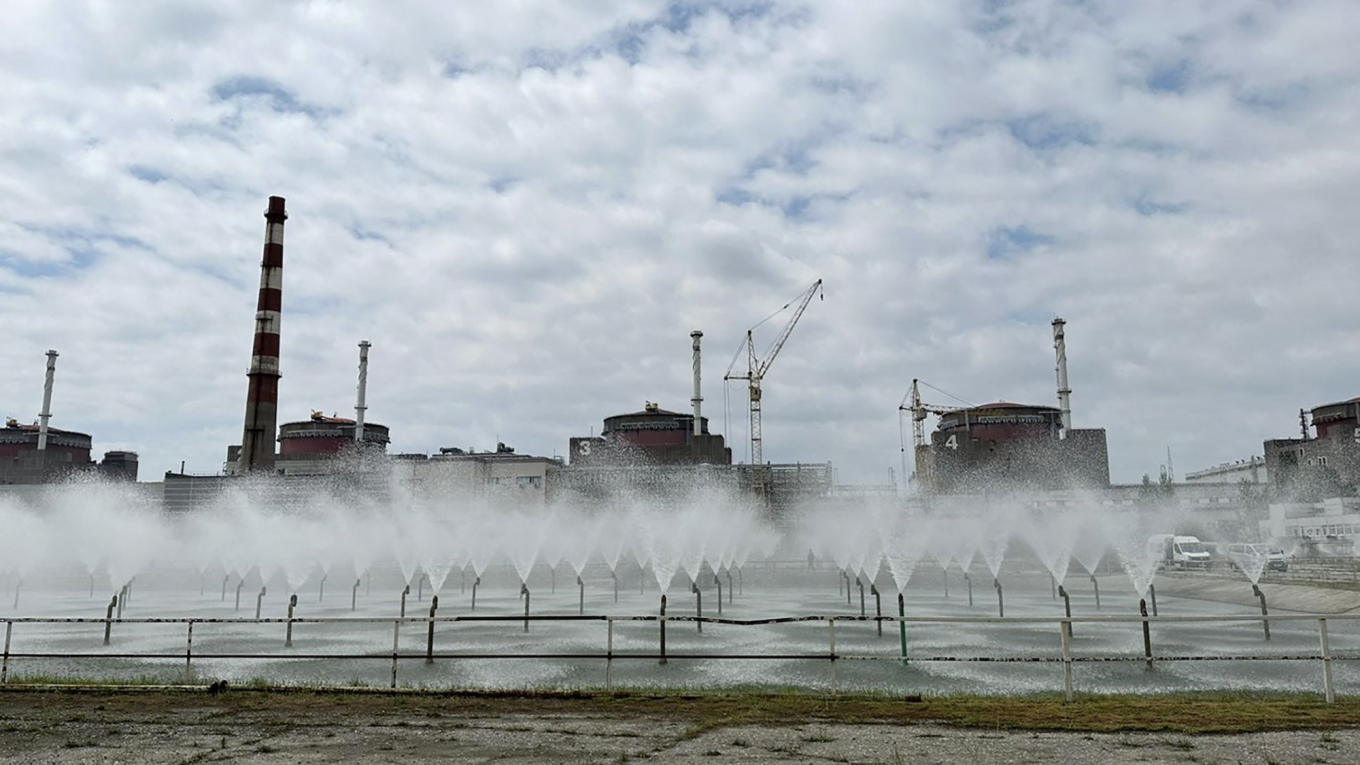
A drone hit the Zaporizhzhia nuclear power plant in Russian-occupied southern Ukraine, the UN nuclear agency said, citing local officials.
The International Atomic Energy Agency (IAEA) posted on social media that the Russian-run plant's operator informed it that a drone had hit the turbine building on Saturday, "reportedly causing a hole in its wall".
Russian media carried a statement from state-owned nuclear power firm Rosatom accusing Ukraine of a deliberate attack — a claim strongly denied by Kyiv.
Close to the front line in southern Ukraine, Zaporizhzhia is the biggest nuclear power plant in Europe.
Moscow and Kyiv have repeatedly accused each other of risking a nuclear catastrophe with attacks since it was captured by Russia's forces in 2022.
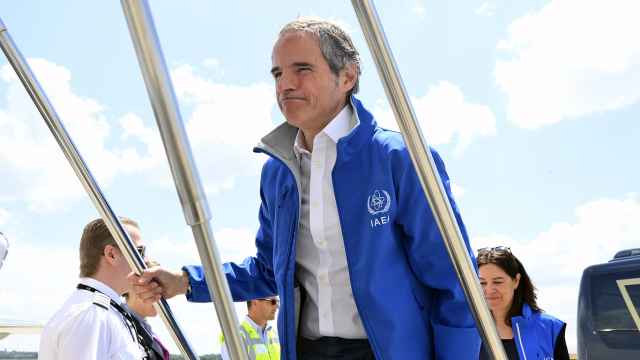
"There should be no attack of any kind from or against the plant", IAEA chief Rafael Grossi was quoted as saying in the agency's X post late on Saturday.
"Attacking nuclear sites is like playing with fire," Grossi said.
Rosatom alleged the drone was controlled via a fibre-optic cable, which ruled out "the possibility of an accidental strike".
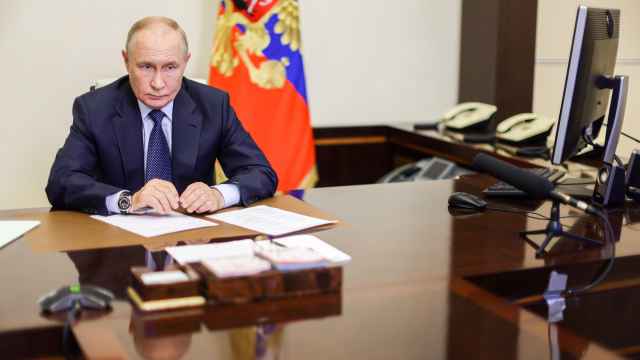
"Today, we have come one step closer to an incident that is highly likely to affect even those who live far beyond the borders of Russia and Ukraine," Rosatom CEO Alexei Likachev told Russian media.
Rejecting the accusations, Ukraine's Foreign Ministry said in a statement that they lacked "logic."
"It is unclear why Ukraine would strike its own nuclear power plant located on its own territory, which it itself seeks to regain under its sovereign control," the ministry said.
"We consider these statements as yet another information operation by the occupying state."
The strike blew a hole in the wall of the machine room but did not damage core equipment, Rosatom said.
Authorities in Russian-occupied Zaporizhzhia in April accused Ukraine of carrying out a strike which they said killed a transport worker.
A Message from The Moscow Times:
Dear readers,
We are facing unprecedented challenges. Russia's Prosecutor General's Office has designated The Moscow Times as an "undesirable" organization, criminalizing our work and putting our staff at risk of prosecution. This follows our earlier unjust labeling as a "foreign agent."
These actions are direct attempts to silence independent journalism in Russia. The authorities claim our work "discredits the decisions of the Russian leadership." We see things differently: we strive to provide accurate, unbiased reporting on Russia.
We, the journalists of The Moscow Times, refuse to be silenced. But to continue our work, we need your help.
Your support, no matter how small, makes a world of difference. If you can, please support us monthly starting from just $2. It's quick to set up, and every contribution makes a significant impact.
By supporting The Moscow Times, you're defending open, independent journalism in the face of repression. Thank you for standing with us.

Remind me later.