
As Russia’s war in Ukraine grinds on, a quieter power grab in the South Caucasus has gone largely unnoticed beyond the region.
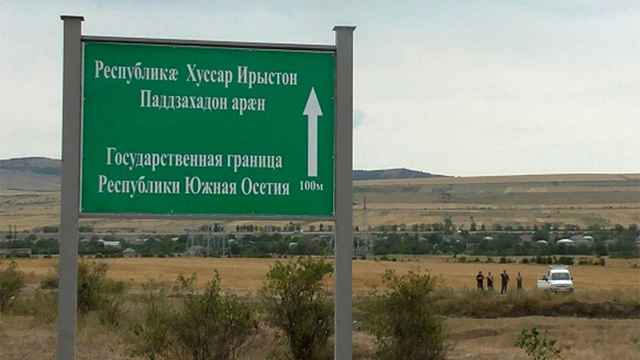
Since the breakup of the Soviet Union, the Georgian regions of South Ossetia and Abkhazia have maintained de facto independence from Tbilisi with Russian support. While most believe them to be Russian-occupied regions of Georgia in the same manner as the Donbas, both Abkhazia and South Ossetia maintain some degree of administrative autonomy from Moscow, billing themselves as genuine independent states. Moscow has even recognized them as separate countries since the 2008 Russia-Georgia war.
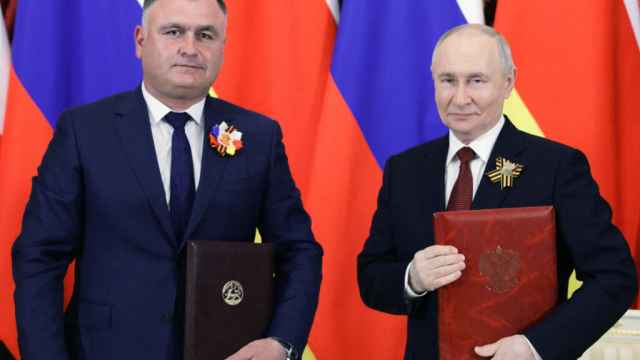
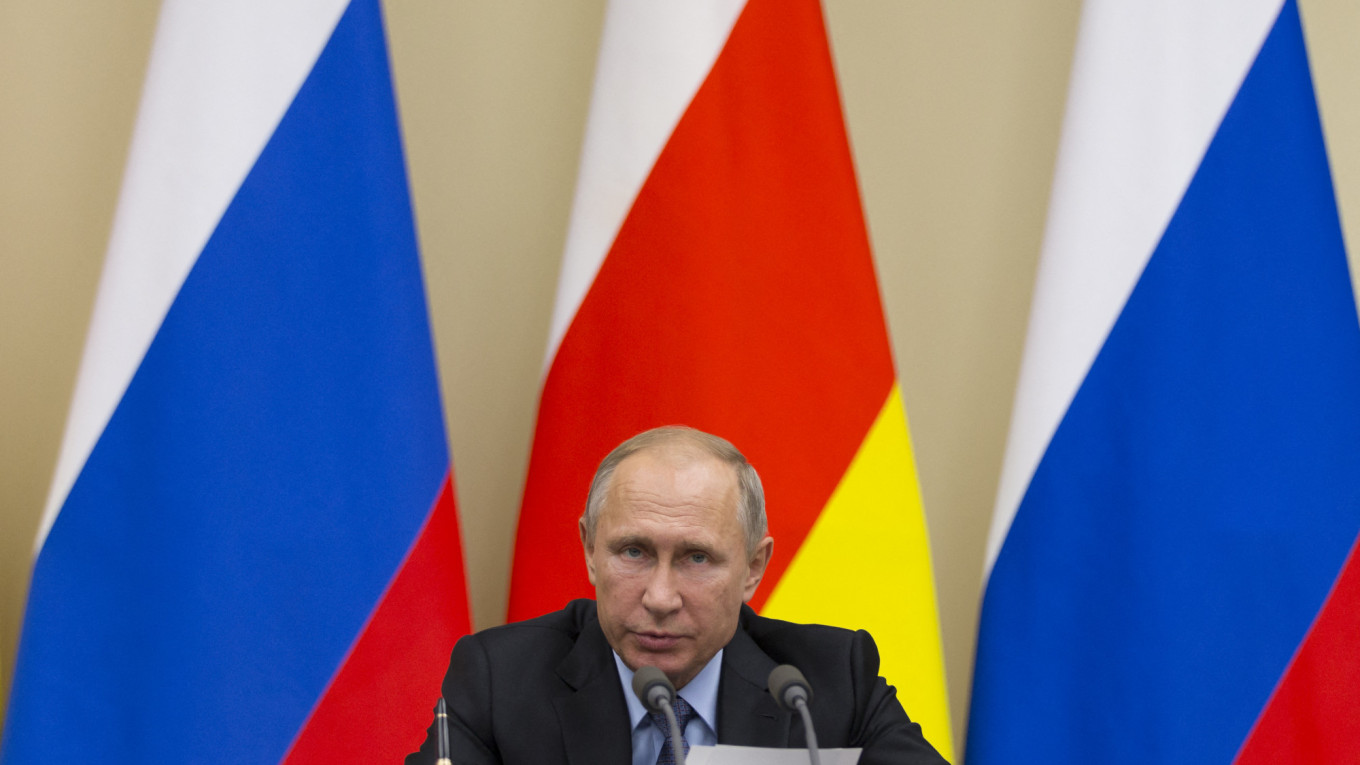
On May 9, however, Russian President Vladimir Putin and de facto South Ossetian President Alan Gagloev signed an agreement on “Deepening Allied Interaction.” Among measures harmonizing economic regulations, the treaty loosened restrictions on who could take part in South Ossetia’s separatist administration. Now, for the first time, Russian citizens are legally able to serve as officials in the region.
At the signing of the agreement, Gagloev said he hoped the treaty would “initiate the reunification of the Ossetian people,” a reference to North Ossetia in the Russian North Caucasus, and constituted “a step towards unity with great Russia.”
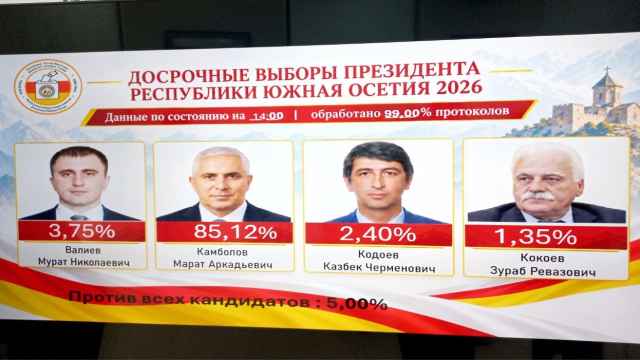
Next, on June 8, South Ossetia’s Prime Minister Dzambolat Tadtoyev resigned. Gagloev accepted his resignation and announced that North Ossetian native Marat Kambolov would eventually be nominated for the position. Kambolov is a career Kremlin bureaucrat who served as deputy education and science minister from 2010 to 2014. According to reporting by RFE/RL’s Georgian service, the Kremlin likely hopes Kambolov’s appointment will lead to more effective management and development in the impoverished region.
More importantly, however, the installation of a Moscow bureaucrat looks to eliminate whatever plausible political distance may have remained between Tskhinvali and Moscow. With the broad parameters of the Russia-South Ossetia agreement, Kambolov is likely to be the first of many Russian administrators to come.
For onlookers, developments in South Ossetia constituted what amounted to de facto annexation by Russia. Former Georgian Prime Minister and head of the opposition Gakharia party, Giorgi Gakharia, protested the agreement between Tskhinvali and Moscow as a “new phase of annexation” allowing the “establishment of Moscow’s direct rule over the occupied territory of Georgia.”
The head of Georgia’s Social Justice Center, Tamta Mikeladze, similarly called the new law the “practical annexation of the region.”
Mikeladze predicted the agreement would lead to the region’s total “absorption of transport, energy and telecommunication systems” by Russia.
While Russia’s military presence and economic support have always been critical to the viability of South Ossetia and Abkhazia, relations between the two phantom states and Moscow have always been somewhat more complicated than that of simply occupied territories.
While South Ossetian elites have voiced their interest in Russian annexation for years, Abkhazia has consistently resisted integration efforts with Russia. What sparse public opinion polling of Abkhazia and South Ossetia exists does back up the idea that Abkhaz residents guard their autonomy to a greater extent than those in South Ossetia.
Abkhazia has a much larger population than South Ossetia, roughly 250,000 to South Ossetia’s less than 55,000. It also lies upon the strategically important Black Sea, giving the territory critical logistical and potential military value.
In contrast to South Ossetia, locals in Abkhazia have pushed back as Russia has ramped up economic integration efforts with Abkhazia in recent years. Such tensions crescendoed in November 2024, when Abkhaz local elites bowed to Russian economic pressure and prepared to green-light legislation giving preferential status to Russian property developers.
The move triggered mass controversy in Abkhazia, with protesters storming the parliament building in Abkhazia’s capital of Sukhumi. Abkhazia’s de facto President Aslan Bzhania fled the city and, within a few days, resigned his position, triggering new elections.
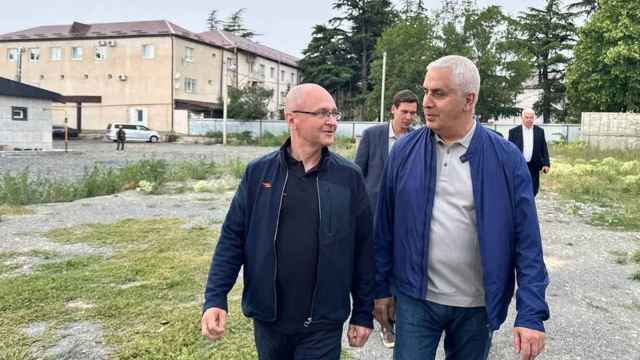
Since then, Moscow has taken a new approach combining economic pressure with elite cooptation. In the aftermath of Bzhania’s overthrow, top Kremlin official Sergey Kiriyenko began regularly visiting Abkhazia, where he himself was born. He threw Russia’s support behind Badra Gunba in Abkhazia’s presidential election, signaling that Moscow’s economic pressure would come to an end if Gunba was elected. In February 2025, Gunba won the presidential elections. Shortly after, Russia launched a new Sochi-Sukhumi passenger rail line.
A few months later, Gunba and Kiriyenko cut the ribbon at a ceremony opening a newly renovated, and Russian-financed, commercial airport — the first in Abkhazia since the collapse of the Soviet Union.
In his June 2026 address to Abkhazians, Gunba underscored the economic value of ongoing projects such as the Ochamchire port, rail connections to Russia, and renewed transit infrastructure — all almost certainly financed by Moscow and likely designed to turn Abkhazia’s Black Sea coast into a hub of Russian logistics.
Still, local Abkhaz elites have maintained red lines toward Russia. In May, shortly after South Ossetia allowed Russian nationals to staff their administration, Abkhazia moved to establish five-year residency requirements for those seeking to hold local office and barred foreign nationals from taking part in Abkhaz politics.
Coming in the context of Georgian Dream’s pivot away from Europe and toward Russia, Moscow’s recent administrative grab in South Ossetia underscores the one-sided nature of this new relationship.
“[Georgian Dream] have given everything away to Russia, deprived us of the chance to join the European Union and attack, on a daily basis, the countries that recognise and defend our territorial integrity. Yet with this submissive policy towards Russia, they have achieved nothing,” Mikeladze wrote on Facebook.
“Instead of defending the country’s interests,” Gakharia argued in reference to South Ossetia, Georgian Dream is “aiding the occupying state in the annexation of our territories through complicit silence.”
Georgian Dream officials have commented on the push toward Russia-South Ossetia integration.
“Russia continues to disregard its international obligations and is taking further steps toward the annexation of Georgia’s regions,” Georgia’s Foreign Minister Maka Botchorishvili said at a European ministerial summit in Moldova following the signing of the treaty.
The comment, however, came six days after the South Ossetia-Russia agreement, a period of silence that opposition members have been quick to point out.
However, it seems there is little Tbilisi could do, or is willing to do, in order to frustrate Moscow’s efforts at political and economic integration with Georgia’s breakaway territories.
For the Kremlin, the route it has now established with Tskhinvali would seem to be an appealing one. Sidestepping any of the extra controversy that may come with formally annexing either territory, the Kremlin is able to inch closer to complete control over each through the installation of its own elites.
Even as Russian law maintains that both Abkhazia and South Ossetia are independent states, the facts on the ground creep closer to annexation.
A Message from The Moscow Times:
Dear readers,
We are facing unprecedented challenges. Russia's Prosecutor General's Office has designated The Moscow Times as an "undesirable" organization, criminalizing our work and putting our staff at risk of prosecution. This follows our earlier unjust labeling as a "foreign agent."
These actions are direct attempts to silence independent journalism in Russia. The authorities claim our work "discredits the decisions of the Russian leadership." We see things differently: we strive to provide accurate, unbiased reporting on Russia.
We, the journalists of The Moscow Times, refuse to be silenced. But to continue our work, we need your help.
Your support, no matter how small, makes a world of difference. If you can, please support us monthly starting from just $2. It's quick to set up, and every contribution makes a significant impact.
By supporting The Moscow Times, you're defending open, independent journalism in the face of repression. Thank you for standing with us.

Remind me later.