As Russian influence across the South Caucasus continues to erode, one of the Kremlin’s most senior officials, Sergei Kiriyenko, has been tasked with strengthening Moscow's oversight of Abkhazia and South Ossetia, the two territories it recognized as independent after the 2008 war with Georgia. In recent days, Moscow dispatched a new ambassador to one and effectively installed a new leader in the other.
The appointments signal a new attempt to make the two territories more manageable for the Kremlin. They also revive a question that Russia has struggled to answer since recognizing them nearly two decades ago: how can it deepen its control over Abkhazia and South Ossetia without further limiting its room for maneuver elsewhere in the South Caucasus?
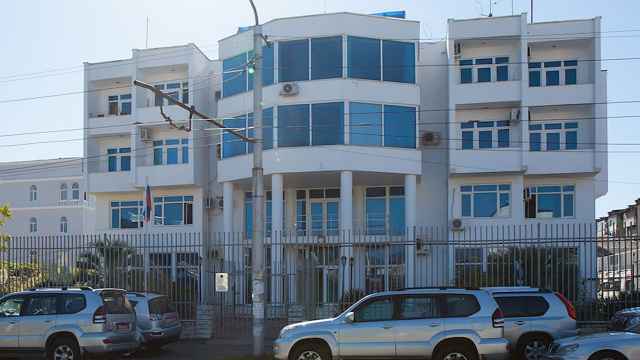
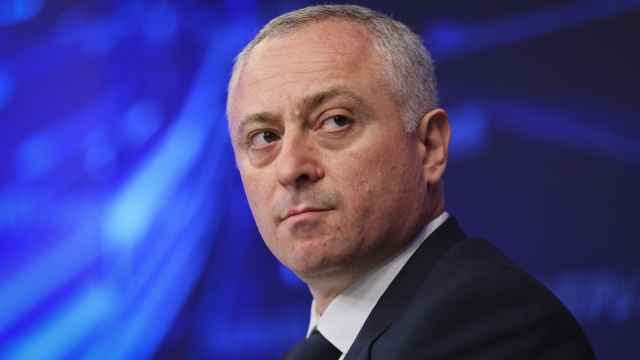
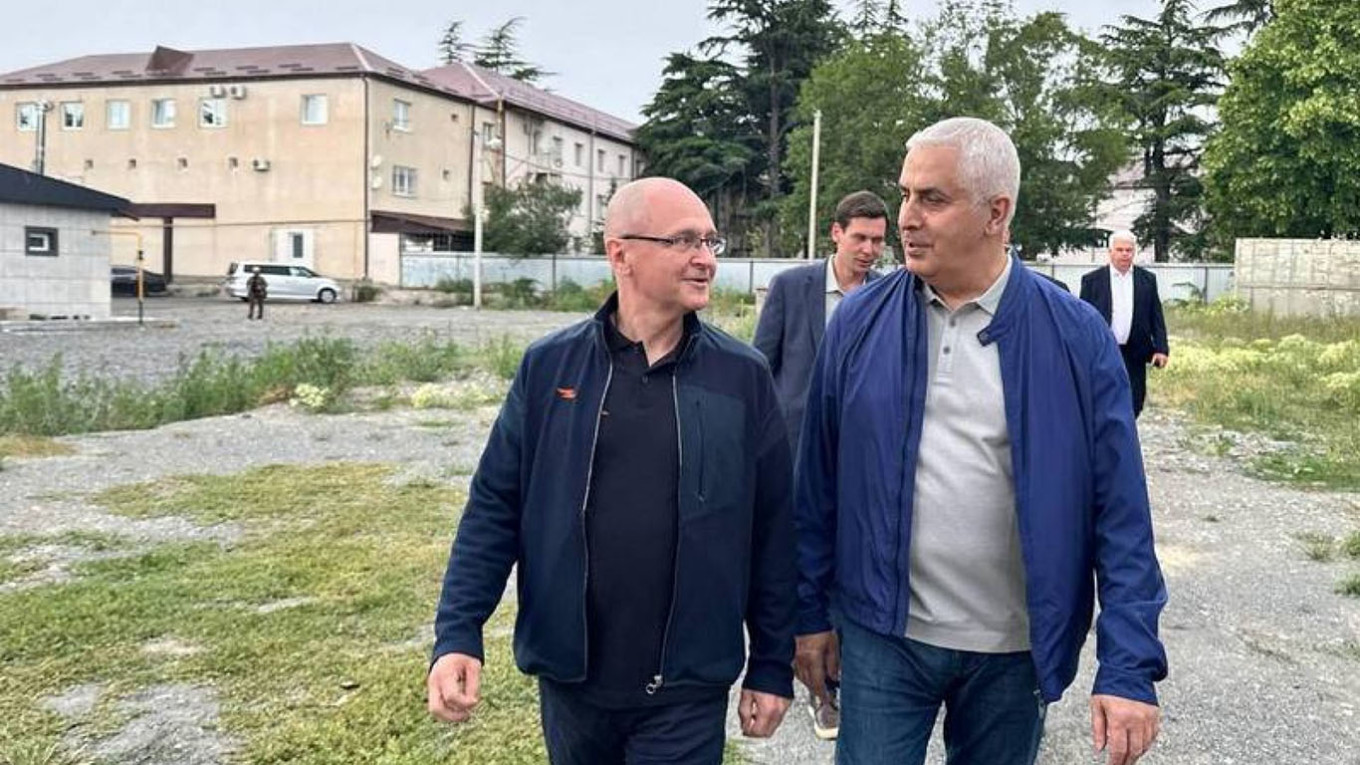
At the beginning of July, the first deputy head of the Russian presidential administration visited South Ossetia to meet its newly installed de facto president before continuing to Abkhazia, where Russia's new ambassador had just arrived. Both men are closely associated with Kiriyenko, underscoring his role as the Kremlin's chief political overseer of the two territories.
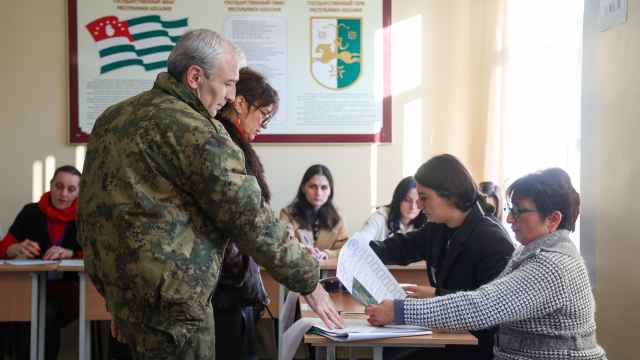
Russia has recognized Abkhazia and South Ossetia as independent states since 2008, while almost the entire international community continues to regard them as part of Georgia.
Moscow maintains military bases there, finances much of their budgets and keeps military, security and civilian officials permanently on the ground.
Alongside these formal instruments of control, the Kremlin has traditionally relied on senior political envoys from the presidential administration or security services (or both at same time) to oversee relations with the territories and intervene during political crises.
Kiriyenko has held this role for just over a year. Like every Kremlin official before him, he inherited the same challenge: successive Russian envoys have tried to make Abkhazia and South Ossetia easier to govern by transplanting Russian administrative practices into societies that operate according to very different rules. In these small, post-conflict communities, power often depends less on formal institutions than on personal relationships and long-established local customs. Attempts to reshape local governance along Russian lines have repeatedly run up against those realities.
The results have been mixed at best. In Abkhazia, repeated Russian attempts to push through new legislation have triggered political crises, strained relations with Moscow and at times fueled protests that brought down local governments.
South Ossetia, much smaller and more dependent on Russia, has generally approved almost any initiative coming from the Kremlin. Yet these formal concessions have done little to change everyday governance, where corruption scandals surrounding Russian financial assistance continue to surface with remarkable regularity.
The lack of progress has long frustrated Moscow. More than one Kremlin envoy responsible for the two territories has lost their position after failing to deliver results. The difficulties have also reinforced a broader perception that Russia struggles to manage even the territories whose survival depends on its backing.
Winning hearts and minds
Kiriyenko has inherited the same mission as his predecessors but has chosen a different way of pursuing it. Instead of relying primarily on pressure and administrative leverage, he has placed greater emphasis on communication, hoping that a more visible public presence and direct engagement will make Moscow's initiatives more acceptable in Abkhazia and South Ossetia. The objective remains the same, only the tools have changed.
That helps explain why Russia has, for the first time, appointed someone from outside the diplomatic corps as its ambassador to Abkhazia: Vyacheslav Gladkov, the former governor of Russia’s Belgorod region.
In his previous posting, Gladkov became known for his frequent video addresses and regular engagement with residents as they faced repeated attacks following the start of the full-scale invasion of Ukraine. Before taking up his new post, Gladkov promised more "human interaction" with Abkhaz society and even spoke about his efforts to learn the Abkhaz language. His predecessor, Mikhail Shurgalin, had alienated many local groups by refusing to engage with some of the territory's most outspoken critics.
A similar approach is visible in South Ossetia under Marat Kambolov, who recently assumed the post of de facto president. He has already launched a Telegram channel, publicly reprimanded customs officials on camera, and regularly posts short videos embracing children or talking with elderly women on park benches.
Yet Kambolov also illustrates the limits of this strategy. Although he is an ethnic Ossetian from neighboring North Ossetia in Russia, he remains largely unknown in South Ossetia itself, having spent most of his career in Moscow. One of his most recent positions was at the Kurchatov Institute, whose head Mikhail Kovalchuk is the brother of Yury Kovalchuk, one of Vladimir Putin's closest allies. South Ossetian social media has been filled with speculation that these connections, together with his Ossetian background, secured him the job.
The obstacles facing Moscow, however, are not primarily communicative but structural. Abkhazia and South Ossetia have repeatedly demonstrated that imported governance models are filtered through local political traditions and informal networks, regardless of how effectively they are presented.
Kiriyenko's approach may make some of Russia's policies more acceptable on the ground. Whether it can make the territories substantially easier to govern is another question.
A suitcase without a handle
The problem extends beyond Abkhazia and South Ossetia themselves. Every additional step toward integrating the two territories into Russia's political system risks increasing tensions with neighboring Georgia, which continues to regard both as occupied parts of its sovereign territory.
Russia's recognition of the two territories in 2008 led to the rupture of diplomatic relations with Tbilisi. Although trade, travel and limited channels of communication have since resumed, the two countries have not yet restored formal diplomatic ties. The territorial dispute continues to block full normalization, even under the current Georgian Dream government, which has sought to avoid direct confrontation with Moscow while allowing relations with the European Union to deteriorate.
For the Kremlin, restoring diplomatic relations with Georgia would bring clear strategic benefits, expanding opportunities for economic engagement and political influence in a country that occupies a pivotal position in the South Caucasus and the Black Sea region. Yet every new step toward integrating Abkhazia and South Ossetia pushes that goal further out of reach.
Even Kiriyenko's recent appointments have already drawn criticism in Tbilisi. More than 50 former Georgian officials and diplomats have appealed to foreign governments and international organizations, describing the latest developments as "annexationist steps." If Moscow continues to deepen its involvement in the two territories, it will become increasingly difficult even for Georgia's current leadership to avoid responding more forcefully.
This brings Kiriyenko back to the same contradiction that has confronted every Russian official since 2008. By recognizing the two territories, establishing military bases there and assuming responsibility for their security and economic survival, Moscow created a dilemma from which there is no straightforward exit. Integrating them more closely into Russia complicates relations with Georgia. Stepping back would call into question a policy the Kremlin has pursued for over 15 years.
Former Russian State Duma deputy Anatoly Chekhoyev once described South Ossetia as “a suitcase without a handle”: too heavy to carry, yet too valuable to throw away.
Kiriyenko may succeed in making Russia's governance of the two territories more effective than his predecessors did. But no amount of administrative reform can resolve the contradiction that Moscow created.
A Message from The Moscow Times:
Dear readers,
We are facing unprecedented challenges. Russia's Prosecutor General's Office has designated The Moscow Times as an "undesirable" organization, criminalizing our work and putting our staff at risk of prosecution. This follows our earlier unjust labeling as a "foreign agent."
These actions are direct attempts to silence independent journalism in Russia. The authorities claim our work "discredits the decisions of the Russian leadership." We see things differently: we strive to provide accurate, unbiased reporting on Russia.
We, the journalists of The Moscow Times, refuse to be silenced. But to continue our work, we need your help.
Your support, no matter how small, makes a world of difference. If you can, please support us monthly starting from just $2. It's quick to set up, and every contribution makes a significant impact.
By supporting The Moscow Times, you're defending open, independent journalism in the face of repression. Thank you for standing with us.

Remind me later.