Russian authorities are reviewing deals in which Russian investors acquired assets from departing foreign companies, the Kommersant newspaper reported, citing two recent lawsuits seeking additional payments from buyers.
Prosecutors have demanded 414.53 million rubles ($4.9 million) from GS Investments, a company linked to the family of businessman Andrei Komarov, whose fortune Forbes estimates at $1.5 billion.
GS Investments is owned by Lidia Komarova, who has been identified as the businessman's mother.
The company acquired the Russian assets of Swiss packaging manufacturer Amcor in late 2022, including a packaging plant in St. Petersburg and two facilities in the Novgorod region. The deal was valued at 370 million euros, excluding debt and cash.
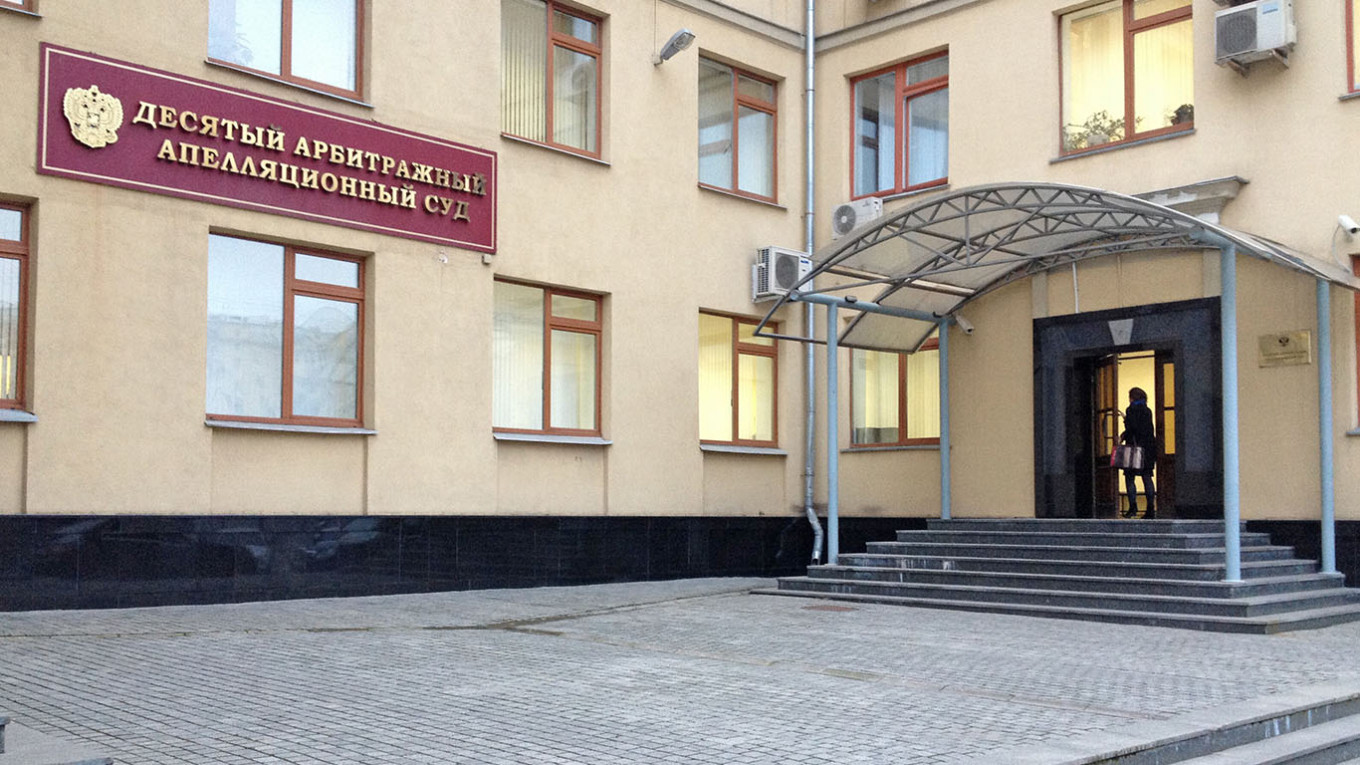
Prosecutors filed the claim with the Moscow Arbitration Court on behalf of the Industry and Trade Ministry. The Finance Ministry and the Audit Chamber are listed as third parties. Court documents do not disclose the basis for the claim.
Yury Levitsky, investment director at BGP Capital, told Kommersant that the lawsuit was likely connected to a retroactive recalculation of the mandatory “voluntary contribution” that buyers of foreign-owned assets were required to pay to the Russian budget.
Anna Barabash, chief executive of Enterprise Legal Solutions, told the newspaper that authorities may have found that Amcor’s assets were undervalued or that the deal’s structure was incorrectly factored into the calculation, resulting in a lower payment to the state.
The case is the second such lawsuit filed in recent weeks.
In early August, the Arbitration Court of St. Petersburg and the Leningrad region registered a lawsuit against Ilim Global Timber Rus, owned by businessmen Zakhar Smushkin and Boris Zingarevich. Prosecutors are seeking 1.81 billion rubles ($21.4 million), alleging violations of rules governing transactions with foreign entities.
Ilim Global Timber Rus agreed in 2023 to buy U.S.-based International Paper’s 50% stake in the Ilim pulp and paper group for $484 million.
The company told RBC that the dispute concerned the exchange rate used to calculate its payment to the Russian budget, with the two sides applying different rates to the transaction.
Levitsky said the similarities between the two lawsuits, filed several weeks apart, could point to a systematic review of completed foreign exit deals.
“If the court supports this approach, it would mean that risks for buyers in deals completed between 2022 and 2024 are not limited to three years, and similar claims could be expected in other transactions from that period,” he said.
Barabash also said the cases could signal a broader wave of reviews.
Foreign companies sold Russian assets in 11 transactions worth a combined $1 billion in the first half of 2026, compared with 10 deals during the same period last year, according to mergers and acquisitions consultancy AK&M.
This article was translated with the help of artificial intelligence and was reviewed by a Moscow Times editor before publication. Learn more about our newsroom's AI policy here.
Read this article in Russian at The Moscow Times' Russian service.
A Message from The Moscow Times:
Dear readers,
We are facing unprecedented challenges. Russia's Prosecutor General's Office has designated The Moscow Times as an "undesirable" organization, criminalizing our work and putting our staff at risk of prosecution. This follows our earlier unjust labeling as a "foreign agent."
These actions are direct attempts to silence independent journalism in Russia. The authorities claim our work "discredits the decisions of the Russian leadership." We see things differently: we strive to provide accurate, unbiased reporting on Russia.
We, the journalists of The Moscow Times, refuse to be silenced. But to continue our work, we need your help.
Your support, no matter how small, makes a world of difference. If you can, please support us monthly starting from just $2. It's quick to set up, and every contribution makes a significant impact.
By supporting The Moscow Times, you're defending open, independent journalism in the face of repression. Thank you for standing with us.

Remind me later.