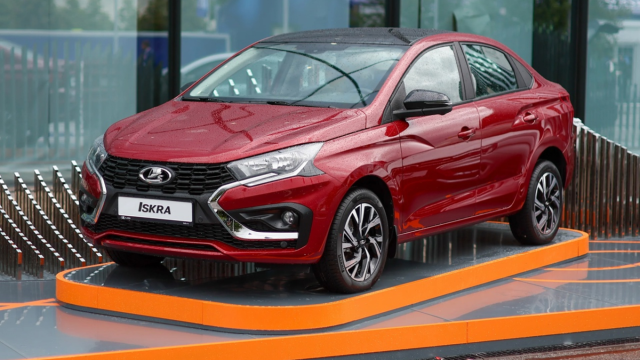
The average price of a new passenger car in Russia has risen 46% since the full-scale invasion of Ukraine, climbing from 2.4 million rubles ($31,200) to 3.5 million rubles ($45,500), according to Sergei Tselikov, head of the Avtostat analytical agency.
With the ruble relatively firm, that puts Russia fifth among the world’s largest car markets by average price, behind Canada ($62,000), Britain ($61,000), the United States ($52,000) and Israel ($50,000), Tselikov said.
“Cars in Russia are becoming among the most expensive in the world,” he concluded.
Russia may rank even higher when adjusted for consumer preferences. In Canada and the United States, high average prices reflect the fact that more than half of new passenger vehicles sold are larger SUVs and pickup trucks. In Britain, the premium segment accounts for a substantial share of sales.
By contrast, the bestselling brand in Russia remains Lada, which primarily produces smaller mass-market B- and C-class models.
Japan and India, where compact budget cars dominate, sit at the bottom of the ranking. The average new car price is $22,400 in Japan and $11,000 in India — two and four times lower than in Russia, respectively.
Cars are also cheaper than in Russia in Germany, where the average price stands at $40,000, as well as in Australia ($35,000), South Korea ($30,000) and China ($22,500).
Tselikov said China was a logical comparison for Russia, as buyers in both countries favor crossovers and Chinese brands now account for nearly half of new passenger car sales in Russia.
Although Russia’s sales mix is skewed toward relatively affordable models, the average price of a car in China is roughly half that in Russia.
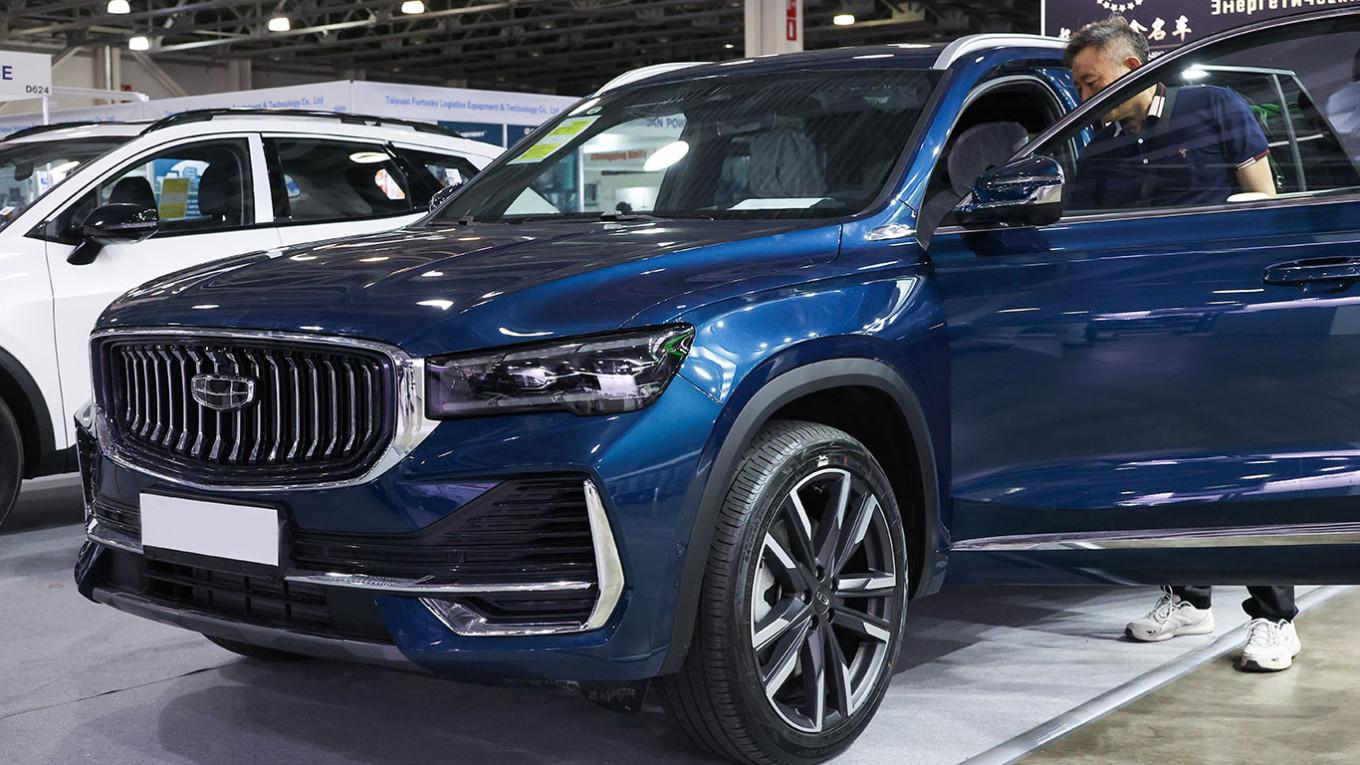
For example, the 2026 Geely Monjaro crossover costs 191,100 yuan, or about 2.1 million rubles ($27,300), in China.
In Russia, prices start at 3.99 million rubles ($51,870) under special offers and reach 4.5 million rubles ($58,500) at full price.
A BMW X3 30 xDrive M Sport Pro assembled in China sells there for 320,000 yuan, or around 3.5 million rubles ($45,500).
An unofficial importer said the model could be delivered to Russia for 6.7 million rubles ($87,100). In the United States, a comparable version is priced at $51,300, or roughly 3.9 million rubles, though in a simpler configuration.
Chinese authorities have supported automakers with subsidies while intense competition has pushed prices down, Tselikov said.
Data from GlobalData show average passenger car prices in China fell from $26,900 in January 2023 to $21,300 in February 2025, before edging higher but remaining below levels seen three years ago.
Tselikov attributed Russia’s high prices to state tariff policy rather than currency effects. He estimates that import duties and costs linked to semi-knockdown assembly can double a car’s price compared with its cost in its home market.
He drew a parallel with Israel, where high car prices are largely due to a purchase tax of 83% of a vehicle’s value, or 50% for repatriates.
Russia sharply increased its commercial scrappage fee on imported cars from 2024, raising it at least 2.5 times to more than 800,000 rubles ($10,400) from 300,000 rubles ($3,900), and by three to four times in many categories.
Preferential rates are being phased out and overall tariff and tax burdens on businesses are rising, an employee of a large dealership said.
The surge in prices has led Russians to buy fewer new cars and extend the lifespan of existing vehicles. According to Avtostat, 1.3 million new passenger cars were sold last year, down 16% from 2024.
Read this story in Russian at The Moscow Times' Russian service.
A Message from The Moscow Times:
Dear readers,
We are facing unprecedented challenges. Russia's Prosecutor General's Office has designated The Moscow Times as an "undesirable" organization, criminalizing our work and putting our staff at risk of prosecution. This follows our earlier unjust labeling as a "foreign agent."
These actions are direct attempts to silence independent journalism in Russia. The authorities claim our work "discredits the decisions of the Russian leadership." We see things differently: we strive to provide accurate, unbiased reporting on Russia.
We, the journalists of The Moscow Times, refuse to be silenced. But to continue our work, we need your help.
Your support, no matter how small, makes a world of difference. If you can, please support us monthly starting from just $2. It's quick to set up, and every contribution makes a significant impact.
By supporting The Moscow Times, you're defending open, independent journalism in the face of repression. Thank you for standing with us.

Remind me later.