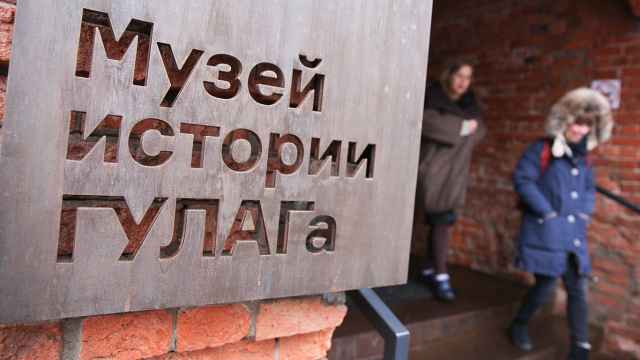

In late March, the State Duma rushed through a bill introducing penalties for denying the so-called “genocide of the Soviet people.” This happened weeks after news broke that Moscow’s shuttered Gulag History Museum is being turned into a museum on the same subject.
Taking place while Russia draws international condemnation for its war in Ukraine, the pushing of the “genocide of the Soviet people” into the public debate shows that the Kremlin is trying to frame Russia as a victim while waving away its own crimes, such as the deportations of Crimean Tatars, Chechens and other Indigenous peoples.
From a legal perspective, expanding the concept of genocide to the vague category of the “Soviet people” raises serious questions.
Do the people who introduced this bill actually understand the definition of genocide? Have they read the Genocide Convention, which Russia itself has ratified?
If the authors of the bill had consulted the Genocide Convention, they would better understand how international law works — and that genocide is, among other things, a legal category. That immediately raises several important questions that deserve answers.
First, according to Federal Law No. 74-FZ, “genocide against the Soviet people” is defined as the actions of Nazi Germany and its accomplices aimed at the destruction of groups inhabiting the territory of the U.S.S.R.
However, when assessed against the criteria of international law, a fundamental problem emerges: there is no evidence of genocidal intent directed at the “Soviet people” as a single, unified group.
In practice, Nazi policy did have a genocidal character. But many of the crimes committed on Soviet territory, including mass killings of civilians, punitive operations, and the siege of Leningrad, are legally classified as war crimes or crimes against humanity, rather than genocide. As historian Konstantin Pakhlyuk, a scholar of memory politics and Nazi crimes, warns, “the term ‘genocide’ gets diluted into a synonym for ‘mass killings’,” eroding its legal and conceptual precision.
If fundamentally different forms of violence are collapsed into a single category of genocide, it becomes harder to distinguish between them, to analyze them accurately, and, ultimately, to prevent them.
Furthermore, the concept of the “Soviet people” itself is highly problematic. The U.S.S.R. was a multiethnic and multinational state, whereas the Genocide Convention requires a specific ethnic, national, racial, or religious group to be the target. The “Soviet people,” by contrast, was a political construct encompassing diverse populations with different identities, histories and experiences.
This conceptual vagueness matters. It risks obscuring the fact that different groups were targeted differently by Nazi Germany. While Nazi ideology often framed populations of the U.S.S.R. broadly as “non-Aryan,” its policies were not uniform. Jews and Roma were subjected to systematic, industrial extermination, while other populations were treated through occupation, labor exploitation or repression. Some groups, including the Georgian-born Josef Stalin, were even considered “Aryan.”
Of course, if the authors of the Russian bill disagree with the existing definition of genocide, that is a legitimate position. But then they must clearly explain why the concept should be expanded to cover everyone who lived in the Soviet Union at the time.
That means recognizing not only certain cases that serve a political agenda, but also crimes committed by the Russian Empire and the U.S.S.R.
This includes, for example, the genocide of the Circassians in the 19th century. Although it occurred before the term “genocide” was coined, the crime itself has no temporal limits and continues to shape the realities of those who survived it, demanding ongoing recognition and action even centuries later. It also includes Soviet-era deportations and mass repression against Chechens and Crimean Tatars, as well as Kalmyks, Bashkirs, Kyrgyz and many other peoples — including those effectively wiped out as a result of Russian colonialism and imperialism.
Raphael Lemkin, the originator of the term, also viewed the Holodomor in Ukraine as genocide, since organized famine is often used as a tool of destruction.
More recently, Luis Moreno Ocampo, a former prosecutor of the International Criminal Court, argued that the 2023 blockade of the Lachin Corridor to Nagorno-Karabakh — which deprived around 120,000 Armenians in Artsakh of access to food, medicine and essential resources — falls under Article II(c) of the Genocide Convention by “deliberately inflicting on the group conditions of life calculated to bring about its physical destruction.”
These issues remain contested. Both perpetrators and their supporters often dispute such classifications, sometimes arguing that the genocide label can only be applied by a court. However, this raises practical concerns, as targeted groups often lack the political power and resources to bring cases.
The very existence of these debates shows how important it is to define criteria clearly. Anyone participating in these discussions must understand the definition of genocide and its legal thresholds.
Recognizing genocide must be accompanied by taking responsibility — and ideally by clear legal mechanisms.
Germany’s conduct after World War II, paying reparations and ensuring national awareness of the Nazi regime’s crimes, is instructive. It is reasonable to ask whether similar responsibility should apply in other cases.
Until State Duma deputies address these basic questions, their initiative is difficult to take seriously. Genocide is not a metaphor or political slogan, but one of the most serious categories in international law.
In this context, the bill appears absurd and unable to withstand even minimal legal scrutiny.
I believe it is important to say this on a personal level.
My family directly experienced the consequences of the Armenian genocide committed by the Ottoman Empire, so for me this is not an abstract topic. During World War II, my grandfather’s brother was killed and is buried in a mass grave in Kaliningrad.
Precisely for that reason, I understand the fundamental difference between genocide as the deliberate destruction of a group and crimes against humanity.
None of this makes war crimes any less serious. On the contrary, they also require condemnation and accountability. But conflating these categories undermines the meaning of genocide and makes its precise application impossible.
As someone trained in political science with experience studying international law, I understand how sensitive and complex this area is. Questions of genocide demand precision, responsibility and seriousness — especially from those in power.
This is particularly important in contexts where tragedies are politicized rather than addressed through a consistently applied human rights-based approach, for example, by acknowledging and taking responsibility for one’s own historical crimes before invoking the concept of genocide in relation to others.
Statements by officials carry far greater weight in international law than those of activists or researchers. Legislative initiatives even more so. That is why such terms must be used with extreme care.
If Russia genuinely sought to contribute to the development or reform of the Genocide Convention, that could be a meaningful step. Moscow could engage with international legal debates, particularly in cases where Western powers are implicated, as well as demonstrating consistency by acknowledging and taking responsibility for its own historical crimes.
There are indeed many challenges: genocide is difficult to prove in international courts, the criteria can be narrow. Scholars and human rights advocates have long debated its application.
These critiques should be taken seriously, discussed, developed, and institutionalized. Instead, we are seeing a superficial use of the term for political purposes.
Moreover, if the goal is to punish or prosecute the justification of Nazi ideology, there are already legal tools for that. There is no need to dilute one of the core concepts of international law to achieve the same result.
It is especially unacceptable to appropriate the tragedy of millions killed during World War II for political purposes. After all, that victory belonged not to Russia alone, but to the Soviet Union as a whole.
I condemn the Russian regime and what is happening in Ukraine. But I am also troubled by what this debate tells us about the legal illiteracy of Russia’s political class. Russia is a nuclear power and a permanent member of the UN Security Council, where it holds veto power. If something happens to President Vladimir Putin, he will likely be replaced by someone just as dangerous.
If you choose to engage in politics, you should at least take a class in international law — and actually take it seriously.
In a world where the post-war legal order is being eroded — even by the very countries that helped found the United Nations — it is worth asking what our grandfathers actually fought for.
By violating and undermining international law — just like the United States — you are now helping to dismantle those achievements.
And that is something we should all be deeply ashamed of.
A Message from The Moscow Times:
Dear readers,
We are facing unprecedented challenges. Russia's Prosecutor General's Office has designated The Moscow Times as an "undesirable" organization, criminalizing our work and putting our staff at risk of prosecution. This follows our earlier unjust labeling as a "foreign agent."
These actions are direct attempts to silence independent journalism in Russia. The authorities claim our work "discredits the decisions of the Russian leadership." We see things differently: we strive to provide accurate, unbiased reporting on Russia.
We, the journalists of The Moscow Times, refuse to be silenced. But to continue our work, we need your help.
Your support, no matter how small, makes a world of difference. If you can, please support us monthly starting from just $2. It's quick to set up, and every contribution makes a significant impact.
By supporting The Moscow Times, you're defending open, independent journalism in the face of repression. Thank you for standing with us.

Remind me later.