
Hello and welcome to Regions Calling, your guide to developments beyond the Russian capital from The Moscow Times.
This week, we are zooming in on Siberia’s Kemerovo region, which has witnessed a series of fatal incidents over the past month. Though not directly connected, these events symbolize the deepening socio-economic crises in Russia’s coal country.
But first, here is the latest news from the regions:
The Headlines
A Polish endurance cyclist died in the republic of Sakha (Yakutia) while trying to reach the world’s coldest permanently inhabited settlement by bike. Local police launched an investigation into Adam Borejko’s death.
Meanwhile, a state of emergency was declared in Sakha’s Bulunsky ulus (district) last week following an oil spill in Russia’s northernmost port town of Tiksi. Around 100 cubic meters of fuel were reportedly spilled during a routine transfer from storage to a service tank.
Several school attacks were reported in Russia’s regions this week.
In the republic of Bashkortostan, law enforcement authorities arrested a teenager after he shot his teacher with an airsoft gun and set off a firecracker at his school in the regional capital of Ufa on Tuesday.
In the Krasnoyarsk region, a seventh-grade student in the town of Kodinsk was arrested on Tuesday after she allegedly stabbed a classmate and tried to attack a teacher. One day later in the same region, a 14-year-old girl was arrested after she set fire to a school classroom and assaulted students with a hammer.
Utility outages have also persisted across Russia’s regions.
In Siberia’s Irkutsk region, residents of the town of Bodaybo have been living without electricity or heating since Jan. 30 amid outside temperatures of minus 40 Celsius.
Mass electricity and water supply outages were also reported in the Ukraine-bordering Belgorod region as temperatures hit minus 25 C.
The Spotlight
In Russia’s Coal Country, Industry Crisis Has a Human Cost
A series of unfortunate events in Russia’s Kemerovo region has thrust the country’s coal-mining heartland into national headlines over the past month, highlighting what analysts say is a deepening socio-economic crisis exacerbated by the war in Ukraine.
At the beginning of January, nine newborns died at Novokuznetsk Maternity Hospital No. 1 in a span of a week, prompting a criminal investigation and the facility’s subsequent closure. Russia’s federal authorities dubbed the news “a tragedy for the state, which makes every effort to support the birth rate.”
Weeks later, nine patients at a psychiatric facility in the nearby city of Prokopyevsk died and 62 others were hospitalized after the outbreak of a viral infection. Russia’s top investigative body launched a probe into the incident, while local authorities ordered inspections at more than a dozen mental health institutions.
Then, on Jan. 31, five teenagers were killed in a fire at a sauna in the same city of Prokopyevsk. The owner now faces up to 10 years in prison on charges related to safety violations.
While the incidents appear unrelated and were attributed to human negligence, experts say they point to chronic underinvestment in public services in Kemerovo, a region heavily dependent on the coal industry.
“I would say that it reflects a worsening socio-economic situation, although Kemerovo was not free of such tragedies before,” said Andras Toth-Czifra, an expert on Russia's domestic politics and political economy, referring to the 2018 mall fire in Kemerovo that killed 60 people.
“I would rather not speculate about whether we are going to see more of this kind of disaster, but the consistent underinvestment in social services, which is going to be difficult to rectify under current budgetary circumstances, certainly raises the probability,” Toth-Czifra told The Moscow Times.
Known colloquially as Kuzbass, a portmanteau for the Kuznetsk Basin coal deposits, one of the world’s largest, Kemerovo is a highly urbanized region in southwestern Siberia.
More than 88% of Kemerovo’s population of 2.5 million live in towns whose economies revolve around coal mining.
Europe’s embargo on Russian coal combined with a global decline in coal prices has pushed Russia’s coal industry toward the brink of collapse, with Kemerovo, which produces more than half of the country’s coal, hit the hardest.
In 2025, Kemerovo’s regional budget ran a deficit of 55.7 billion rubles ($713 million) on total expenditures of 255.8 billion rubles ($3.27 billion).
"Everyone is doing badly, but you have a monstrous deficit,” Natalya Zubarevich, Russia’s leading specialist on the economy of the regions, told local news outlet Kuzbass Online.
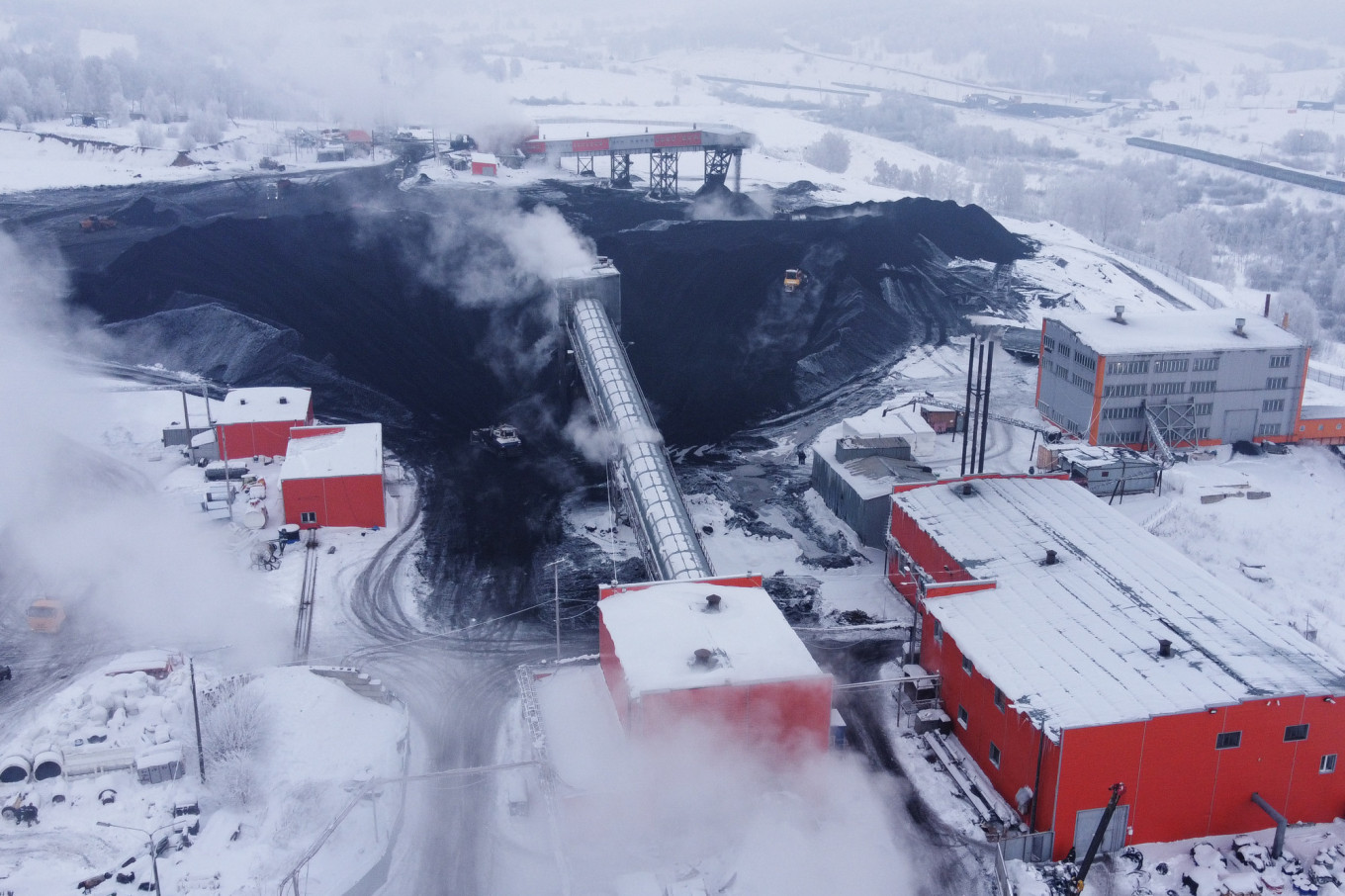
Revenue from mineral extraction taxes fell to 2.9 billion rubles ($37 million) in 2025, compared with 7.7 billion ($99 million) in 2024 and 17.7 billion ($226 million) in 2023.
Corporate income tax payments from coal companies fell to 1.8 billion rubles ($23 million) in the first 11 months of 2025, down from 5.3 billion ($68 million) in 2024 and 46.7 billion ($598 million) in 2023.
Federal transfers to the region were also cut by 30% in 2025.
Measures aimed at mitigating the budget shortfall have, in turn, hit public-sector employees, whose salaries were cut by 10%, and healthcare workers, some of whom complained of delayed payments and salary cuts as large as 20%.
Some Kuzbass medical workers are paid as little as 13,000 rubles ($170) per month.
"The tragic events that have shaken our region over the past month have demonstrated that the social sector and healthcare system are in a critical state,” Governor Ilya Seredyuk admitted on Tuesday.
“And it is ‘critical’,” agreed expert Toth-Czifra. “Health care spending in the first eleven months of 2025 has been lower in nominal terms than at any point since 2021. Severe staff shortages and salary arrears have been reported from Kemerovo region hospitals, even as 16 hospitals were closed over the past five years.”
Without “a broad restructuring plan for the coal industry” by the federal government, Toth-Czifra warned that Kuzbass’ “possibilities to handle socioeconomic problems symptomatically will depend, in the short run, on coal markets and on the largesse of the federal budget.”
Kemerovo’s government head Andrei Panov predicted 2026 to be “even more challenging” for coal mining companies, hinting that dozens of them are likely to shut down completely.
Economist Zubarevich likewise expects only a few companies able to withstand low coal prices to stay afloat, while “many of the weakest mines, and to a lesser extent open-pit ones, are expected to go bankrupt.”
She noted that out-of-work miners will have few options beyond early retirement or signing contracts with the Defense Ministry to fight in Ukraine.
As if taking no notice of the economic malaise, Kemerovo’s government increased the one-time bonus for signing a military contract to 1.5 million rubles ($19,570) last June.
Kemerovo’s independently verified war casualties have continued to rise in turn, with the region ranking 13th nationwide with 3,585 confirmed deaths.
Though Kuzbass is uniquely dependent on coal, “other sectoral crises can, in the near future, upset the budgets of regions relying on these industries,” warned expert Toth-Czifra, who singled out metallurgy and car manufacturing as potential flashpoints.
“Under Russia's current budgetary system and fiscal priorities, most regions cannot afford to make long-term investments into public infrastructure,” he said. “Therefore, I am afraid that we may very well see more accidents triggered by badly maintained and understaffed systems [across the country].”
Photo of the Week
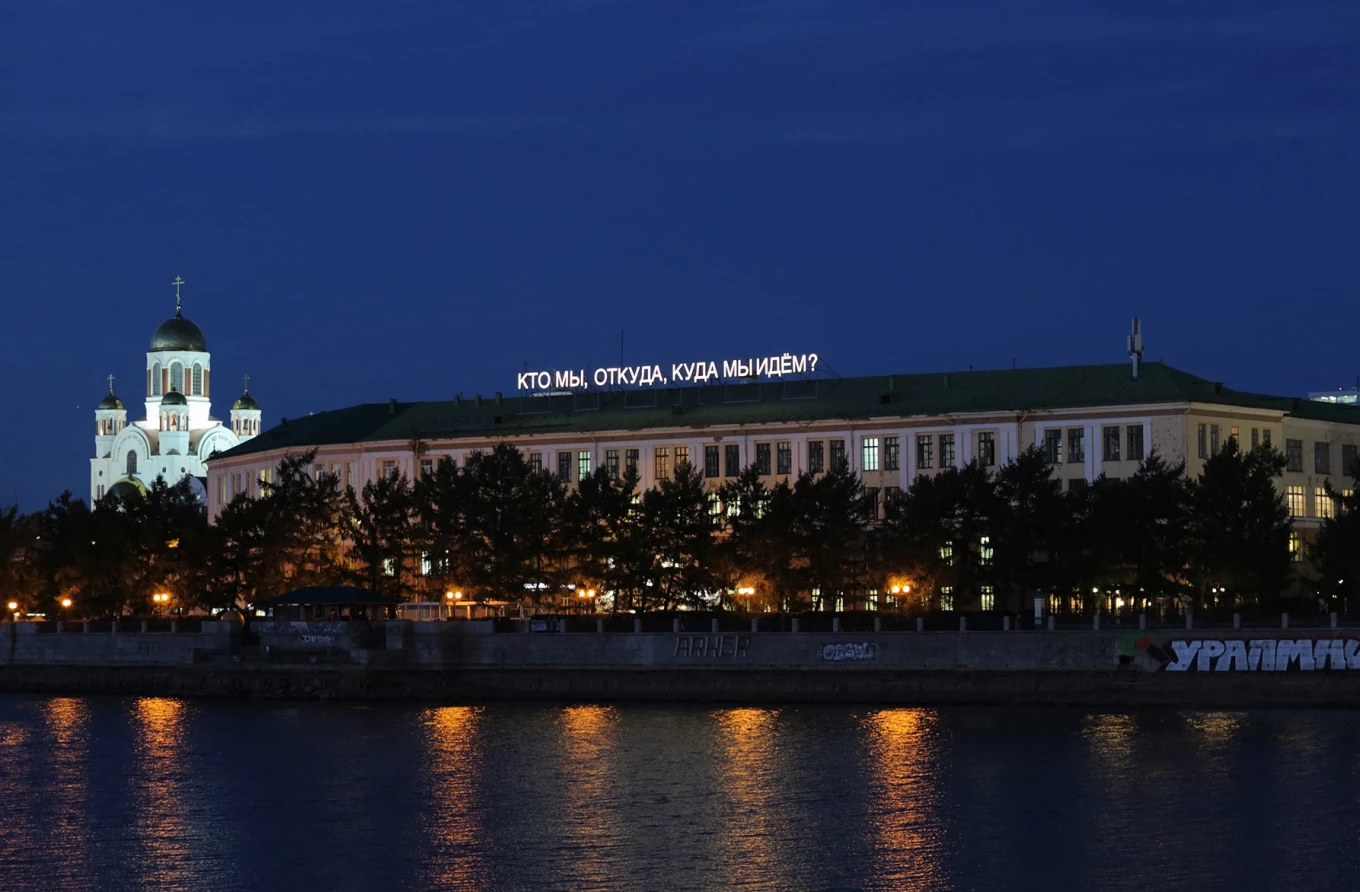
Authorities in Yekaterinburg green-lighted the demolition of the Ural Instrument-Making Plant’s facilities, including the building housing the iconic art installation “Who Are We? Where Do We Come From? Where Are We Going?”
The metal installation by street artist Tima Radya was erected in 2017 on the roof of a riverside building overlooking the Iset River. It has since become one of the most recognizable works of Russian protest art and a symbol of Yekaterinburg, Russia’s fourth-largest city.
Culture & Entertainment
- Vienna-based NGO Dialogbüro is hosting a series of weekly online lectures dedicated to the history of Russian feminism. More information is available here.
- Documentary film “Mr. Nobody Against Putin” by Russian teacher-turned-filmmaker Pavel Talankin has been nominated for the Academy Award for Best Documentary Feature Film. The film is currently screening in limited theatrical releases worldwide.
- Russia’s Coal Industry Is Collapsing. Will it Drag the Economy Down With It?
- In Russia's Coal-Mining Heartland, Healthcare Workers Struggle as Regional Budget Shortfall Delays Salaries
- “Russia's Economy in the Late 2020s Will Look a Lot Like the Late Soviet Economy” by Tatyana Rybakova
- “Crunching Ice Under My Feet’: In Russia’s Sakha, a Still-Unbuilt Bridge Is a Matter of Life and Death” by Leyla Latypova
A Message from The Moscow Times:
Dear readers,
We are facing unprecedented challenges. Russia's Prosecutor General's Office has designated The Moscow Times as an "undesirable" organization, criminalizing our work and putting our staff at risk of prosecution. This follows our earlier unjust labeling as a "foreign agent."
These actions are direct attempts to silence independent journalism in Russia. The authorities claim our work "discredits the decisions of the Russian leadership." We see things differently: we strive to provide accurate, unbiased reporting on Russia.
We, the journalists of The Moscow Times, refuse to be silenced. But to continue our work, we need your help.
Your support, no matter how small, makes a world of difference. If you can, please support us monthly starting from just $2. It's quick to set up, and every contribution makes a significant impact.
By supporting The Moscow Times, you're defending open, independent journalism in the face of repression. Thank you for standing with us.

Remind me later.