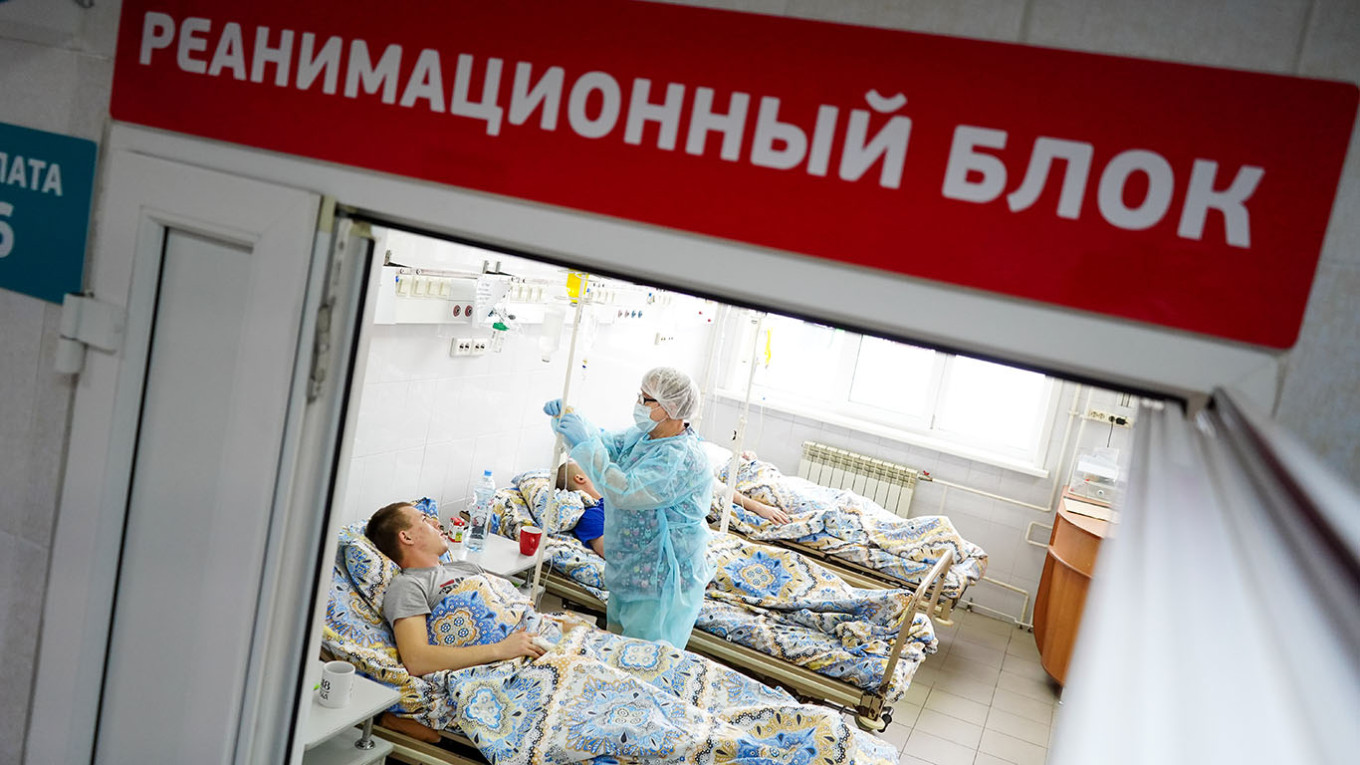
Health workers in Russia’s coal-rich Keremovo region are reporting delayed and reduced salaries as the region grapples with a record-breaking budget deficit amid a crisis in the coal industry.
The delayed payments are the latest instance of a problem that has recurred across Russia for years, particularly in economically stressed regions reliant on state funding.
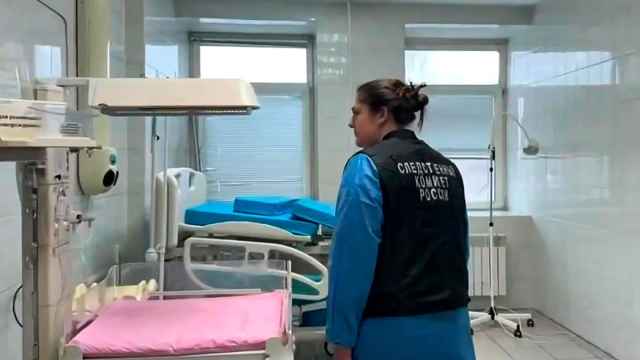
Staff at several hospitals in the regional capital of Kemerovo said they only received an advance for December, with January pay delayed.
“My wife is a doctor. She received 13,000 rubles ($166) for December,” a local resident wrote on a social media forum.
Regional authorities blamed the delays on “funding gaps” in the local mandatory health insurance fund, while the regional Health Ministry said salaries are paid in full according to the official payroll schedule.
Similar complaints emerged in the town of Anzhero-Sudzhensk, where workers said their January salaries, originally due on Jan. 15, might be paid only on Jan. 21.
“How are we supposed to pay our bills and live? Our advance was only 15,000 rubles ($192),” one worker said.
The regional Health Ministry confirmed measures had been taken to ensure payments would be made on Jan. 16.
A nurse at the Kuzbass Center for the Protection of Miners' Health in Leninsk-Kuznetsky said her pay had been cut by nearly 20% without agreement.
She added that she had never received a “young specialist” bonus and that, unlike in previous years, no year-end bonuses were issued for 2025.
The center’s director Yevgeny Yeshin was arrested in October on corruption charges.
Experts link the crisis to the sharp decline in regional tax revenues from the coal sector, the backbone of Kuzbass’ economy.
According to regional authorities, corporate income tax payments from coal companies fell to 1.8 billion rubles ($23 million) in the first 11 months of 2025, down from 5.3 billion ($68 million) in 2024 and 46.7 billion ($598 million) in 2023.
Revenue from mineral extraction taxes dropped to 2.9 billion rubles ($37 million), compared with 7.7 billion ($99 million) in 2024 and 17.7 billion ($226 million) in 2023.
Governor Ilya Seredyuk said in December that three-quarters of the region’s mining companies were operating at a loss.
The regional budget ran a deficit of 55.7 billion rubles ($713 million) in 2025 on total expenditures of 255.8 billion rubles ($3.27 billion), with spending cut by 14.2% from the previous year.
Corporate income tax revenue fell nearly 45%, from 43.3 billion ($555 million) to 29.9 billion ($382 million) rubles.
Economist Natalia Zubarevich said Kemerovo’s shortfall was the largest among Russia’s 60 deficit-hit regions.
“Everyone is struggling, but you have a monstrous deficit. Interbudget transfers could have helped, but these have been cut by 30%,” she said.
Read this story in Russian at The Moscow Times' Russian service.
A Message from The Moscow Times:
Dear readers,
We are facing unprecedented challenges. Russia's Prosecutor General's Office has designated The Moscow Times as an "undesirable" organization, criminalizing our work and putting our staff at risk of prosecution. This follows our earlier unjust labeling as a "foreign agent."
These actions are direct attempts to silence independent journalism in Russia. The authorities claim our work "discredits the decisions of the Russian leadership." We see things differently: we strive to provide accurate, unbiased reporting on Russia.
We, the journalists of The Moscow Times, refuse to be silenced. But to continue our work, we need your help.
Your support, no matter how small, makes a world of difference. If you can, please support us monthly starting from just $2. It's quick to set up, and every contribution makes a significant impact.
By supporting The Moscow Times, you're defending open, independent journalism in the face of repression. Thank you for standing with us.

Remind me later.