
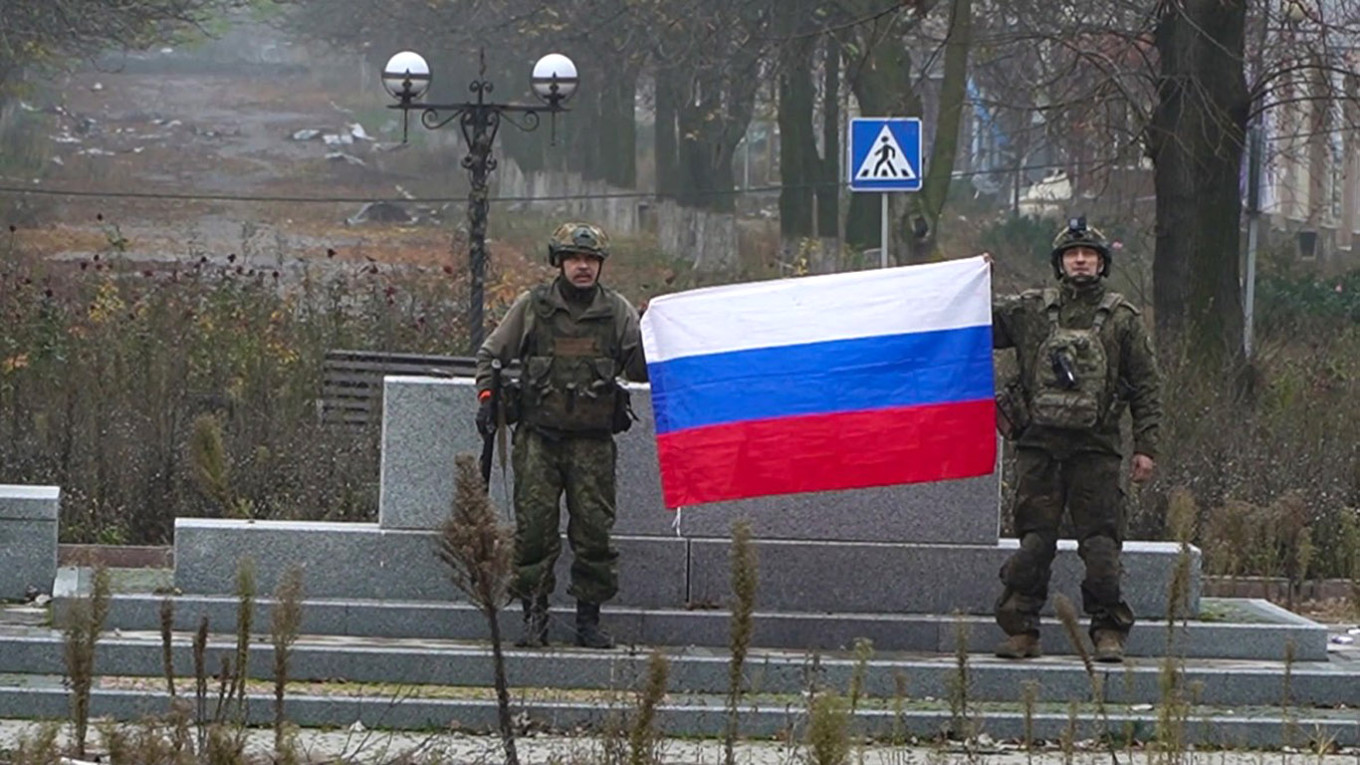
Russia has spent enormous resources trying to seize Pokrovsk, the key logistical hub in eastern Ukraine that Moscow claimed to have captured on Monday, military experts said.
The battle for Pokrovsk, a city with a pre-war population of 60,000 that sits at a strategic location in the Donetsk region, has been raging since August 2024.
If confirmed, its seizure would mark the most significant battlefield win for Russia in recent months, underscoring the slow, attritional nature of Moscow’s war.
A mining city with no military significance, Pokrovsk carries strategic value as the last holdout between Russian forces and the major Donetsk region cities of Kramatorsk and Sloviansk, said military expert Ivan Stupak, a former officer in Ukraine’s SBU security service.
President Vladimir Putin on Tuesday called Pokrovsk “a good foothold for accomplishing all the objectives set at the start” of the invasion, as “the Russian army can conveniently advance [from Pokrovsk] in all directions.”
Russia has stepped up its attack on the city in recent months, prompting Kyiv to send reinforcements in an effort to halt the advancing Russian forces.
Ukrainian President Volodymyr Zelensky said Russia had concentrated around 170,000 troops in the area to capture Pokrovsk — a figure experts described as colossal and one that underscores how important the city is for the Kremlin.
For comparison, the entire German army amounts to roughly 180,000 active-duty soldiers and the Polish army is around 200,000 servicemen, Stupak noted.
The Moscow Times could not independently verify the number given by Ukraine. Russia does not disclose how many of its soldiers are deployed to the Pokrovsk area. President Vladimir Putin said in September that around 700,000 Russian servicemen were deployed on the front in total.
It is also impossible to reliably assess total losses in Pokrovsk on either side, Stupak told The Moscow Times.
As of November, more than 6,500 Ukrainian servicemen had reportedly been killed in the battle for Pokrovsk, the Russian Telegram channel SHOT said without citing sources.
Russia’s chief of the General Staff Valery Gerasimov also claimed in October that 5,500 Ukrainian military personnel were encircled in Pokrovsk — claims that were dismissed by military experts and Russian pro-war bloggers at the time.
Ukraine has taken an economic hit as well, as coal production and steel production in Pokrovsk has been suspended since January.
On the Russian side, the U.S.-based research group Institute for the Study of War (ISW) reported that “Russian forces have incurred significant casualties in their monthslong campaign to seize Pokrovsk.”
Zelensky said at least 25,000 Russian troops had been killed in October, most of whom were killed in the battle for Pokrovsk.
The Ukrainian military said its forces killed 1,221 Russian soldiers and wounded 545 in the past month in the Pokrovsk area, including 519 killed and 131 wounded in Pokrovsk itself.
Russia had been claiming progress along the Pokrovsk front for weeks.
On Monday, the Russian Defense Ministry posted a video purportedly showing Russian soldiers raising their country's flag over the central square in Pokrovsk, which Moscow calls by its Soviet-era name Krasnoarmeysk.
Ukrainian forces said Tuesday that fighting in Pokrovsk was still ongoing and noted that the Russian troops who reportedly raised a flag in the city center had been pushed back. They did not directly deny Russia’s claim that it had captured the city.
ISW said it did not have sufficient evidence to confirm that Russian forces had fully seized Pokrovsk as of Dec. 1.
Putin claimed on Tuesday the city was “сompletely under the control of the Russian army.”
The timing of Russia’s announcement on the eve of U.S. special envoy Steve Witkoff’s visit to Moscow for peace talks was likely intended as an intentional signal to Washington, the ISW said.
“The Kremlin has repeatedly made exaggerated claims about the battlefield as part of its ongoing cognitive warfare effort to falsely portray a Russian victory as inevitable, such that Ukraine and the West should concede to Russia’s demands now,” it said.
Stupak shared a similar view, saying the announcement “is about creating an image that [Putin] is in control — that he has the situation firmly in hand to send a message to the American side that everything is going well for [Russia], while everything is going badly for Ukraine.”
AFP contributed reporting.
A Message from The Moscow Times:
Dear readers,
We are facing unprecedented challenges. Russia's Prosecutor General's Office has designated The Moscow Times as an "undesirable" organization, criminalizing our work and putting our staff at risk of prosecution. This follows our earlier unjust labeling as a "foreign agent."
These actions are direct attempts to silence independent journalism in Russia. The authorities claim our work "discredits the decisions of the Russian leadership." We see things differently: we strive to provide accurate, unbiased reporting on Russia.
We, the journalists of The Moscow Times, refuse to be silenced. But to continue our work, we need your help.
Your support, no matter how small, makes a world of difference. If you can, please support us monthly starting from just $2. It's quick to set up, and every contribution makes a significant impact.
By supporting The Moscow Times, you're defending open, independent journalism in the face of repression. Thank you for standing with us.

Remind me later.