
Jan. 11 marked a new milestone for the war in Ukraine: 1,418 days. That is how long the Soviet army fought against Germany from June 22, 1941, until Victory Day on May 9, 1945.
To separate this victory from its own complicity in the Nazi rampage across Europe in the Molotov-Ribbentrop pact, Soviet — and later Russian — historiographers introduced the concept of the Great Patriotic War, focusing on Moscow’s actions after Operation Barbarossa.
Since the early 2000s, Kremlin propagandists have been equating Ukrainian democratic forces with nationalists and Nazis, while employing practices — mass deportations, cultural erasure and systematic violence against civilians — that mirror the very crimes they claim to be fighting against.
The lesson to be learned from 1418 days of genocide against Ukrainians is that the myth of Russia’s strength and invincibility has already shattered. Even with the backing of China, Iran, North Korea and enablers like Cuba and Venezuela, Russia — by far the largest military spender in Europe — cannot defeat Ukraine outright.
Russia’s total war spending is projected at roughly $540 billion since the full-scale invasion, taking into account wider defense and security spending, compensation to soldiers’ families, etc. Meanwhile, total Western support of all types is about $380 billion.
The contrast with 1941-45 is stark. The Soviet Army in World War II pushed Nazi forces back roughly 1,500-1,800 kilometers west, from the outskirts of Moscow to the streets of Berlin.
Russia’s deepest sustained positions in Ukraine since 2022, by contrast, extend only several tens of kilometers from its own border in the east and south, and Moscow still cannot fully seize the Donbas region it has claimed and annexed since 2014.
Western misconceptions about the extent of Russia’s gains in Ukraine are reinforced by a lingering U.S.S.R.-centric lens that still shapes how many observers conceptualize World War II and the Red Army as a primarily Russian force. In reality, the Ukrainian S.S.R. was a core manpower and industrial base of the war effort and Ukrainians formed one of the largest national contingents within the Red Army.
This legacy is often obscured in contemporary narratives that implicitly equate the U.S.S.R.’s achievements with Russia’s, erasing Ukraine’s agency and distorting historical benchmarks used to judge today’s battlefield performance. Re-centering Ukraine’s role in the Soviet victory helps explain why modern Ukrainian forces, drawing on a deep martial tradition of their own, have proven capable of resisting and, in many sectors, halting the army that still claims Soviet glory as exclusively Russian.
What Russia has achieved is the implementation of brutal occupation tactics on captured Ukrainian territories.
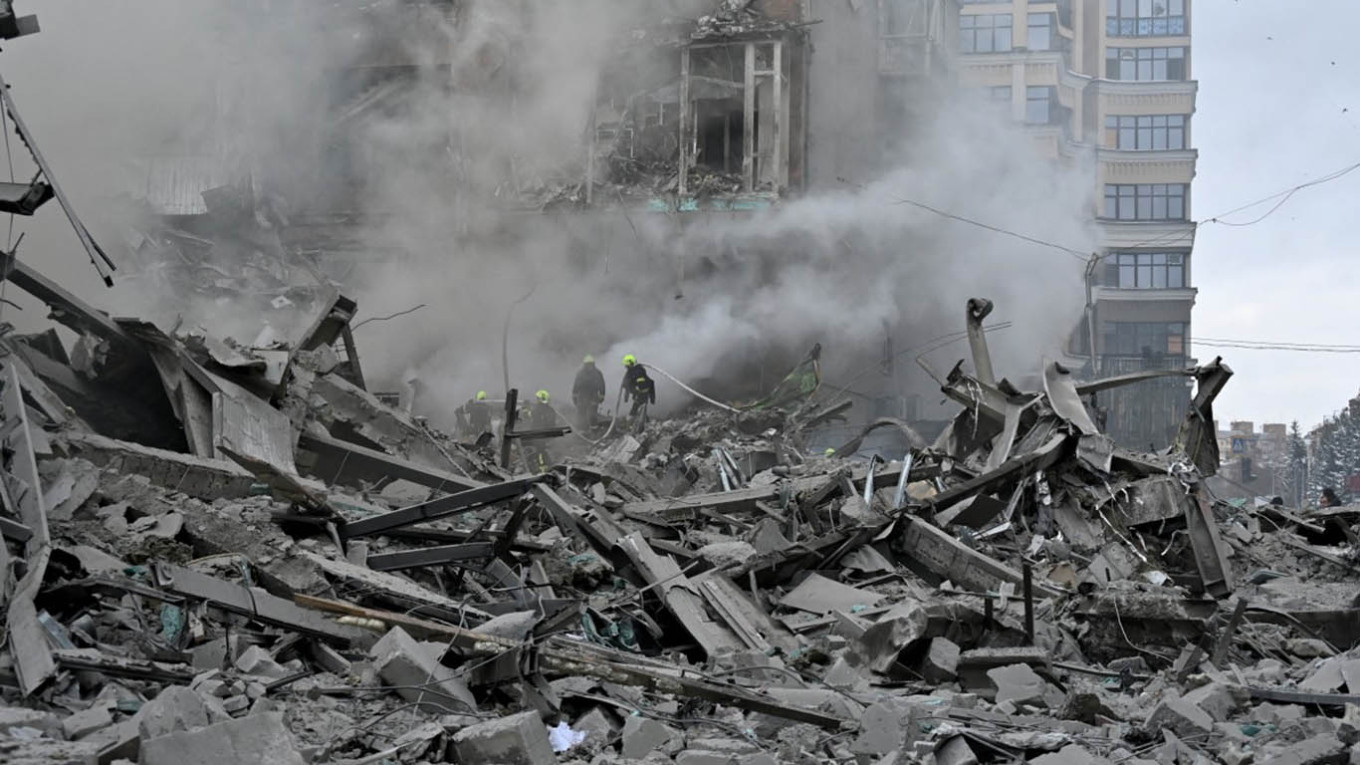
Moreover, its campaign of terror has shifted almost entirely onto the civilian population on Ukrainian-controlled territory: indiscriminate ballistic missile and drone strikes on cities, repeated attacks on energy, water and residential infrastructure, and the deliberate targeting of non-combatants have become defining features of this war. Just last week, Russia used its Oreshnik hypersonic missile in an attack near western Ukraine, close to NATO’s borders. While you are reading this article, more than 6,000 homes in Kyiv have no heating, electricity and water after Russia’s latest attack.
Some in Moscow still cling to the delusional belief in a Ukrainian uprising against President Volodymyr Zelensky, or the hope that diplomacy with certain Western leaders might shatter the country’s unity. But Ukrainians understand that they cannot become distracted. Allowing occupation to sneak in through the back door will create millions of victims whose stories never get told, invisible to the wider world, whose suffering will entrench enmity for generations.
To abandon Ukraine now would be to return it to Moscow’s gravitational pull alongside Belarus. Such a collapse would not insulate Europe but invite future aggression from an army millions strong, reinforced by manpower from Belarus and occupied Ukraine, with the backing of the Axis of Upheaval.
If anyone thinks such a war with NATO would be fundamentally different simply because the alliance — which is fracturing before our eyes — has advanced weapons and air superiority, they might ask: where are Russia’s expensive main battle tanks now? Hasn’t 30% of its strategic aviation been lost in Operation Spider’s Web? All those expensive wonder-weapons were destroyed by unmanned aerial systems, which have made a gigantic technological leap since 2022.
The main reason why Russia failed in Ukraine is not the lack of weapons or manpower, but hubris, strategic miscalculation and a gross underestimation of its opponent. NATO should not make this mistake itself.
It is far wiser to help Ukraine now — support its defense, reinforce its institutions and choke Russia economically and diplomatically — than to pay, later, the infinitely higher price of European refugees streaming westward and mourning the defenders of lands that might never have been attacked had Russia been defeated in Ukraine’s fields rather than Europe’s.
Despite all this, there should be no illusion that Russia is exhausted or incapable. What has happened is that Ukrainians proved capable and willing to fight for their land with extraordinary effectiveness. This is not a matter of Western largesse alone, though allied support has been decisive; it is a function of Ukrainian resolve, domestic mobilization of resources, innovation and strategic partnerships that have helped blunt Russia’s numerical and material advantages.
A Message from The Moscow Times:
Dear readers,
We are facing unprecedented challenges. Russia's Prosecutor General's Office has designated The Moscow Times as an "undesirable" organization, criminalizing our work and putting our staff at risk of prosecution. This follows our earlier unjust labeling as a "foreign agent."
These actions are direct attempts to silence independent journalism in Russia. The authorities claim our work "discredits the decisions of the Russian leadership." We see things differently: we strive to provide accurate, unbiased reporting on Russia.
We, the journalists of The Moscow Times, refuse to be silenced. But to continue our work, we need your help.
Your support, no matter how small, makes a world of difference. If you can, please support us monthly starting from just $2. It's quick to set up, and every contribution makes a significant impact.
By supporting The Moscow Times, you're defending open, independent journalism in the face of repression. Thank you for standing with us.

Remind me later.