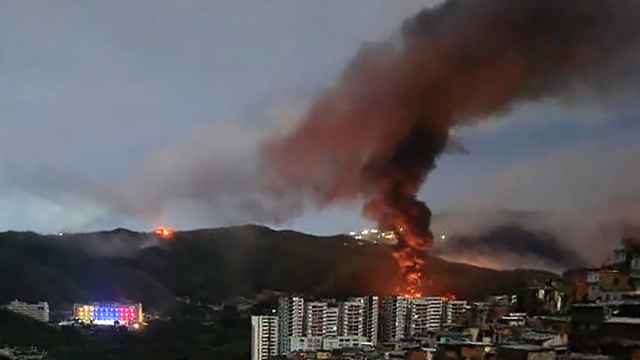
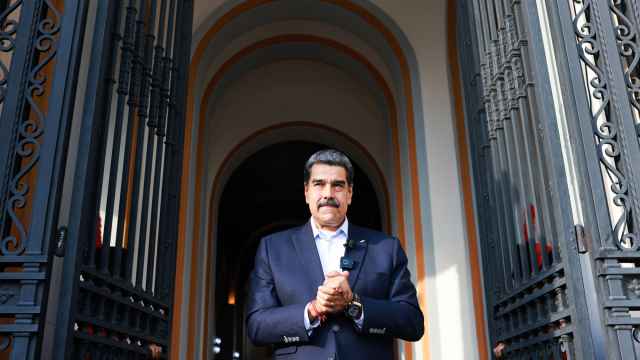
Russian-supplied air defense systems in Venezuela were largely non-operational and failed to respond to a large-scale U.S. strike that preceded an American special forces operation to seize President Nicolás Maduro, The New York Times reported Monday.
Venezuela had started acquiring Russian-made S-300 and Buk-M2 surface-to-air missile systems in 2009, hailing them as a way to shield the country’s airspace amid heightened tensions with the U.S.
But the systems were not even connected to radar when U.S. forces entered Venezuelan airspace on Jan. 3, U.S. officials familiar with the operation told The New York Times.
The air defense systems were not networked with one another and may not have been operational for years, former U.S. officials and independent analysts said.
Key components of the systems were in storage at the time and not deployed, The New York Times' examination of photos, videos and satellite imagery taken after the strikes showed.
The analysis indicated that U.S. forces prioritized strikes on locations where Venezuela had deployed or stored Buk missile systems, including sites near Caracas.
Venezuela has struggled to maintain its Russian-made air defenses due to a shortage of Russian specialists and spare parts, which U.S. officials said were being redirected to Russia’s war in Ukraine.
Moscow may have even allowed the systems sold to Venezuela to deteriorate to avoid a more serious confrontation with Washington, two former U.S. officials said.
“The Venezuelan armed forces were practically unprepared for the U.S. attack,” Yaser Trujillo, a military analyst in Venezuela, told The New York Times. “Their troops were not dispersed, the detection radar was not activated, deployed or operational. It was a chain of errors that allowed the United States to operate with ease, facing a very low threat from the Venezuelan air defense system.”
A Message from The Moscow Times:
Dear readers,
We are facing unprecedented challenges. Russia's Prosecutor General's Office has designated The Moscow Times as an "undesirable" organization, criminalizing our work and putting our staff at risk of prosecution. This follows our earlier unjust labeling as a "foreign agent."
These actions are direct attempts to silence independent journalism in Russia. The authorities claim our work "discredits the decisions of the Russian leadership." We see things differently: we strive to provide accurate, unbiased reporting on Russia.
We, the journalists of The Moscow Times, refuse to be silenced. But to continue our work, we need your help.
Your support, no matter how small, makes a world of difference. If you can, please support us monthly starting from just $2. It's quick to set up, and every contribution makes a significant impact.
By supporting The Moscow Times, you're defending open, independent journalism in the face of repression. Thank you for standing with us.

Remind me later.