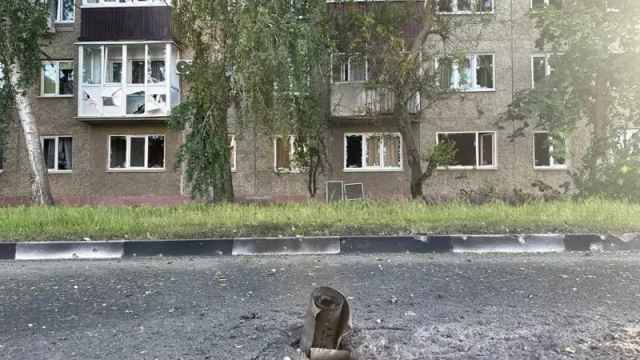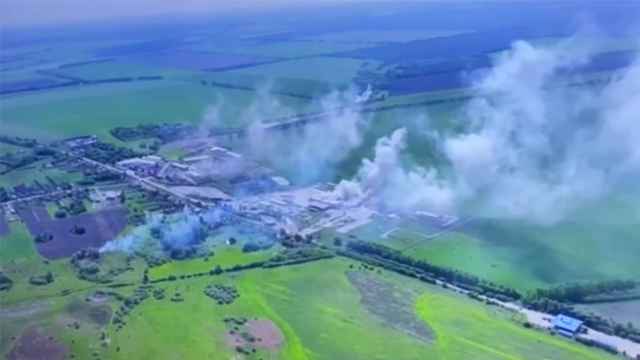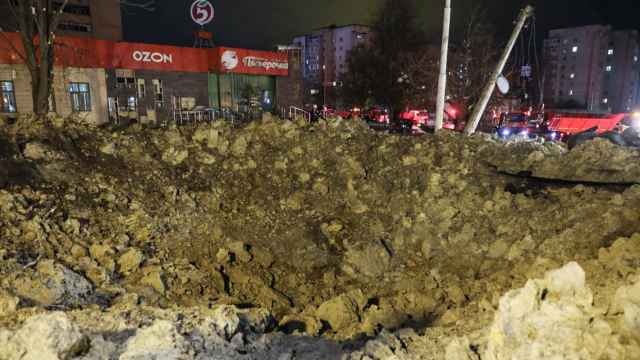

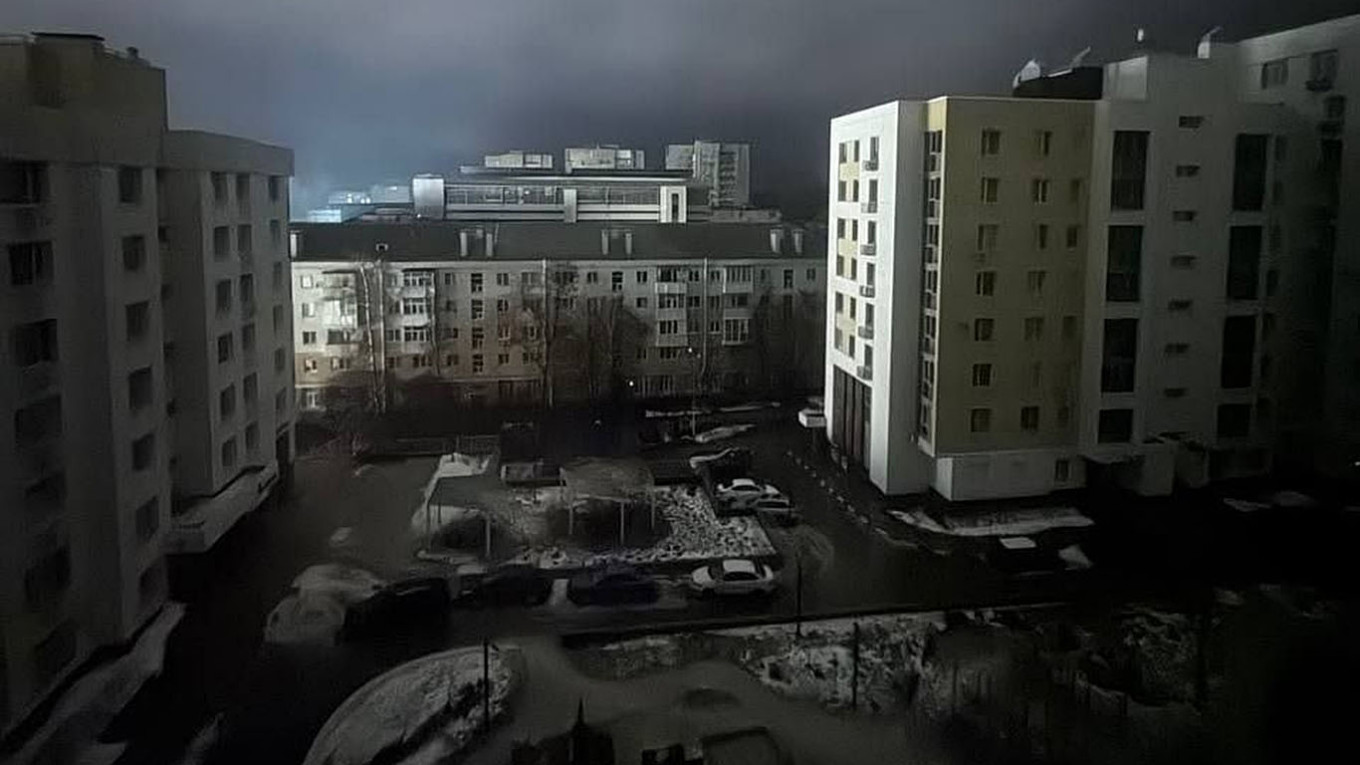
Russia’s Belgorod region was still struggling to restore power, heating and water amid subzero temperatures on Monday after a Ukrainian strike triggered its worst blackout since the start of the full-scale war in Ukraine nearly four years ago.
The outages came as 1 million people some 250 kilometers away in Ukraine’s Dnipropetrovsk region similarly suffered from widespread blackouts and heating outages following Russian strikes.
The Belgorod region, which borders northeastern Ukraine, has faced regular cross-border shelling and drone attacks since the start of the war.
But strikes on local energy facilities on Friday have caused the most extensive blackouts in the region so far, cutting more than half a million people off from electricity and heating, local authorities said.
Some 200,000 residents were left without water and mobile communications were also disrupted in some districts.
As of Monday, residents said utilities had not been fully restored in parts of the region.
“Everyone I know has been affected, in one way or another, by the electricity, heating and water outages,” a Belgorod city resident told The Moscow Times. “There’s a sense of panic to some extent. People are scared because nothing like this has ever happened before.”
She said mobile internet remained unreliable in the city center, while some neighborhoods were still experiencing water supply issues.
The outages come amid freezing temperatures and heavy snowfall, with daytime highs around minus 11 degrees Celsius and nighttime lows falling to minus 18 C.
While authorities worked to restore infrastructure, some residents criticized regional Governor Vyacheslav Gladkov on social media for failing to resolve the utility problems caused by the attack.
“It’s already the fourth day since the shelling and there’s still no water [in our district]...When will we finally get water?” local resident Natalia Simanova wrote in a comment on the VKontakte social platform.
Another Belgorod resident, Irina Sokolova, complained on Gladkov’s VKontakte page about power outages affecting heating systems in the Shebekinsky district, which is located near the Ukrainian border and regularly hit by shelling.
“There has been no electricity since Jan. 9. [The electricity grid operator] Rosseti is carrying out repairs — thank you for that — but people here rely on electric boilers for heating. What are residents supposed to do if their heating systems freeze?” she said.
Photos and videos circulated on social media on Friday showed darkened apartment blocks and long lines at gas stations.
Regional Digital Development Minister Sergei Chetverikov said more than 60% of cellular base stations had gone offline during the blackout.
Gladkov acknowledged that the damage to energy infrastructure was severe, calling the situation “extremely difficult.”
On Tuesday, he said it would be “impossible to fully restore electricity supplies to residential buildings and to industrial facilities using backup generation alone” and suggested that residents relocate to other regions if they have the means.
As of Monday, several shopping malls had announced closures or reduced hours, while more than 60 industrial enterprises were ordered to limit electricity use to eight hours a day between midnight and 8 a.m., according to regional news outlet Pepel.
Some residents also criticized the authorities after the governor urged locals to buy their own home generators to produce electricity.
“There are a large number of households that could purchase them, but, hoping — forgive me — that they will get lucky and this disaster will somehow pass them by, do not buy generators,” Gladkov said of the ongoing power outages.
The comments angered Belgorod residents, who accused him of attempting to “shift responsibility” onto locals instead of taking action.
"Your speeches urging citizens to buy their own generators seem very cynical. I personally do not have that opportunity,” Dina Sharapova said in a comment on VK. “People did not end up in this disaster through any fault of their own, but because of the enemy’s actions. Citizens should be able to rely on protection and assistance from the state — or are you suggesting that everything should be left to the people to handle themselves?"
Another Belgorod resident, Anatoly Rogozyansky, wrote that “all responsibility lies entirely with the regional authorities.”
“The list of regional authorities’ failures could go on endlessly, yet you try to shift the responsibility onto the population,” he said.
“From the very first days of the [the war], we have seen your insufficient engagement with the people — those who have been living side by side with the front lines since day one,” Rogozyansky said.
Meanwhile in Ukraine, a Russian strike has left more than 1 million people in the Dnipropetrovsk region without water supplies and heating as temperatures dropped below zero.
Another Russian strike on the Ukrainian capital Kyiv on Friday killed at least four people and also left half the city's residential buildings without heat, while the Defense Ministry said it used its highly touted Oreshnik missile in western Ukraine near NATO borders.
Ukrainian President Volodymyr Zelensky accused Moscow of “trying to use cold weather as a tool of terror.”
Back in Belgorod, residents said they fear that local energy facilities could be targeted again.
“This is a very troubling precedent for all residents of the city,” the Belgorod resident told The Moscow Times.
“The atmosphere in the region shows the fatigue of war, felt more strongly by residents of Belgorod than anyone else [in Russia],” she said.
A Message from The Moscow Times:
Dear readers,
We are facing unprecedented challenges. Russia's Prosecutor General's Office has designated The Moscow Times as an "undesirable" organization, criminalizing our work and putting our staff at risk of prosecution. This follows our earlier unjust labeling as a "foreign agent."
These actions are direct attempts to silence independent journalism in Russia. The authorities claim our work "discredits the decisions of the Russian leadership." We see things differently: we strive to provide accurate, unbiased reporting on Russia.
We, the journalists of The Moscow Times, refuse to be silenced. But to continue our work, we need your help.
Your support, no matter how small, makes a world of difference. If you can, please support us monthly starting from just $2. It's quick to set up, and every contribution makes a significant impact.
By supporting The Moscow Times, you're defending open, independent journalism in the face of repression. Thank you for standing with us.

Remind me later.