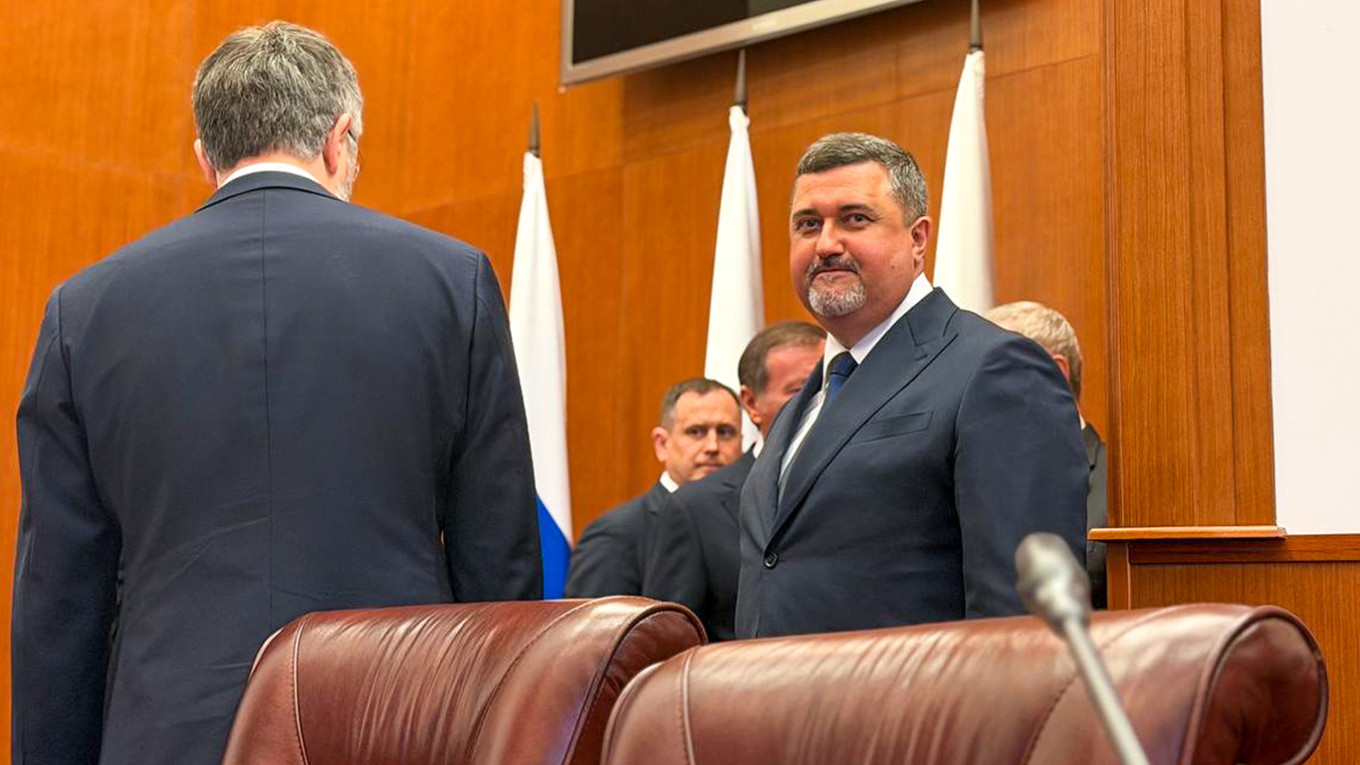
The newly appointed acting head of the republic of Dagestan disbanded the regional government on Wednesday and tapped President Vladimir Putin’s deputy envoy to the North Caucasus region to serve as the acting prime minister.
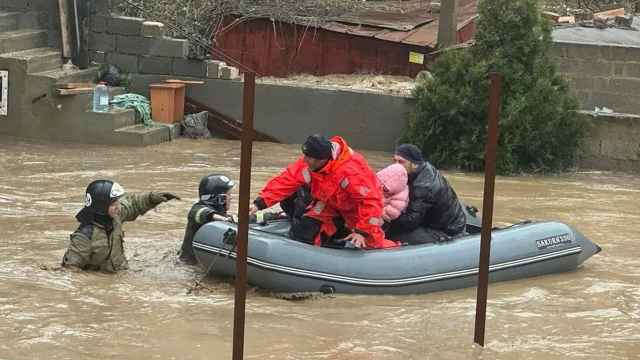
Fyodor Shchukin, who had previously led Dagestan’s Supreme Court, was named as acting head of Dagestan on Monday after Putin accepted the resignation of his predecessor, Sergei Melikov. The reshuffle came shortly after deadly floods decimated the mountainous region in March and April.
Shchukin signed a decree on Wednesday that formally disbanded Dagestan’s government, though current members will remain in their posts in an acting capacity until a new government is formed.
He also appointed Magomed Ramazanov, the deputy presidential envoy to the North Caucasus Federal District, as Dagestan’s acting prime minister. Putin suggested at a Kremlin meeting with senior Dagestani officials last week that Ramazanov may be a good fit for the role.
Earlier, some political analysts predicted that Shchukin, the first ethnic Russian to lead Dagestan, would rule “in tandem” with Ramazanov, who is a member of several ethnic groups native to Dagestan, in order to preserve the so-called “national principle of separation of power” that prevents members of one ethnic group from holding several key positions at once.
The head of Dagestan is not elected by popular vote. Instead, the selection follows a multi-stage process that involves the president presenting a list of three candidates to Dagestan’s regional parliament for a vote. To take office, a candidate must secure a simple majority of votes from regional lawmakers.
It remains unclear when a vote to elect the next head of Dagestan will take place.
Shchukin’s predecessor, Melikov, who is of mixed Russian and Lezgin descent, was appointed in 2021 to stabilize one of Russia’s most complex regions. However, he struggled to address Dagestan’s chronic infrastructure issues, and the region today remains notorious for frequent power outages and poor road conditions.
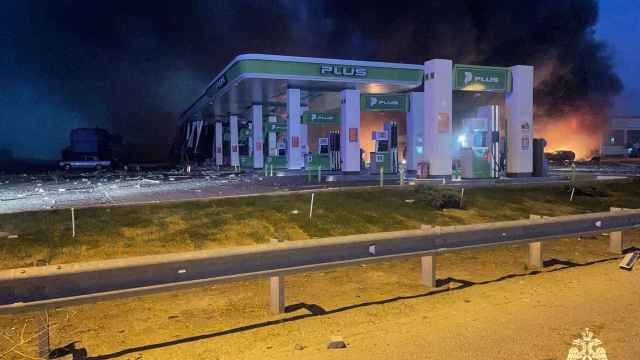
A series of high-profile security failures further tested his leadership. The final blow to Melikov’s standing in the Kremlin appears to have been catastrophic flooding earlier this year, when at least five people were killed and thousands were displaced.
Melikov said this week that he had asked Putin to let him continue working in Dagestan for the foreseeable future as he helps Shchukin transition into the job as regional head.
A Message from The Moscow Times:
Dear readers,
We are facing unprecedented challenges. Russia's Prosecutor General's Office has designated The Moscow Times as an "undesirable" organization, criminalizing our work and putting our staff at risk of prosecution. This follows our earlier unjust labeling as a "foreign agent."
These actions are direct attempts to silence independent journalism in Russia. The authorities claim our work "discredits the decisions of the Russian leadership." We see things differently: we strive to provide accurate, unbiased reporting on Russia.
We, the journalists of The Moscow Times, refuse to be silenced. But to continue our work, we need your help.
Your support, no matter how small, makes a world of difference. If you can, please support us monthly starting from just $2. It's quick to set up, and every contribution makes a significant impact.
By supporting The Moscow Times, you're defending open, independent journalism in the face of repression. Thank you for standing with us.

Remind me later.