
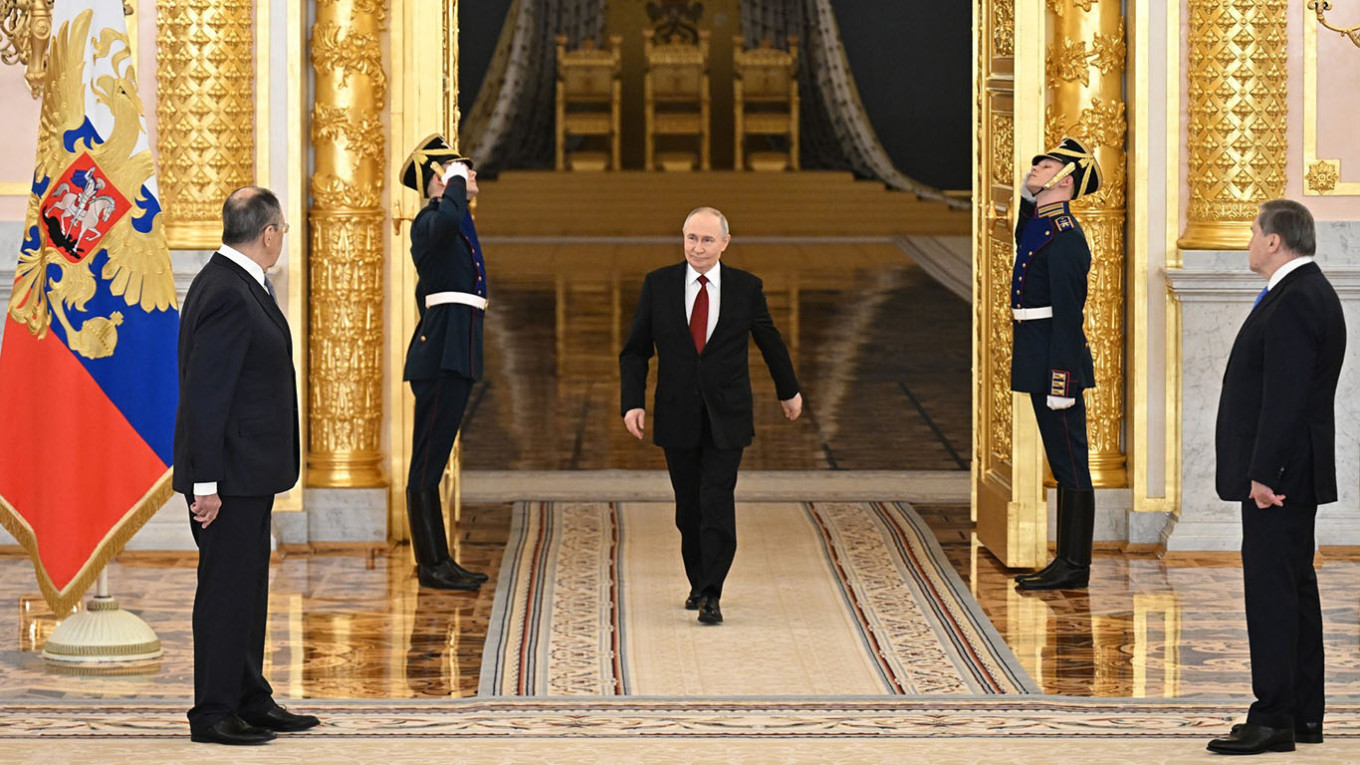
President Vladimir Putin is known for jumping at the chance to lambast the West and position his country as a friend of the Global South.
But as a string of international crises has battered regimes allied with Moscow, the Russian leader’s responses have been muted or absent entirely.
He has still not spoken publicly about this month’s lightning U.S. operation to capture Venezuelan President Nicolás Maduro. Nor did he issue a strong rebuttal on behalf of Iran as President Donald Trump floated taking military action against the protest-hit country.
Analysts say his silence reflects Russia’s focus on the war in Ukraine and hesitancy to provoke the U.S. — a stance that risks alienating longtime allies and eroding trust in Moscow.
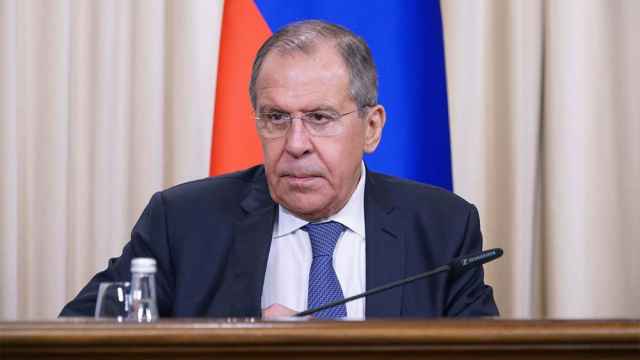
With the Kremlin leader staying mum, Russia’s Foreign Ministry has instead taken to offering subdued condemnations in each case.
“This morning, the United States committed an act of armed aggression against Venezuela,” the Foreign Ministry said as Maduro was flown to New York to face drug trafficking and other charges. “This is deeply concerning and condemnable.”
Days later, another statement called for the preservation of Venezuela’s sovereignty and ability to dictate its destiny “without any destructive interference from the outside,” without directly naming the U.S.
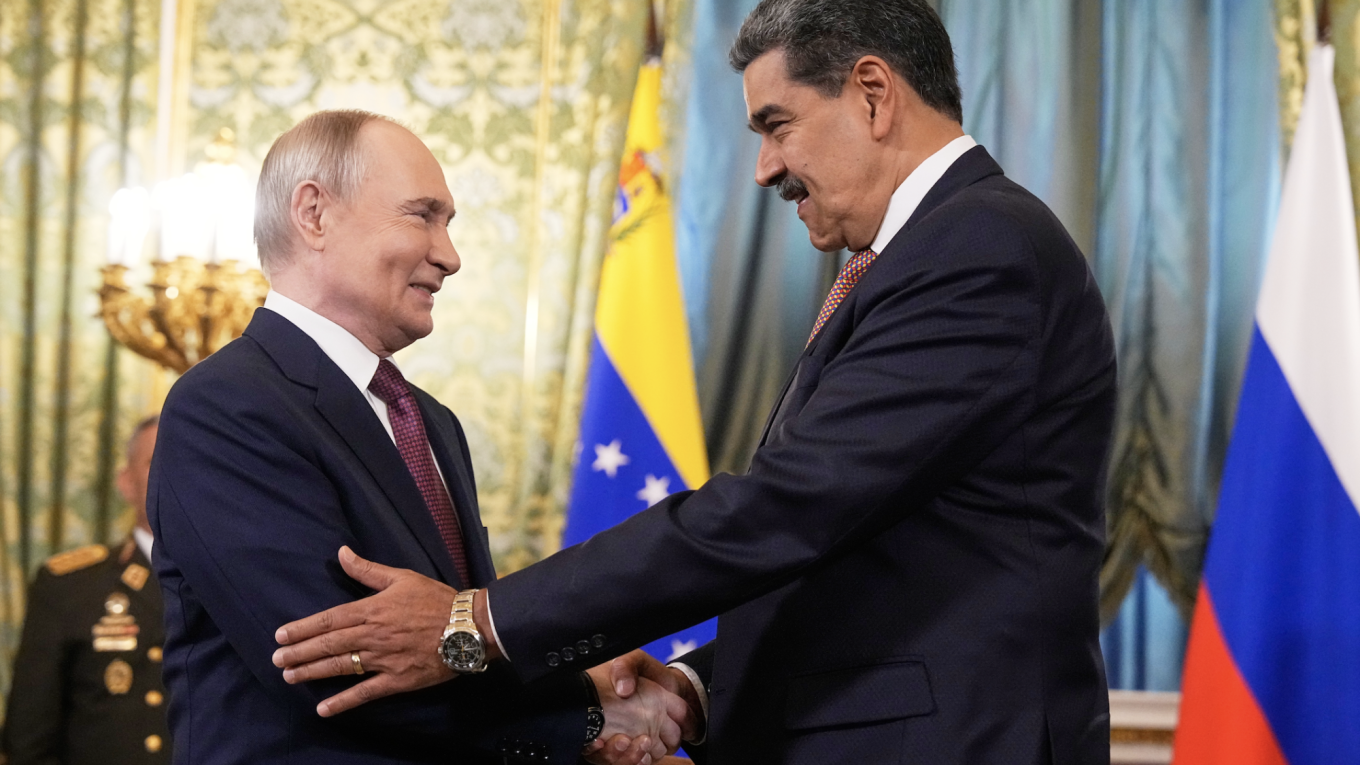
What was striking about the incident was how little it resembled Putin’s usual response.
In 2019, when a crisis was simmering in Venezuela over disputed election results with the U.S. backing Maduro’s challenger, the Kremlin released a pointed summary of a call between Putin and the Venezuelan leader.
Without the U.S. having committed to an intervention, Putin warned that “destructive external interference is a gross violation of the fundamental norms of international law.”
This time around, even as world leaders were condemning Maduro’s capture as a violation of sovereignty, Putin did not comment.
“Part of the answer is simply, I think, that this is his proclivity and it has been for some time,” said Julian Waller, a professor at George Washington University and a Russia researcher at the think tank CNA.
“We sometimes fool ourselves talking about decisiveness in the Russian case and in Putin’s personal decision-making patterns, when actually he often takes a decent amount of time to either come to a decision or to turn a decision made into something publicly observable,” he told The Moscow Times.
Another reason could be that Putin would prefer not to amplify a story that highlights Russia’s shaky support for global allies.
“The Kremlin is clearly falling back on a well-worn playbook: say nothing about an embarrassing setback … and hope the story fades from the news cycle,” Andrey Pertsev, a political commentator at the Carnegie Endowment for International Peace, wrote in the online journal Riddle.
Since the early 2000s, the Russian leader has been a frequent user of the term “color revolution” to describe the theory that the West supposedly foments democratic coups in Kremlin-friendly nations using paid protesters, Western-backed NGOs and disruptive youth groups.
He used the term as recently as 2022, when Russian troops were sent to Kazakhstan to help suppress mass unrest.
“Of course, we understand the events in Kazakhstan are not the first and far from the last attempt to interfere in the internal affairs of our states from the outside,” Putin said at the time.
While even Putin would struggle to frame the capture of Maduro as a color revolution, what came after in Iran has appeared to fit the bill.
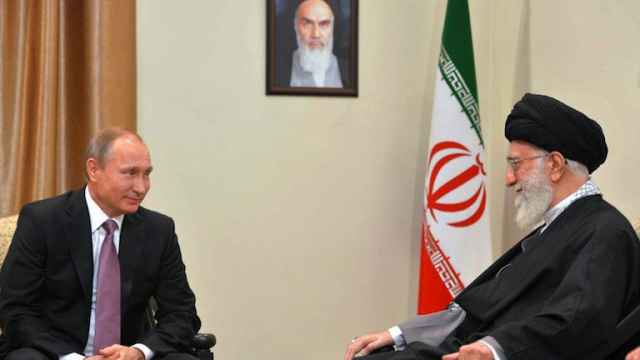
Anti-government protests have rocked Iran, a key Russian ally in the diplomatic and military spheres, since late December. After thousands were killed in a vicious crackdown by security forces, Trump floated the possibility of military intervention, though he later backed down.
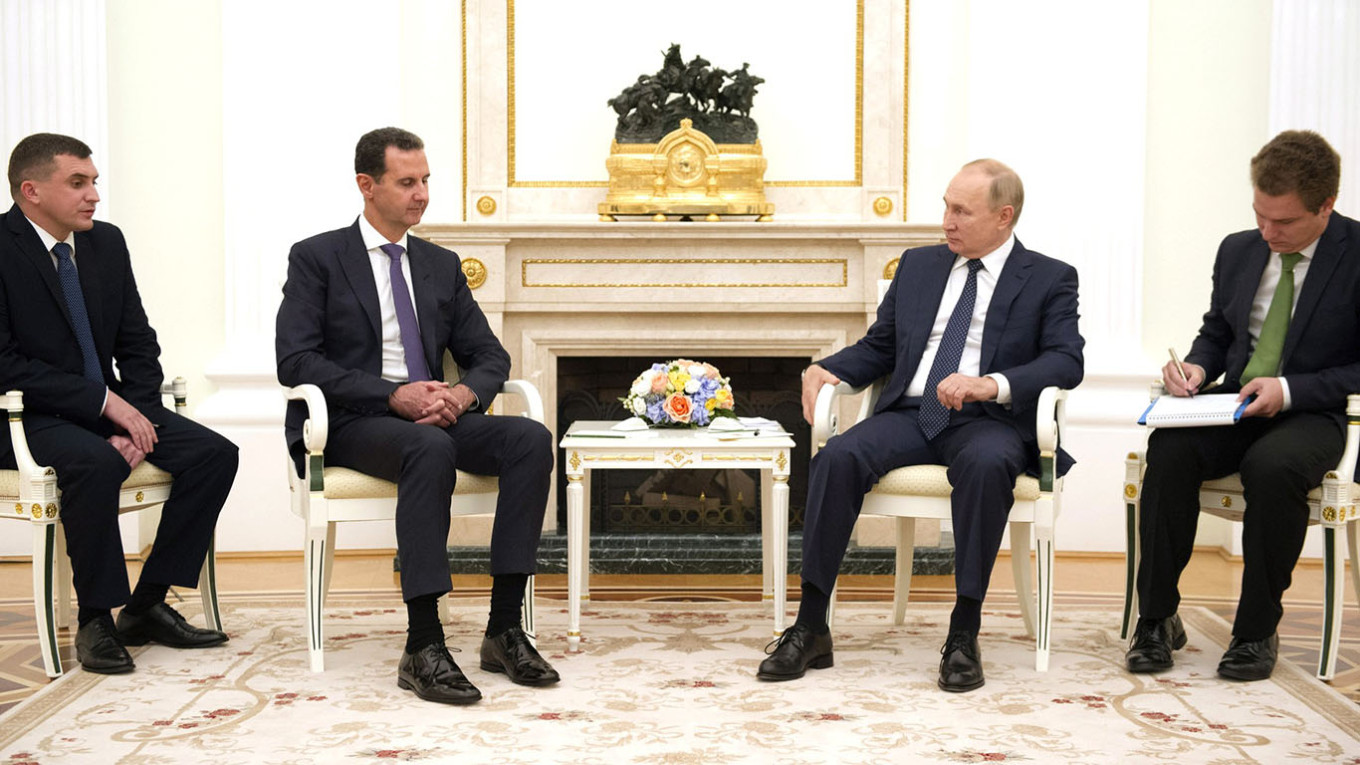
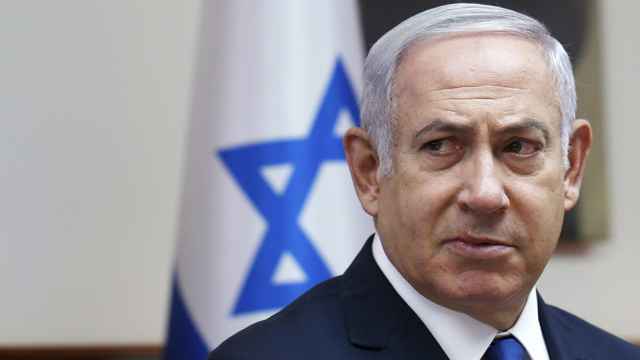
Putin’s visible involvement was limited to a phone call to the leaders of Israel and Iran in which he offered to help find a diplomatic offramp. There was none of the vitriolic reprimanding, sabre-rattling and claims of Western hypocrisy that might have been expected of the Russian leader in years past.
The abrupt change in tack reflects Russia’s evolving foreign policy priorities, Waller said. In particular, Putin appears keen to avoid antagonizing Washington while Russia seeks leverage in negotiations over Ukraine.
“There’s an argument that, yes, they want to tiptoe around the U.S. otherwise and that U.S decision-making is unusually subject to slights and insults,” he told The Moscow Times. “In fairness, looking at the negotiations over the last year, I think Russia has been burned because it didn’t realize who it was dealing with a couple of times.”
Waller added that Putin’s lack of support could inflame skepticism of Russia among factions of the Iranian elite that were already wary of Moscow.
“Russia failing to publicly back the regime might have significant consequences if the regime survives,” he said.
For observers, the latest episodes echo Russia’s response to the fall of Bashar al-Assad’s regime in Syria in December 2024.
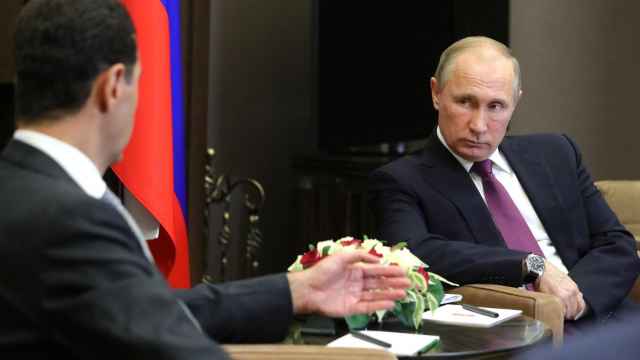
After rebel forces overran government positions, Assad and his family fled to Moscow. It was a stunning reputational blow to Russia, which had spent years propping up Assad’s rule militarily and financially only for it all to crumble overnight.
Putin gave scant acknowledgement that one of Russia’s most important allies had fallen, saying the end of the regime did not mean Russia had failed to achieve its objectives in Syria.
He appears to have tried to distance himself from the story since then.
The Assad family has kept a low profile since fleeing to Moscow. Russian authorities have reportedly barred the former Syrian leader from speaking with the media, and he has not met publicly with Putin.
A Message from The Moscow Times:
Dear readers,
We are facing unprecedented challenges. Russia's Prosecutor General's Office has designated The Moscow Times as an "undesirable" organization, criminalizing our work and putting our staff at risk of prosecution. This follows our earlier unjust labeling as a "foreign agent."
These actions are direct attempts to silence independent journalism in Russia. The authorities claim our work "discredits the decisions of the Russian leadership." We see things differently: we strive to provide accurate, unbiased reporting on Russia.
We, the journalists of The Moscow Times, refuse to be silenced. But to continue our work, we need your help.
Your support, no matter how small, makes a world of difference. If you can, please support us monthly starting from just $2. It's quick to set up, and every contribution makes a significant impact.
By supporting The Moscow Times, you're defending open, independent journalism in the face of repression. Thank you for standing with us.

Remind me later.