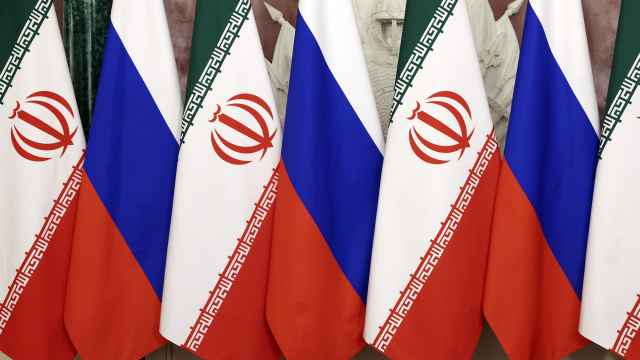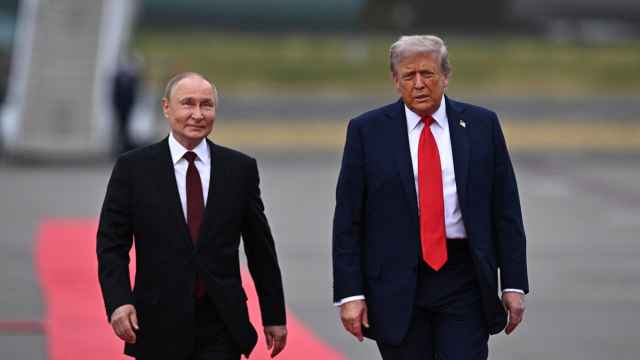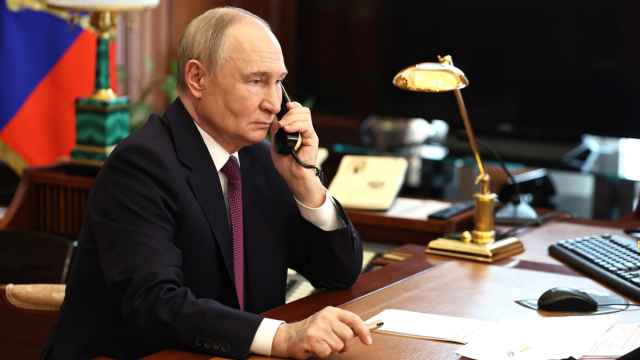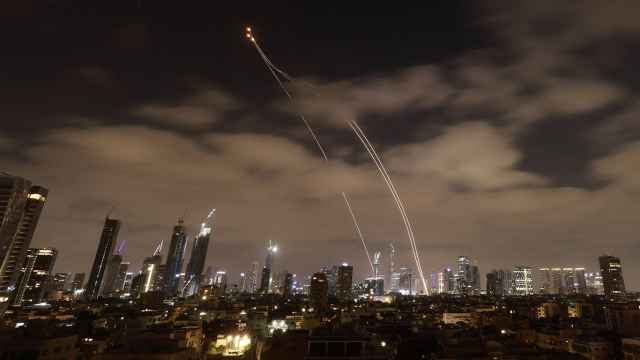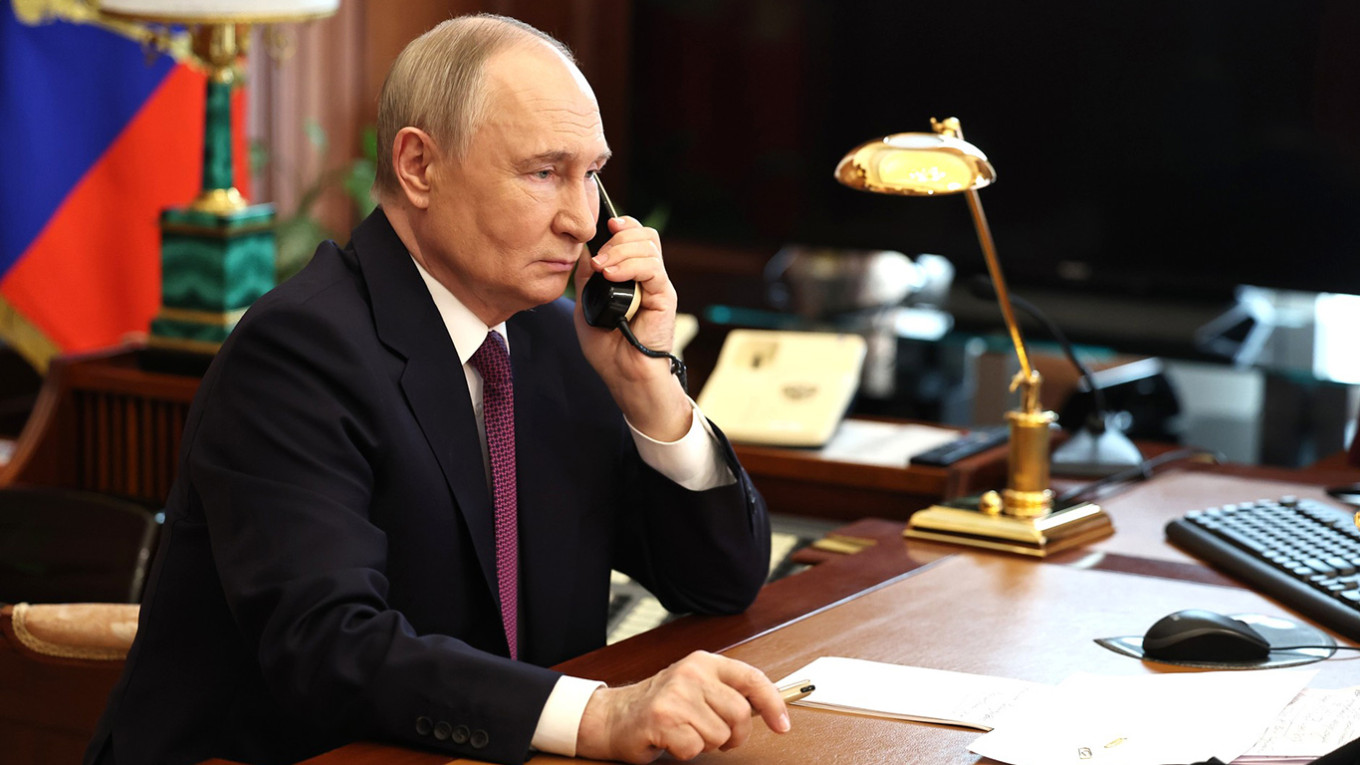
President Vladimir Putin spoke with the leaders of Iran and Israel on Friday, marking his first public reaction to the latest tensions in the Middle East amid swelling protests across Iran and threats by U.S. President Donald Trump to strike the Islamic republic.
Mass demonstrations over soaring inflation have rocked Iran since late December. The government in Tehran has led a brutal crackdown on protesters by introducing a countrywide internet blackout and killing at least 2,677 people, according to the U.S.-based Human Rights Activists News Agency.
Trump had talked in recent days about coming to the help of the Iranian people, saying the U.S. military was “locked and loaded” should Iran start shooting at protesters. However, he has since pulled back from those threats after Terhan assured him the killing of protesters would stop.
The Kremlin said Putin spoke with Iranian President Masoud Pezeshkian over the phone as he “continued efforts” to de-escalate tensions between Washington and Tehran.
“This is assistance not only to Iran, but to the entire region, as well as to the cause of regional stability and peace,” top spokesman Dmitry Peskov told reporters, adding that details of the conversation would be released later.
During his phone call with Israeli Prime Minister Benjamin Netanyahu, Putin “outlined fundamental approaches in favor of intensifying political and diplomatic steps in the interests of ensuring stability and security in the region.”
“Russia confirmed readiness to continue undertaking appropriate mediation efforts and to promote constructive dialogue involving all interested states,” the Kremlin readout on the call said, without providing further details.
The New York Times reported earlier that Netanyahu warned Trump against launching strikes against Iran.
On Thursday, Russia’s permanent representative to the UN Security Council, Vassily Nebenzia, accused the United States of “escalating tensions and stirring up hysteria around Iran.” Nebenzia dismissed protesters in Iran as “yet another example of the use of tried and tested methods of ‘color revolutions’.”
Putin has remained largely silent about Iran and Venezuela, both allies of Russia, in recent weeks as the two countries have come under pressure from the Trump administration, which stunned the world earlier this month with the capture of Venezuelan President Nicolás Maduro.
A Message from The Moscow Times:
Dear readers,
We are facing unprecedented challenges. Russia's Prosecutor General's Office has designated The Moscow Times as an "undesirable" organization, criminalizing our work and putting our staff at risk of prosecution. This follows our earlier unjust labeling as a "foreign agent."
These actions are direct attempts to silence independent journalism in Russia. The authorities claim our work "discredits the decisions of the Russian leadership." We see things differently: we strive to provide accurate, unbiased reporting on Russia.
We, the journalists of The Moscow Times, refuse to be silenced. But to continue our work, we need your help.
Your support, no matter how small, makes a world of difference. If you can, please support us monthly starting from just $2. It's quick to set up, and every contribution makes a significant impact.
By supporting The Moscow Times, you're defending open, independent journalism in the face of repression. Thank you for standing with us.

Remind me later.