
Moscow resident Natalia has had to take more steps than usual before leaving her apartment in recent days.
“You now have to check locations, take screenshots of the details in advance, take some cash and be ready for any unexpected problems,” Natalia said.
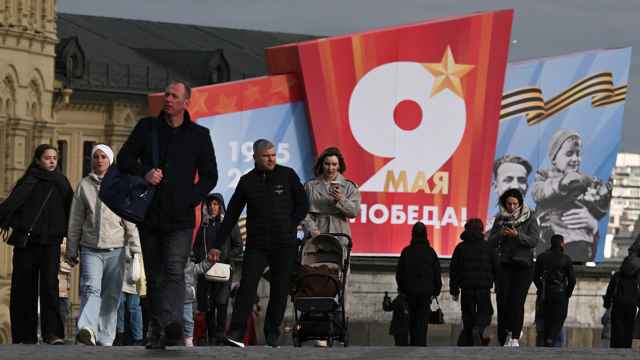
Large parts of Moscow’s city center have been grappling with intermittent or near-total mobile internet disruptions for nearly two weeks due to what the Kremlin says are “security measures.”
The shutdowns have significantly disrupted everyday life in a city known for its widespread use of apps and digital services and are costing businesses millions — and authorities have not specified when they might end.
Regions across Russia have been living with mobile internet disruptions for months due to the threat of Ukrainian drone attacks. Nor is this the first time that Moscow has had its mobile internet cut off.
But given their duration and scale, the latest outages in Moscow have fueled speculation that the authorities may be readying a new clampdown on Russians’ digital freedoms.
Some residents said mobile internet access varied from neighborhood to neighborhood, disappearing unpredictably and without any notice.
Both internet and cellular service in the central Basmanny district stopped working last weekend, Natalia said.
“I couldn’t even make a call or send an SMS [text message],” she told The Moscow Times, withholding her last name for security reasons.
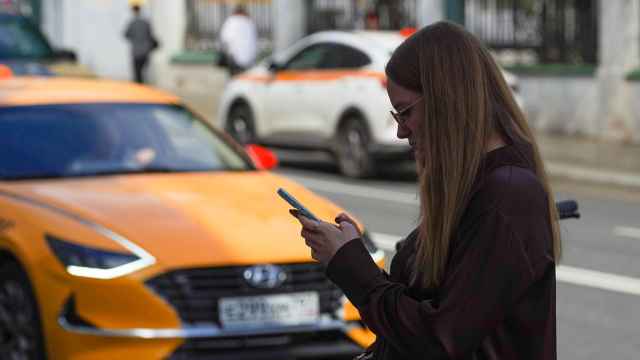
A woman living in central Moscow said mobile internet had stopped working in her district entirely, including the so-called “white list” of essential services like government websites, banking apps and taxis meant to remain accessible during shutdowns.
“It’s incredibly frustrating,” she said. “I can order a taxi from my home Wi-Fi, and then spend half an hour walking around the neighborhood trying to find the driver.”
A Moscow resident who works near Tsvetnoi Bulvar said that mobile and internet service was largely unavailable there as of Friday.
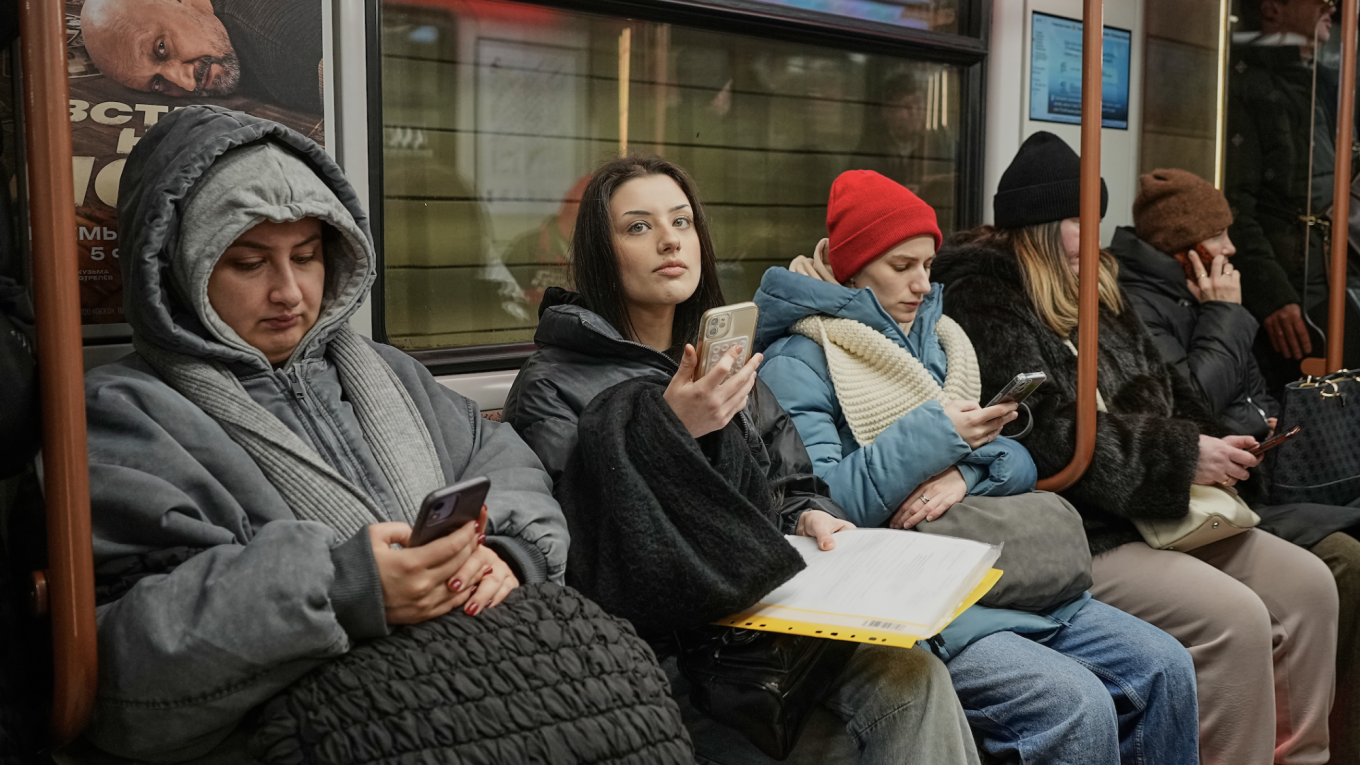
Residents said they were occasionally unable to pay by card, withdraw cash from ATMs or collect online orders because payment terminals and pickup points were disconnected from the internet.
Experts estimate that Moscow’s businesses lost between 3 billion to 5 billion rubles ($38-63 million) during the first five days of the disruption, with courier services, taxi and car-sharing companies and retailers among the hardest hit.
The internet outages have even reached Russia’s political elite.
Kremlin spokesman Dmitry Peskov said Friday that the presidential administration had switched to using landline phones.
The lower-house State Duma, a short walk away from the Kremlin, also experienced an internet and mobile outage on Thursday, sources in the parliament told Russian media.
Lawmakers were reportedly unable to connect to the chamber’s Wi-Fi network, and messaging apps including Telegram and Max, the homegrown messaging app heavily promoted by officials, were unavailable.
“Lawmakers should be united with the people,” lawmaker Mikhail Delyagin joked.
Media have also reported spikes in demand in Moscow for printed maps, walkie-talkies and pagers. Analysts noted, however, that pager communication services no longer operate in Russia.
Lawmaker Igor Antropenko proposed installing payphones “with internet access” in Russian cities to help people stay connected during outages.
The Moscow Institute of Physics and Technology offered a more archaic solution: If their cellphones’ maps stopped working, Muscovites could always use the stars and the Sun to navigate.
Internet shutdowns have become increasingly common in Russia since Moscow launched its full-scale invasion of Ukraine in 2022.
Russia ranked first globally for the number of internet disruptions in 2025, according to estimates by research and analytics group Top10VPN.
The frequency and scale of shutdowns started increasing last year as Ukraine expanded long-range drone attacks targeting military infrastructure inside Russia.
The monitoring group Na Svyazi said restrictions have targeted at least 63 regions.
Outages were reported almost daily last September in the border region of Belgorod, as well as in the Kaliningrad, Leningrad, Moscow, Stavropol, Novosibirsk, Perm and Orenburg regions.
Two regions, the Ulyanovsk region and annexed Crimea, have restricted mobile internet “until the end of the war.”
Ulyanovsk authorities specified that the measures are “geographically selective” and only apply to areas near critical infrastructure.
President Vladimir Putin in February signed a law requiring telecom operators to suspend services to subscribers at the request of the Federal Security Service (FSB), a measure officials said would strengthen security and counterterrorism capabilities.
The Kremlin said this week all internet restrictions were being implemented “strictly in accordance with current legislation,” accusing Ukraine of “using increasingly sophisticated methods in its attacks” and making the shutoffs necessary.
Russia has been tightening the screws on what Russians can see and do online since the invasion of Ukraine in 2022, blocking opposition content and independent media as well as restricting foreign messaging apps like WhatsApp and Telegram.
While critics have slammed the restrictions as assaults on digital freedom, authorities have said each new measure is an attempt to protect civilians.
“As a state at war we must clearly…tell our citizens that sometimes they will have to put up with inconveniences,” lawmaker and deputy chairman of the State Duma’s Information Policy Committee Andrei Svintsov said Thursday.
“If someone remotely detonates something near a police officer through some messenger… if that were to happen every day near every metro station, our citizens would probably say: ‘To hell with the internet. I don’t want to be blown up every day’,” he added.
Mobile internet restrictions in Moscow have reignited discussions that the Russian authorities may be testing its “sovereign internet,” a system designed to isolate the country from the World Wide Web.
A source from the Digital Development Ministry told the RBC business daily that the Moscow internet outages were a test of the ability to block access to sites not on the “white list.”
“This testing has been going on in the regions for some time, and it has now reached Moscow,” the source said.
Yet leading Russian internet analyst Mikhail Klimarev said fears that "white lists" would be made permanent “seem premature,” noting that fixed-line internet continues to operate in Moscow and across Russia.
The outages in Moscow appear similar to those imposed in other regions when authorities want to protect military infrastructure, said Klimarev, who heads the Internet Protection Society.
“It’s only when the ‘white lists’ start being implemented at home that there will be real cause for concern,” he added.
A Message from The Moscow Times:
Dear readers,
We are facing unprecedented challenges. Russia's Prosecutor General's Office has designated The Moscow Times as an "undesirable" organization, criminalizing our work and putting our staff at risk of prosecution. This follows our earlier unjust labeling as a "foreign agent."
These actions are direct attempts to silence independent journalism in Russia. The authorities claim our work "discredits the decisions of the Russian leadership." We see things differently: we strive to provide accurate, unbiased reporting on Russia.
We, the journalists of The Moscow Times, refuse to be silenced. But to continue our work, we need your help.
Your support, no matter how small, makes a world of difference. If you can, please support us monthly starting from just $2. It's quick to set up, and every contribution makes a significant impact.
By supporting The Moscow Times, you're defending open, independent journalism in the face of repression. Thank you for standing with us.

Remind me later.