
Hello and welcome to Regions Calling, your guide to developments beyond the Russian capital from The Moscow Times.
This week, we unpack the motives behind the ongoing crackdown on members of Russia’s Communist Party in the Altai region and what it signals for this September’s parliamentary elections.
But first, here is the latest news from the regions:
The Headlines
Ingush political prisoner Akhmed Barakhoev was released from a penal colony in Yaroslavl after serving five years on charges linked to 2019 protests against a controversial land-swap deal between his native republic of Ingushetia and Chechnya. Musa Malsagov, another protester, was released the same day.
At least 200 people gathered at Ingushetia’s Magas Airport on Wednesday to greet Barakhoev on arrival, prompting authorities to redirect his flight to neighboring North Ossetia-Alania, according to local reports.
Barakhoev, 71, and fellow community elder Malsag Uzhakhov were the oldest defendants in the high-profile case triggered by the 2019 protests. Uzhakhov, 73, is expected to be released from prison later this year.
At least 19 people were arrested across five regions of Russia and Moscow for publicly commemorating the second anniversary of Kremlin critic Alexei Navalny’s death, human rights watchdog OVD-Info reported. Seven of the detentions took place in Ufa, the сapital of the republic of Bashkortostan.
Chechnya’s Supreme Court overturned the most recent sentencing of Zarema Musaeva, the jailed mother of exiled critics of Chechen leader Ramzan Kadyrov.
Musaeva, who has been in detention since January 2022, was sentenced to three years and 11 months in prison for allegedly assaulting a prison guard in August last year, a charge she and her family deny. She will await the retrial of her case in a pre-trial detention center.
In the Ukraine-bordering Belgorod region, which has faced weeks of utility outages due to Ukrainian airstrikes on energy infrastructure, authorities vowed to organize emergency commissions to handle a surge of complaints after Governor Vyacheslav Gladkov warned that the regional capital would not have hot water until April.
The Spotlight
Why Altai Communists Are Feeling the Pinch as the Kremlin Eyes State Duma Elections
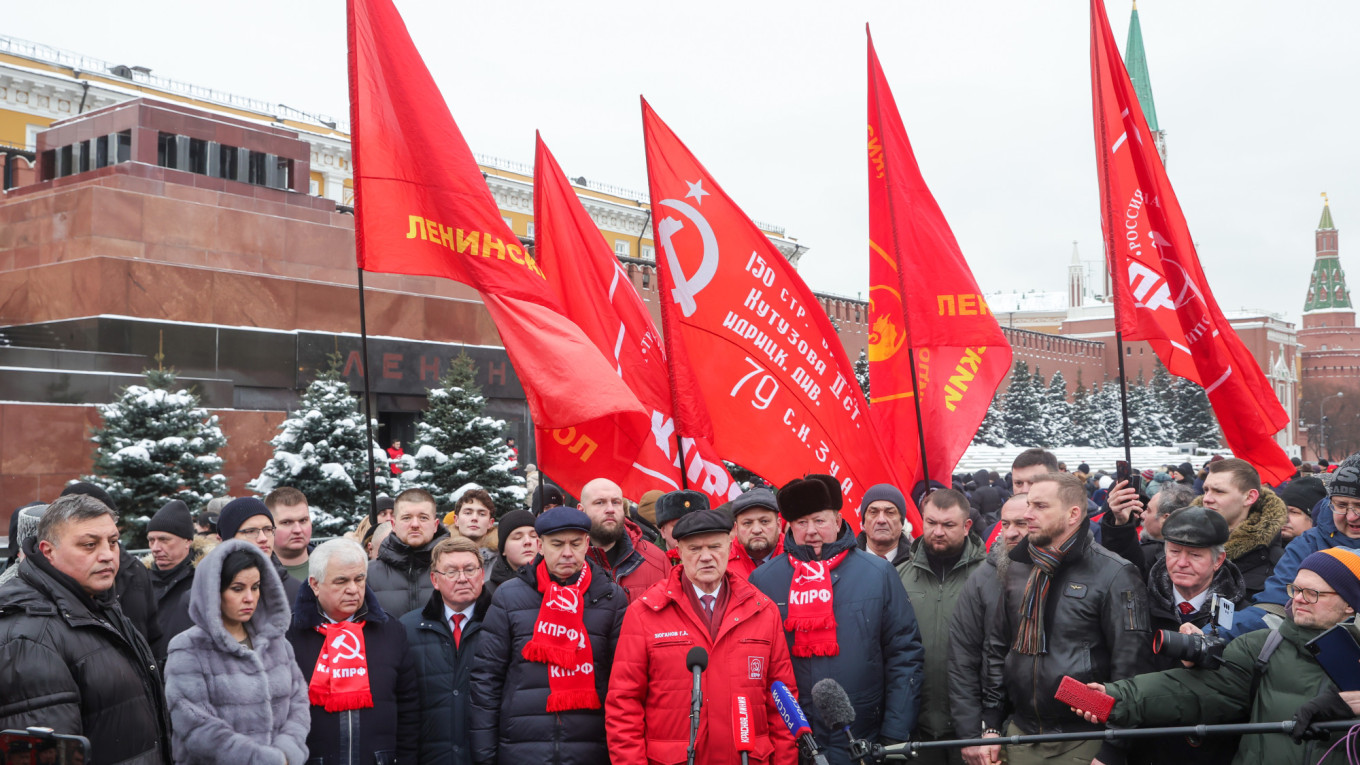
Russia’s Communist Party (KPRF) is under increased pressure ahead of this September’s State Duma elections, with dozens of members across the country targeted in police raids, implicated in administrative offenses and arrested on charges they say are politically motivated.
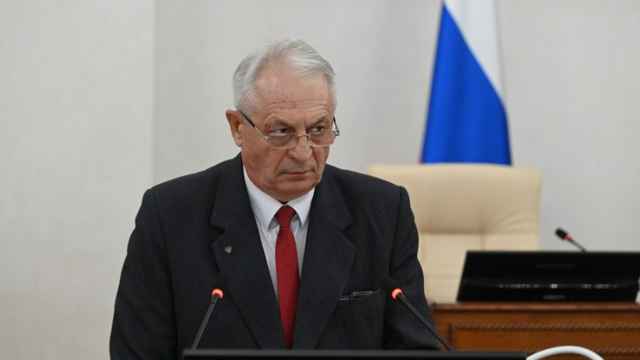
In Siberia’s Altai region alone, as many as 11 KPRF affiliates have been arrested over the past three months, including regional assembly deputy speaker Yury Kropotin.
Prosecutors allege that Kropotin, who was placed under house arrest, embezzled more than 2 million rubles ($26,000) through fictitious employment schemes between 2021 and 2025.
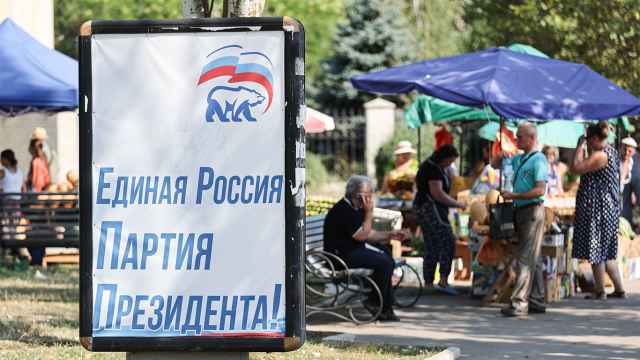
Veteran Communist Party leader Gennady Zyuganov accused the Kremlin of waging a deliberate campaign to hamstring Russia’s second-largest political party as it prepares to compete with the ruling, de facto Putin-led United Russia party in the State Duma elections.
“Our opponents see that the Communist Party is getting stronger, and the people have come over to our side. KPRF is actively fighting to protect small and medium businesses,” Zyuganov said.
“I myself was interrogated, threatened and put on trial in the past,” said Zyuganov, who has led the party since the 1990s. “I believed those times were over. But now they are being revived in an even worse form.”
The Kremlin has not yet commented on the matter. In the past, it has repeatedly denied that criminal investigations into opposition figures and politicians are politically motivated.
But independent analysts who spoke with The Moscow Times said that Zyuganov has a point.
“Of course, this is directly connected to the [upcoming] elections,” an expert on Russian electoral politics said, requesting anonymity for safety reasons.
“The Altai region branch of the KPRF is one of the strongest — if not the strongest — in the country,” they added.
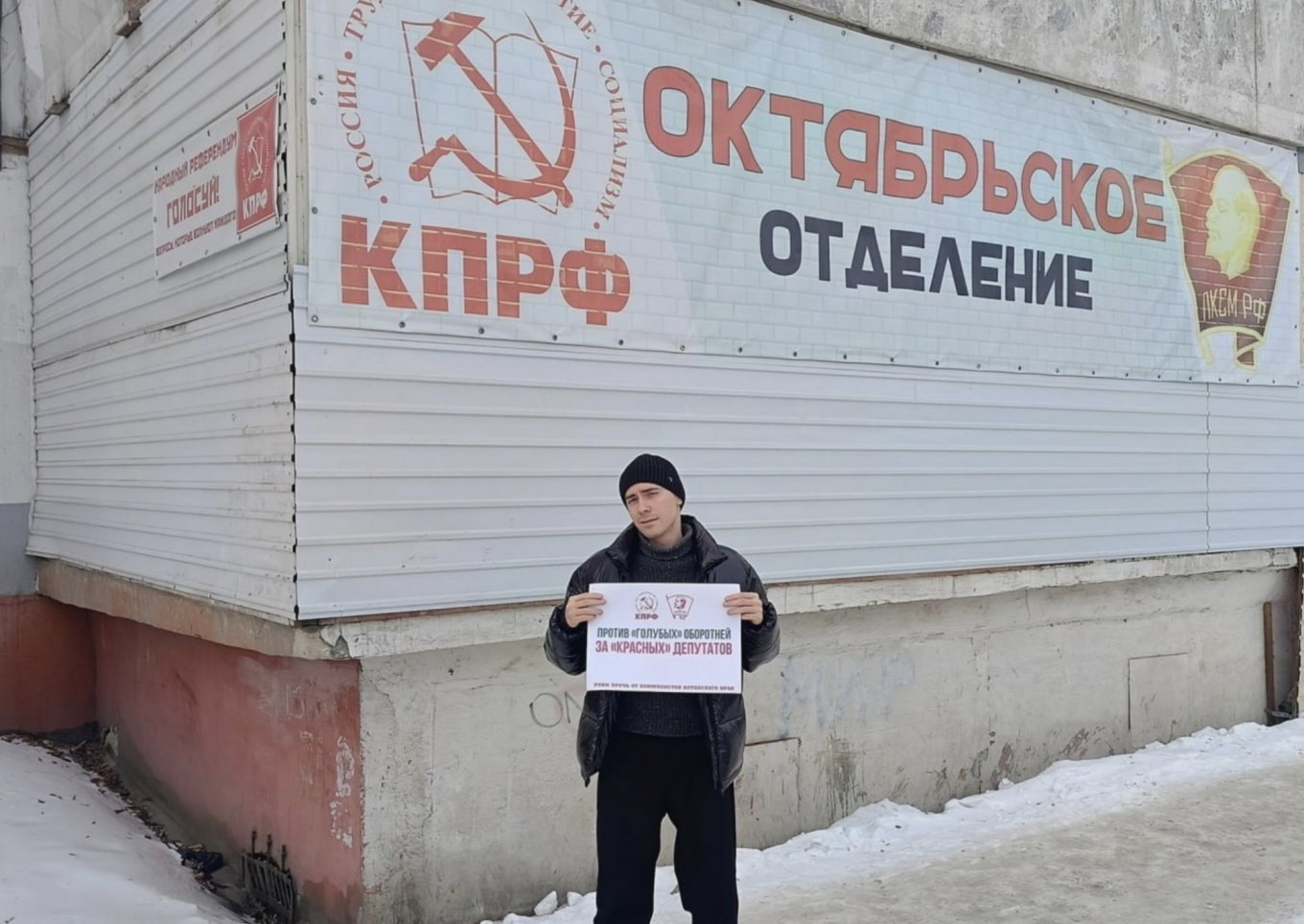
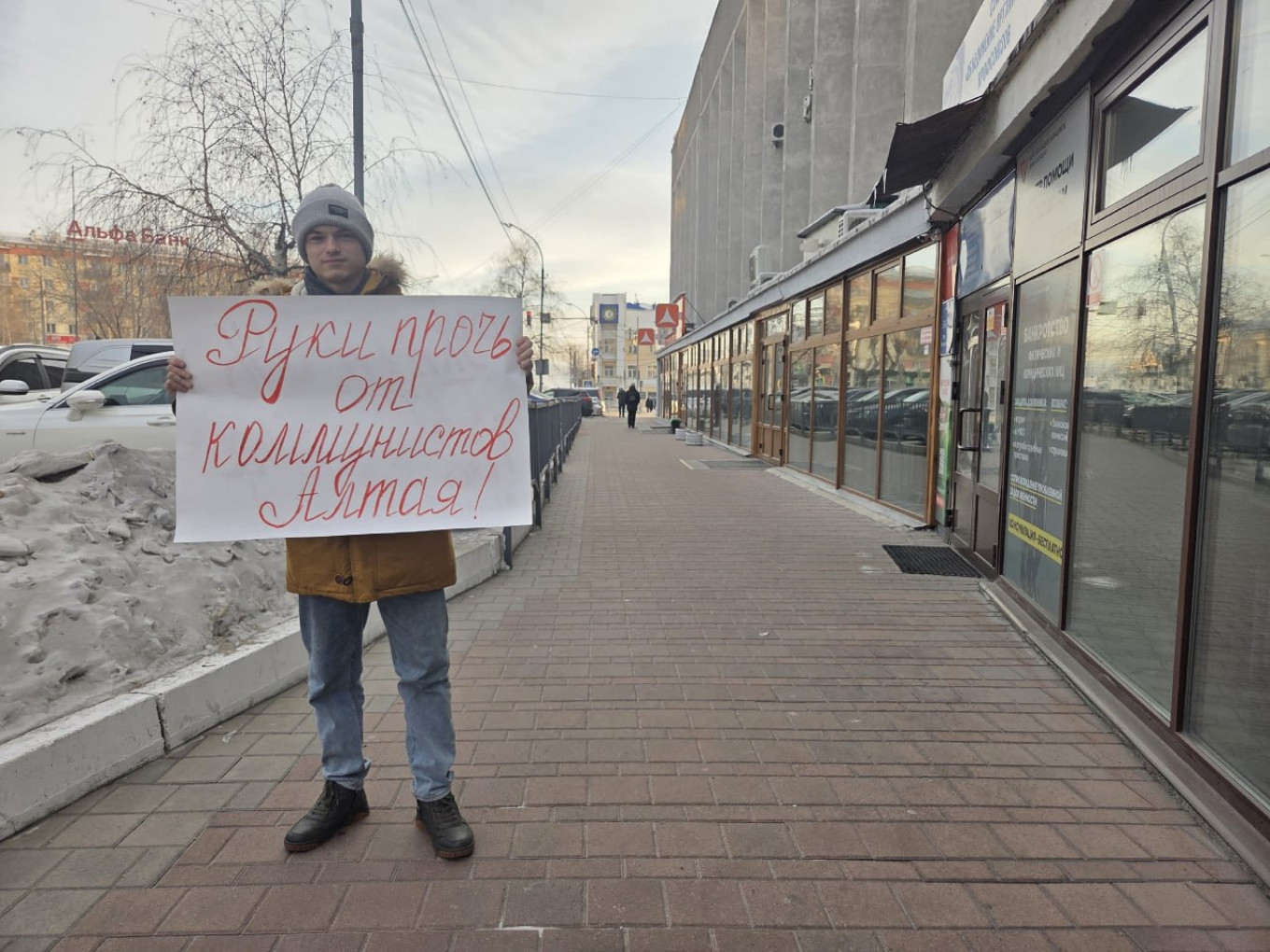
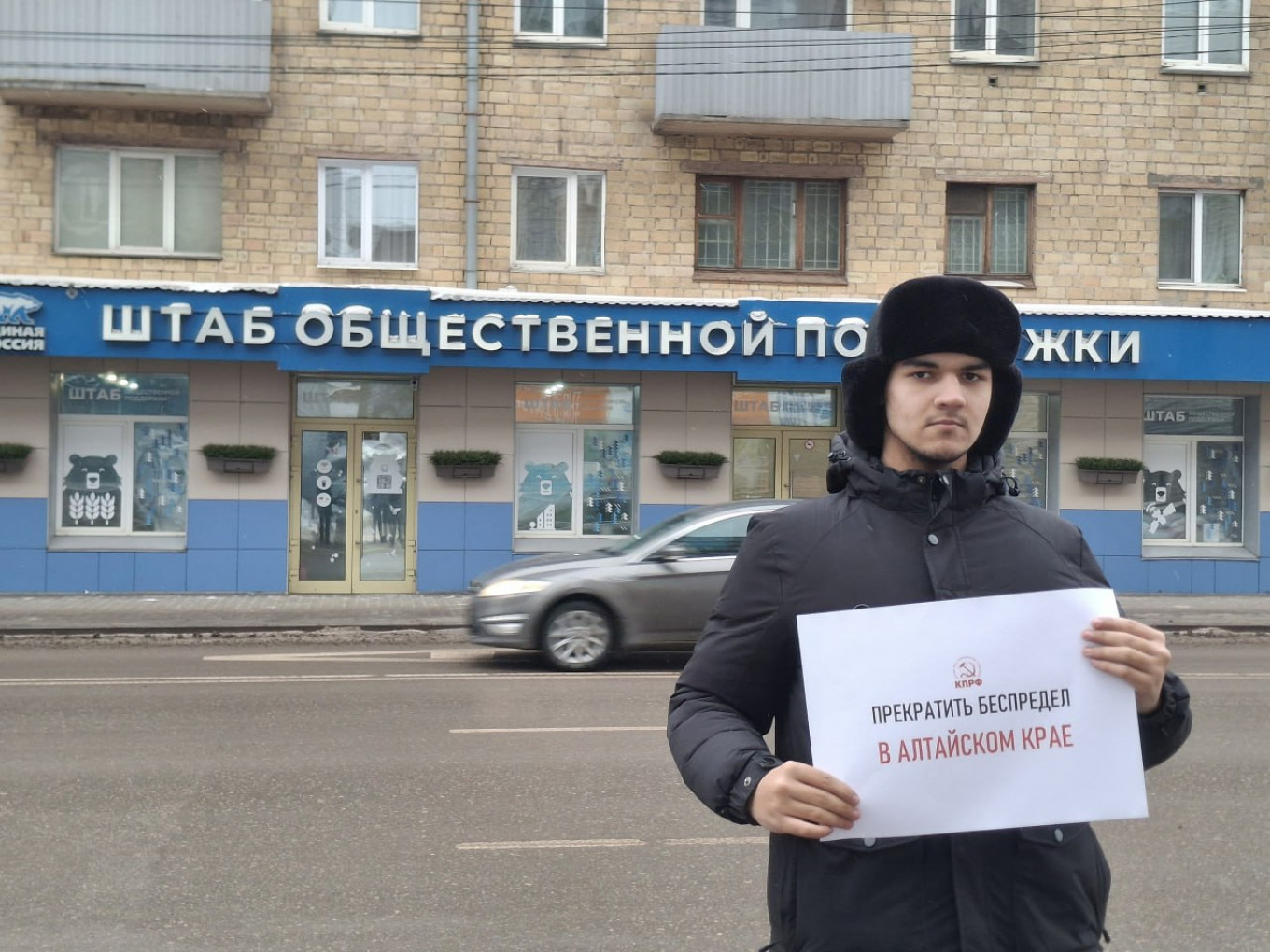
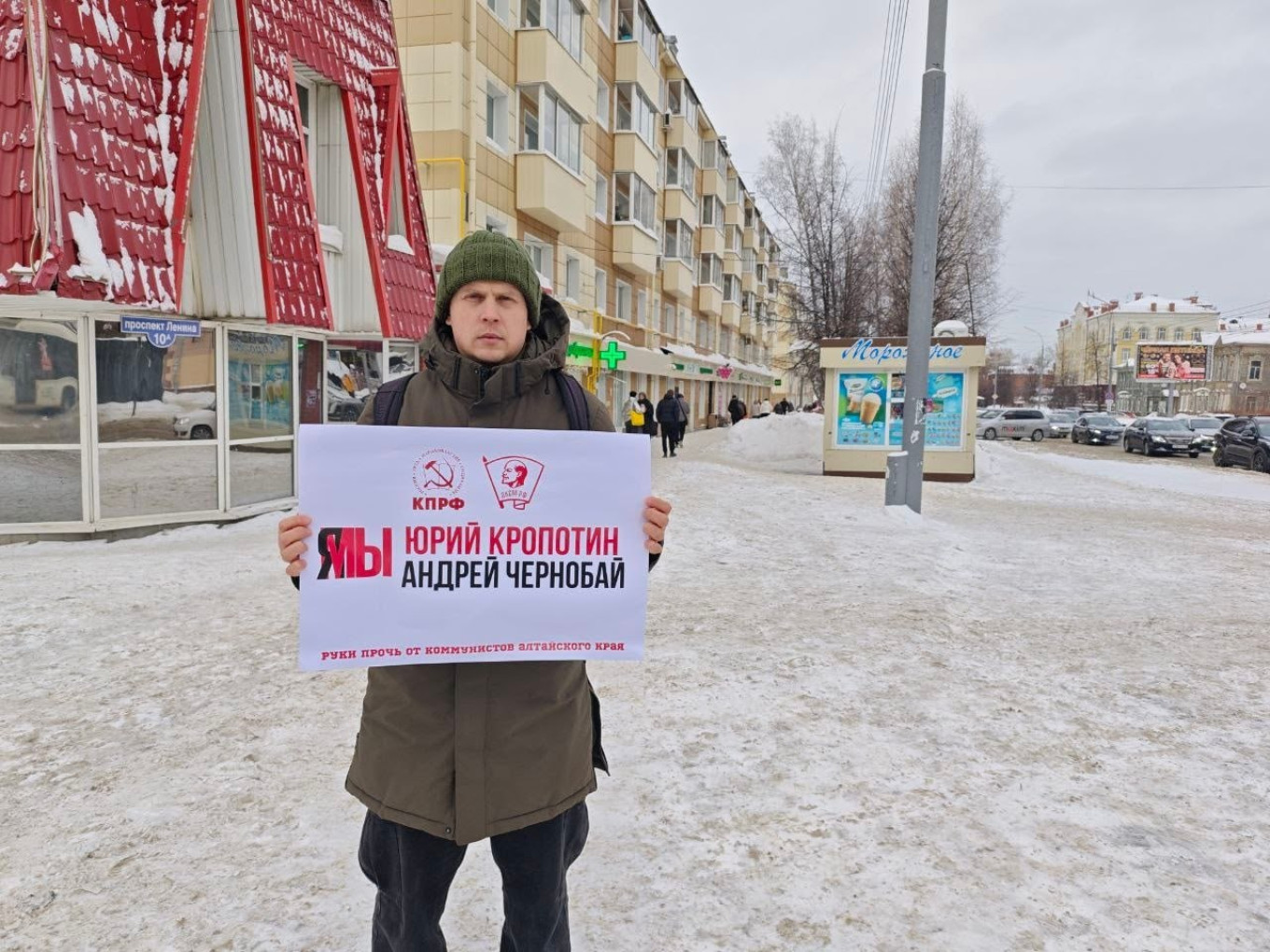
Altai, one of Russia’s largest agricultural regions with a population of more than 2 million, has long been challenging ground for United Russia to conquer.
In the 2021 regional elections, the Communists won 24 of 68 seats in the regional assembly. Its strong presence in the regional parliament has been a nuisance for United Russia, whose initiatives have regularly been met with open scrutiny and resistance from Communist deputies.
Coincidentally, KPRF’s success was followed by a series of setbacks. Some deputies left the faction due to internal disputes, while others have been implicated in criminal cases, mostly on fraud accusations.
In November, Altai investigators opened a criminal case against deputy Lyudmila Klushnikova and her assistant Svetlana Kerber for allegedly embezzling over 3 million rubles ($39,000).
The charges against the women resembled the later charges that Kropotin would face.
Klushnikova and Kerber were transferred to house arrest in December after Zyuganov publicly pleaded for top investigative official Alexander Bastrykin to intervene.
In the 2021 State Duma elections, KPRF also received an impressive 31% of the votes in the Altai region against United Russia’s 33%.
KPRF would likely have certainly emerged victorious in the party list vote had it not been for two spoiler parties, the Communists of Russia and the Pensioners of Russia, on the ballots, analysts agree.
Local Communist leader Mariya Prusakova, who won a single-mandate Duma seat in 2021, is also expected to face a tougher re-election battle in September.
The district where she won her Duma seat more than four years ago was eliminated in last year’s redistricting, while Altai media have circulated rumors that she, too, could soon be embroiled in a criminal embezzlement case.
“The Kremlin doesn't want any of the ‘systemic opposition’ parties to become a focal point for protest votes,” said Ora John Reuter, professor of political science at the University of Wisconsin-Milwaukee and expert on Russia’s electoral politics.
Though KPRF is not positioning itself as the last remaining bastion for opposition, voters dissatisfied with the status quo could still rally behind the party, he said.
“I think that [the Kremlin] is trying to stamp out any sort of overt oppositional activity just to make it harder for those who oppose it to figure out who they should coordinate on in terms of giving their protest votes,” Reuter told The Moscow Times.
He said the pressure on the Communist Party fits “a pattern that has been apparent for most of its existence during the Putin era,” whereby the party “needs to maintain some credibility for its voters, but it can't be too oppositional. Otherwise, it will face repression.”
Beyond the Altai region, fellow Communist Party members in the Primorye and Lipetsk regions, as well as the republic of Buryatia, have also faced increasing pressure.
In the Altai region’s neighboring republic of Altai, Communist Party members have been forced to tread lightly after vocally opposing controversial reforms pushed by Kremlin-installed head Andrei Turchak, including a local self-governance overhaul that sparked one of Russia’s largest wartime protests last year.
But even regionally concentrated pressure could have wider consequences for the rest of the country, analysts say.
“Such blatant pressure will affect both the work of the Altai region branch and party offices in other regions,” the anonymous expert told The Moscow Times.
“The number of people willing to run for office in Russia has already declined significantly over the past five years, even among members of United Russia,” they added. “All of the parties are having a hard time, but when everyone sees this kind of coercive pressure, it becomes even harder to find both candidates and sponsors.”
Photo of the Week
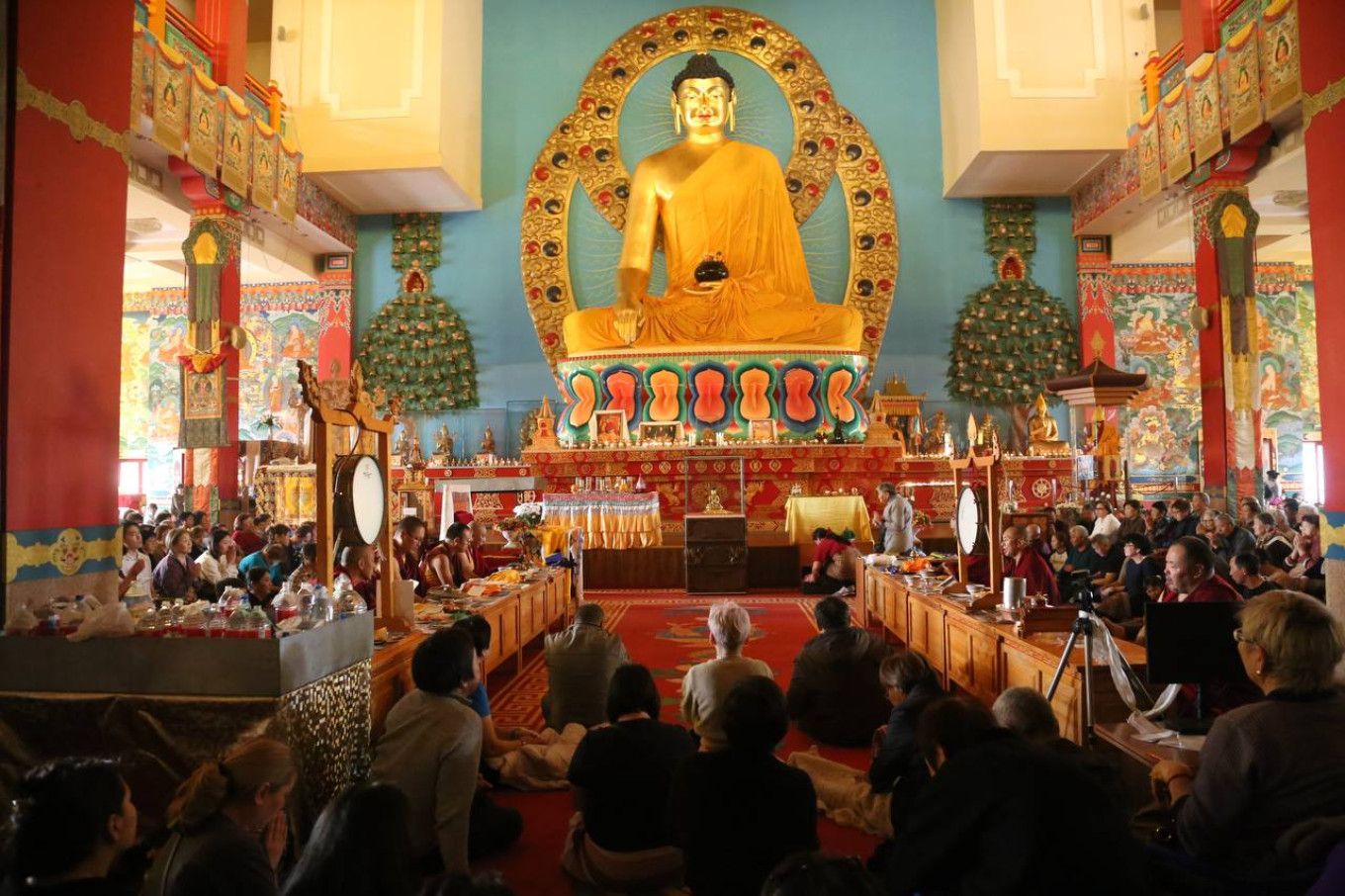
Buddhist believers in Russia’s southern republic of Kalmykia gathered at the Burkhan Bakshin Altan Sume monastery in the capital Elista on Tuesday to partake in Hgurvn khuuv, a spiritual cleansing ritual traditionally performed on the eve of Tsagaan Sar, the Mongolian Lunar New Year.
Indigenous communities in the republics of Buryatia and Tyva, as well as the Zabaikalsky region, also celebrated the New Year this week in accordance with the Mongolian lunisolar calendar.
Culture & Entertainment
- The University College London School of Slavonic and East European Studies (SSEES) is hosting an in-person seminar on March 2 to explore the role of women in Soviet documentary film. More information about the event is available here.
- “The Wizard of the Kremlin,” a political dark comedy starring Jude Law as a young Vladimir Putin, is now available in select theaters worldwide. Olivier Assayas’ film premiered at the 82nd Venice International Film Festival last August and was nominated for the Golden Lion.
- “Months Since a Historic Protest, Altaians Still Fighting for Political Representation” by Leyla Latypova
- “Russia’s Opposition, Past and Future: A Conversation With Jan Matti Dollbaum” by Mack Tubridy
- “A Push For Local Government Efficiency in Russia Is Really About Kremlin Control” by Andras Toth-Czifra
A Message from The Moscow Times:
Dear readers,
We are facing unprecedented challenges. Russia's Prosecutor General's Office has designated The Moscow Times as an "undesirable" organization, criminalizing our work and putting our staff at risk of prosecution. This follows our earlier unjust labeling as a "foreign agent."
These actions are direct attempts to silence independent journalism in Russia. The authorities claim our work "discredits the decisions of the Russian leadership." We see things differently: we strive to provide accurate, unbiased reporting on Russia.
We, the journalists of The Moscow Times, refuse to be silenced. But to continue our work, we need your help.
Your support, no matter how small, makes a world of difference. If you can, please support us monthly starting from just $2. It's quick to set up, and every contribution makes a significant impact.
By supporting The Moscow Times, you're defending open, independent journalism in the face of repression. Thank you for standing with us.

Remind me later.