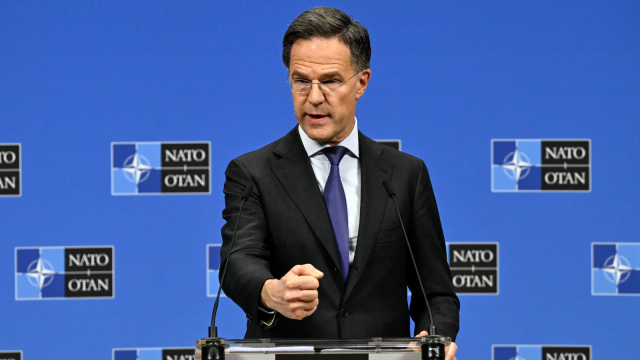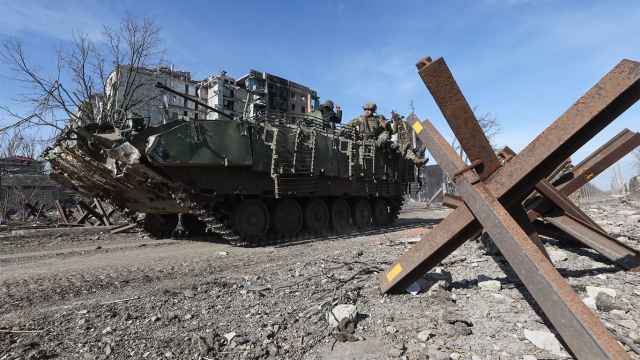

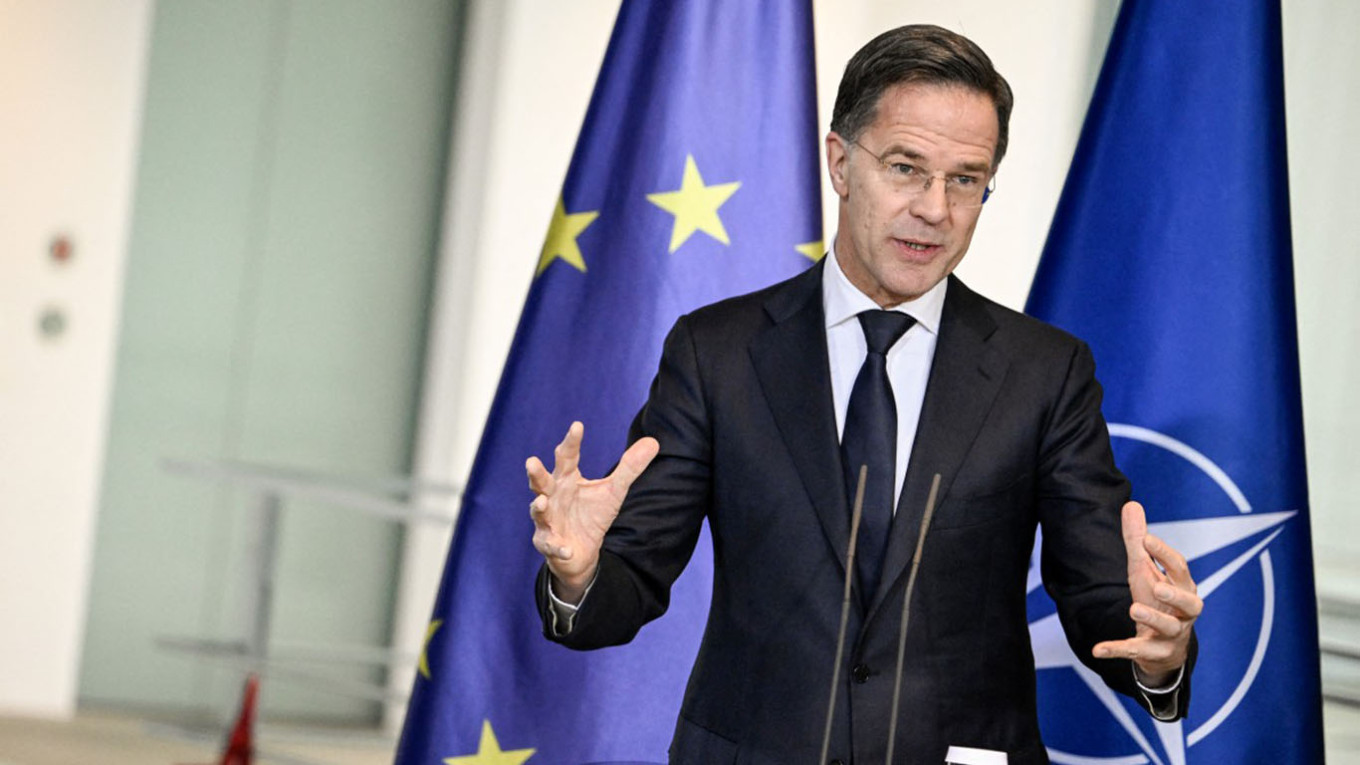
BRUSSELS — NATO Secretary General Mark Rutte said that each European country must decide for itself whether to resume dialogue with the Kremlin, nearly four years after the Russian invasion of Ukraine brought almost all bilateral contact to a halt.
“It’s not up to me to advise allies,” Rutte told The Moscow Times on Wednesday. “But I think every ally is open and can do what the French have been doing, and I know that they closely coordinate with other allies. I would encourage every initiative that will bring this terrible war faster to an end.”
European leaders have debated whether to restore dialogue with Russia in recent months, with some worrying that European interests risk being sidelined in U.S.-led efforts to negotiate a peace deal in Ukraine.
Many have resisted the idea of resuming dialogue, pointing to Moscow’s refusal to budge from its hardline negotiating position and arguing that Moscow should remain diplomatically isolated as punishment for its invasion of Ukraine.
French President Emmanuel Macron this week confirmed that he had reestablished “technical-level” discussions with Russia after sending his top foreign policy adviser to Moscow to meet with Russian counterpart Yury Ushakov.
Macron said that meeting brought him “confirmation that Russia does not want peace right now.”
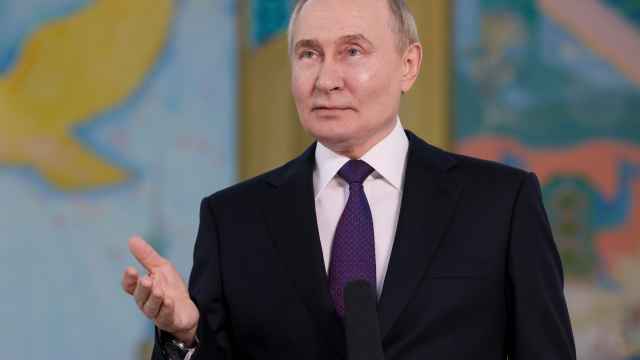
The Kremlin meanwhile said these discussion channels “could help fairly quickly reestablish dialogue at the highest level.”
Rather than engaging directly with Moscow, European leaders have focused on coordinating with the U.S. to ensure their perspectives and interests are considered, including accompanying Ukrainian President Volodymyr Zelensky to Washington.
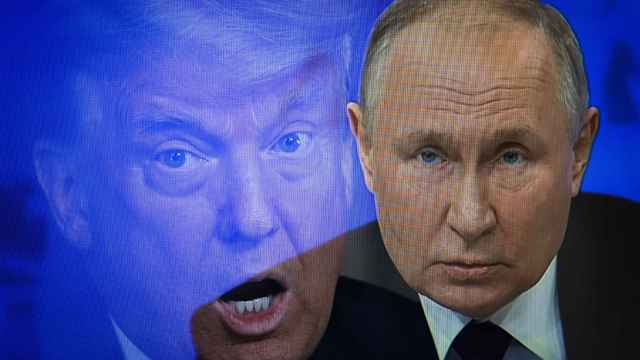
Rutte, who has praised U.S. President Donald Trump’s push to end the war, told The Moscow Times: “We all agree that U.S. leadership is key here. It was the American president breaking the deadlock. But I think every initiative which will bring this war to an end and will bring it faster to an end can be encouraged.”
The European Union’s chief diplomat, Kaja Kallas, said this week that European governments must agree on a series of demands from Russia as part of any Ukraine peace deal.
A list of concessions including limitations on the size of Russia’s army and the return of all children abducted from Ukraine would be presented to EU member governments in the coming days, she told reporters.
A Message from The Moscow Times:
Dear readers,
We are facing unprecedented challenges. Russia's Prosecutor General's Office has designated The Moscow Times as an "undesirable" organization, criminalizing our work and putting our staff at risk of prosecution. This follows our earlier unjust labeling as a "foreign agent."
These actions are direct attempts to silence independent journalism in Russia. The authorities claim our work "discredits the decisions of the Russian leadership." We see things differently: we strive to provide accurate, unbiased reporting on Russia.
We, the journalists of The Moscow Times, refuse to be silenced. But to continue our work, we need your help.
Your support, no matter how small, makes a world of difference. If you can, please support us monthly starting from just $2. It's quick to set up, and every contribution makes a significant impact.
By supporting The Moscow Times, you're defending open, independent journalism in the face of repression. Thank you for standing with us.

Remind me later.