
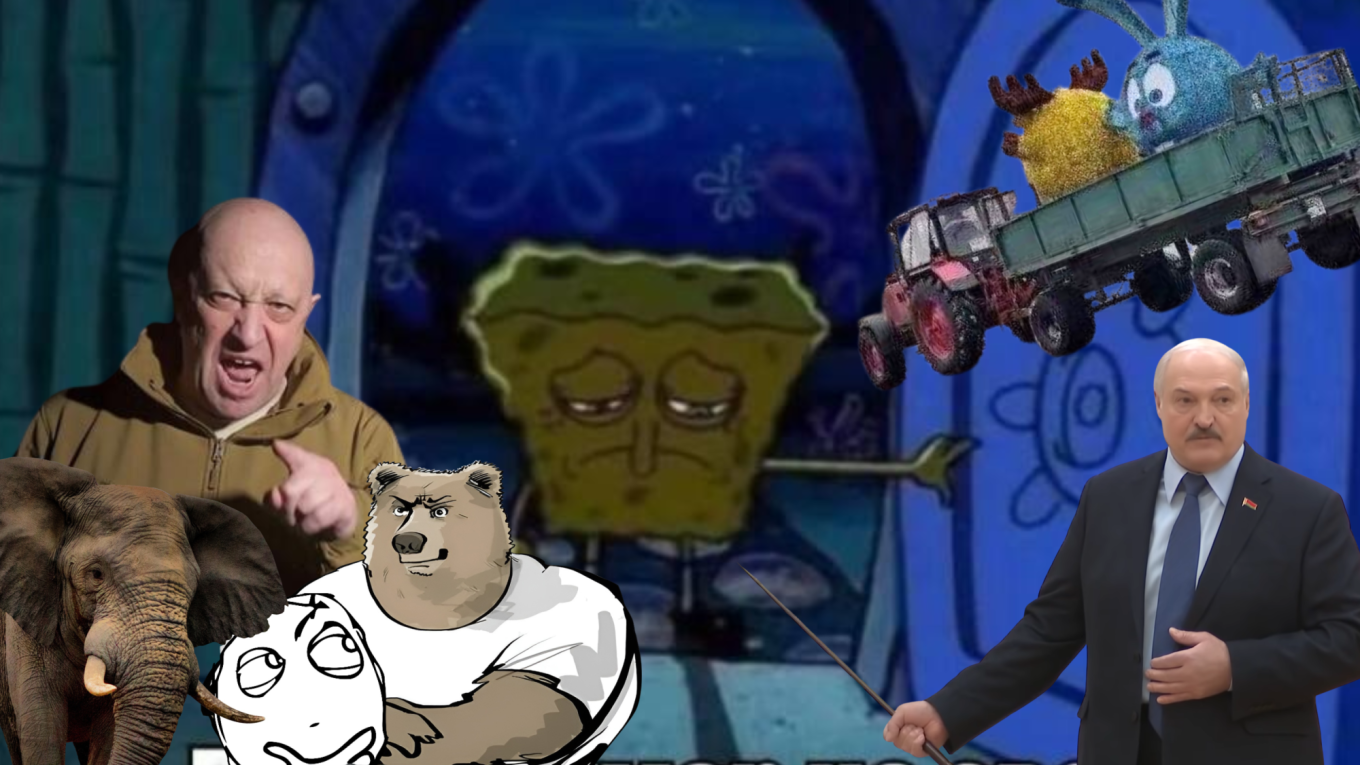
In Russia, where open criticism of the war in Ukraine is effectively outlawed, memes have become a coded way to comment on the full-scale invasion.
Many of the most widely shared memes mock the patriotic spectacle, bureaucratic jargon and propaganda tropes of the war, often using a fair dose of dark humor.
While this humor can sometimes appear abrasive or even offensive, these memes form part of a shared language through which Russians process a reality that cannot always be discussed openly.
The Moscow Times has compiled a guide to some of the most well-known wartime memes in Russia:
‘Goida!’
An archaic Russian interjection used historically as a battle cry, “Goida!” gained notoriety in September 2022, when actor Ivan Okhlobystin shouted it during a speech at a patriotic rally on Red Square.
In that speech, Okhlobystin called the war “sacred” and issued a warning to the “Old World,” which he said had been “deprived of true beauty and ruled by madmen, perverts and satanists.”
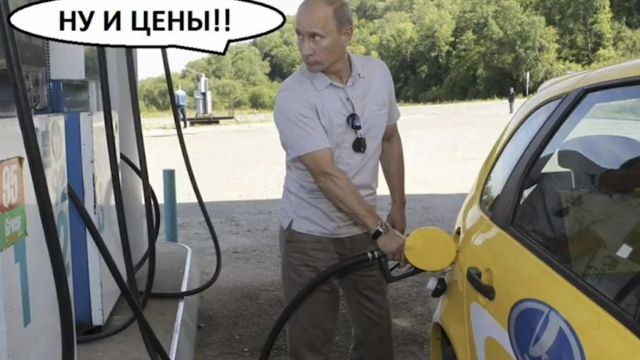
It wasn’t long before clips of the speech spread across the internet, and “Goida!” was quickly repurposed as a sarcastic punchline. Today, it is often posted under news of Russia’s failures and setbacks — like reports of rising prices — to mock exaggerated pro-war triumphalism and official claims of success.
A related meme, “Gooooal!”, comes from a cartoon in which a bear mistakenly celebrates a card game against Uncle Sam as if it were a football match. Like “Goida!”, it is used to mock pro-war celebrations or political theater.
Both expressions are also often deployed out of context as absurdist punchlines.
‘Our elephant’
The phrase nash slon (“our elephant”) first appeared in right-wing chat rooms and web forums as a way to express respect for patriotic figures or people abroad who support or represent Russia.
It has been traced back to “Russia is the homeland of elephants,” a Soviet-era joke that mocked the U.S.S.R.’s tendency to exaggerate its own achievements.
The meme was later adopted by anti-war Russians, who use it ironically.
Public figures as varied as Donald Trump, Elon Musk, Tucker Carlson, “Anora” actor Yura Borisov, Wagner mercenary leader Yevgeny Prigozhin, opposition politician Boris Nadezhdin and Telegram founder Pavel Durov have all been labeled “our elephant” — sometimes sincerely, but usually sarcastically.
In this video, a flattened Trump is accompanied by the caption “Our elephant is going to sign a decree on bringing Coca-Cola and Kit-Kat back to Russia.”
‘SVO’
The abbreviation for “special military operation,” the Kremlin’s official term for the invasion of Ukraine, is a ubiquitous sight on billboards, official documents and state media.
While initially associated with pro-war figures, the term has been widely appropriated in a post-ironic sense over the past four years, with memes exaggerating the bureaucratic language surrounding the deadly war to highlight how official newspeak has entered daily conversation.
One viral video on TikTok parodies the interrogation scene from “Blade Runner 2049,” with the subject responding to questions like “Have you ever been to the SVO?”, “What do you feel when you’re in a trench?”, “Do you want to sign a contract?” using only the words “Goida” and “SVO.”
Another mock advertisement promotes a “cosmetics kit for the SVO,” including toner “to wipe the dust and gunpowder off your face,” concealer “to hide dark circles from lack of sleep” and lip balm “to blind the enemy.”
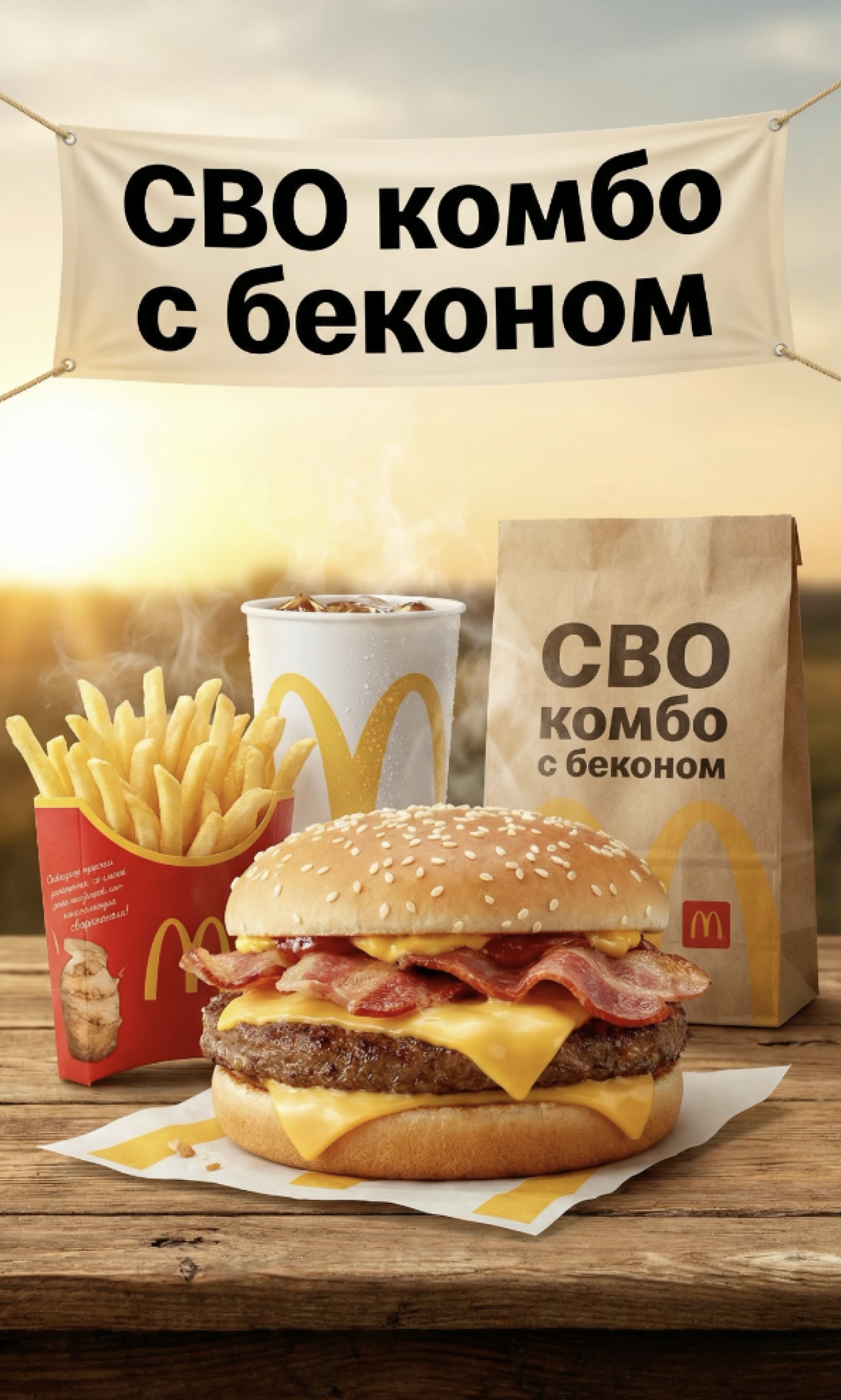
Some users noticed the visual coincidence between the McDonald’s CBO burger and the Cyrillic letters for “SVO.”
A subset of “SVO” memes puts popular cartoon characters in wartime scenarios, juxtaposing the innocence of children’s media with grim and violent military tropes.
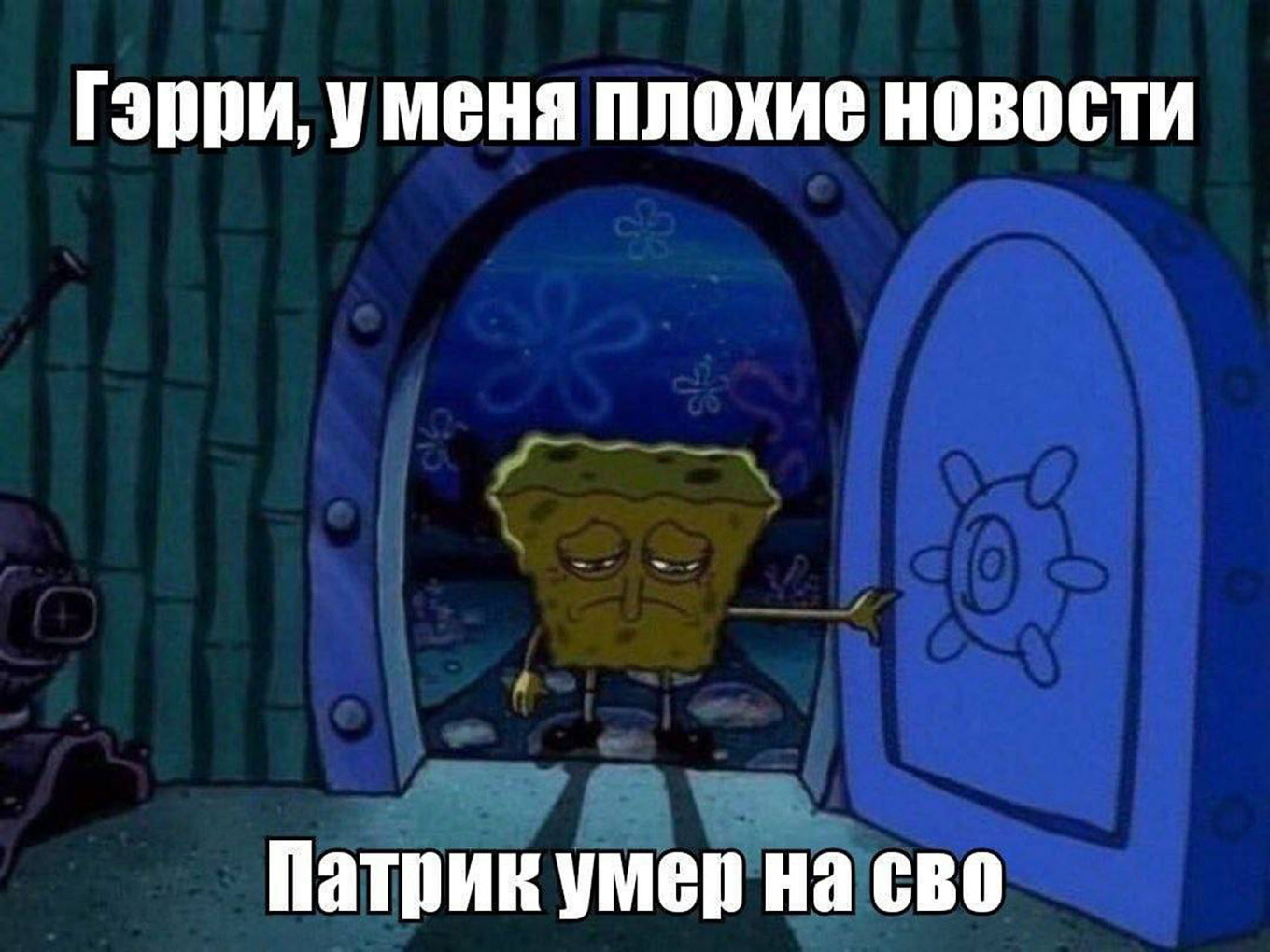
One meme shows Patrick from “SpongeBob SquarePants” missing his limbs with the caption “The Kyiv regime bombed Patrick,” mocking Russian officials’ insistence on calling Ukraine’s government “the Kyiv regime.”
Another shows Spongebob with a frying pan on his head and the caption: “Epic disaster. The Kyiv regime is shelling the Krusty Krab.”
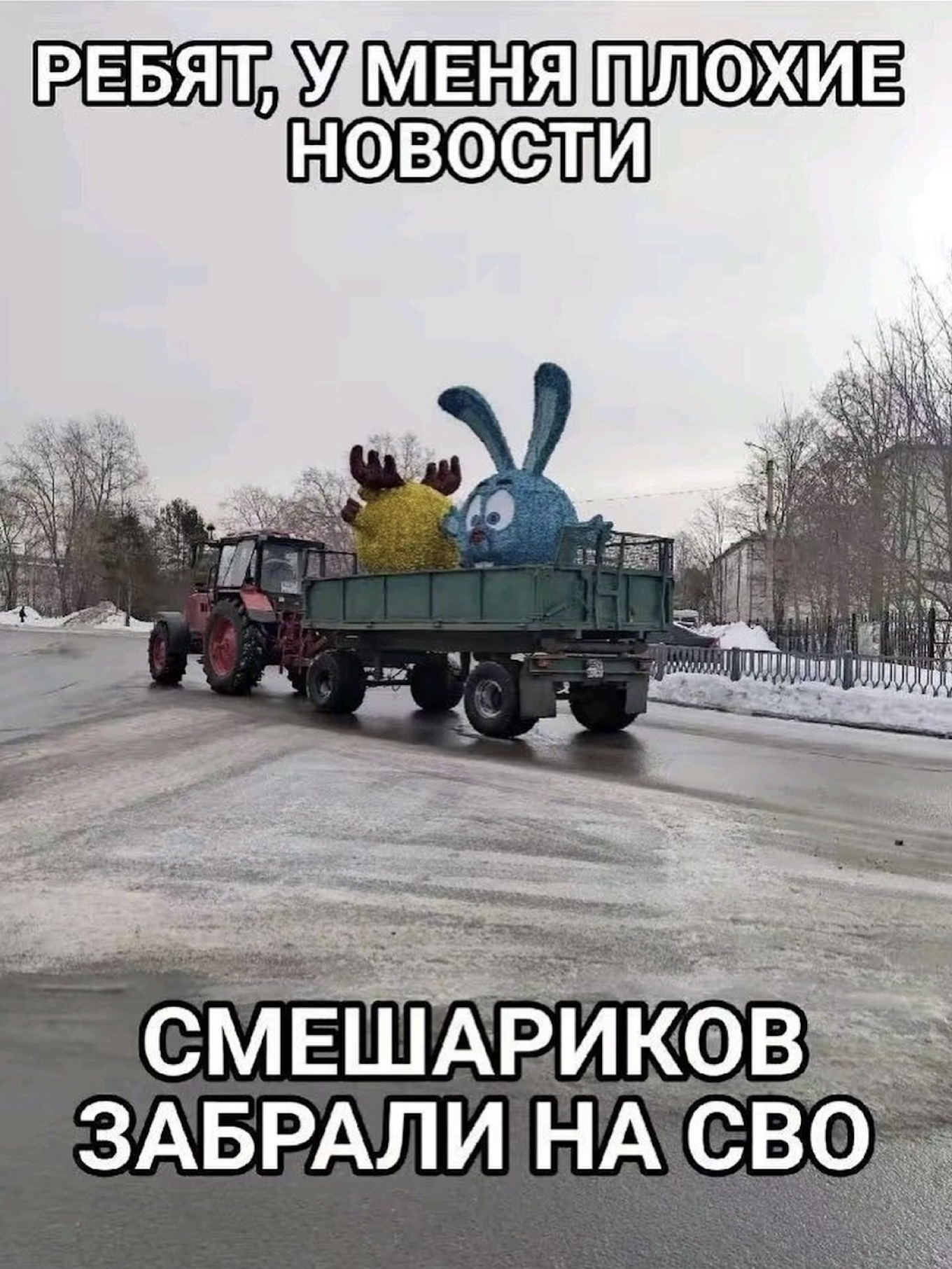
In one video, the round animal characters from the Russian cartoon “Smeshariki” are shown wounded with the caption “VSU [Armed Forces of Ukraine], are you happy now?”
In a darker twist, some memes show cartoon characters mourning their friends who “died in the SVO.” In this video, Tom the cat grieves Jerry the mouse, set to a mournful song from the Chechen War era.
Other memes aim the joke at military recruitment in both Russia and Ukraine. One clip depicts “Smeshariki” characters as Ukrainian enlistment officers conscripting a bear named Kopatych. In the comments, users wrote: “Kopatych is our elephant” and “Kopatych got lucky. Patrick died there.”
MAX Messenger
Russian authorities have in recent months pushed MAX as a national “everything app” comparable to China’s WeChat while tightening restrictions on foreign platforms like WhatsApp and Telegram.
Although cybersecurity experts agree that the app effectively hands over users’ private data to the security services, officials have urged civil servants to adopt it and influencers have been enlisted to promote it.
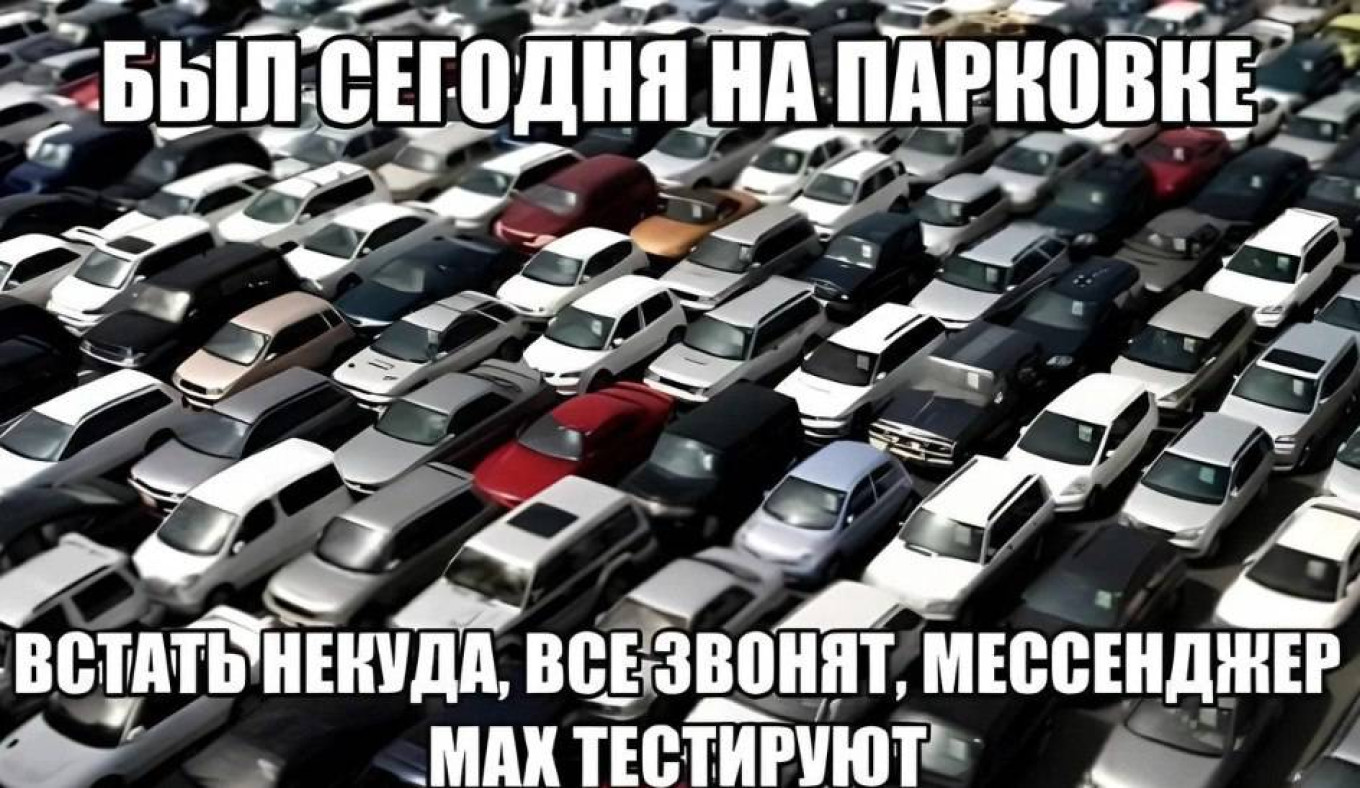
A viral July 2025 video in which pop singer Instasamka called on her fans to switch to MAX triggered a wave of satire, with memes mocking its awkward promotional tone and the implication that the platform’s main achievement is the fact that it works.
“I'm blown away because this messenger even works in the parking lot,” Instasamka says in the video.
In a return to “SpongeBob SquarePants,” one video shows Patrick convincing SpongeBob and Squidward to switch to MAX while Mr. Krabs eavesdrops.
A flood of deepfake videos shows famous figures like Ukrainian President Volodymyr Zelensky, Elon Musk and French President Emmanuel Macron endorsing MAX in a parody of the Instasamka video.
‘And now I’ll show you where they were preparing to attack Belarus’
Two weeks after Russia launched its invasion of Ukraine, Belarusian President Alexander Lukashenko claimed Russia had carried out a “pre-emptive strike” to foil a Ukrainian attack on Belarus.
Speaking during a televised meeting with President Vladimir Putin, he presented a map and declared he would show where the attack had been planned.
The phrase, which even Putin appeared to find odd, quickly went viral, becoming a standard meme format.
Users inserted Lukashenko into absurd scenarios, telling everyone from doctors at a psychiatric clinic to aliens and Mr. Bean about the imminent attack on Belarus.
‘There are 25,000 of us, and we’re going to sort things out’
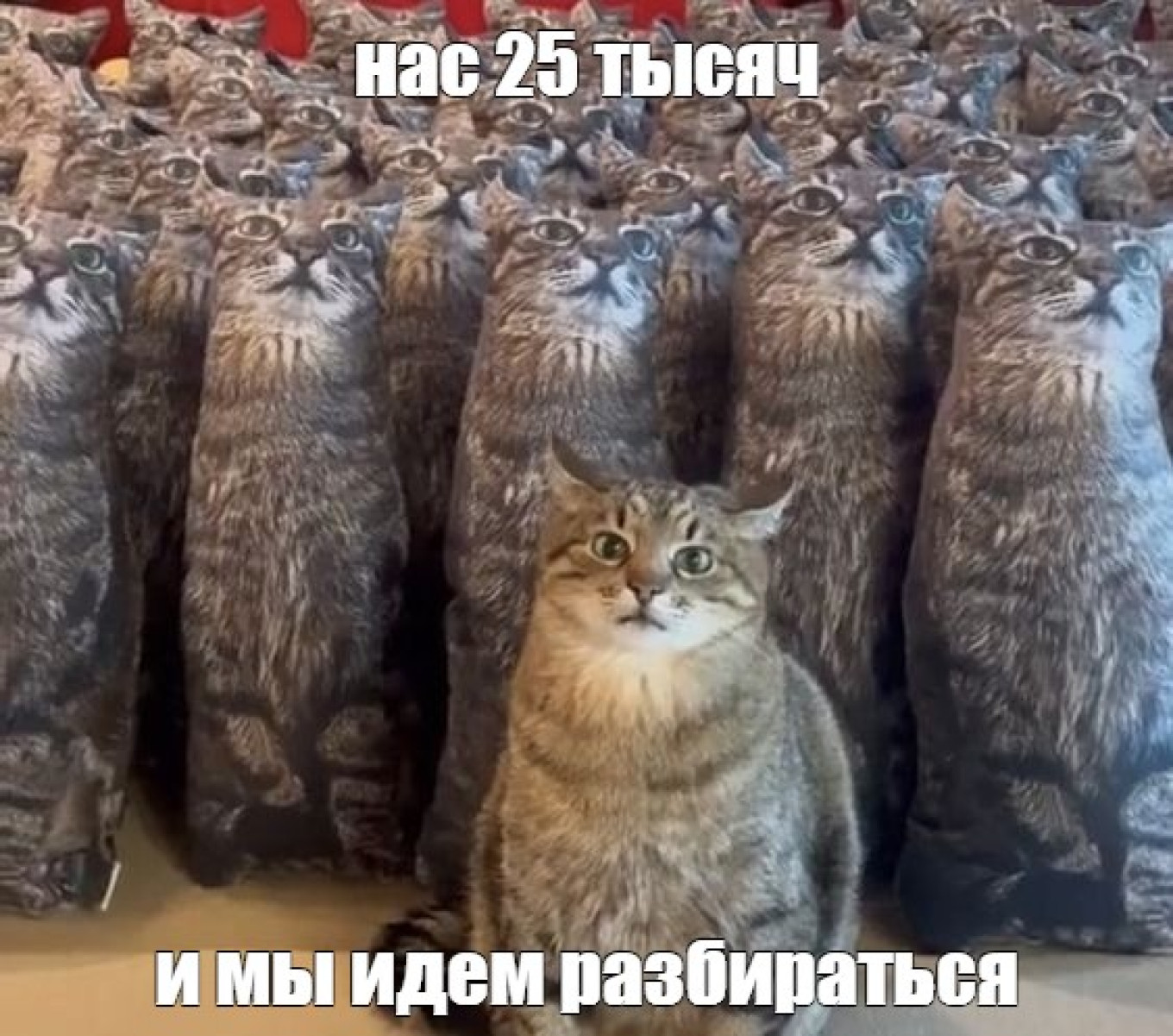
Wagner leader Prigozhin used this line in June 2023 as he announced his aborted march on Moscow during a standoff with Russia’s Defense Ministry.
The quote later resurfaced in memes unrelated to the mutiny.
After Telegram founder Pavel Durov’s August 2024 arrest in France, users used the quote to reference his claim to have fathered more than 100 children as a sperm donor, joking that his offspring were mobilizing in his defense.
Other versions feature flocks of pigeons or anonymous crowds repeating the line.
A Message from The Moscow Times:
Dear readers,
We are facing unprecedented challenges. Russia's Prosecutor General's Office has designated The Moscow Times as an "undesirable" organization, criminalizing our work and putting our staff at risk of prosecution. This follows our earlier unjust labeling as a "foreign agent."
These actions are direct attempts to silence independent journalism in Russia. The authorities claim our work "discredits the decisions of the Russian leadership." We see things differently: we strive to provide accurate, unbiased reporting on Russia.
We, the journalists of The Moscow Times, refuse to be silenced. But to continue our work, we need your help.
Your support, no matter how small, makes a world of difference. If you can, please support us monthly starting from just $2. It's quick to set up, and every contribution makes a significant impact.
By supporting The Moscow Times, you're defending open, independent journalism in the face of repression. Thank you for standing with us.

Remind me later.