
Russian and Ukrainian media recently reported that Ramzan Kadyrov, who has ruled the North Caucasus republic of Chechnya for nearly two decades, may be suffering from kidney failure and has been exploring potential successors.
Kadyrov has consistently dismissed reports that his health is on the decline, typically responding with staged public appearances.
For the Kremlin, the loss of Kadyrov could risk destabilizing a region that fought two bloody wars for independence from Moscow in the 1990s and 2000s.
Here’s what we know about the health of Kadyrov, known as Russia’s most brutal and staunchly Kremlin-loyal regional leader who has been accused of crimes against critics and political opponents.
Reports of worsening health
Claims of serious health problems have long plagued Kadyrov, 49, despite apparent PR campaigns by both Chechnya and the Kremlin to maintain his image as a strongman. These reports have increased in frequency and seriousness in recent years.
The Chechen leader was reportedly hospitalized in serious condition in late December as he arrived in Moscow for the annual State Council meeting led by President Vladimir Putin, Novaya Gazeta Europe reported last month.
Kadyrov, who once described himself as “Putin’s foot soldier,” was notably absent from the Dec. 25 meeting, the exiled news outlet said, citing sources close to him.
“Moscow doctors barely managed to save him and he returned home after that,” one source claimed.
Kadyrov rarely appeared in public in 2025 and was consulted twice that year by German doctors, the outlet said.
“Judging by the cautious, fragmented conversations of [Kadyrov’s] inner circle, there is little hope for a positive outcome,” the source told Novaya Gazeta Europe.
Kadyrov’s health had reportedly deteriorated due to kidney failure, Ukraine’s state news agency Ukrinform and RBC Ukraine reported last week. According to Ukrinform’s source in Ukraine’s military intelligence, Kadyrov was placed on dialysis at a private hospital in Chechnya.
This is not the first time that Kadyrov has been reported to have suffered kidney failure. Novaya Gazeta Europe said in 2024 that Kadyrov, who appeared noticeably larger in a video from that time, was struggling with kidney failure and fluid buildup in the lungs.
“His abdomen had developed all the signs of pancreatogenic ascites. He experienced severe shortness of breath, had difficulty speaking, walked slowly and dressed in clothing that was unusually warm for the Chechen climate,” the outlet reported at the time.
In September 2023, Kadyrov critics and Ukrainian intelligence claimed that he had been in a coma.
He was first diagnosed with pancreatic necrosis in 2019 and developed serious endocrine system complications after contracting Covid-19 in 2020, Novaya Gazeta Europe said.
Kadyrov’s denials
Kadyrov has repeatedly denied these reports. In several cases, he has responded by publishing footage of himself at work or in the gym to ostensibly prove that he is healthy and active.
On Monday, following the latest reports, Kadyrov released a video in which he said he held his first meeting of the year with the Chechen government.
“We must step up efforts to counter fake information spreading on the internet. People are saying that my kidneys have failed, that I am in the hospital and that doctors from a private clinic in Moscow were brought to me,” Kadyrov said in the video published on his Telegram channel, as quoted by Chechnya Today.
Kadyrov was seen in a video published on Jan. 2 by Ahmed Dudayev, Chechnya’s national policy and press minister. The next day, his press service released another video showing Kadyrov walking with a cane and not speaking at the opening of a local Islamic school.
“My attitude is combative. Satanists and neo-Nazis are doing their job — they are paid for it. No matter what we say or show, these rumors will continue,” Kadyrov said at that time regarding the reports about his health.
Kadyrov’s press service often publishes this footage in a concerted campaign to respond to rumors about his health, Novaya Gazeta Europe noted.
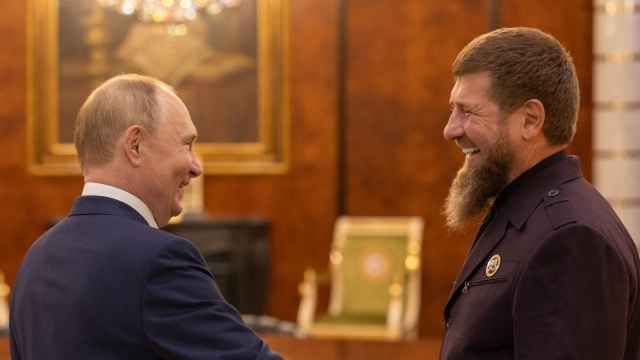
In 2024, this campaign reportedly involved top Russian politicians including Putin himself. According to the outlet, Putin adjusted his presidential schedule to meet with Kadyrov, later releasing photos to confirm that Kadyrov was alive.
Who could succeed Kadyrov?
Moscow has approved Kadyrov’s candidacy for this year’s elections for the head of the republic, Novaya Gazeta reported, citing a source from the FSB’s Chechnya branch.
Kadyrov also confirmed his intention to run during his televised end-of-year phone-in with the public, saying, “I will go to the elections if the president proposes it and the people support it.”
He added, however, that he is “fed up with this power and serving the people,” and that “new forces and new people would be more interesting; the situation would be better if there were others.”
Ukrinform, citing anonymous sources, claimed that the intensified decline in Kadyrov’s health has given efforts to select a potential successor more urgency.
Among the possible candidates are Chechnya’s Prime Minister Magomed Daudov and Akhmat special forces commander Apti Alaudinov, it said.
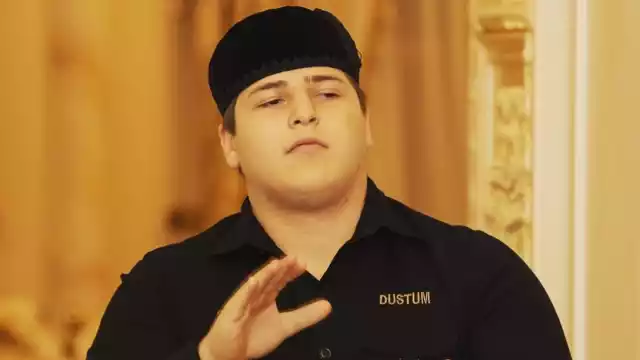
Also mentioned is Kadyrov’s eldest son, 20-year-old Akhmat Kadyrov, who was recently appointed Chechnya’s deputy prime minister in addition to his post as the republic’s sports minister.
Exiled investigative outlet IStories reported that Alaudinov was seen as a potential successor within Putin’s administration, citing a current FSB officer. Kadyrov himself reportedly wanted his younger son Adam, 18, to succeed him, IStories added.
According to Novaya Gazeta Europe, as of last month, Moscow has had “no behind-the-scenes negotiations” regarding Kadyrov’s potential successors.
“Whether the Kremlin has a contingency plan should Kadyrov be unable to take part remains unknown,” the outlet added.
A Message from The Moscow Times:
Dear readers,
We are facing unprecedented challenges. Russia's Prosecutor General's Office has designated The Moscow Times as an "undesirable" organization, criminalizing our work and putting our staff at risk of prosecution. This follows our earlier unjust labeling as a "foreign agent."
These actions are direct attempts to silence independent journalism in Russia. The authorities claim our work "discredits the decisions of the Russian leadership." We see things differently: we strive to provide accurate, unbiased reporting on Russia.
We, the journalists of The Moscow Times, refuse to be silenced. But to continue our work, we need your help.
Your support, no matter how small, makes a world of difference. If you can, please support us monthly starting from just $2. It's quick to set up, and every contribution makes a significant impact.
By supporting The Moscow Times, you're defending open, independent journalism in the face of repression. Thank you for standing with us.

Remind me later.