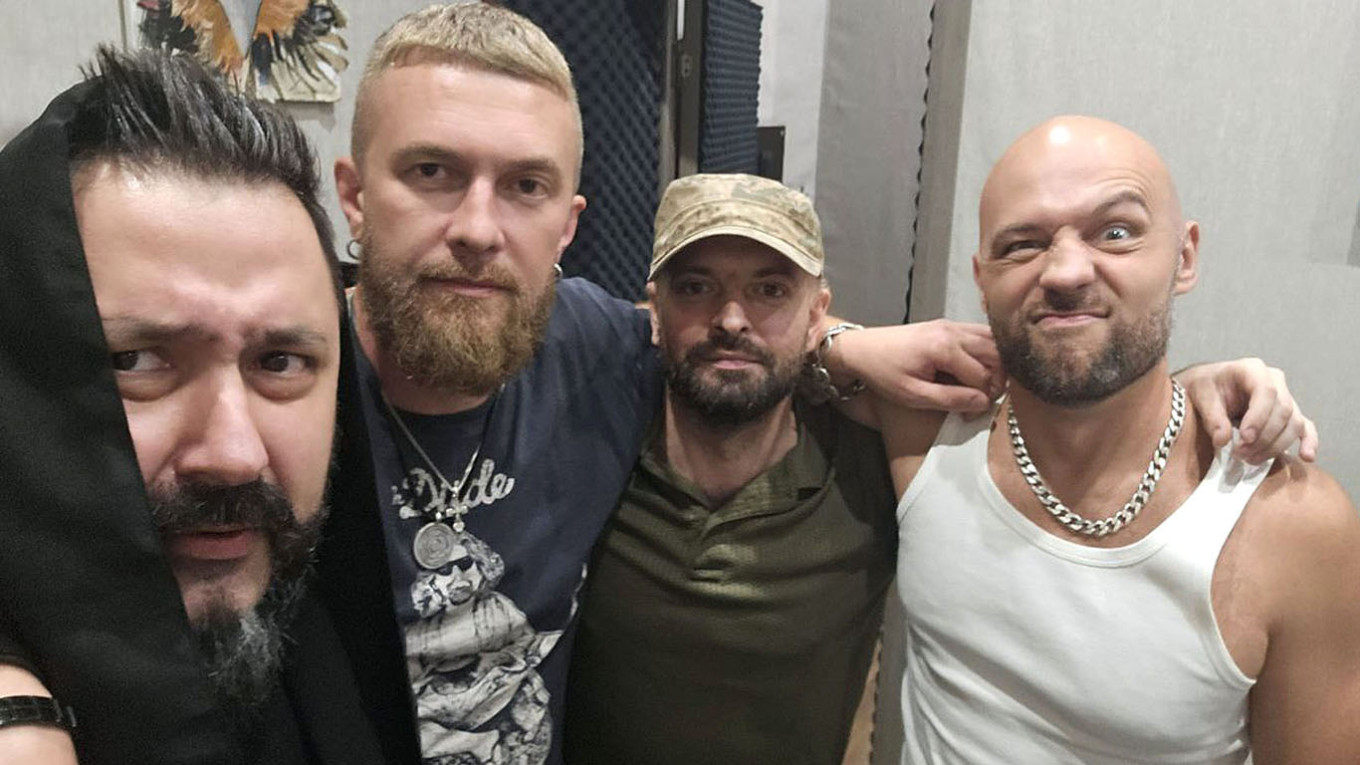
“As troops followed their commander’s orders, the relocants sped off in all directions on their scooters,” runs a line from “The Best in Heaven,” a song honoring Russian soldiers killed in Ukraine.
The song appears on “Glory to Russia,” an album released this month by the group Rep Vzvod ("Rap Platoon") whose 11 tracks glorify Russia’s invasion of Ukraine and the military.
Rap Platoon is one of a handful of musical acts that have been producing patriotic, pro-war music since Russia’s invasion of Ukraine drove many of the country’s most popular artists into exile.
But experts say these artists are unlikely to break into the mainstream or make Kremlin ideology appealing to the masses.
Andrei Mikeyev, Rap Platoon’s creator and self-styled war correspondent, said he launched Rap Platoon in response to anti-war rappers such as Noize MC and Kasta, who left Russia after Moscow launched its full-scale invasion of Ukraine in February 2022.
“Rap is like a sandbox: boys fighting over toys. And there was no unity among those who stayed in Russia,” Mikeyev told the 360.ru TV channel. “I want to mix them up, so that famous [artists] are together with some ordinary guy who, right now, is in a trench and wrote a verse during a break between combat missions.”
“Glory to Russia” features collaborations with popular Russian artists like Akim Apachev and Roma Zhigan.
Before the war, Mikeyev served as editor-in-chief of the pro-Kremlin outlet LifeNews, worked with state television host Anton Krasovsky — who later publicly called for Ukrainian children to be drowned — and was friends with rapper Oxxxymiron.
Russian authorities later designated Oxxxymiron a “foreign agent” and placed him on the wanted list.
“Having received the coveted approval of the liberal clique, he lost his homeland,” Mikeyev said of his former friend, referencing Oxxxymiron’s Interior Ministry profile, which lists his nationality as “none.”
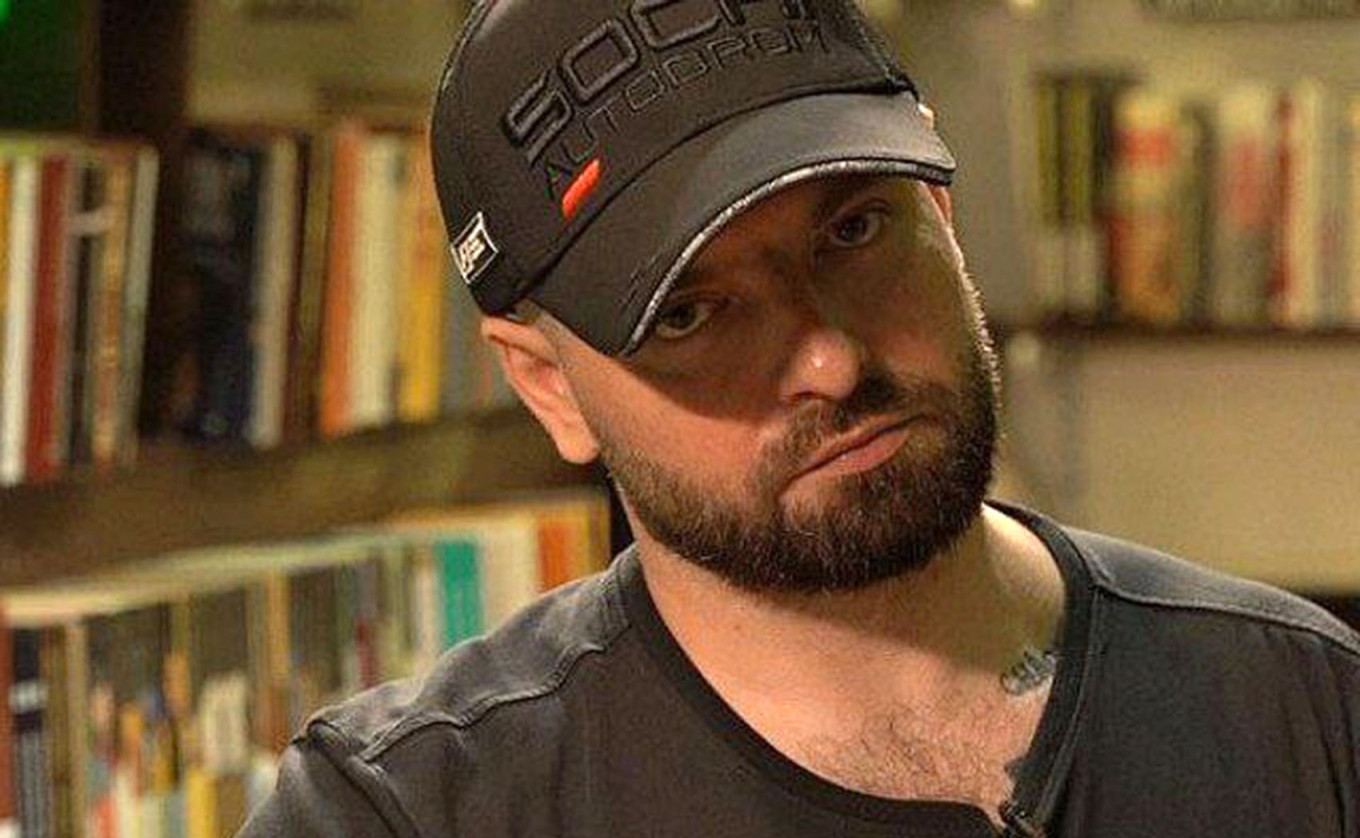
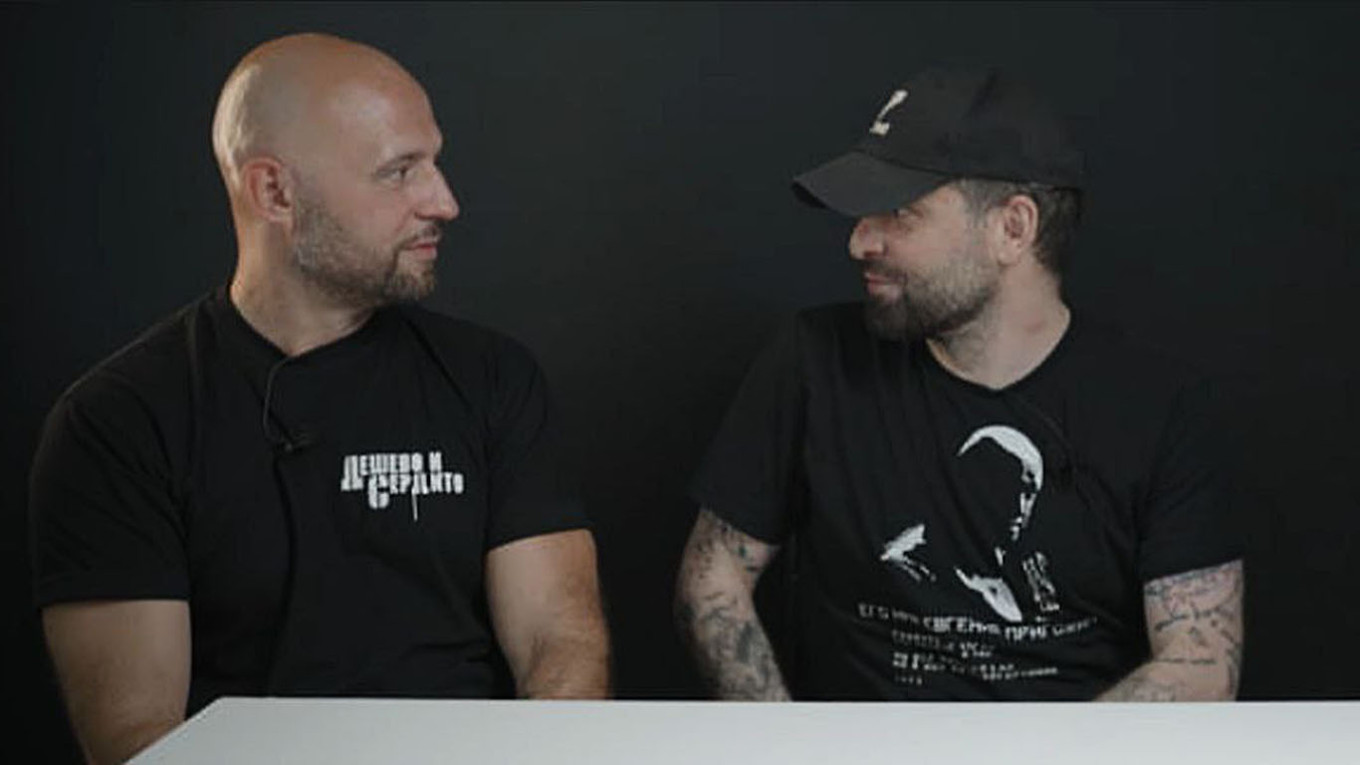
Today, Mikeyev works with producer Andrei Chernyshov, known as KIT, who rose to prominence in the early 2000s as part of the rap group YUG and now produces Rap Platoon’s beats.
The two also run Rap Platoon’s VKontakte page, where they publish interviews analyzing tracks written by participants in the war. Mikeyev frequently appears in the videos wearing a cap marked with the pro-war “Z” symbol.
In one interview, Chernyshov said he had offered a beat for the song “Let’s Bow to Those Great Years” to rapper Legalize, who declined. Legalize publicly opposed the war, left Russia after the invasion and was designated a “foreign agent” in 2024.
‘A musical allegory of the Russian Armed Forces Cathedral’
Several tracks on the album address Russians who left the country or those who support the war from afar.
One song, “We Are United,” describes the makeup of the Russian army: “Convicts like wolves and guys from the job site / Don’t screw up when choosing your side.”
“In this song, a siren-like sound appears alongside aggressive shouts, while the harmony shifts into a Phrygian mode with a lowered second degree, which intensifies the tension of the sound,” musicologist Anna Vilenskaya told The Moscow Times.
Across the album, she said, artists use a hybrid lexicon combining military and criminal slang — both deliberately masculine, aggressive and rooted in a “closed code” that is difficult for outsiders to decode.
That approach has defined Apachev’s work since the war began, Vilenskaya said, citing his frequent invention of new “blatnoy” slang terms, including “WagnerA,” a colloquial twist on the name of Russia’s Wagner mercenary group.
Pro-war rap, she added, draws heavily on street culture, religious imagery and military symbolism — icons, prayers and bell-like sounds. She described the end result as “a musical allegory of a military temple” where war, death, sacredness and “moral values” merge into a single image.
The album’s final track, “The Best in Heaven,” combines bell chimes and praise for fallen soldiers — “Dogs of war go to heaven” — with attacks on emigres: “The one who betrayed once will betray again. Stay there, we don’t welcome your kind here.”
The song features Roma Zhigan alongside rappers using the stage names ZHAR, Pasha Nero and Somalyon Batali.
“In ‘The Best in Heaven,’ the sonic environment is built from the start around a funeral intonation: bell chimes and two minor chords sliding into each other by a semitone. The lyrics are densely packed with pro-war vocabulary — lists of weapons, slogans like ‘Goida!’, phrases like ‘to the bitter end’ and details of army life,” said Vilenskaya.
Streaming plays and a failed rap festival
Nearly every post on Rap Platoon’s Telegram channel mentions support from the Presidential Fund for Cultural Initiatives (PFCI).
Roman Karmanov, the fund’s director general, said the album had received over 10,000 likes and 92,000 streams on Yandex.Music.
This year, Rap Platoon applied for nearly 20 million rubles ($261,000) from the PFCI to organize a “patriotic rap” festival in Nizhny Novgorod, according to grant documents reviewed by The Moscow Times. The application was unsuccessful.
Despite promotion from prominent pro-war bloggers and the PFCI itself, the group’s audience remains small. The album announcement on Mikeyev’s Instagram received two likes. Rap Platoon has fewer than 100 subscribers on RuTube, just over 500 followers on VKontakte and fewer than 1,000 on Telegram.
“This album has no real viral potential. It looks more like another wartime monument to corruption,” said Vilenskaya. “‘Manifest rap’ might have its own audience, but it’s small, and the genre is likely to stay niche and underground.”
A Message from The Moscow Times:
Dear readers,
We are facing unprecedented challenges. Russia's Prosecutor General's Office has designated The Moscow Times as an "undesirable" organization, criminalizing our work and putting our staff at risk of prosecution. This follows our earlier unjust labeling as a "foreign agent."
These actions are direct attempts to silence independent journalism in Russia. The authorities claim our work "discredits the decisions of the Russian leadership." We see things differently: we strive to provide accurate, unbiased reporting on Russia.
We, the journalists of The Moscow Times, refuse to be silenced. But to continue our work, we need your help.
Your support, no matter how small, makes a world of difference. If you can, please support us monthly starting from just $2. It's quick to set up, and every contribution makes a significant impact.
By supporting The Moscow Times, you're defending open, independent journalism in the face of repression. Thank you for standing with us.

Remind me later.