
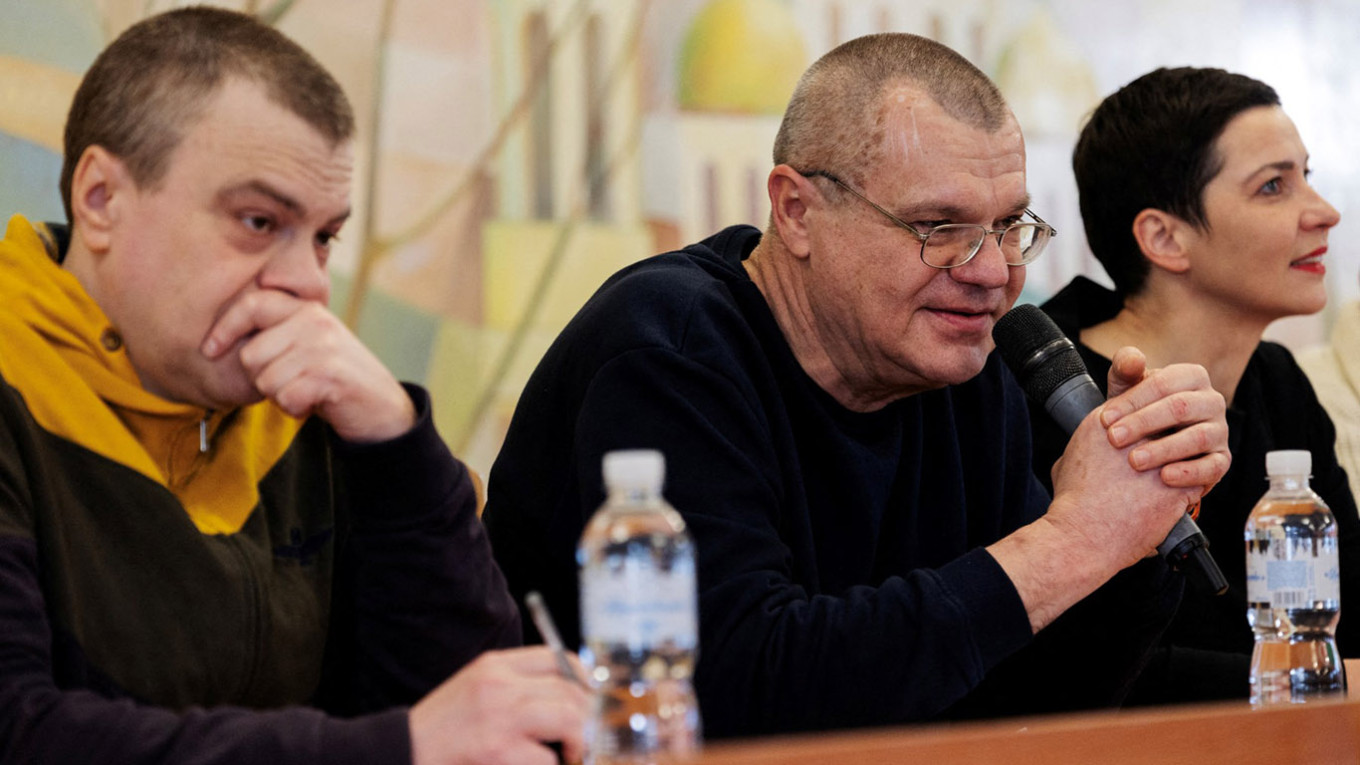
The Belarusian authorities have released 123 political prisoners following negotiations with the United States. From a humanitarian standpoint, this decision can only be welcomed: every drop of freedom regained is meaningful. Yet these releases did not occur in a vacuum and were accompanied by the relaxation sanctions on the regime.
Though the deal did not lift all sanctions, the exemptions and waivers granted reopened access to critically important export revenues. What we are therefore dealing with is not a humanitarian gesture, but a transactional bargain with long-term strategic consequences.
Potash fertilizers are one of the key pillars of the Belarusian economy. Before sanctions were imposed, the company Belaruskali controlled about 18% of the global potash market, making Belarus one of the world’s largest producers alongside Canada and Russia.
Potash exports brought the country $2.5-2.8 billion annually — around 4% of GDP and up to 7% of total goods exports. From a fiscal perspective, Belaruskali was a systemically important asset. This is why sanctions against Belarus’ potash sector were among the most painful blows to Lukashenko’s regime: they sharply reduced hard-currency inflows and increased Minsk’s dependence on the Kremlin.
The easing of U.S. sanctions restores these financial flows, providing funds for Belarus’ repressive apparatus. Using the potash sector as payment for the release of political prisoners directly strengthens the dictatorship’s economic foundation.
Washington’s decision should be viewed as a product of the Trump administration’s domestic economic and tariff policies. The American agricultural sector is under significant pressure from high prices — especially for fertilizers — amid growing trade uncertainty. The country as a whole is structurally dependent on potash imports, primarily from Canada. But Canadian supplies are constrained by logistics and already fully integrated into the market. Moreover, Trump’s aggressive tariff rhetoric toward Ottawa — including threats to impose duties on fertilizers — has only intensified price pressures and discontent among farmers, one of his key electoral constituencies.
In this situation, Belarusian potash becomes a convenient tool to relieve domestic pressure. Unlike other suppliers, bringing it back to market requires no new investment or expanded extraction — only an administrative decision to grant sanctions exemptions.
This sends a quick price signal to the market, eases pressure on farmers, and allows the White House to frame the move as technical and humanitarian without abandoning its broader protectionist line.
From a human perspective, freeing political prisoners is an unmitigated good. But in politics, the mechanism matters as much as the outcome.
Effectively buying prisoners’ freedom from a dictator — trading sanctions relief, diplomatic concessions, or economic benefits for releases — is strategically shortsighted. It turns repression into a tradable asset. Political prisoners cease to be solely victims and become currency: first produced en masse, then selectively exchanged for perks.
The result is paradoxical but predictable. The freedom of a few is purchased at the cost of intensified repression for everyone else. The regime gains money, time, legitimacy and a signal of impunity — and invests all of this in new arrests and tighter control. The overall number of victims does not decrease, but grows.
The repressive machine continues to operate at full throttle. In the first weeks of December alone, 10 people were newly recognized as political prisoners, 25 people were added to the register of “terrorists” and “extremists” and 11 people were arrested or sentenced on politically motivated charges. The total number of political prisoners in Belarus has now reached 1,227.
U.S. officials explain their approach by arguing that partial sanctions relief and economic engagement could reduce Lukashenko’s dependence on Russia and gradually pull Belarus away from Moscow. This argument may sound pragmatic, but that does not make it valid.
Lukashenko’s dependence on the Kremlin is not economic but existential. Since 2020, his regime has survived not thanks to internal legitimacy or economic success, but because of Moscow’s guarantees: security and political backing with no qualms about mass repression and election fraud. No additional export revenues can replace that.
Offering a financial lifeline will not wean Minsk off Russia’s support. They will, however, make it a more resilient junior partner. Funds obtained through sanctions relief will not be used to diversify foreign policy or build institutions. They will go toward financing repression, sustaining an inefficient economy and fulfilling obligations to Moscow.
Western concessions do not weaken Russian influence, but partially subsidize it.
History has already tested this hypothesis. Between 2014 and 2020, the West eased sanctions and reopened dialogue with Minsk in hopes of reducing Russia’s influence. The outcome is well known: repression returned with a vengeance and Lukashenko leaned fully on Moscow when crisis struck. The failure stemmed not from insufficient generosity, but from a fundamental misunderstanding of the nature of the Belarusian regime.
In the logic of transactional diplomacy, democracy and human rights cease to be guiding principles of foreign policy. What matters most is the deal — a visible result that can be presented as success. In this framing, Lukashenko is not a dictator carrying out mass repression, but a counterparty. Political prisoners become bargaining chips; sanctions become items for trade in pursuit of short-term PR wins.
Such logic systematically benefits authoritarian regimes. Repression itself becomes an asset that can be monetized.
Moreover, transactional diplomacy erodes sanctions as a cumulative tool of pressure. If they can be partially lifted in exchange for symbolic gestures, they cease to be a deterrence and become a menu of options instead. Autocrats know this well.
Trading sanctions and concessions for prisoner releases places democratic governments in an inherently weaker position. Once they accept transactional logic, they lose strategic initiative.
The price inevitably rises. Demands expand. Each subsequent “humanitarian gesture” costs more than the previous one. Eventually, the price becomes politically unacceptable — and responsibility for ongoing repression is rhetorically shifted from the jailer to the outside world.
In politics, price is not a technical detail; it is a structural variable. Ignoring this fact systematically tilts the balance of power in favor of the authoritarian regime.
Freeing political prisoners is vital. But it must not be achieved through concessions. It should be the result of weakening the dictatorship, not a condition for strengthening it.
Every new politically motivated arrest should automatically increase the costs for the dictator through tighter sanctions, expanded personal measures, deeper international isolation and other genuinely effective forms of pressure and coercion.
Repression must not bring rewards. Dictators should have to make concessions in exchange for policy relaxation. They must be coerced into the position of a supplicant, not a rule-setter. Only within this logic does the release of political prisoners cease to be a cynical bargain and become part of a real strategy to confront a repressive regime.
The release of political prisoners through sanctions concessions vividly illustrates a classic trolley-problem dilemma. On one track are concrete human lives that can be saved here and now. On the other are systemic consequences that are less visible, but affect far more people over the long term. In politics, there are no free decisions: every choice carries a cost, and refusing to acknowledge it does not eliminate the need to pay it.
This dimension often drops out of public debate. Judging by the comments of many activists and observers, decisions are assessed solely through the moral lens saying that if people were freed, then everything was done right. But this ignores a key feature of politics — it always operates through consequences. Freeing some by rewarding a repressive regime means harsher conditions in which new prisoners will appear tomorrow. This is not cynicism; it is the necessity of an honest conversation about the price of political decisions.
Make no mistake, striving to free political prisoners is a moral imperative. But it cannot be the ultimate goal of policy. Political prisoners are a symptom of the disease — the repressive dictatorial regime — and dismantling that regime must be the primary strategic task. Policymakers must aim to make the very phenomenon of political prisoners disappear from reality. Not by offering palliative care, but by curing the disease itself.
Solving this task requires eliminating the root cause: the repressive authoritarian regime. Ultimately, all other choices and decisions — including humanitarian ones — must be subordinated to that objective.

A Message from The Moscow Times:
Dear readers,
We are facing unprecedented challenges. Russia's Prosecutor General's Office has designated The Moscow Times as an "undesirable" organization, criminalizing our work and putting our staff at risk of prosecution. This follows our earlier unjust labeling as a "foreign agent."
These actions are direct attempts to silence independent journalism in Russia. The authorities claim our work "discredits the decisions of the Russian leadership." We see things differently: we strive to provide accurate, unbiased reporting on Russia.
We, the journalists of The Moscow Times, refuse to be silenced. But to continue our work, we need your help.
Your support, no matter how small, makes a world of difference. If you can, please support us monthly starting from just $2. It's quick to set up, and every contribution makes a significant impact.
By supporting The Moscow Times, you're defending open, independent journalism in the face of repression. Thank you for standing with us.

Remind me later.