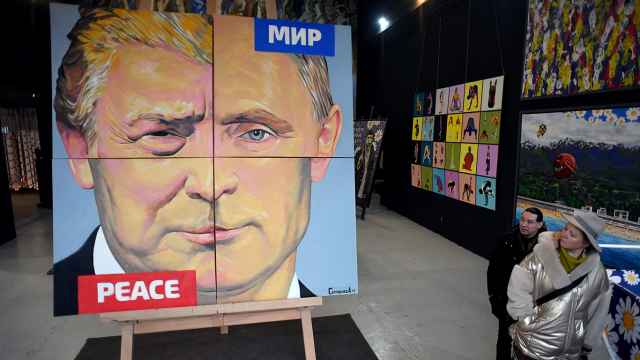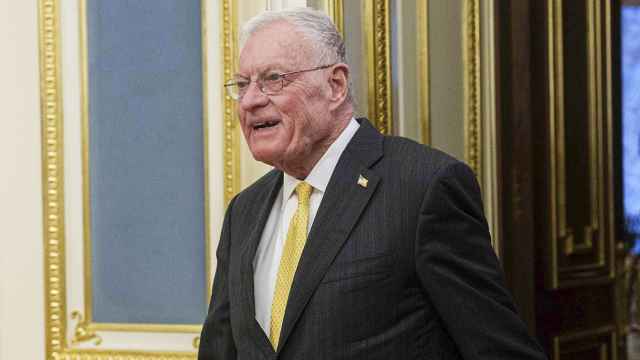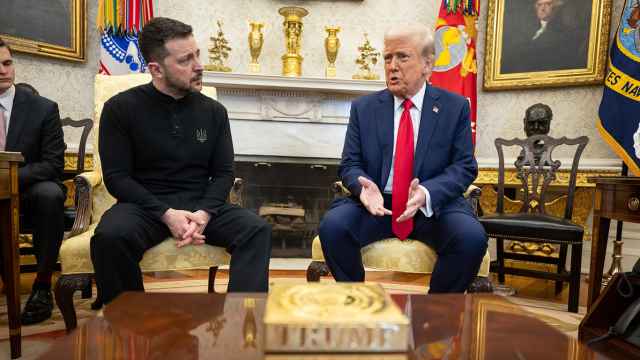


When the Trump administration’s 28-point peace plan for the Ukraine war leaked last month, its evident pro-Russian bent was treated with a mixture of disdain and confusion in Kyiv and across Europe. Special envoy Steve Witkoff, who helped craft the plan, had long been seen as sympathetic to the Kremlin, but the latest proposals went far beyond anything he or the White House had previously floated.
Initially, observers linked much of the plan’s pro-Russian slant to Witkoff’s apparent gullibility in his interactions with Russian envoys. Why else would the Trump administration be putting forward terms that punish the victim more than the aggressor?
As reporting in the weeks since has revealed, there’s a far simpler and more concerning explanation: money.
In a bombshell story in The Wall Street Journal, reporters detailed how the U.S. peace plan had little to do with American interests and much less to do with things like democracy or even national security.
Instead, it was all about constructing financial deals between insiders in both Russia and the U.S., and how to enrich the elites of both countries at everyone else’s expense, especially Ukraine’s.
Much of the reporting built on previous investigations by The Moscow Times, which outlined many of the same potential deals, revealing how the Kremlin was pushing for a “grand bargain” to allow Russia to dominate Ukraine while enjoying lucrative economic rehabilitation.
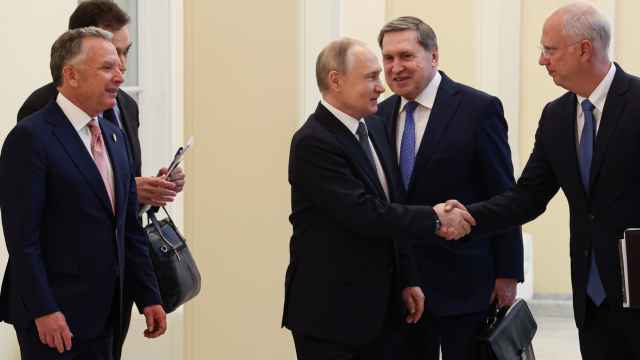
The details in the Journal’s report are extraordinary. Witkoff — who, like his partner Jared Kushner, has no expertise or experience in Russia — worked hand-in-glove with Kremlin consigliere Kirill Dmitriev to outline how to “bring Russia’s $2 trillion economy in from the cold,” with America’s wealthiest corporations standing to benefit.
There would be new joint projects for Americans and Russians to “exploit the vast mineral wealth in the Arctic,” with those close to Trump’s family standing to personally benefit. Companies like ExxonMobil were now holding “secret talks” to return to Russia, and sanctioned Russian billionaires were now sending representatives to American counterparts to explore new energy and mining ventures.
The secretive arrangements left some of Europe’s most senior national security officials “shocked” — not just by the revelations, but by what they signaled about Washington’s priorities.
This kind of transactional dealmaking is nothing new for the Trump administration, which has long centered geopolitics around commercial arrangements — tariffs, trade deals, investments — that past presidents largely kept at arm’s length.
But The Wall Street Journal’s reporting points to something far more destabilizing: a kind of oligarchic crony capitalism benefiting both the Kremlin and those in Trump’s orbit, all while sacrificing Ukraine and even undermining America’s own interests. It paints a portrait of a White House willing to be bought off at the right price, and of a Russian regime, however repressive, finding a path back to international normalization.
Still, none of this should be that surprising. After all, this is an administration that has not only decimated America’s anti-corruption safeguards but has further pursued investments around the world — crypto funding, real estate deals, new golf courses and more — that have primarily benefited the president and his family, rather than America. Russia was unlikely to be any different.
But it is remarkable to see it all laid out in the open. Toss in the fact that Dmitriev reportedly authored many of the points of the “peace plan” himself — points that Trump, Witkoff and Kushner then foisted on Ukraine — and you suddenly have a damning picture of just how destructive this kind of transnational corruption can truly be.
It’s not simply that this kind of naked corruption now corrodes American democracy or entrenches Russia’s dictatorship (or autocrats elsewhere).
It’s that the biggest geopolitical issues of modern times revolve around how much American officials and corporate heads can make off of it — and which dictatorships with the deepest pockets and biggest investment opportunities can finance them.
Perhaps the only surprising element is that American investors would ever go for such schemes. Given how many Western financiers have watched their investments collapse in Russia over the years — and given that Putin’s dictatorship looks set to endure for years to come — there’s no guarantee that these corporations would ever see any return on their investments. And there is no guarantee that Moscow wouldn’t simply seize the American investments if and when it launches another invasion of Ukraine in the future.
Nor would any of these arrangements bring “peace.”
Indeed, this idea — that building financial ties could help end wars and forge healthy democracies — has failed time and again.
We saw this in the 1990s, when American politicians pitched commercial investments as a way of not only stabilizing Russia’s post-Soviet economy but of creating the kinds of financial webs that would help prevent Russia from backsliding into imperial dictatorship.
Little matter that this overall theory had already been tried a century earlier, when a series of European empires constructed their own financial connections — and then watched it all end up in the ash heap of World War I.
The theory re-emerged once more by the end of the 20th century, bringing American investors as well as much-needed capital and technology into Russia as the Soviet collapse sent the economy into freefall.
We saw how well that went. Instead of democratizing Moscow, these investments simply blinded the U.S. to what was taking place in Russia itself, and to the kind of frothing nationalism, resurgent revanchism and descent into dictatorship that has propelled Putin for years. Rather than stabilize a democratic Russia, these investments simply filled the Kremlin’s coffers, helping build a war chest for Putin to use against Ukraine and many others.
At least today, there’s no longer any pretense that these new American investments would bring democracy to Russia. Instead, they are surprisingly clear about what all parties want. For the Americans, it is profit above all else, even if that means surrendering Ukraine and potentially other allies to an emboldened imperialist Russia. For the Kremlin, it is about finding a means to finally dominate Ukraine — and to prove just how easy it is to corrupt America’s leadership along the way.

A Message from The Moscow Times:
Dear readers,
We are facing unprecedented challenges. Russia's Prosecutor General's Office has designated The Moscow Times as an "undesirable" organization, criminalizing our work and putting our staff at risk of prosecution. This follows our earlier unjust labeling as a "foreign agent."
These actions are direct attempts to silence independent journalism in Russia. The authorities claim our work "discredits the decisions of the Russian leadership." We see things differently: we strive to provide accurate, unbiased reporting on Russia.
We, the journalists of The Moscow Times, refuse to be silenced. But to continue our work, we need your help.
Your support, no matter how small, makes a world of difference. If you can, please support us monthly starting from just $2. It's quick to set up, and every contribution makes a significant impact.
By supporting The Moscow Times, you're defending open, independent journalism in the face of repression. Thank you for standing with us.

Remind me later.