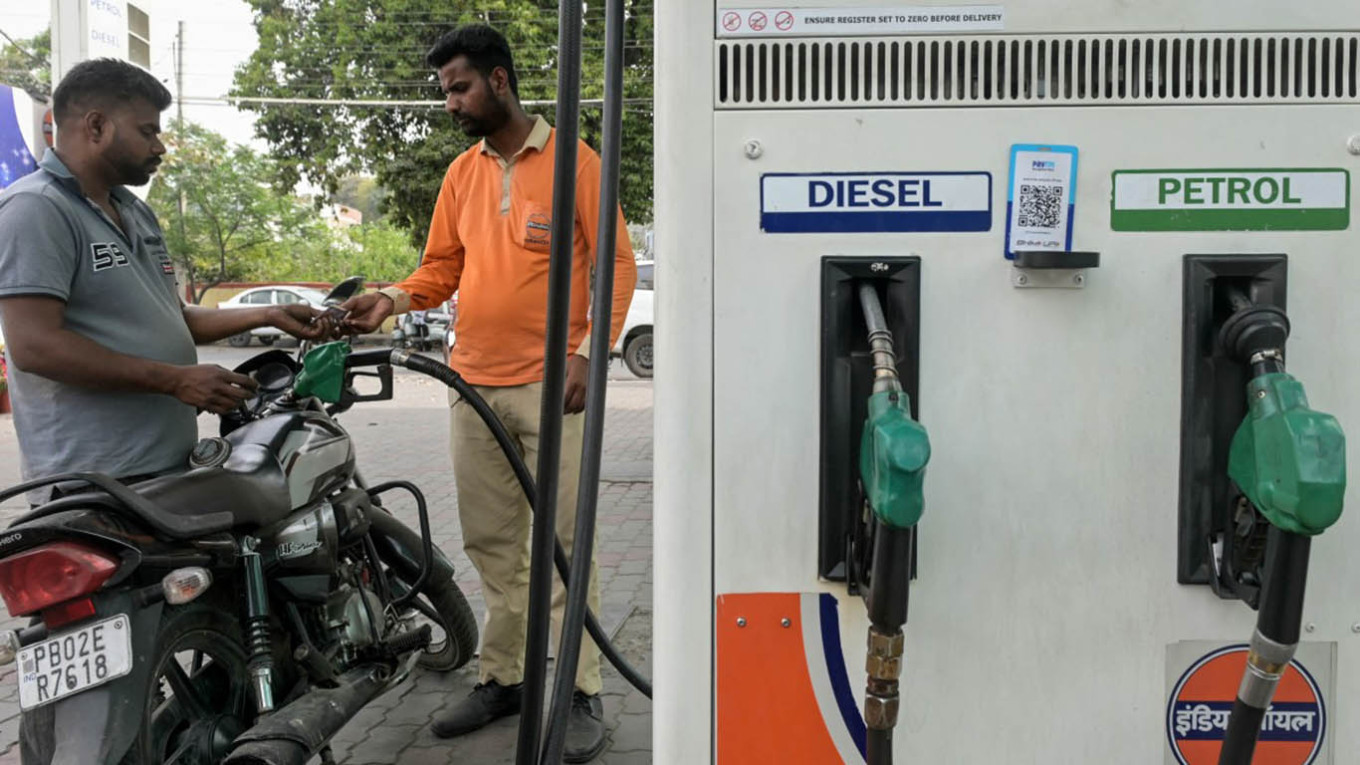
The price of Russia’s Urals crude delivered to Indian ports rose to a record $98.93 per barrel on Friday, Bloomberg reported Monday as conflict in the Middle East tightened global oil supplies.
Urals prices in India have surged by nearly $40, or around 70%, since Feb. 27, just before the U.S. and Israel launched their first strikes on Iranian territory, Bloomberg cited Argus data as saying.
The current level marks the highest since 2022, when Russia began exporting large volumes of oil to the Indian market after being hit by Western sanctions over the invasion of Ukraine.
Turmoil in the Middle East and a temporary easing of U.S. restrictions on Russian oil shipments have boosted Moscow’s energy revenues at a time when the federal budget is under growing strain from war spending and weaker oil and gas income earlier this year.
Discounts on Urals relative to Brent in India narrowed to about $4.80 per barrel after the Trump administration allowed Indian refiners to purchase Russian crude that had been stranded on tankers offshore until April 11.
Urals traded significantly lower in Russia’s own export ports at $73.73 per barrel on Friday.
The roughly $25 gap reflects the costs and margins taken by traders, intermediaries and shipping networks that move Russian crude to Asian buyers while navigating Western sanctions.
Even so, prices at Russian ports are now well above the $59 per barrel level assumed in the country’s federal budget. Just a month earlier, Urals had been trading only slightly above $40 per barrel.
According to calculations by the Financial Times, the surge in oil prices is generating as much as $150 million in additional revenue for Russia’s budget each day.
The windfall comes after a sharp drop in energy income earlier this year. Russia’s oil and gas revenues in January-February were about half the level recorded a year earlier, while the federal budget deficit widened to 3.5 trillion rubles ($43.05 billion).
“The attack on Iran and the sharp improvement in commodity market conditions — both in prices and potential export volumes — could significantly reduce the deficit if this shock lasts for several months,” economist Dmitry Polevoy said.
Polevoy estimated that if the average taxable oil price reaches about $70 per barrel between March and May and around $60 for the rest of the year, the annual average could approach the budget’s planned $59 per barrel.
In that scenario, the annual deficit could fall to between 1 trillion and 1.5 trillion rubles ($12.3 billion-$18.45 billion), compared with the Finance Ministry’s forecast of 3.8 trillion rubles ($46.74 billion).
Still, analysts say higher oil prices alone are unlikely to solve Russia’s fiscal pressures as government spending remains elevated.
“If oil prices remain high for several months, the Finance Ministry will get some breathing room and may be able to reduce borrowing on the domestic market,” Freedom Finance analyst Vladimir Chernov said. “But expensive oil alone will not fully solve the budget problem because expenditures have increased.”
Regardless of oil prices, the government is also considering cutting federal spending by about 10% across non-sensitive categories, Bloomberg reported earlier, citing sources close to the cabinet.
The reductions — estimated at around 2 trillion rubles ($24.6 billion) — would exclude social spending and defense and are aimed at preserving the remaining resources of Russia’s National Wealth Fund and potentially allowing it to be replenished if revenues improve.
Read this story in Russian at The Moscow Times' Russian service.
A Message from The Moscow Times:
Dear readers,
We are facing unprecedented challenges. Russia's Prosecutor General's Office has designated The Moscow Times as an "undesirable" organization, criminalizing our work and putting our staff at risk of prosecution. This follows our earlier unjust labeling as a "foreign agent."
These actions are direct attempts to silence independent journalism in Russia. The authorities claim our work "discredits the decisions of the Russian leadership." We see things differently: we strive to provide accurate, unbiased reporting on Russia.
We, the journalists of The Moscow Times, refuse to be silenced. But to continue our work, we need your help.
Your support, no matter how small, makes a world of difference. If you can, please support us monthly starting from just $2. It's quick to set up, and every contribution makes a significant impact.
By supporting The Moscow Times, you're defending open, independent journalism in the face of repression. Thank you for standing with us.

Remind me later.