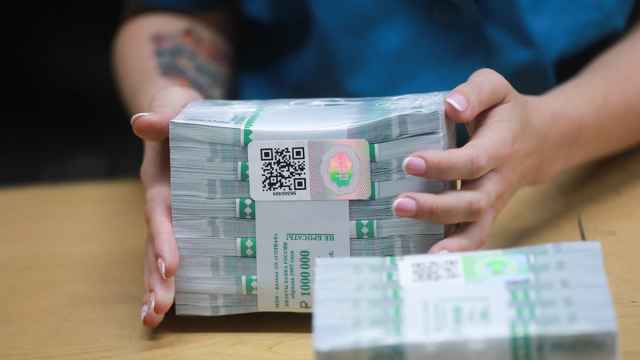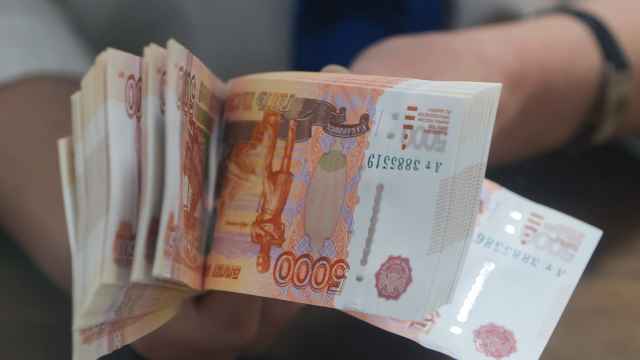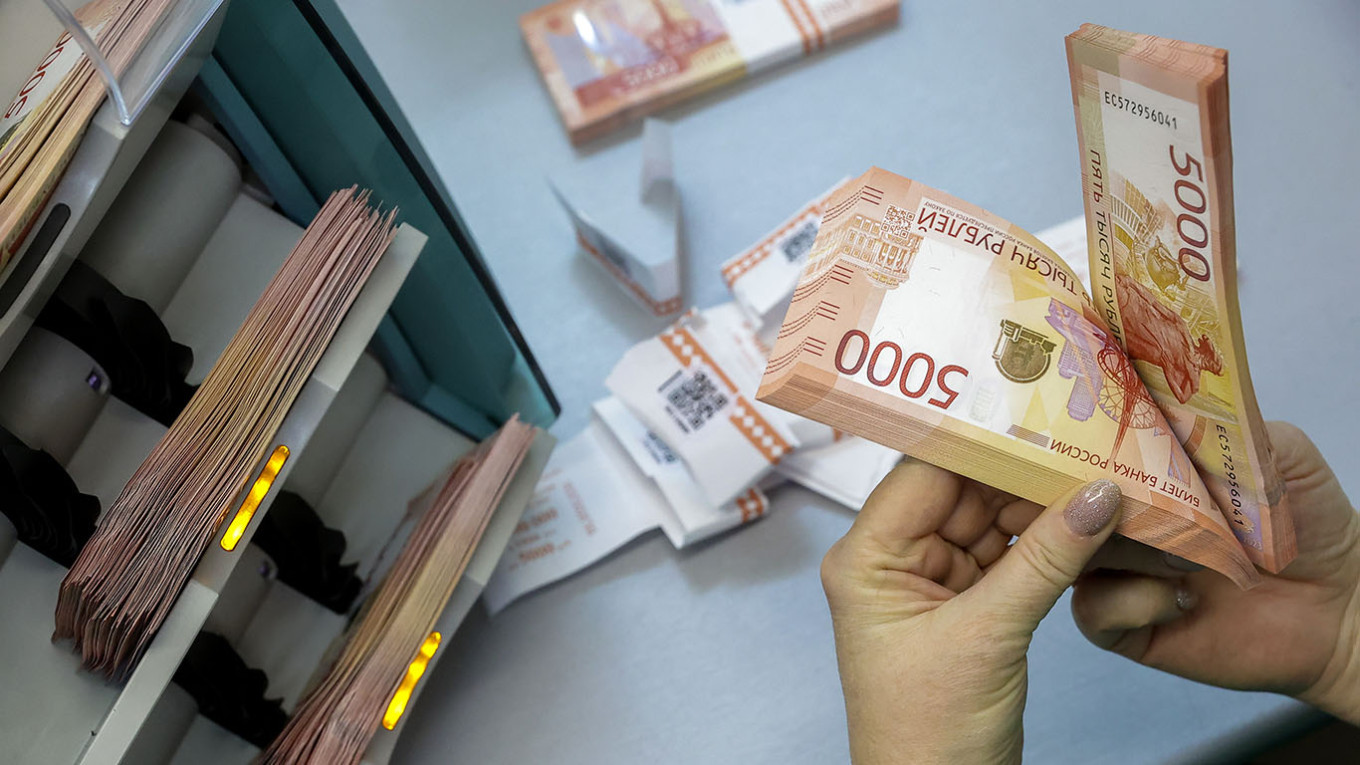
Russians withdrew more than 1.6 trillion rubles ($19.7 billion) from their bank accounts in January, Central Bank data showed, as card blocks and recurring mobile internet outages push consumers toward cash.
This marks the largest monthly cash withdrawal since the market turmoil that followed the invasion of Ukraine in March 2022, when Russians withdrew 2.1 trillion rubles ($25.8 billion) from ATMs.
The spike in withdrawals suggests growing unease with Russia’s banking and payments infrastructure amid tighter financial controls and persistent connectivity disruptions, experts say.
Only 468 billion rubles ($5.8 billion) returned to banks in the form of term deposits in January, less than a third of the withdrawn amount, according to Central Bank materials cited by the RBC news website.
The figures imply a net cash outflow from the banking system of roughly 1.1 trillion rubles ($13.5 billion) for the month.
The shift back to paper banknotes may reflect rising distrust in the banking and payments system, said Alexander Abramov, head of the Laboratory for the Analysis of Institutions and Financial Markets at the Russian Academy of National Economy and Public Administration (RANEPA).
“Such sentiment in Russia has hardly been seen since the mid-2000s,” Abramov said.
Demand for cash could continue to grow if internet and mobile service disruptions persist, said Yevgeny Goryunov, head of the monetary policy laboratory at the Gaidar Institute.
If sustained, however, the trend could pose risks for the stability of Russia’s banking system, he said.
A surge of more than 1 trillion rubles ($12.3 billion) in cash circulating outside banks could also feed inflationary pressures and complicate future policy decisions by the Central Bank.
The rise in withdrawals comes as Russian banks have increasingly blocked customer cards and accounts as part of anti-fraud efforts.
Cybersecurity firm Informzashchita estimated that temporary restrictions in early January alone may have affected between 2 million and 3 million Russians, or roughly 1-2% of all active bank clients.
At the same time, the Central Bank has noted that more people are withdrawing cash because of regular internet shutdowns that began last May and now affect dozens of regions on a near-daily basis.
Some Russians have also grown wary of increased scrutiny of bank transfers. Since July 1, 2025, the Federal Tax Service has joined efforts to monitor suspicious card transactions, including potential evasion of personal income tax or taxes owed by self-employed workers.
That oversight has heightened concerns among consumers about greater tax authorities’ attention to their finances, said Valeria Popova, a senior analyst at investment firm Rikom-Trust.
Meanwhile, banks have begun restricting cash withdrawals at ATMs under the banner of combating fraud.
Russia’s Interior Ministry has also proposed limiting withdrawals to 50,000 rubles ($615) at bank branches when officials suspect a customer may be under the influence of scammers — a proposal that banking representatives have supported.
Read this story in Russian at The Moscow Times' Russian service.
A Message from The Moscow Times:
Dear readers,
We are facing unprecedented challenges. Russia's Prosecutor General's Office has designated The Moscow Times as an "undesirable" organization, criminalizing our work and putting our staff at risk of prosecution. This follows our earlier unjust labeling as a "foreign agent."
These actions are direct attempts to silence independent journalism in Russia. The authorities claim our work "discredits the decisions of the Russian leadership." We see things differently: we strive to provide accurate, unbiased reporting on Russia.
We, the journalists of The Moscow Times, refuse to be silenced. But to continue our work, we need your help.
Your support, no matter how small, makes a world of difference. If you can, please support us monthly starting from just $2. It's quick to set up, and every contribution makes a significant impact.
By supporting The Moscow Times, you're defending open, independent journalism in the face of repression. Thank you for standing with us.

Remind me later.