The Kremlin said Monday that a new U.S. sanctions waiver on Russian oil exports proves that the commodity is too vital to the global economy to be sidelined.
“Russia remains a responsible and very important player in global energy markets,” Kremlin spokesman Dmitry Peskov told reporters. “The market is going through tough times and, of course, Russian volumes are difficult not to take into account and ignore.”
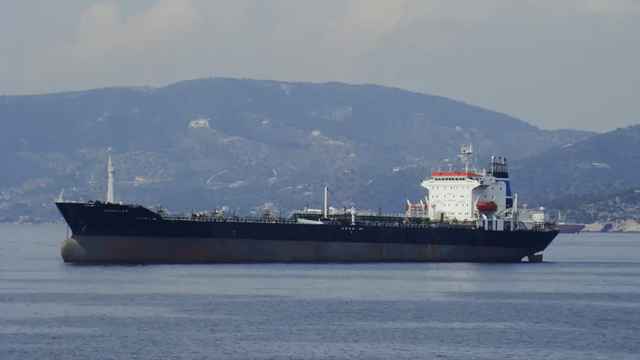
The U.S. Treasury Department issued the extension on Friday, allowing for the purchase of Russian oil and petroleum products loaded onto ships between April 17 and May 16. The move is part of an ongoing effort to stabilize global energy prices, which have surged following the outbreak of war in the Middle East.
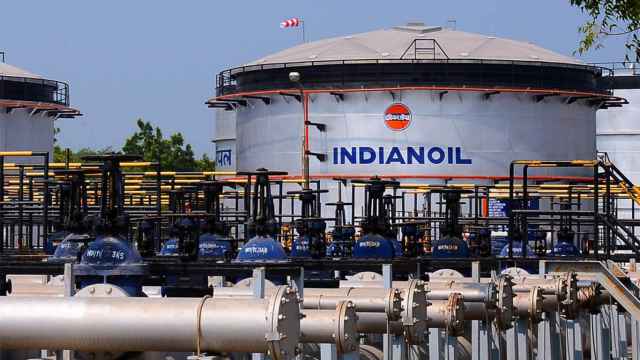
Several Asian countries had lobbied Washington for an extension as they looked for alternatives to Middle Eastern supplies disrupted by the closure of the Strait of Hormuz. On Thursday, Indonesia announced a new agreement to receive Russian crude, while Malaysia said its state energy firm, Petronas, is negotiating its own purchases.
South Korea and the Philippines purchased Russian oil and petroleum products after the first U.S. sanctions waiver was issued last month. Russian crude exports to China, meanwhile, increased by 14% year-on-year in March, according to Chinese customs data.
Russian oil, which traded at deep discounts for years following the 2022 invasion of Ukraine, is now selling at a premium as the conflict in the Middle East creates the largest global energy disruption in history.
Urals crude, Russia’s flagship blend, has sold at above $100 a barrel throughout April.
Ukrainian President Volodymyr Zelensky on Sunday criticized the U.S. Treasury Department’s decision to renew the sanctions waiver on Russian oil. Treasury Secretary Scott Bessent had said last week that the White House had no plans to provide another waiver.
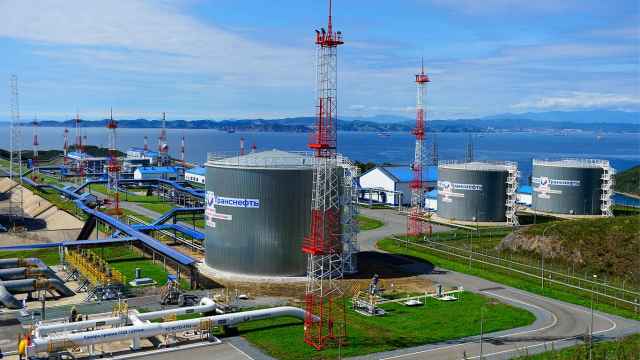
Russia’s revenue from crude and petroleum shipments surged to $19 billion in March, according to the International Energy Agency, a sharp reversal from February, when revenues hit a post-invasion low of $9.75 billion.
A Message from The Moscow Times:
Dear readers,
We are facing unprecedented challenges. Russia's Prosecutor General's Office has designated The Moscow Times as an "undesirable" organization, criminalizing our work and putting our staff at risk of prosecution. This follows our earlier unjust labeling as a "foreign agent."
These actions are direct attempts to silence independent journalism in Russia. The authorities claim our work "discredits the decisions of the Russian leadership." We see things differently: we strive to provide accurate, unbiased reporting on Russia.
We, the journalists of The Moscow Times, refuse to be silenced. But to continue our work, we need your help.
Your support, no matter how small, makes a world of difference. If you can, please support us monthly starting from just $2. It's quick to set up, and every contribution makes a significant impact.
By supporting The Moscow Times, you're defending open, independent journalism in the face of repression. Thank you for standing with us.

Remind me later.