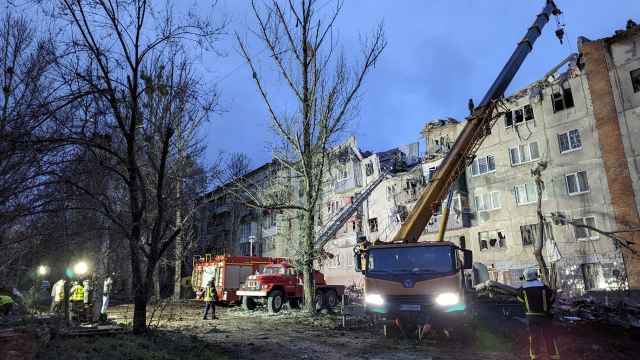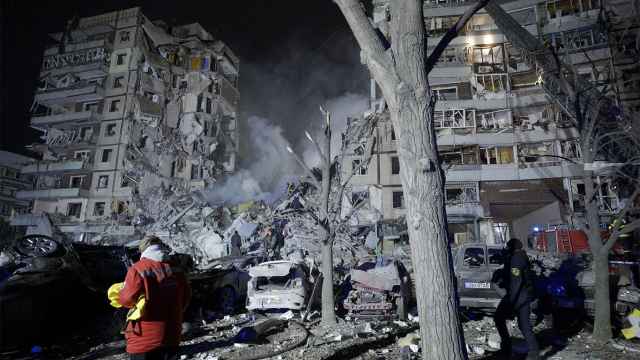
Russia fired more missiles on Ukraine in February than in any other month since at least the beginning of 2023 in overnight strikes, targeting Ukrainian energy infrastructure in particular, an AFP analysis showed Sunday.
Russian forces launched 288 missiles at Ukraine in February, an increase of around 113% compared to the 135 missiles launched in January, according to an AFP analysis of daily figures provided by the Ukrainian air force.
This is the highest number of missiles launched at night in a single month against Ukraine since Kyiv's air force started routinely publishing statistics at the beginning of 2023.
The previous record was set in October 2025, when, according to Kyiv, the Russian military launched 270 missiles at the country.
As the harshest winter in years gripped Ukraine, heating and power outages triggered by Russian strikes have plunged hundreds of thousands into cold and darkness, sparking the most dire energy crisis since the beginning of the invasion launched in February 2022.
Russia has targeted the Ukrainian energy grid for the fourth consecutive winter, as part of a strategy aimed at weakening the Ukrainian civilian population, Kyiv and its allies said.
“Despite everything, Ukrainians made it through this difficult winter,” Ukrainian President Volodymyr Zelensky said on social media as the country marked its traditional first day of spring on March 1.
“Over the three months of winter, Russians launched more than 14,670 guided aerial bombs, 738 missiles, and nearly 19,000 attack drones — most of them Russian-Iranian ‘shaheds’ — against our people,” Zelensky said.
Across the country, rolling power cuts have remained in place to mitigate electricity shortages.
In 2024, the International Criminal Court (ICC) in The Hague issued arrest warrants for top Russian army officials for the “war crime of causing excessive” harm to civilians by striking Ukrainian energy sites.
In February, Russia launched 5,059 long-range drones during its nighttime pummeling of Ukrainian cities and towns — an increase of around 13% compared to January.
In retaliation, Kyiv regularly sends its own drones to strike Russian oil depots and refineries in an attempt to cut off the key fossil fuel revenues that finance the Kremlin's war effort.
A Message from The Moscow Times:
Dear readers,
We are facing unprecedented challenges. Russia's Prosecutor General's Office has designated The Moscow Times as an "undesirable" organization, criminalizing our work and putting our staff at risk of prosecution. This follows our earlier unjust labeling as a "foreign agent."
These actions are direct attempts to silence independent journalism in Russia. The authorities claim our work "discredits the decisions of the Russian leadership." We see things differently: we strive to provide accurate, unbiased reporting on Russia.
We, the journalists of The Moscow Times, refuse to be silenced. But to continue our work, we need your help.
Your support, no matter how small, makes a world of difference. If you can, please support us monthly starting from just $2. It's quick to set up, and every contribution makes a significant impact.
By supporting The Moscow Times, you're defending open, independent journalism in the face of repression. Thank you for standing with us.

Remind me later.