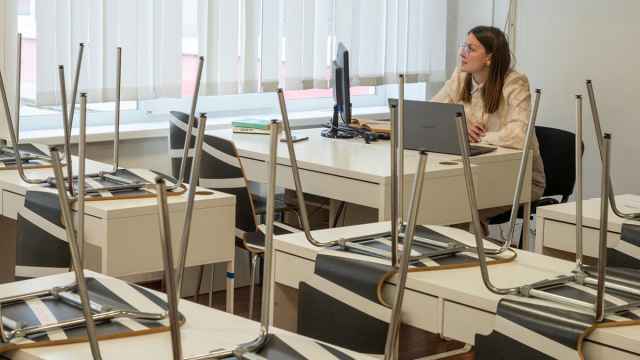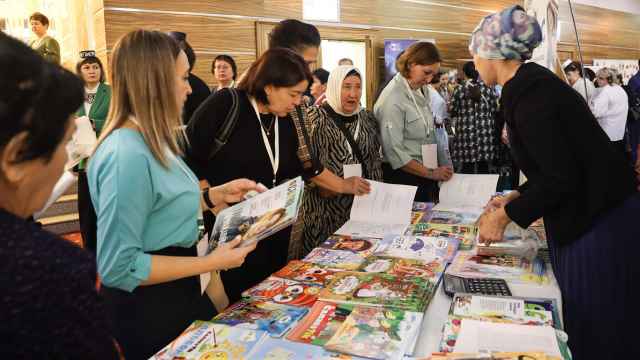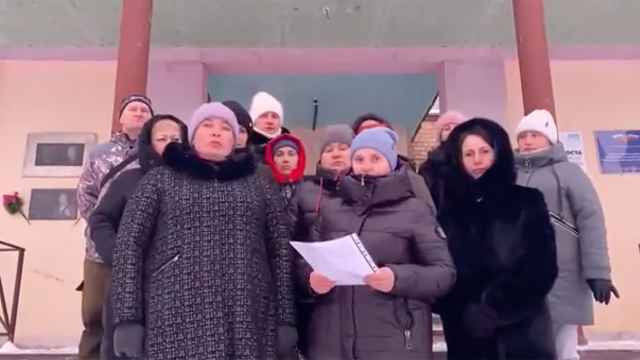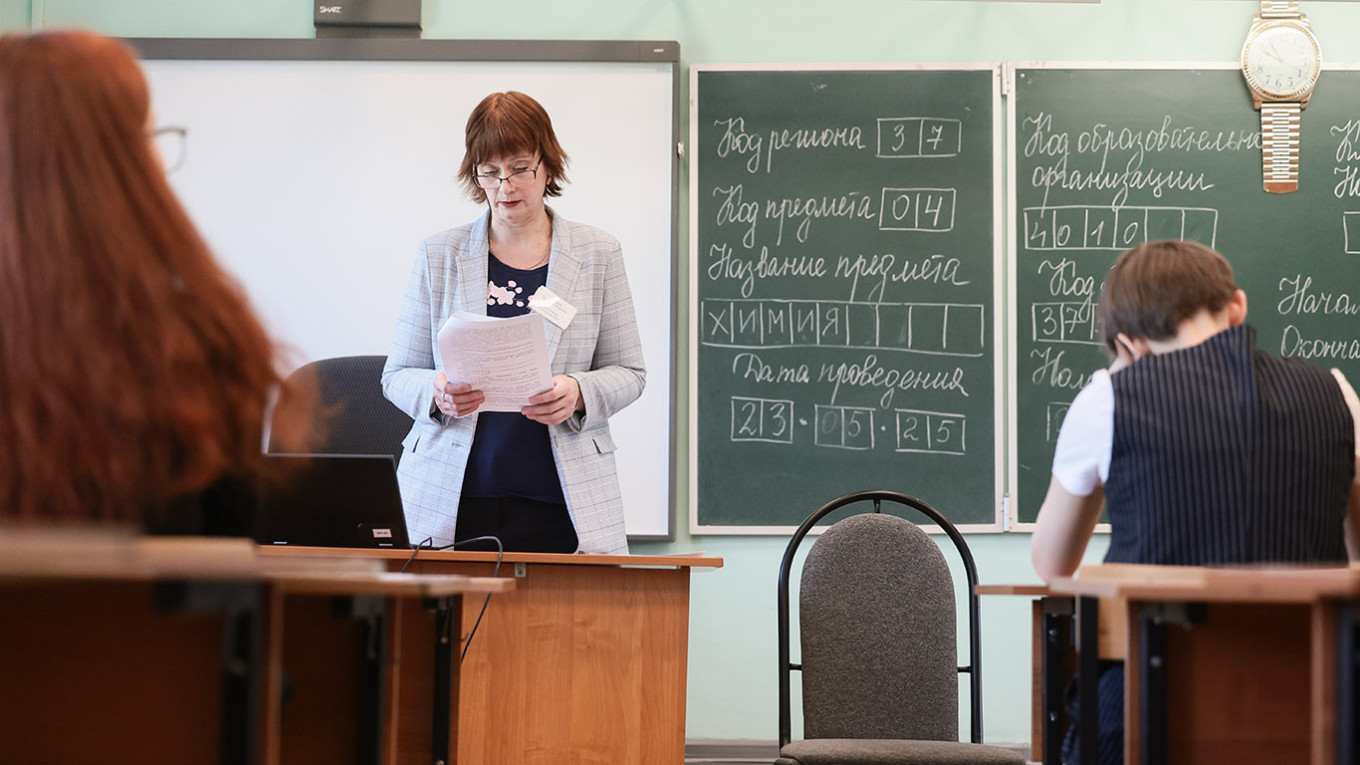
School teachers in at least 10 Russian regions have faced delays in part of their salaries, an independent teachers’ union told the pro-Kremlin daily Izvestia on Thursday, as widening fiscal deficits strain public finances.
Educators did not receive January class supervision bonuses in the Chelyabinsk, Irkutsk, Rostov, Arkhangelsk, Tambov and Ryazan regions, as well as the Zabaikalsky and Khabarovsk regions and the republics of Karelia and Udmurtia, the Teacher union said.
The payments in question are federally funded bonuses worth 5,000 rubles ($65) a month for teachers in cities with over 100,000 residents and 10,000 rubles ($130) in smaller localities, union head Dmitry Kazakov told Izvestia.
Schools in the Far East Khabarovsk region where payments were delayed were instructed to conduct “explanatory work” with staff, the union said. In messages circulated to teachers, administrators said that funds allocated from the federal budget via the Education and Science Ministry had not been transferred in full and that delays were expected.
In the Primorye region, one teacher’s January payslip reportedly listed the bonus as an “outstanding debt of the employer to the employee.”
The Education and Science Ministry said it was not responsible for schools, while the Education Ministry declined to comment, Izvestia reported.
The Teacher union said it has appealed to the Prosecutor General’s Office with a request for inspections and administrative penalties for labor law violations. Violators would face fines of up to 5,000 rubles ($65) for officials and up to 50,000 rubles ($650) for legal entities.
The payment delays come amid steep rises in federal and regional budget deficits. In 2025, the consolidated budget deficit reached a record 8.291 trillion rubles ($107.9 billion), according to Finance Ministry data. The federal budget closed the year with a deficit of 5.7 trillion rubles ($74 billion), five times higher than initially planned. Regional budgets posted a combined deficit of 1.5 trillion rubles ($19.9 billion), the highest in two decades of available statistics.
The situation is likely to persist this year, said Oleg Vyugin, a former first deputy chairman of the Central Bank and professor at the Higher School of Economics. He said the Finance Ministry may struggle to meet tax revenue targets as Russia enters 2026 with higher taxes and elevated interest rates, increasing the risk of a recession.
Weaker-than-expected oil and gas revenues tied to the ruble’s exchange rate, along with sanctions on oil exports and a continuing discount on Russia’s crude relative to Brent, have compounded pressures on the budget, he said.
Read this story in Russian at The Moscow Times' Russian service.
A Message from The Moscow Times:
Dear readers,
We are facing unprecedented challenges. Russia's Prosecutor General's Office has designated The Moscow Times as an "undesirable" organization, criminalizing our work and putting our staff at risk of prosecution. This follows our earlier unjust labeling as a "foreign agent."
These actions are direct attempts to silence independent journalism in Russia. The authorities claim our work "discredits the decisions of the Russian leadership." We see things differently: we strive to provide accurate, unbiased reporting on Russia.
We, the journalists of The Moscow Times, refuse to be silenced. But to continue our work, we need your help.
Your support, no matter how small, makes a world of difference. If you can, please support us monthly starting from just $2. It's quick to set up, and every contribution makes a significant impact.
By supporting The Moscow Times, you're defending open, independent journalism in the face of repression. Thank you for standing with us.

Remind me later.