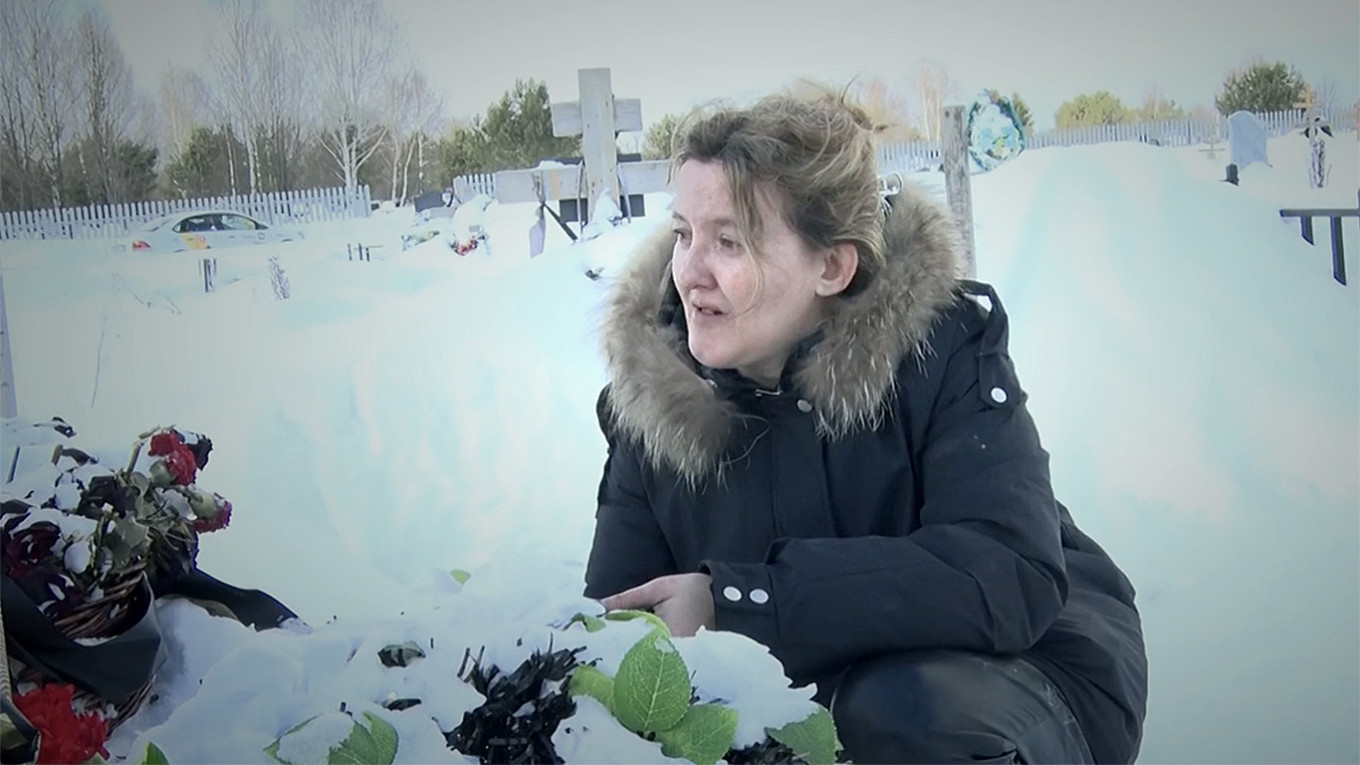
Galina Simagina, a woman from Russia’s Chelyabinsk region, was locked in a feud with her in-laws over who was entitled to state compensation for her husband’s death in the Ukraine war.
She took an unorthodox step to resolve the dispute: She went on state television.
In the studio for the talk show “Muzhskoe-Zhenskoe” (“Male-Female”), Simagina accused her late husband’s family of turning her two children against her and cutting off all contact.
“Stop lying! I’m taking my children anyway, and I won’t give them to you,” Simagina tells her mother-in-law on camera.
Before long, the show’s hosts were calling her a kukushka (“cuckoo”), a pejorative term in Russia for a mother seen as having abandoned her child.
As the Kremlin’s full-scale invasion of Ukraine has dragged on for nearly four years, generous cash incentives for contract soldiers and multimillion-ruble payments for families of those killed have created opportunities for social mobility for thousands of Russians.
They have also fueled disputes over inheritance, custody and alleged fraud — some of which are now unfolding on television, turning private grief into spectacle while normalizing the human cost of a war whose narrative is tightly controlled by the Kremlin.
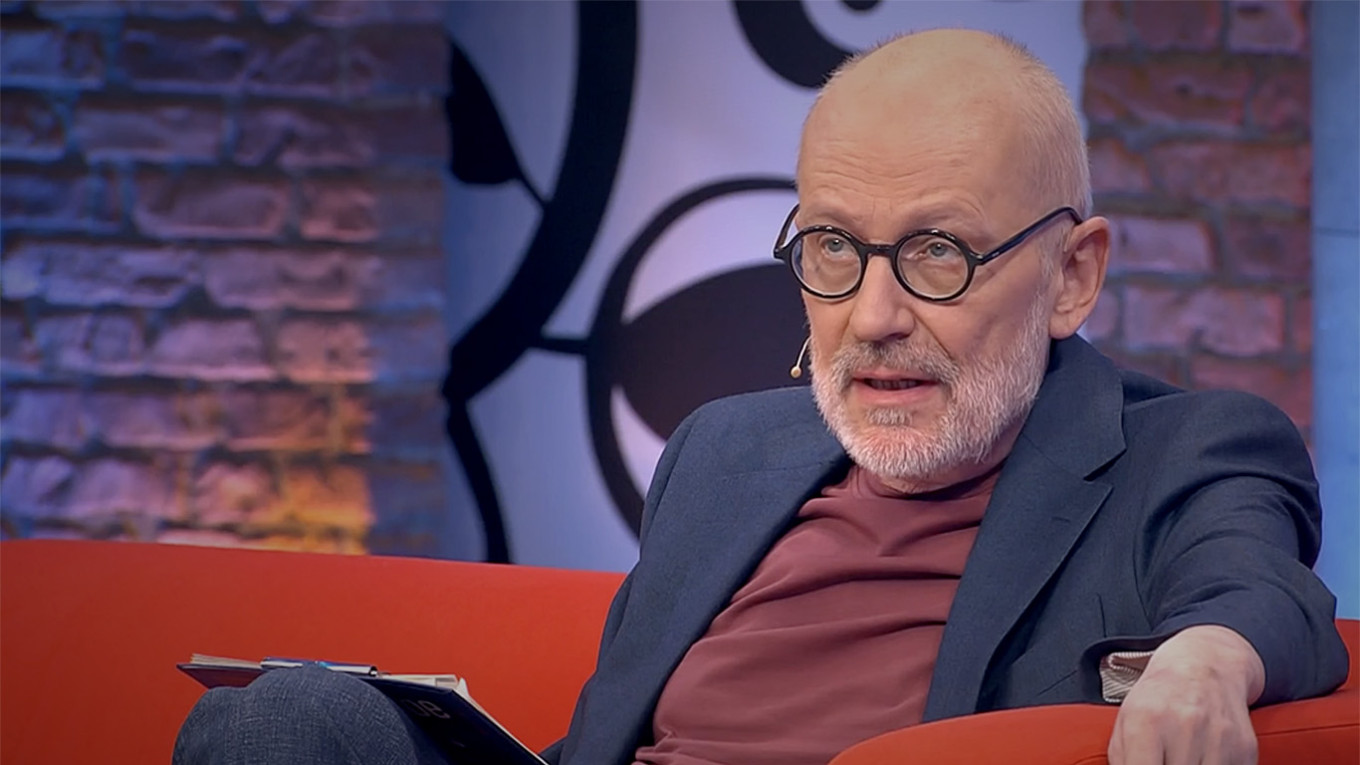
Hosted by TV personalities Alexander Gordon and Yulia Baronovskaya, “Muzhskoe-Zhenskoe” on Channel One has become one such arena for these family feuds.
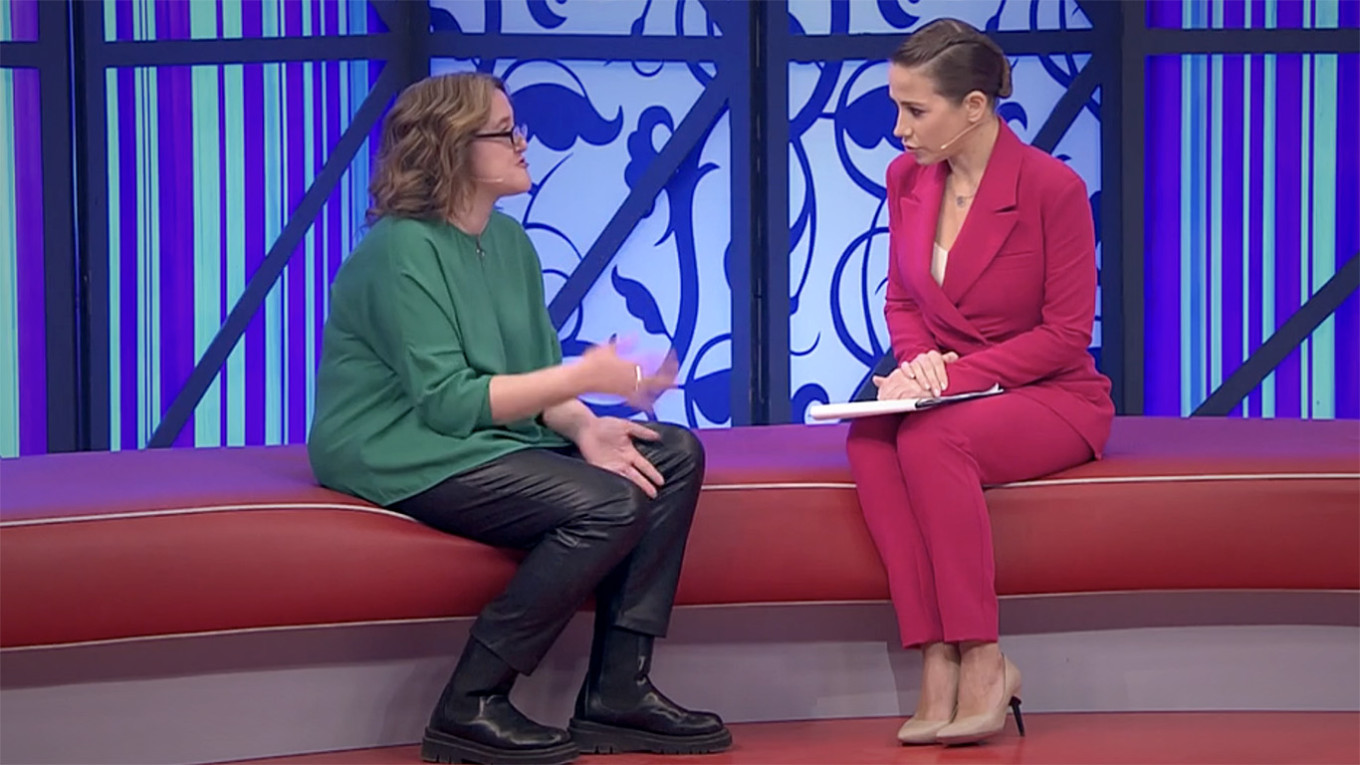
The long-running daytime talk show typically features emotionally charged family conflicts where guests air grievances before a live studio audience, while the hosts question participants, offer commentary and occasionally call on officials or social services to intervene.
The episode featuring Simagina has amassed more than 1 million views on the show’s YouTube channel since it aired last month.
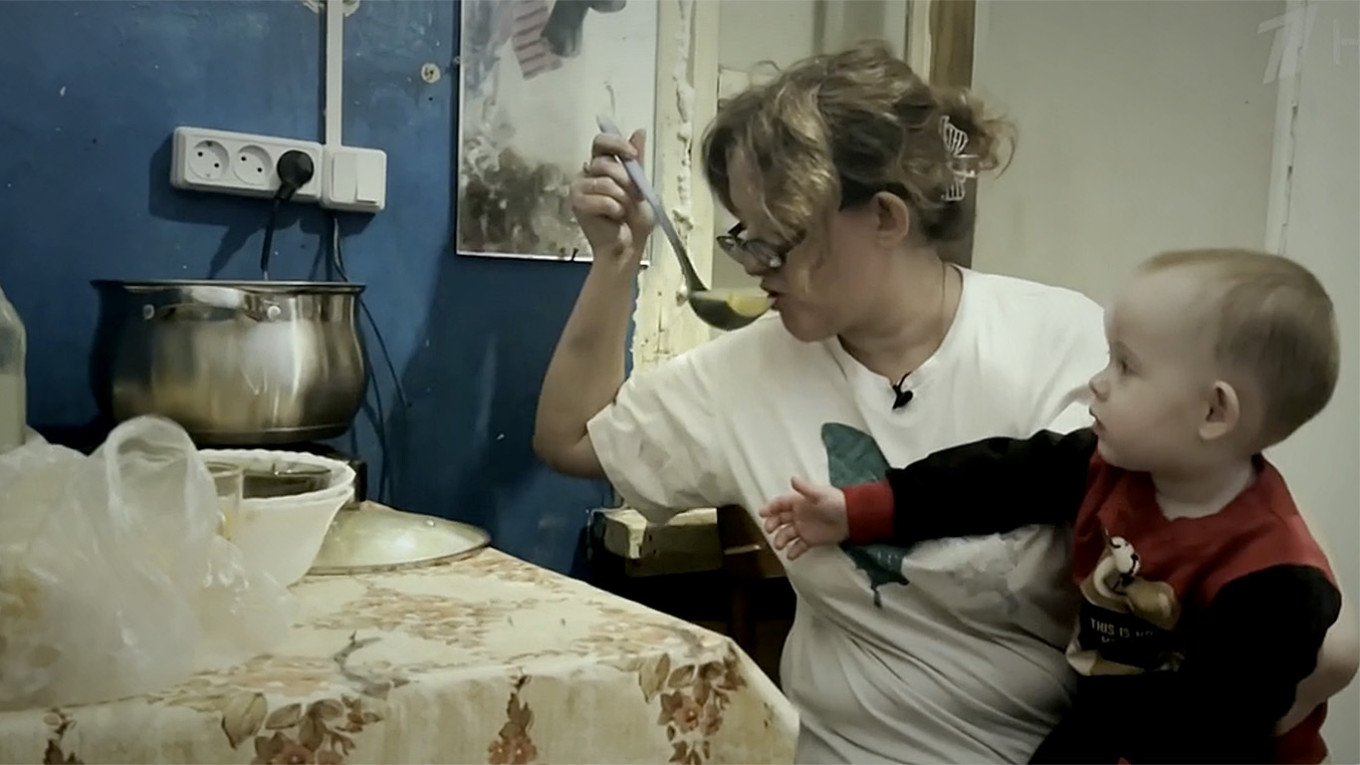
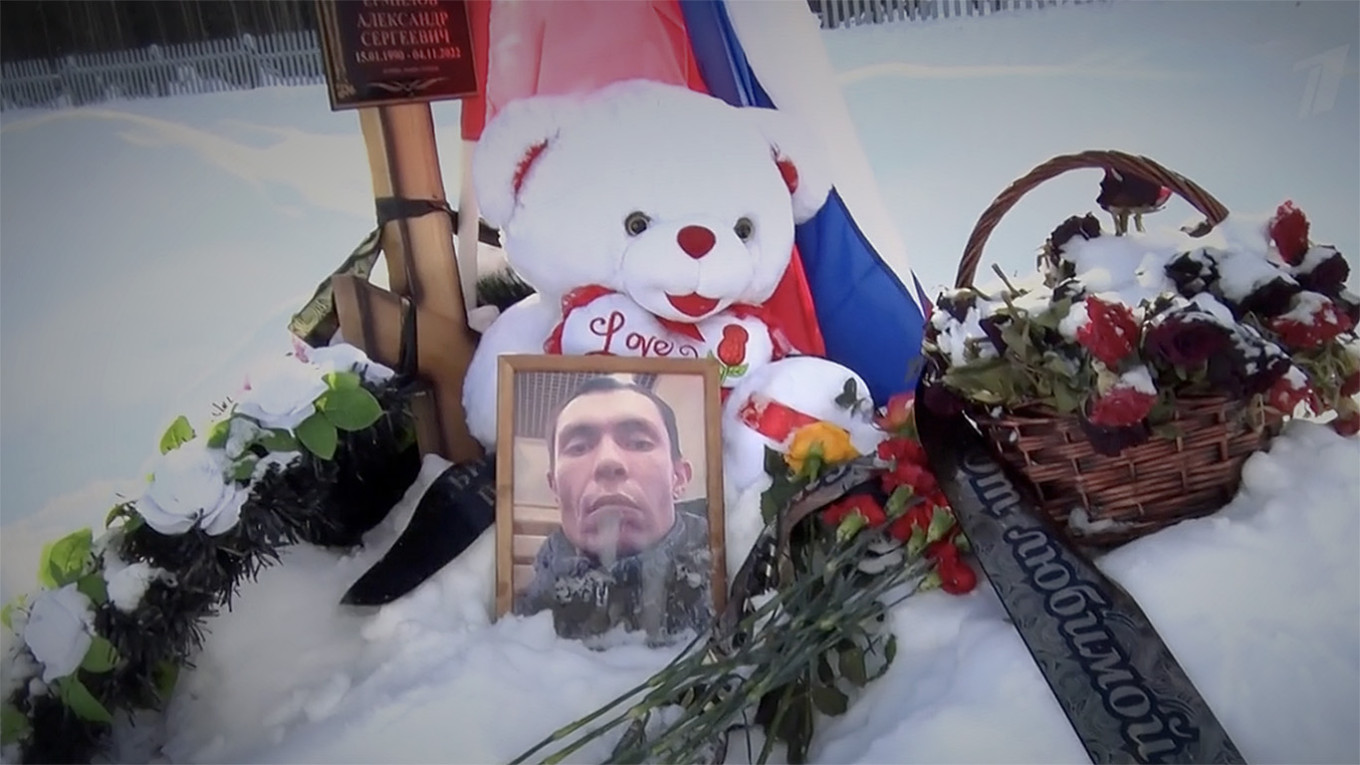
Alyona Yermilova, a widow from the republic of Udmurtia, appeared on “Muzhskoe-Zhenskoe” with a similar dilemma. While in prison, her late husband signed a contract to fight in Ukraine with the Wagner mercenary group. He was killed in combat in November 2022.
Yermilova says she quickly spent the state payout from her husband’s death, sometimes referred to in Russia as “coffin money,” on clothing and to pay off bank loans and payday loans.
“Maybe I was in such a state that I didn’t understand what I was doing,” she tells the hosts.
Footage shown to the audience depicts her living with her children in a three-room apartment with dirty floors, a broken stove and an outdoor toilet.
“Homeless people live better than we do,” Yermilova says to the camera from her apartment.
A thank-you letter from the Kremlin-appointed head of Ukraine’s Russian-occupied Luhansk region hangs alongside Wagner Group medals on the wall of her home. Over the course of the episode, the hosts never mention why Yermilov was imprisoned.
“I have no nerves left, no strength. If they [authorities] take my child away from me, I won’t survive it,” Yermilova says while sitting at her husband’s grave.
By the end of the episode, the hosts called on child welfare authorities to strip her of parental rights.
Another show guest, Tatyana Sharafutdinova, also addressed her late husband who died in Ukraine on camera.
“I often come here, look at him and talk to him, so that things are good for him in heaven. Maybe I hurt him somehow. I always ask for forgiveness,” Sharafutdinova says while standing by the corner that houses her home’s Orthodox icon.
Sharafutdinova learned of her husband’s death in January 2023 and has yet to receive the government compensation for his death.
“As soon as he died in the war, the fight over the money began,” Sharafutdinova said.
Gordon, the co-host, called it “another wild story.”
In 2025, at least three episodes of “Muzhskoe-Zhenskoe” featured disputes among relatives of soldiers killed in Ukraine. Threats of terminating parental rights, accusations of alcoholism, betrayal and fraud are just some of the charges exchanged between the sides.
In some cases, the children of fallen servicemen visit the studio in person to ask for help in resolving their family conflicts.
After teenager Vera Vinogradova’s father was killed in the war, her mother used the compensation to buy a new house, where she now lives with a new partner.
“We never even dreamed of something like this before, but now we got it,” her mother’s new partner told “Muzhskoe-Zhenskoe.”
Vinogradova said she saw none of the money.
“[My family] always left me out when it came to clothes — they’d buy them for the younger kids, but not for me. Now I got compensation for my father, and my mom left me out again. She took all the money, bought a house, and I never saw any of it,” the teenager said.
As the show unfolds, it’s revealed that Vinogradova’s new boyfriend planned to buy an apartment in Moscow using the money from her father’s death benefits.
‘Black widows’ and marriage scams
Coverage of scams targeting soldiers and their families has also become a recurring theme on Russian state television, including on “Muzhskoe-Zhenskoe.”
One of the most talked-about schemes involves single women who allegedly marry low-income men, encourage them to enlist and then receive multimillion-ruble payouts if they are killed, earning them the moniker “black widows.”
“The black widow scam has become a well-oiled operation in Russia,” journalist Ira Novik, who regularly interviews soldiers and their families, told The Moscow Times. “Sometimes the scheme includes enlistment officers, security officials or registry staff. They’re needed to speed up the process of signing contracts and registering marriages — and to help find suitable husbands.”
In one episode, Yulia Skrylnikova, the mother of Roman Skrylnikov, a fallen soldier from the Kursk region, asked the “Muzhskoe-Zhenskoe” hosts to intervene in a dispute with her daughter-in-law over compensation payments for her grandson.
Skrylnikova sought to block the compensation payments for her grandson, who she believed was not biologically related to her son despite her son acknowledging the child as his own.
“She never loved my son,” Skrylnikova says of her daughter-in-law, Karina.
Under Russian law, compensation for fallen soldiers is reserved for immediate family members. This includes legal spouses, parents and children. Siblings may be eligible for a presidential payment of 5 million rubles ($63,400).
“If this is our child, then for God’s sake let him receive the payments, but if he is not…” Skrylnikov’s widow Karina says, suggesting that a DNA test be administered.
War-themed episodes of “Muzhskoe-Zhenskoe” frequently include scenes of widows visiting their husbands’ gravesites.
“I come here often, but I try not to run into Roman’s parents,” Karina Skrylnikova says on camera.
“My kitten, it’s very hard for us without you,” she says, addressing her late husband. “Your relatives are harassing me.”
The program later reveals that Karina was not living with her husband and did not attend his funeral. Before dating Skrylnikov, she had married another serviceman who was also killed in the war.
Journalist Novik said these storylines risk trivializing the war by reframing it as domestic conflict.
“The narratives voiced by [Russian propagandists] Gordon, Solovyov and Karnaukhov not only normalize death in war, but often glorify it. Karnaukhov literally urged Russian soldiers not to surrender, but to kill themselves — that way, he said, they would die as heroes,” Novik said.
A Message from The Moscow Times:
Dear readers,
We are facing unprecedented challenges. Russia's Prosecutor General's Office has designated The Moscow Times as an "undesirable" organization, criminalizing our work and putting our staff at risk of prosecution. This follows our earlier unjust labeling as a "foreign agent."
These actions are direct attempts to silence independent journalism in Russia. The authorities claim our work "discredits the decisions of the Russian leadership." We see things differently: we strive to provide accurate, unbiased reporting on Russia.
We, the journalists of The Moscow Times, refuse to be silenced. But to continue our work, we need your help.
Your support, no matter how small, makes a world of difference. If you can, please support us monthly starting from just $2. It's quick to set up, and every contribution makes a significant impact.
By supporting The Moscow Times, you're defending open, independent journalism in the face of repression. Thank you for standing with us.

Remind me later.