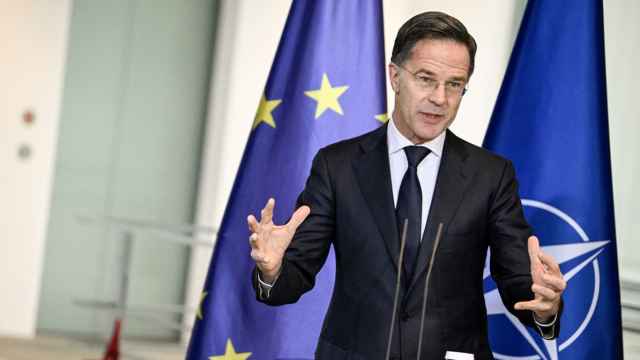

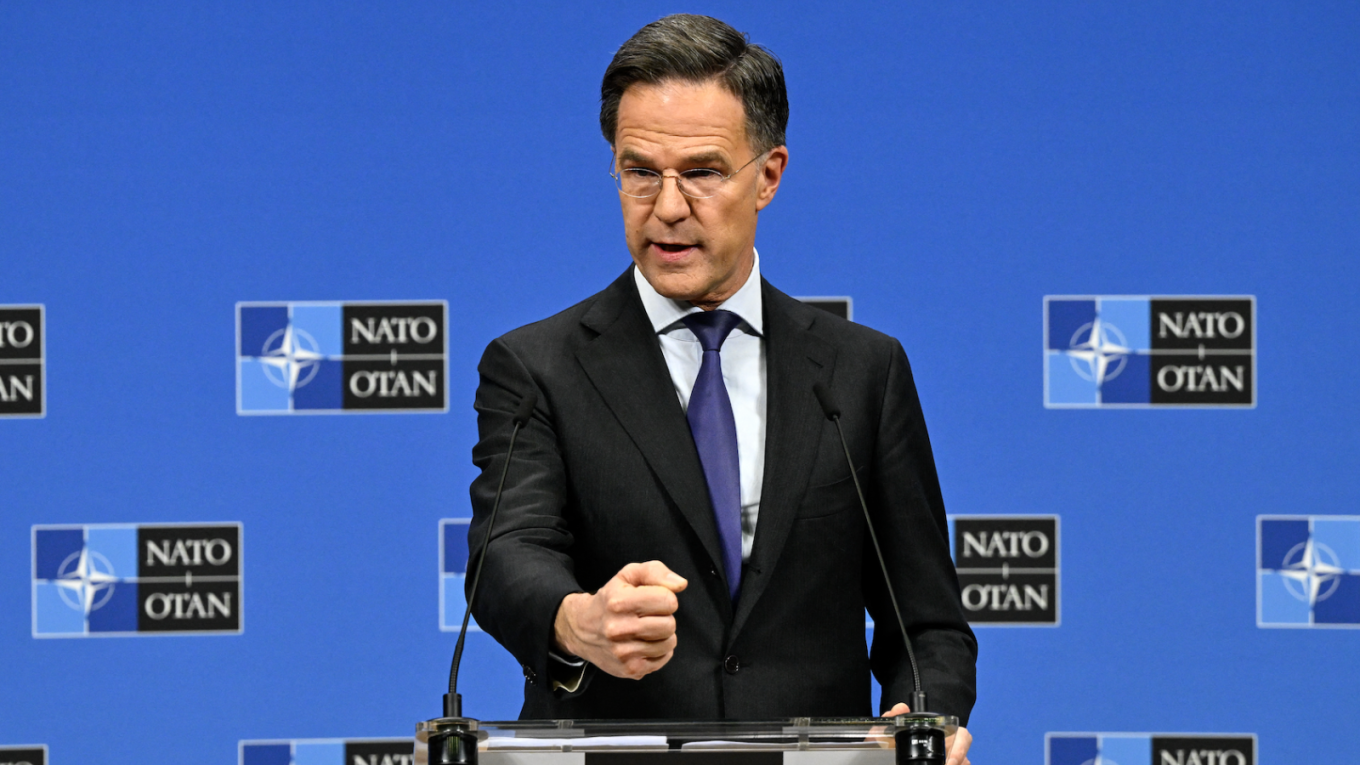
MUNICH, Germany — The Russian people should know that the war is destroying their country and should do everything they can to stop it, NATO Secretary General Mark Rutte told The Moscow Times.
Speaking on the sidelines of the Munich Security Conference, the former Dutch prime minister discussed what the Russian people should know about their country’s leadership and place in the world as the Kremlin further restricts their access to the global information ecosystem by blocking Telegram and WhatsApp.
“In December, they lost 35,000 of their own men, and in January — 30,000,” he said, pointing to figures that Western officials say show that more Russians were killed in Ukraine than were recruited to fight in the same period.
These casualties “do not come from Moscow and St. Petersburg, so the elite may not immediately experience this,” Rutte said. “But this will come soon, because at this [rate] of so many people dying in action, it's unavoidable that it will also reach Moscow and St. Petersburg.
“I would say, ‘Do everything you can to stop this, because it is killing Russia. It is so bad for Russia’,” he said.
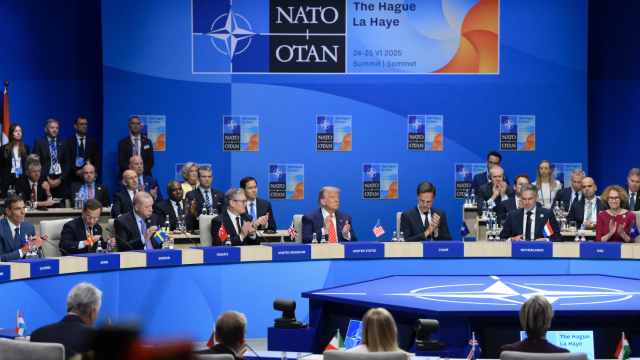
The conference took place the day after NATO defense ministers met in Brussels and announced another package of $500 million in military aid to Ukraine through the Prioritized Ukrainian Requirements List (PURL), which allows countries to buy U.S. weapons for Ukraine.
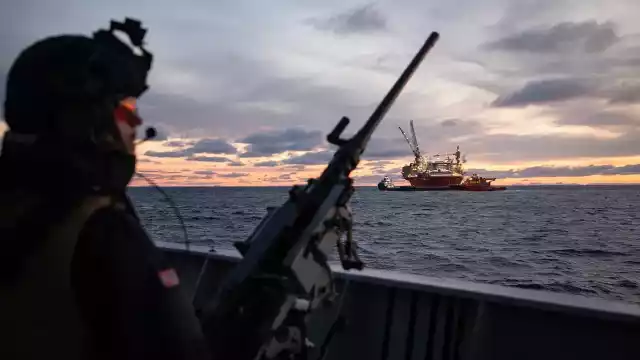
The figure included over $200 million from Britain to buy air defense missiles, as Russia continues targeting Ukraine’s cities and energy infrastructure.
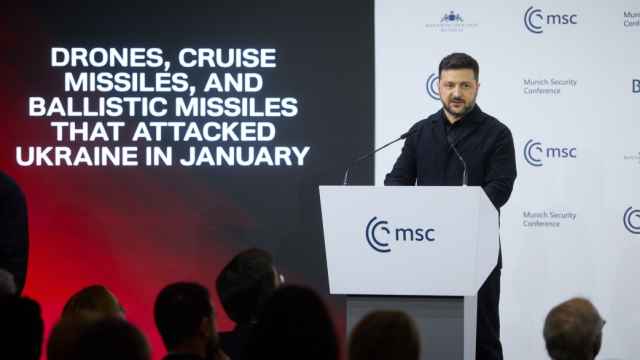
On the main stage at Munich, Ukrainian President Volodymyr Zelensky thanked the U.S. and European countries for their support and said Ukraine was ready to strike a peace deal.
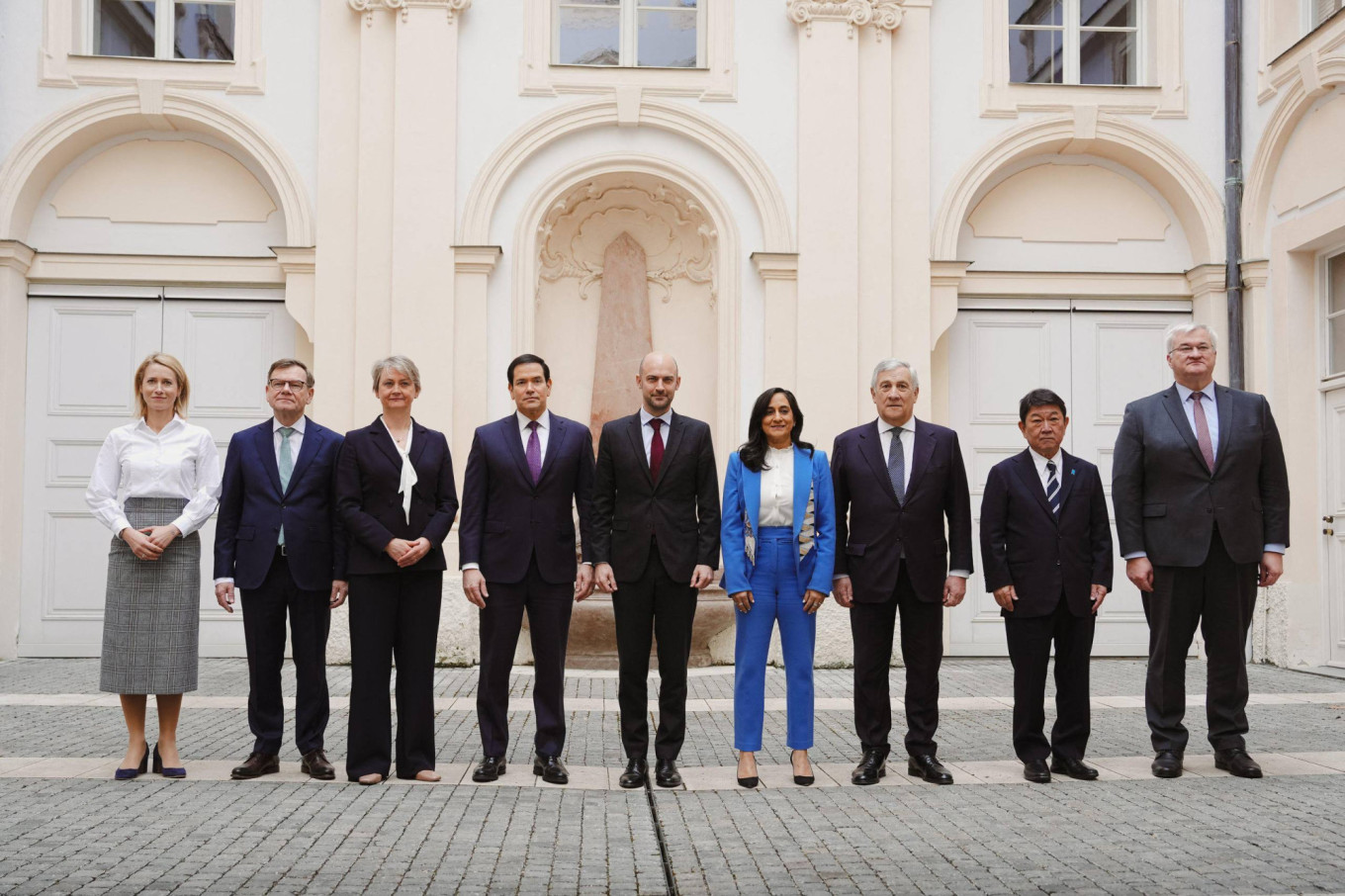
But he said that while Ukraine was willing to make concessions, he saw no evidence that Russia would.
Several speakers at the conference, including U.S. Secretary of State Marco Rubio, openly doubted whether there was clear evidence Russia wanted to end the war.
In remarks to journalists ahead of his meeting with Rubio, Zelensky said he believed that Russia’s only goal in invading his country was its total occupation and it was a mistake to believe that ceding the Donbas to Russia would bring peace.
Not only does how the war ends look unclear, but so does the relationship Russia will have with the rest of the world.
“I'm afraid under the current leadership of Russia, a return to normal relations with the West is unlikely,” Polish Foreign Minister Radosław Sikorski told The Moscow Times on Friday. “Colonial wars, if you look historically, are only ended by a different team than started them.”
“Let’s have a peace deal first and then see what happens after that,” Rutte said. “But for NATO, it’s clear as we see things now, Russia is a long term threat to the whole of NATO’s territory.”
A Message from The Moscow Times:
Dear readers,
We are facing unprecedented challenges. Russia's Prosecutor General's Office has designated The Moscow Times as an "undesirable" organization, criminalizing our work and putting our staff at risk of prosecution. This follows our earlier unjust labeling as a "foreign agent."
These actions are direct attempts to silence independent journalism in Russia. The authorities claim our work "discredits the decisions of the Russian leadership." We see things differently: we strive to provide accurate, unbiased reporting on Russia.
We, the journalists of The Moscow Times, refuse to be silenced. But to continue our work, we need your help.
Your support, no matter how small, makes a world of difference. If you can, please support us monthly starting from just $2. It's quick to set up, and every contribution makes a significant impact.
By supporting The Moscow Times, you're defending open, independent journalism in the face of repression. Thank you for standing with us.

Remind me later.