
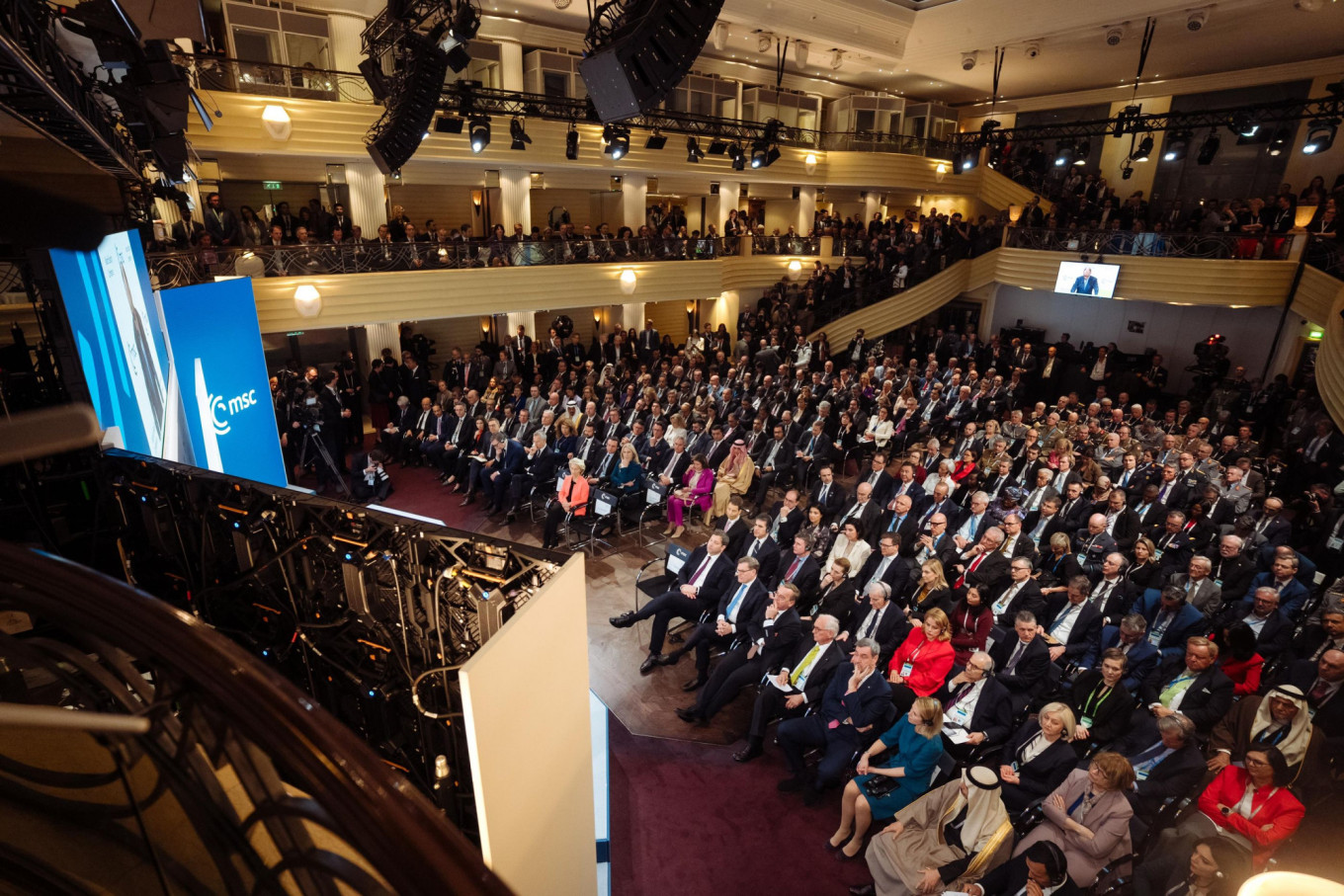
MUNICH, Germany — The unofficial mascot for the 2026 Munich Security Conference was an elephant.
But if the elephant in the room was the question of whether the United States was trampling over the world order and its relationship with Europe nearly four years into Russia’s full-scale invasion of Ukraine, it was not ignored, but repeatedly confronted.
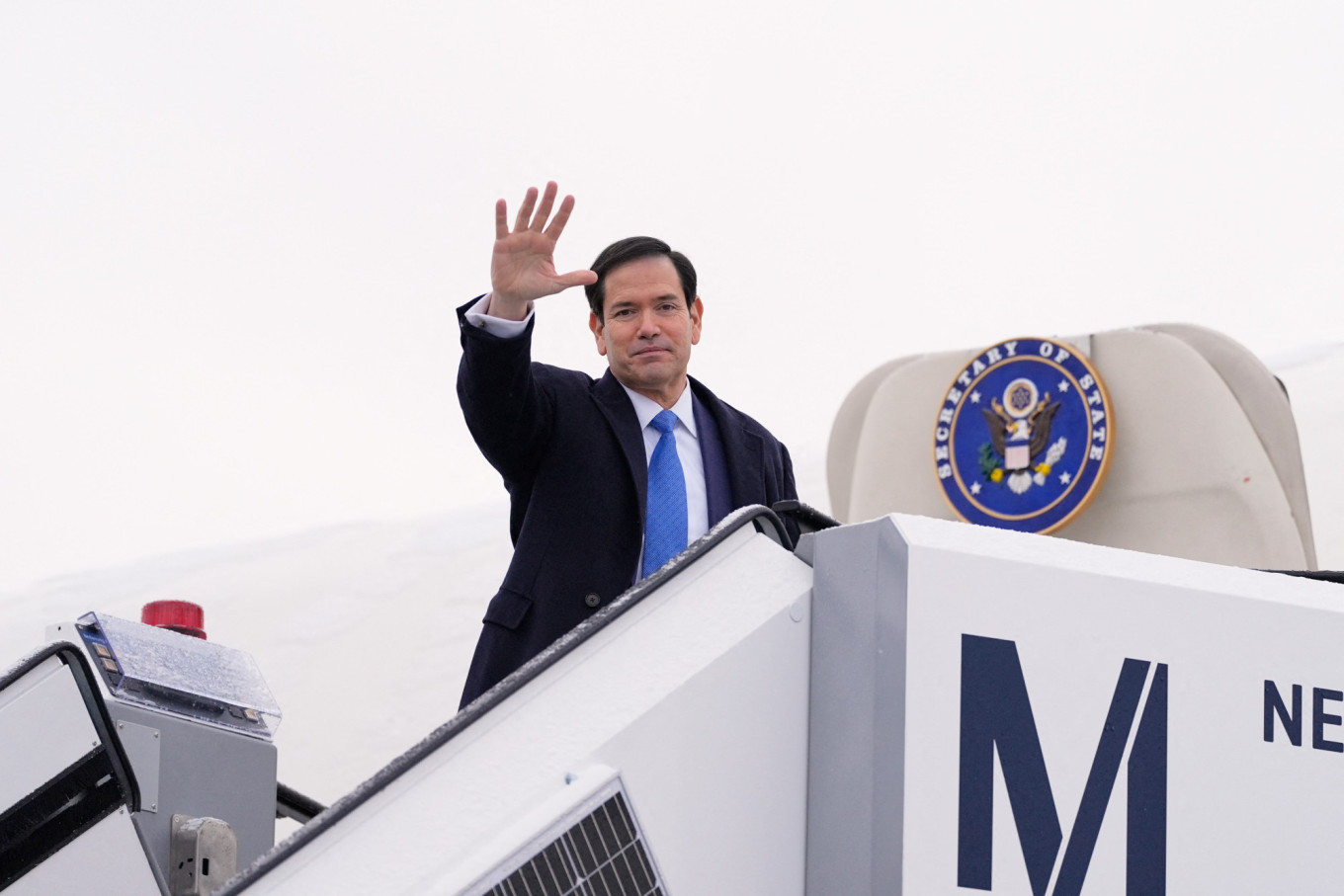
A year after U.S. Vice President J.D. Vance stunned European leaders at the same gathering by accusing them of abandoning democratic values and freeloading on U.S. protection, Secretary of State Marco Rubio struck a more conciliatory tone.
The mood at this year’s conference was less apocalyptic than last year’s “shock therapy,” as European Commission President Ursula von der Leyen put it.
But several attendees, many speaking on condition of anonymity, told The Moscow Times that they were not entirely reassured.
“We want Europe to be strong. We believe that Europe must survive, because the two great wars of the last century serve for us as history’s constant reminder that ultimately, our destiny is and will always be intertwined with yours, because we know that the fate of Europe will never be irrelevant to our own,” Rubio told a crowd at the luxurious Bayerischer Hof Hotel.
But his was still seen as a continuation of the administration's MAGA rhetoric, decrying “mass immigration,” a “climate cult” and framing the U.S. not just as the most powerful country in the democratic world, but as part of a “shared civilization” with Europe, “forged by centuries of shared history, Christian faith, culture, heritage, language, ancestry” and “the sacrifices of previous generations.”
For some European leaders, who increasingly accept that the continent must reduce its reliance on Washington and assert itself as a more equal partner, that rhetoric landed uncomfortably.
German Chancellor Friedrich Merz criticized Washington’s tariff policies and what he described as the projection of U.S. “culture war” issues into European politics.
“MAGA means anti-EU. It means anti-liberal world order. It means anti-climate change. That’s the ideological undercurrent” guiding U.S. foreign policy,” said Finnish President Alexander Stubb, who is thought to have one of the best relationships with U.S. President Donald Trump out of anyone in the alliance.
How much damage Rubio could undo was limited, as many European leaders have direct experience with the Trump administration.
Danish Prime Minister Mette Fredriksen said she believes that Trump still wants to own Greenland, despite having toned down his threats to take it by force.
Eyes on east and west
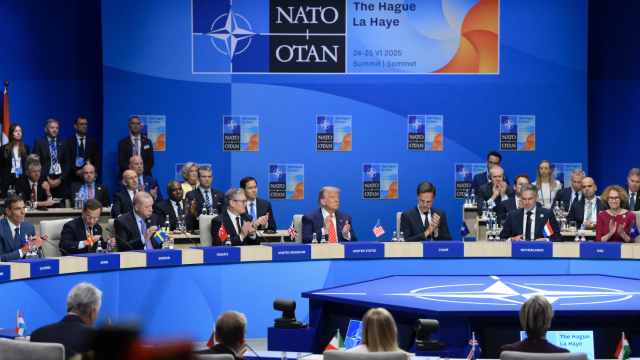
The conference took place the day after a meeting of NATO defense ministers in Brussels, where they discussed progress toward capability targets set at last year’s summit in The Hague. NATO announced that a further $500 million would be pledged to purchase U.S.-made weapons for Ukraine through the Prioritized Ukrainian Requirements List (PURL), including air defense missiles to protect cities and infrastructure from Russia’s intensifying drone and missile attacks.
As Ukrainian civilians continued to freeze in apartments that have been without heating for weeks due to Russian strikes on energy infrastructure, Ukrainian officials sought to emphasize Moscow’s problems on the battlefield after Western figures suggested Russia lost 9,000 more men on the battlefield last month than they recruited.
At the Ukraine House exhibition, co-hosted by the presidential office near the main venue, visitors met Ukrainian drone developers and watched an AI-generated video depicting simulated Russian Geran drone attacks on major European cities.
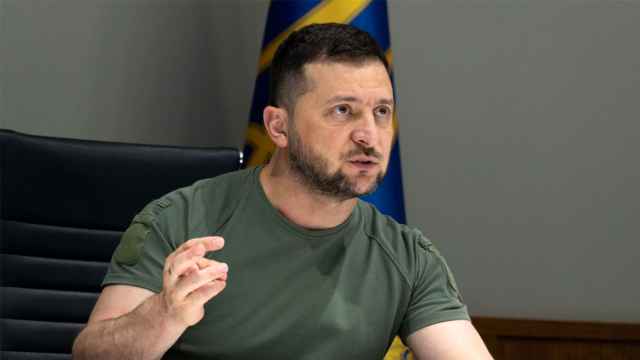
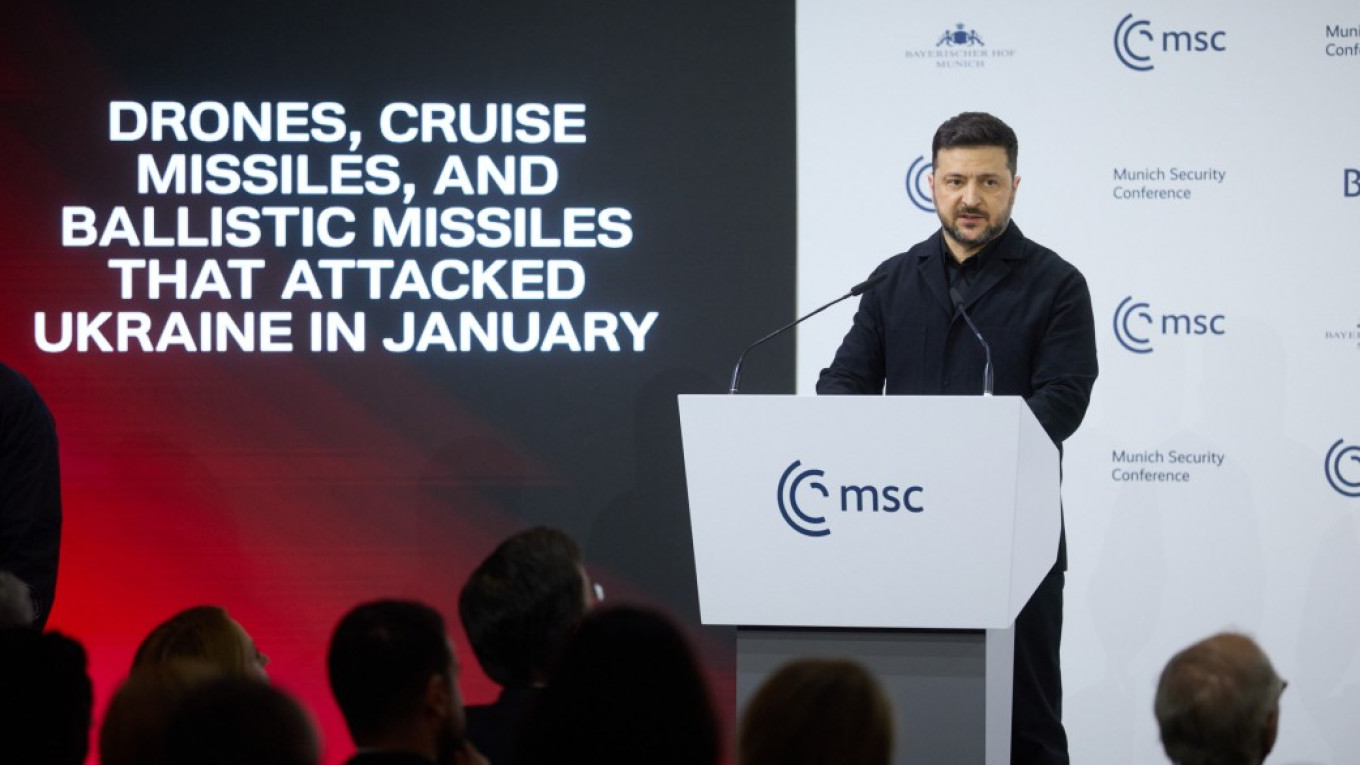
On the main stage, President Volodymyr Zelensky called for security guarantees for Ukraine lasting at least 20 years. He said Washington had offered 15-year assurances but had not specified how it would provide them, including whether it would support a European reassurance force in Ukraine.
He called on the international community to “exert maximum pressure on Russia” by pushing down global oil prices to further hit a key source of revenue for Moscow’s war effort.
He also said Ukraine would hold elections — a condition pushed by Trump and the Kremlin — if a two-month ceasefire with security guarantees were agreed.
The next round of talks between Russia, Ukraine and the United States is scheduled for Tuesday and Wednesday in Geneva.
After almost a year of talks in which Russia repeated its demand for Ukrainian territory and rejected external security support for Kyiv as a threat, the contours of any deal remain vague.
Rubio said it was unclear how “serious” Russia was about ending the war. “
“They say they are — and under what terms they are willing to do it and whether we can find terms that are acceptable to Ukraine that Russia will always agree to. But we’re going to continue to test it,” he said.
Equally uncertain is how the international community would engage with Russia if a deal were reached. The Kremlin has signaled that peace would depend on ending Russia’s economic isolation, including lifting sanctions and pursuing new economic agreements with the U.S.
Attendees who spoke to The Moscow Times did not provide a clear picture of how the world should treat a post-war Russia. But none were looking for a return to the pre-war status quo.
“Let’s have a peace deal first and then see what happens after that,” Rutte said. “But for NATO, it’s clear as we see things now, Russia is a long term threat to the whole of NATO’s territory.”
“We leant over backwards to integrate Russia into the broadly understood West…” Polish Foreign Minister Radosław Sikorski said. “I'm afraid under the current leadership of Russia, a return to normal relations with the West is unlikely. Colonial wars, if you look historically, are only ended by a different team than started them.”
Russian opposition activist Mikhail Khordokovsky also saw no prospects for a lasting peace as long as President Vladimir Putin holds power in the Kremlin.
“For him, war is necessary, because then we need to avoid talking about normal life,” he said.
A Message from The Moscow Times:
Dear readers,
We are facing unprecedented challenges. Russia's Prosecutor General's Office has designated The Moscow Times as an "undesirable" organization, criminalizing our work and putting our staff at risk of prosecution. This follows our earlier unjust labeling as a "foreign agent."
These actions are direct attempts to silence independent journalism in Russia. The authorities claim our work "discredits the decisions of the Russian leadership." We see things differently: we strive to provide accurate, unbiased reporting on Russia.
We, the journalists of The Moscow Times, refuse to be silenced. But to continue our work, we need your help.
Your support, no matter how small, makes a world of difference. If you can, please support us monthly starting from just $2. It's quick to set up, and every contribution makes a significant impact.
By supporting The Moscow Times, you're defending open, independent journalism in the face of repression. Thank you for standing with us.

Remind me later.