This publication was adapted from the original at the Sakharov Review’s “The Country and the World” project and is part of the series “Four Years of War: The Results.”
The Kremlin has turned fighting inflation into a quasi-ideology. The doctrine combines the recommendations of court financiers with the ruler’s own strategy, aimed at preserving power for decades to come.
Since February 2022, desperate measures to curb inflation have been implemented in Russia with such consistency that look like a natural policy beyond questioning.
But they are not. They are a decision.
A comparison helps clarify the picture. Over four wartime years (2022-2025), Russia’s consumer price index rose by 39%, compared with 61% in Ukraine. If we look at two other countries at war with each other, Israel and Iran, inflation from 2023-2025 amounted to 11% in the former and at least 200% in the latter.
Russia has been less successful at containing inflation than Israel. But when it comes to effort, first place belongs squarely to Moscow, as evident in the 10.4 percentage point gap between the interest (16%) and inflation (5.6%) rates at the end of 2025. In Ukraine, the difference was 7.5 percentage points while Israel's gap was just 1.4.
Unlike Israel, Russia is fighting under heavy sanctions and financing the war almost entirely from domestic resources. It has no access to international borrowing, receives no external grants or preferential loans and struggles to sell its oil on global markets at anything close to full price. Under similar conditions, its finances might have resembled the chaos seen in Iran. Instead, Russia’s economic reality looks markedly different.
This makes the phenomenon all the more intriguing because Russia has no anti-inflationary tradition of fiscal restraint. Neither of the empires that preceded the Russian Federation — under the tsars or U.S.S.R. — was ever particularly scrupulous with their finances, especially in wartime.
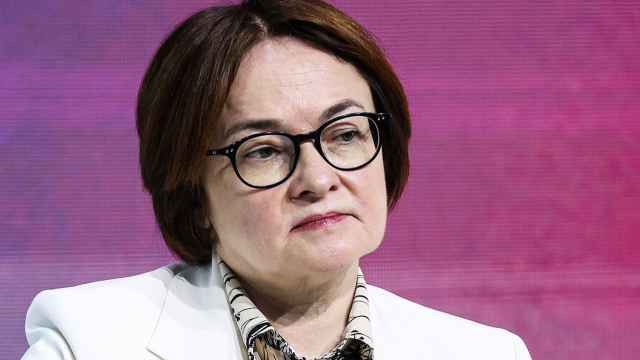
Many observers believe this uncharacteristically harsh financial policy is dictated by Central Bank Governor Elvira Nabiullina. She has been in office since 2013 and belongs to the small circle of Putin’s top technocrats.
Her image intrigues the outside world. At the height of the war, The Economist showered her with praise (“her mere presence at the helm is enough to calm markets”) and compared her to a Shakespearean tragic character, without specifying which one.
It is easy to imagine Nabiullina as the driving force behind Russia’s wartime anti-inflationism. The Central Bank declared 4%inflation its target back in 2015 and has adhered to it ever since. Four years into the war, the regulator’s rhetoric has not changed: Nabiullina has again confirmed that inflation should return to 4% in 2026.
Other leading technocrats broadly share her view. Prime Minister Mikhail Mishustin, Finance Minister Anton Siluanov and even — albeit with reservations — Defense Minister Andrei Belousov have, over the years, supported the policy of restraining inflation.
Open advocates of inflationism do exist, but they are treated by the mainstream as eccentrics. The most prominent among them, former minister Sergei Glazyev, proposed cutting rates just over a year ago and once again unveiled a plan to boost GDP growth to 8%by abandoning inflation targeting.
But those involved in real decision-making have never, throughout the war, acted as open inflationists or called for a “mobilization economy.” Even Belousov — the most statist of Putin’s technocrats and a frequent critic of Nabiullina — said in the first year of the war that a mobilization economy made no sense.
Does this mean Russia’s wartime anti-inflationism was imposed on the ruler by technocrats led by Nabiullina? The facts suggest the opposite.
Nabiullina’s rigidity should not be overstated. In the critical summer of 2023, it faltered. In July and August of that year, seasonally adjusted annualized inflation surged to 13%, far outpacing the then-policy rate of 8.5%.
Putin had no intention of suppressing inflation by cutting government spending — that is, war spending. Senior bureaucrats understood that calling for such cuts would earn them punishment, so they hid behind Nabiullina. She, in turn, understood she was being pushed into a trap: raising rates sharply would turn economic elites against her. She stalled.
On Aug. 15, 2023, the Central Bank raised the rate to 12%, launching a cycle of increases that eventually pushed it to 21%. Three weeks later, Putin personally defended the regulator, suggesting critics speak directly to Nabiullina if they failed to understand.
Despite their professed opposition to inflation, mainstream state managers regularly lament the damage caused by ultra-high interest rates and cling to the idea of a safe middle path between Turkey-style inflation and Nabiullina’s austere policy.
Economic Development Minister Maxim Reshetnikov expressed this view several months ago, arguing that the debate had been oversimplified — reduced to a binary choice between 4% inflation and a Turkish-style collapse — and calling for “a little love for the economy” alongside faith in inflation targeting.
Around the same time, banker Andrei Kostin, close to the Kremlin, suggested not lowering rates but simply raising the inflation target.
Once again, Putin intervened. In December, he declared that the government, the presidential administration and the Central Bank were fully aligned on the importance of reducing inflation.
The message was clear: anti-inflationism remains a state doctrine by consensus.
Russian economic policy has long since become a theater designed for a single spectator. The performances of the state machine and its bureaucrats are staged not for society or even for fellow elites, but to satisfy Putin’s preferences. Wartime anti-inflationism is one of them.
It would be wrong to claim Russia’s technocrats are indifferent to what they are asked to implement. Among the highly qualified cohort of officials and former “system liberals” working in the Central Bank, the Finance Ministry and economic agencies, there exists an internal logic and sense of professional balance.
Many are as competent as their counterparts in major Western economies. But their liberal instincts have long since been adapted to Russia’s political reality. Expecting demarches from them in February 2022 was naïve. At the time, the Kremlin still allowed them to gather at the Gaidar Forum, where warnings could be whispered offstage.
Any such warnings, however, were professional rather than moral — about material risks, not political loyalty. The war soon ended even this limited autonomy. The Gaidar Forum has not convened since, and attempts to relaunch it quietly failed. The regime no longer needs corporate assemblies. Each technocrat must now rely solely on Putin’s personal favor.
This has become the norm. As one analyst put it, Nabiullina and Siluanov “sleep in helmets,” never knowing when the next shock will arrive.
With this in mind, it becomes possible to trace what Russian economic policy has sought — and achieved — since the start of the Russian-Ukrainian war in 2014. Throughout the 12 years since, Nabiullina and Siluanov have remained in their posts. They are products of the era of imperial revanche, and their careers are inseparable from it.
From 1999 to 2013, Russia’s economy grew by 107% and real incomes rose by at least 150%. From 2013 to 2025, growth amounted to just 18%, with real incomes increasing by roughly the same margin.
The period from 2014 to 2017, marked by falling oil prices and the first wave of sanctions, was a professional triumph for Nabiullina and Siluanov. A floating ruble was introduced, a 4% inflation target was adopted and established as a fiscal rule. Inflation was crushed, the deficit slashed and macroeconomic stability restored.
The cost was stagnation and falling living standards. But life felt largely normal.
That sense of normality is what Putin demanded again after 2022. This time, the strategy worked far worse.
Between the two invasions came a stagnant interlude (2018-2021), when growth barely reached 8%, living standards stagnated, and inflation hovered near target. This was Putinomics at equilibrium.
The full-scale invasion broke that balance. Putin refused both to cut spending and to tolerate inflation. The result was a drawn-out, exhausting battle. The deficit swelled, growth stalled and inflation proved stubborn.
Real incomes rose sharply — by about 20% — but without corresponding growth in civilian production. Money accumulated in bank deposits rather than showing up in consumption.
Putin accepted near-zero growth in 2025 as the price of fighting inflation. Summing up the year, he publicly praised Nabiullina and framed the slowdown as a deliberate choice.
Labor shortages caused by mobilization and the crackdown on migrant workers have pushed wages up across the country. These incomes, however, are largely saved rather than spent.
Household deposits nearly doubled between December 2021 and December 2025. Maintaining a large gap between inflation and interest rates has helped keep this money locked in banks. Cutting rates risks releasing it — and reigniting inflation.
Budget imbalances, oil price volatility, rising debt-service costs and depleted reserves add further pressure. Russia’s public debt remains small, but servicing it is increasingly expensive.
Putin has overstretched the system by trying simultaneously to wage a costly war, suppress inflation, and preserve the appearance of economic normality.
By 2027 at the latest, the regime will face a choice: reduce the cost of the war or abandon anti-inflationism and with it, the illusion of normality.
A Message from The Moscow Times:
Dear readers,
We are facing unprecedented challenges. Russia's Prosecutor General's Office has designated The Moscow Times as an "undesirable" organization, criminalizing our work and putting our staff at risk of prosecution. This follows our earlier unjust labeling as a "foreign agent."
These actions are direct attempts to silence independent journalism in Russia. The authorities claim our work "discredits the decisions of the Russian leadership." We see things differently: we strive to provide accurate, unbiased reporting on Russia.
We, the journalists of The Moscow Times, refuse to be silenced. But to continue our work, we need your help.
Your support, no matter how small, makes a world of difference. If you can, please support us monthly starting from just $2. It's quick to set up, and every contribution makes a significant impact.
By supporting The Moscow Times, you're defending open, independent journalism in the face of repression. Thank you for standing with us.

Remind me later.