This open letter was compiled by a collective of writers, researchers, artists and journalists.
The liberation of people persecuted by totalitarian regimes must remain one of the most important tasks of international diplomacy, even if it cannot be fully achieved by such means. More than 4,600 people are currently imprisoned in Russia on political charges. All of them must be set free.
But in some cases, the issue of their immediate release is particularly urgent, becoming a matter of saving their life.
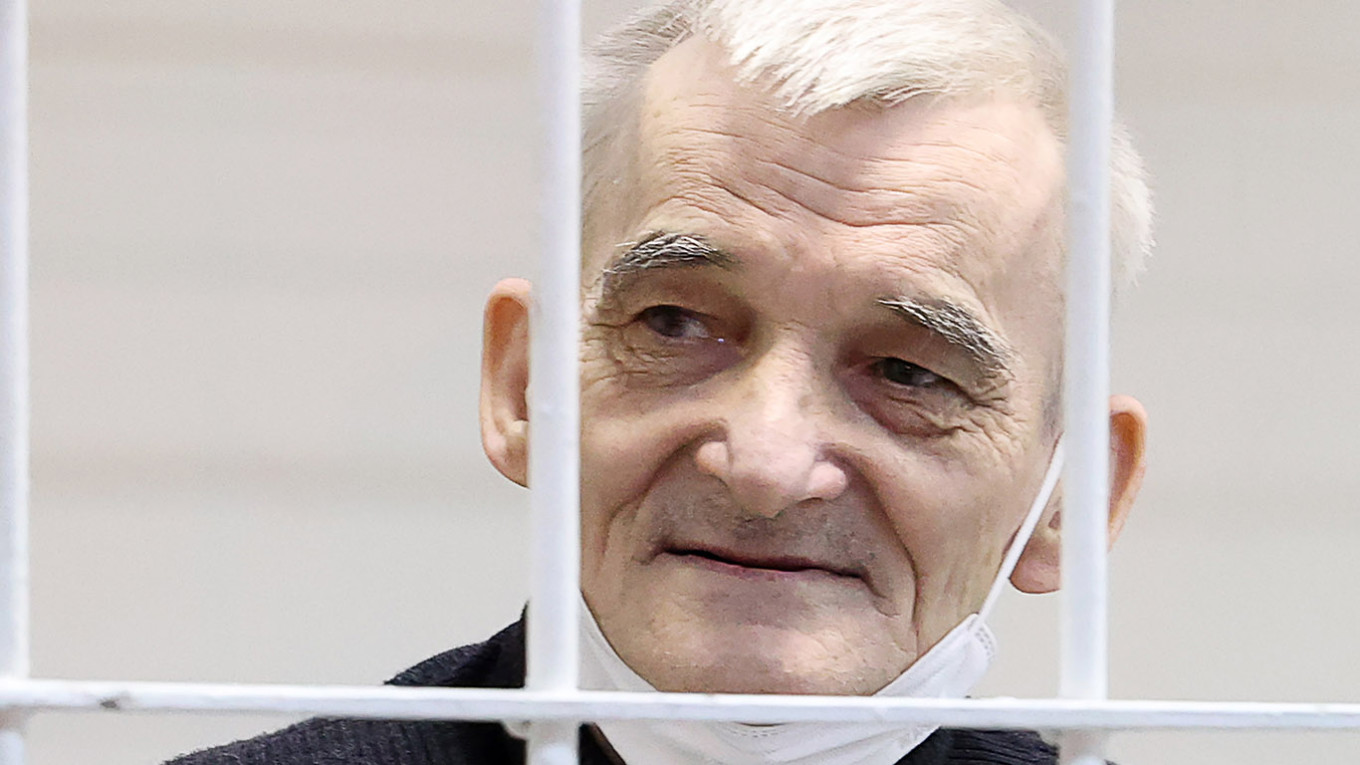
This is the situation of Yury Dmitriyev, one of the first political prisoners of the current wave of President Vladimir Putin's repressions. Arrested in December 2016 on false charges, he has been in prison for over nine years. On Jan. 28, 2026, he will turn 70. He will spend this birthday in a maximum security penal colony in the republic of Mordovia.
Despite suspected cancer, Dmitriev has been denied diagnostic tests for three years. According to his sentence, he must remain in custody for another six years. However, the delay in providing competent medical care may soon prove fatal. Instead of receiving treatment, Dmitriev is regularly punished for feeling unwell: he has been placed in solitary confinement several times for sitting down on his bed during the day or not performing his morning exercises sufficiently actively.
The criminal case against Yuri Dmitriev was brought because of his work researching the history of Stalinist terror in the northern republic of Karelia and preserving the memory of its victims. As the leader of the local branch of the Russian Memorial Society, he spent 30 years searching for the burial sites of victims of the Great Terror, examining archival data to reconstruct the fates of those who were killed.
Thanks to his efforts, numerous memorials commemorating the crimes of the Stalinist regime were created, including the Sandarmokh memorial complex, one of the most famous sites of executions dating back to 1937-1938. He reconstructed the biographies of thousands of victims, including more than 100 figures of the so-called Executed Renaissance of Ukraine, writers, poets and theater directors.
In 2014, Dmitriyev strongly condemned the actions of the Russian authorities in eastern Ukraine. His work has been recognized with numerous awards, including the Golden Cross of Merit of the Republic of Poland (2016), the Moscow Helsinki Group Award for the Defense of Human Rights (2017), the Lev Kopelev Award (2020) and the Norwegian Helsinki Committee's Andrei Sakharov Award (2020).
Yuri Dmitriev's reward from the official Russian authorities was a fabricated charge and a sentence of 15 years in a strict regime colony.
We ask government officials in the United States, Europe and Britain, as well as representatives of international organizations, to use all available diplomatic and legal mechanisms to ensure that Dmitriyev is released as soon as possible. His 70th birthday, celebrated in custody, is an important occasion to remember his achievements and the fact that his immediate release may be his only chance to see his family again.
Signed
Svetlana Alexievich — Writer and Nobel Prize in Literature (2015)
Anne Applebaum — Historian and journalist, Pulitzer Prize (2004)
Irina Galkova — Historian at the Memorial Society
Jessica Gorter — Filmmaker, director of The Dmitriev Affair
Agnieszka Holland — Film director
Vladimir Kara-Murza — Journalist, human rights activist and former political prisoner
Evgenia Kara-Murza — President and CEO of the 30 October Foundation
Tomasz Kizny — Photographer and journalist
Sergei Lebedev — Writer, poet and journalist
Berit Lindeman — Secretary General of the Norwegian Helsinki Committee
Jonathan Littell — Writer, Prix Goncourt (2006)
Adam Michnik — Editor-in-chief of Gazeta Wyborcza
Oleg Orlov — Co-chair of the Memorial Human Rights Center, former political prisoner
Ludmila Ulitskaya — Writer, Russian Booker Prize (2002)
Nicolas Werth — Historian, president of the Memorial-France Association
Evgen Zakharov — Human rights defender and director of the Kharkiv Human Rights Group
A Message from The Moscow Times:
Dear readers,
We are facing unprecedented challenges. Russia's Prosecutor General's Office has designated The Moscow Times as an "undesirable" organization, criminalizing our work and putting our staff at risk of prosecution. This follows our earlier unjust labeling as a "foreign agent."
These actions are direct attempts to silence independent journalism in Russia. The authorities claim our work "discredits the decisions of the Russian leadership." We see things differently: we strive to provide accurate, unbiased reporting on Russia.
We, the journalists of The Moscow Times, refuse to be silenced. But to continue our work, we need your help.
Your support, no matter how small, makes a world of difference. If you can, please support us monthly starting from just $2. It's quick to set up, and every contribution makes a significant impact.
By supporting The Moscow Times, you're defending open, independent journalism in the face of repression. Thank you for standing with us.

Remind me later.