

American and Israeli strikes on Iran could not have come as a surprise to Russia. The Twelve-Day War and subsequent developments made it clear that a new Middle Eastern war was quite possible.
Moreover, the Kremlin clearly does not rule out the possibility of regime change in Iran. Russia’s reaction to the protests in late December and January was quite telling. For more than two weeks, Moscow remained silent about the ongoing unrest. Only when the Islamic Republic brutally suppressed the protests did Russian Foreign Ministry spokesperson Maria Zakharova make a clear statement in support of the Iranian regime. Obviously, that meant Russian officials waited until it became clear that Tehran had secured its survival.
After the setback in Syria, where a long-time Russian-backed ally, Bashar al-Assad, suddenly lost power in 2024, Moscow now clearly acknowledges the possibility that it could lose partners unexpectedly. Moreover, the Syrian case shows a clear pattern: when the collapse of a friendly regime appears realistic, Russia simply steps aside, seeing a need for vital pragmatism.
At the same time, almost any government that might replace the Islamic Republic would not be interested in maintaining a similarly close relationship with Moscow as before. Russia’s image as a world power among Iranians is generally negative due to a long list of historical grievances, including wars with the Russian Empire in the 19th century that resulted in the loss of territory that is now part of present-day Azerbaijan, as well as the Soviet-British occupation of Iran during World War II. Iranians remain quite sensitive to these episodes and often view Russia as a colonial power.
Moreover, anti-Russian sentiment has recently surged again. Iranians increasingly perceive Moscow as a key supporter of the Islamic Republic, which has recently faced serious problems with internal legitimacy. Recent protests have only reinforced these perceptions as the regime has used Russian weaponry, including newly supplied Spartak armored vehicles, to suppress mass demonstrations.
New authorities would not be able to ignore these sentiments. This means that in the event of regime change, Russia would probably lose all the projects it currently has in Iran, as happened in Syria after the transition of power.
However, even if the Islamic Republic survives, the future of most of Moscow’s initiatives there will still be uncertain. Regular protests suppressed with live fire, repeated internet shutdowns, and infrastructure that has been severely damaged by airstrikes all make it difficult to implement Russian plans regarding Iran. Large and complex projects require a certain level of stability, which is unlikely to exist under the current circumstances.
First and foremost, the future of the International North-South Transport Corridor (INSTC) is called into question. The project’s goal was to create an additional transit route through Iranian territory for goods imported to and exported from Russia. While there are doubts about whether this route can ever become profitable, the corridor has strategic value for the Kremlin because the Russian economy needs access to global markets after traditional Western routes were closed by sanctions.
However, making the route operational requires major investments. Moscow has expressed its readiness to build the Rasht-Astara railway to connect the Iranian and Russian rail networks and finance the project with a $1.5 billion loan. Yet this alone will not be enough. Making the corridor effective would require upgrading much of Iran’s logistics infrastructure, including transport hubs, warehouses and ports. Given the ongoing war and instability, such a goal now appears almost impossible.
The situation is roughly the same with the idea of turning Iran into a gas hub. The project envisages exporting Russian gas to global markets through Iranian networks and LNG terminals in the Persian Gulf, which would still need to be built. Both sides had already begun moving in this direction, and the first deliveries of Russian gas were expected to reach the Islamic Republic this year through the existing pipeline in Azerbaijan. Now these plans appear unlikely to materialize.
What happens to projects that already exist also remains unclear. Russia is currently building the second phase of the Bushehr nuclear power plant. Work was suspended after the start of Israeli and U.S. strikes, and personnel are now being evacuated. Meanwhile, the Russian state nuclear corporation Rosatom had planned not only to complete the Bushehr project but also to launch a new one. In 2025, Moscow and Tehran reached a preliminary $25 billion agreement to build the Hormoz Nuclear Power Plant.
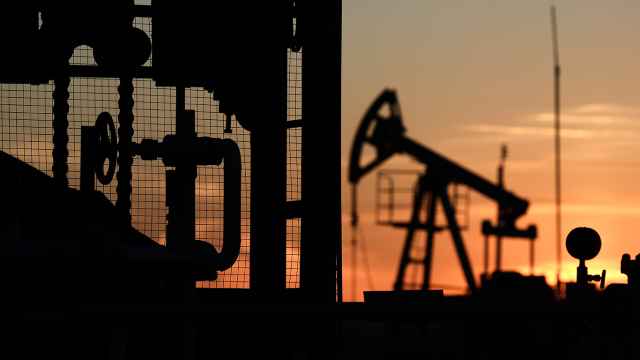
Russian companies have also been active in Iran’s energy sector for several years. Russian company ZN Vostok is collaborating with Iranian partners in the development of at least five oil fields. In addition, Russian specialists are constructing the Sirik thermal power plant in Hormozgan province. These projects are less public than the Bushehr plant, and there have been no official statements from Russia regarding them since the war began. However, they are probably facing no fewer challenges than the Bushehr project.
Russia has been the largest foreign investor in Iran’s economy each year since 2022, with at least $4.2 billion invested. Most of these investments were directed toward oil and gas projects in the country. At the same time, Iranian authorities have struggled to finance existing initiatives due to a shortage of foreign currency and broader economic difficulties. For instance, the Islamic Republic’s debt related to the Bushehr nuclear power plant alone was estimated at 500 million euros ($580 million).
However, Russian and Iranian authorities have tried to avoid revealing such information publicly since 2022 to avoid undermining the image of a strong Moscow-Tehran partnership. As a result, the real scale of unpaid bills, debts and unrecovered investments in Iran could be significantly higher. Even today, we still do not have a clear picture of how much Russia lost in Syria after Assad’s fall.
Even if the Islamic Republic survives the war, it will remain in a desperate economic situation and will hardly be able to pay for Russia’s services. Moscow would probably continue supplying Tehran with certain types of weaponry or agricultural products. However, this would no longer be about making profits; the only viable option would be allowing Iran to import Russian products on credit or offering political concessions, including mineral rights, sovereign control over infrastructure and special privileges for Russian businesses in the country.
The nature of Russian interests in Iran may shift even further from economic benefit toward political necessity. Moscow will likely be unable to complete most of its planned projects or recover the money it has already invested.
A Message from The Moscow Times:
Dear readers,
We are facing unprecedented challenges. Russia's Prosecutor General's Office has designated The Moscow Times as an "undesirable" organization, criminalizing our work and putting our staff at risk of prosecution. This follows our earlier unjust labeling as a "foreign agent."
These actions are direct attempts to silence independent journalism in Russia. The authorities claim our work "discredits the decisions of the Russian leadership." We see things differently: we strive to provide accurate, unbiased reporting on Russia.
We, the journalists of The Moscow Times, refuse to be silenced. But to continue our work, we need your help.
Your support, no matter how small, makes a world of difference. If you can, please support us monthly starting from just $2. It's quick to set up, and every contribution makes a significant impact.
By supporting The Moscow Times, you're defending open, independent journalism in the face of repression. Thank you for standing with us.

Remind me later.